Logo RPF general


The photographs displayed on this page were meticulously identified to correspond to the exact date and the name of the source the time they were captured.
However, errors may occasionally occur. If you notice any discrepancies or inaccuracies in the dates or other details, please let us know by sending an email here

Your feedback is invaluable to me, and we will acknowledge your contribution by citing you as a contributor. 

- 0  entries indexed on -

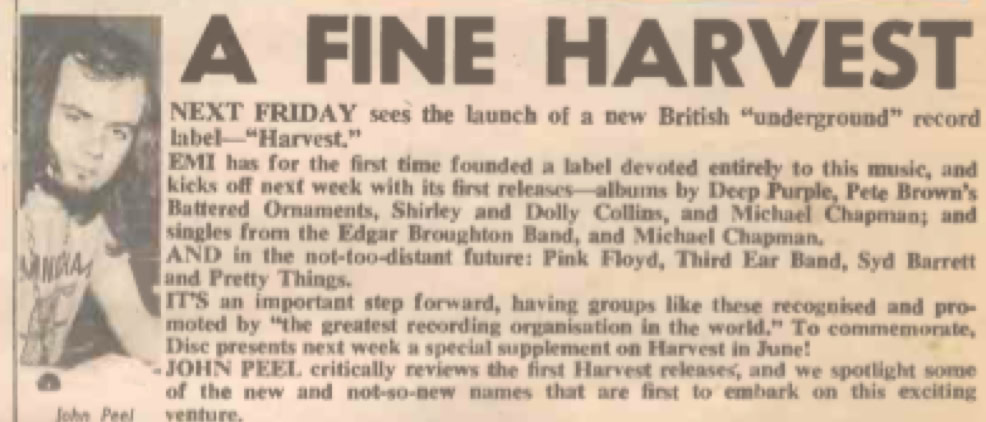
 MAIN EVENT | EMI launches his new progressive label « Harvest » with the help of John Peel.

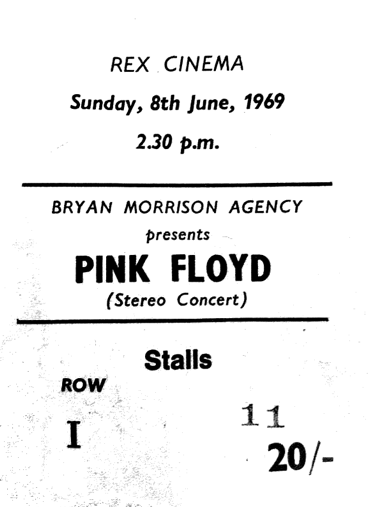
 CONCERT DATE | 8 June 1969 Rex Ballroom, Cambridge, England

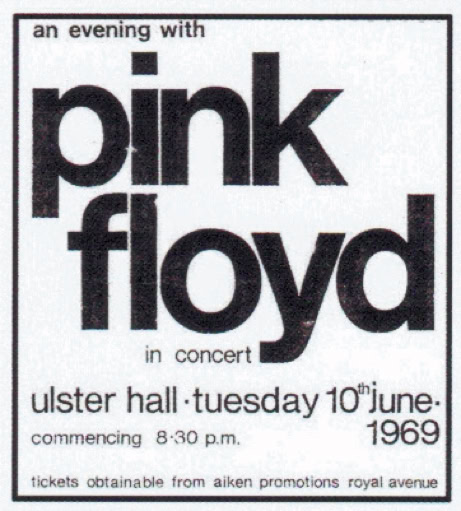
 CONCERT DATE | 10 June 1969 Ulster Hall, Belfast, Northern Ireland

 CONCERT DATE | 13 June 1969 Van Dike Club, Devonport, Plymouth, England 

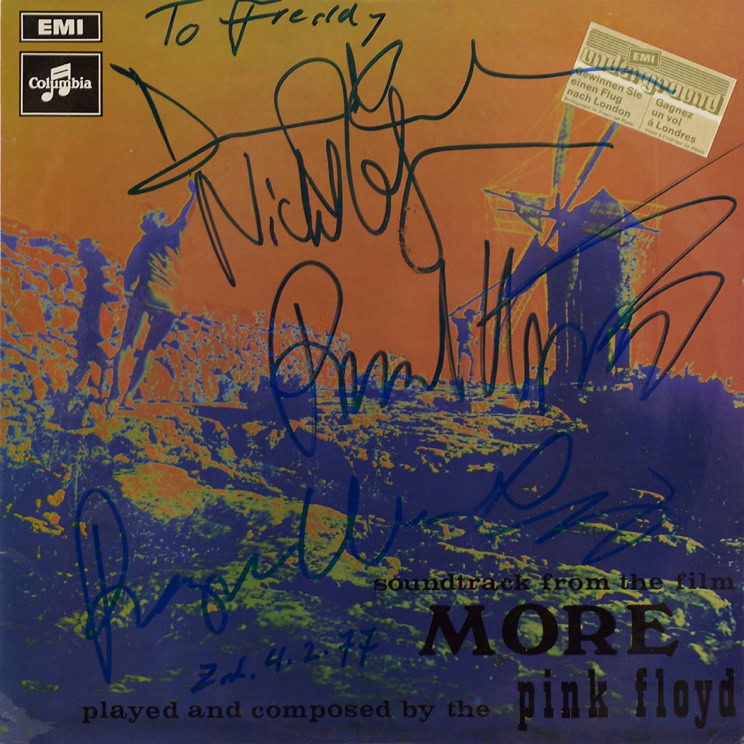
 RECORD RELEASE | 13 June 1969, « More » is released


Interviewer: «Comment vous est venue l’idée de prendre les Pink Floyd pour la musique ?»

Barbet Schroeder: «Il fallait un groupe qui ne se trouve ' pas trop loin de l’endroit où je montais le film, pour pouvoir collaborer avec eux sur les images mêmes. J’en suis très vite venu au Pink Floyd, qui représente pour moi. le meilleur groupe anglais actuel. De plus, leur musique possède un sens de l'espace qui s’allie parfaitement au cinéma, qui est lui-même art de l'espace»

Interviewer: «Ont-ils assisté au tournage du film ?»

Barbet Schroeder: « Non. Préoccupe par d’autres problèmes, je n'ai pas eu le temps d’organiser cela à l'avance. Mais, ils sont venus à Paris pour voir le premier montage, puis je leur ai envoyé une liste avec les durées et diverses indications; je suis parti à Londres avec une copie du film, cl nous avons travaillé à l’enregistrement pendant une semaine, tous les - jours - de minuit à neuf heures du matin. On se levait en fin d'après-midi pour voir le travail effectué la veille sur les séquences du film. Le soir. les images bien en tête, ils se remettaient à composer; je surveillais les durées au chronomètre. C'était époustouflant, car ils n'ont pas l’habitude de travailler aussi vite (ils sortent généralement un album tous les six mois). Ils ont eu là une période d’inspiration extraordinaire. dont ils étaient eux-mêmes stupéfaits. Au niveau des acteurs et des techniciens. nous avons eu la même chance tout au long du film, ils se sont donnés à fond»

Interviewer: «Du point de vue de mixage, il me semble que la musique passe souvent très faiblement ?»

Barbet Schroeder: « Oui. il est très ennuyeux que les salles de cinéma ne mettent pas le son plus fort, je n’arrête pas de passer les voir, pour qu'ils corrigent ce défaut. En fait, j'ai réalisé un mixage très étudié, avec des parties chuchotées et d’autres au contraire, plus fortes (le générique en particulier). Je n’ai pas toujours employé la musique à un très haut niveau, par exemple dans la séquence où Stéphane rentre chez lui de mauvaise humeur. On serait trop pris par le charme de la musique, j’ai donc diminué son intensité. pour que l’image regagne de son importance»

Interviewer: «Quelles sont pour vous les qualités musicales des Pink Floyd ?»

Barbet Schroeder: « On entend beaucoup de musique psychédélique, délirante, mais jamais très achevée. Chez eux. ce qui me fascine, c’est leur maîtrise absolument fabuleuse dans l’invention et le délire, et une entente depuis longtemps établie. Il y a une recherche extraordinaire. sans aucune concession, qui s’annonce de plus en plus riche, et toujours un immense goût de la beauté, des sonorités qui font rêver»

Interviewer: « Avez-vous des projets ? Pensez-vous travailler encore avec les Pink Floyd ?»

Barbet Schroeder: « Oui. je prépare un film, mais je ne sais pas encore comment cela va se passer musicalement. puisqu'il y a des séquences en son direct et d’autres non»

«La tête de «More»», Actuel, March 1970

 CONCERT DATE | 13 June1969 « Bradninch Dance », Great Hall, Devonshire House, University of Exeter, Exeter, England

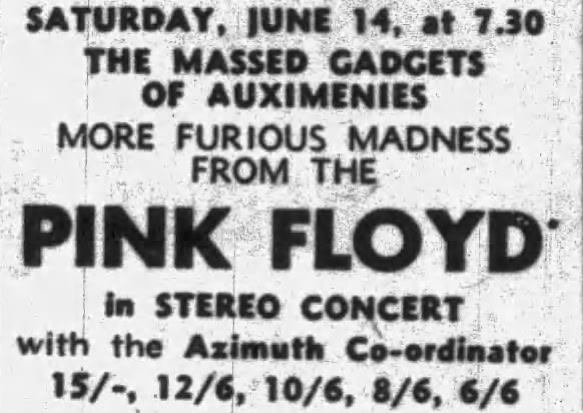
 CONCERT DATE | 14 June 1969 Colston Hall, Bristol, England

 CONCERT DATE | 15 June 1969 Guildhall, Portsmouth, England

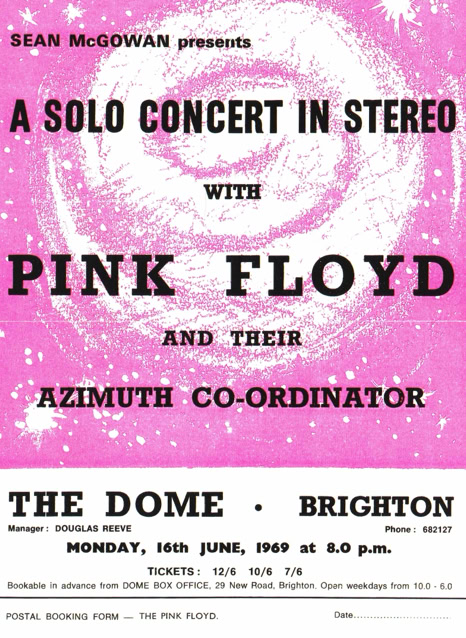
 CONCERT DATE | 16 June 1969 The Dome, Brighton, England

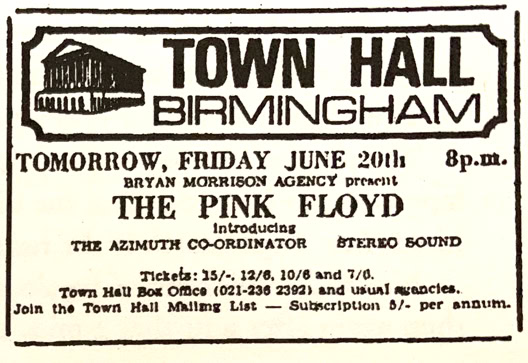
 CONCERT DATE | 20 June 1969 Town Hall, Birmingham, England

«Baal I Bang I We're off with the Pink Floyd, into two-and-a-quarter hours of musical assault which left listens as punch-drunk in Birmingham Town Hall on Friday. The Floyd coax and carasa their audience before wheeling into a aavaga attack. They create soft muaical passages, climb on a tide of mounting aound. than turga to a Marling climax. The listener la bit in frontal auault by a barrage of itraophonic aound. He picka himself up only to ha cfiibbad down again from

The theme of the Floyd’s music on Friday was simple. A man worfca, gone t» sleep, has a nightmare la which various nasty things appear, than slowly drifts back to the concept It realised by a skilful combination of lira playing and tha use of a saran-part stereo-pfcoolc amplification system Into which are fed prt-rtcorded tapes and noises — tha acre am of divine aeroplanes, tha mewings and screechinet of animals snd birds.

Tha effactiraama of this was underlined during pan of tha performance entitled “Tha labyrinths of Auximanas ’ whan the Man was heard walking and running down a long corridor, unlocking and ilaauniag sinister metal doors. Sating in penttng haste from The Pursuer. In the sound picture that was painted the footstep, ol tha auarry were beard all around IS 2a*.ne» of the town hall.

If the performance was absorbone point someone in a monkey costume materialised in the audience like a refugee from panto: later be reappeared aa a scaly. They are much mors successful when they concentrate on the music. Although they largely esche the subtleties of melody end lyric they pour forth a fascinating Wend of sounds and noises. The music is elemental but direct — a punch between the eyes. The end wit a marvellous sequence. The organist, perched at the Town Hall * own huge set of pipee. played a throbbing, ethereal dirge Seemingly in response, an orange cloud of smoke rose from the stage like a wraith from a grave. It drifted out over the audience, crept over the ups ilrs baIcooies, ascended to the rafters, until the whole hall was one orange hare in which hundreds of people stood end clapped foe more.

The spirit of Pink Floyd had entered Into them»

«Sound spell cast by the Floyd», Walsall Observer & South Staffordshire Chronicle, 27 June 1969

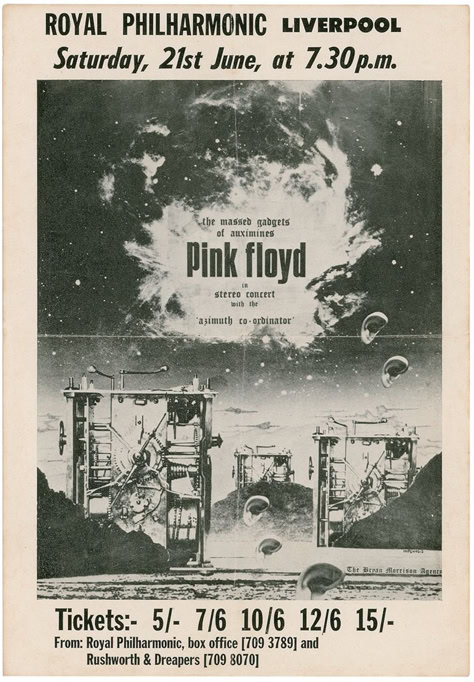
 CONCERT DATE | 21 June 1969 Royal Philharmonic , Liverpool, England

«We bought tickets for this as soon as we’d seen the London show. Good seats if I remember, in the stalls about 20 rows back. Same friend I’d been with in London but my brother wanted to come too. Him being younger (not yet 15) my parents thought it a bit risky so up stepped Dad again and he drove us to the show and back (now his second gig….and still not his last). I really have no detailed memories of this show. The only things that I remember are that it was tighter than the London show, more rehearsed, particularly the first set. And they didn’t seem to make as much use of the Azimuth Co-ordinator as previously, or maybe it was just less effective being a much smaller hall. We certainly enjoyed it but that’s it……no detail I’m afraid. It was presumably over-shadowed in my mind by the previous show»

«Recollections of Early Floyd Shows» (Simond), Yeeshkul Website, 8 March 2015

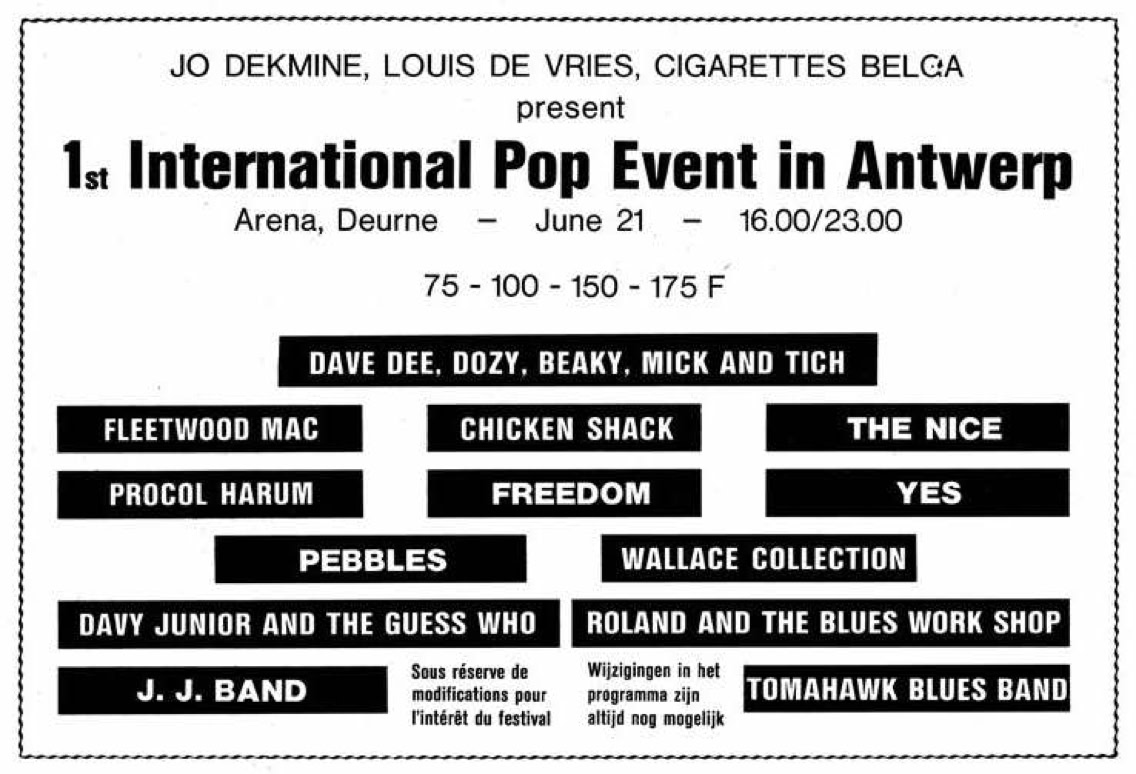
The same day, the Is International Pop Event is held in Antwerp, Belgium. the festival with Dave Dee, Dozy, Beaky, Mick and Tich as headliner serves as a trial run for the « Festival Actuel » to be held at the end of the year

 CONCERT DATE | 22 June 1969 Free Trade Hall, Manchester, England

 CONCERT DATE | 24 June 1969  «Commemoration Ball», Queens College, Oxford, England

Dress rehearsal before the show was held at St. Matthews Couch.


«There were unusual sounds from SI. Matthew's Church, Ealing Common, when a pop group, a choir, and a brass section combined to produce "underground" pop music. The Pink Floyd, 25 member of Ealing Central Choir, and the brass *ee lion of the Royat Philharmonic Orchestra, were holding a dress rehearsal before their performance at the Royal Albert Hall last Thursday. The Pink Floyd, who are London based, and have been together for about four years, said it was the first time they had used any other than pop instruments or a their. They are Roger Waters. Ricky Wright. Nicky Mason and Dave Gilmore, and the average age is 23. Their latest LP «Saucerful of Secrets» has already been released, and on their neat, to be released in three months time, they plan backing by a choir.The Rev Peter Watkins, vicar of st Matthew said «I intend to arrange an evening in the church with poetry reading* and music in the autumn»»

«Pop group tries out new line», Middlesex County Times, 4 July 1969

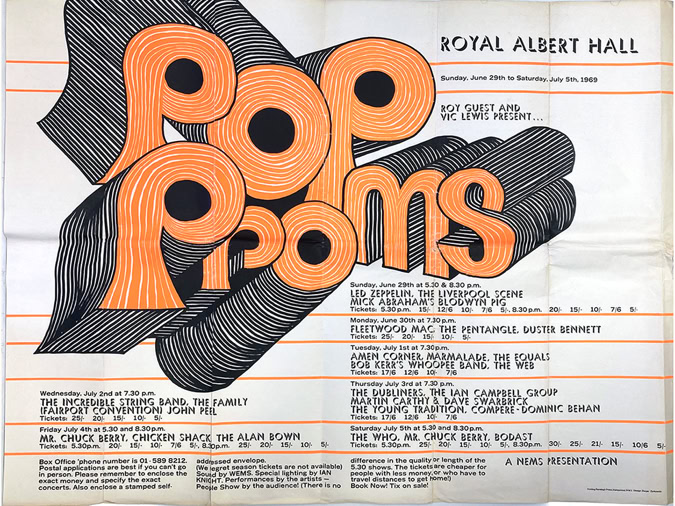
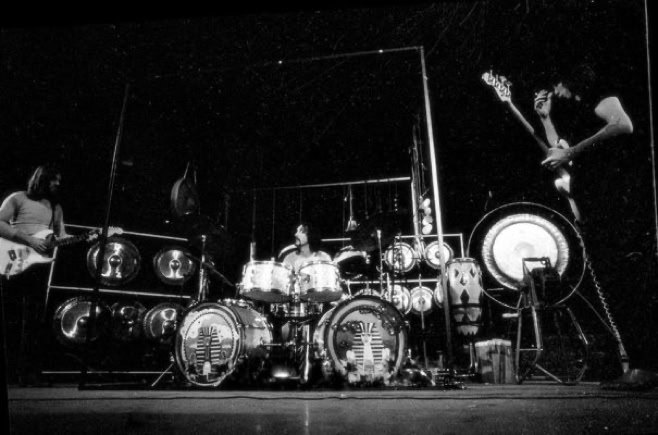
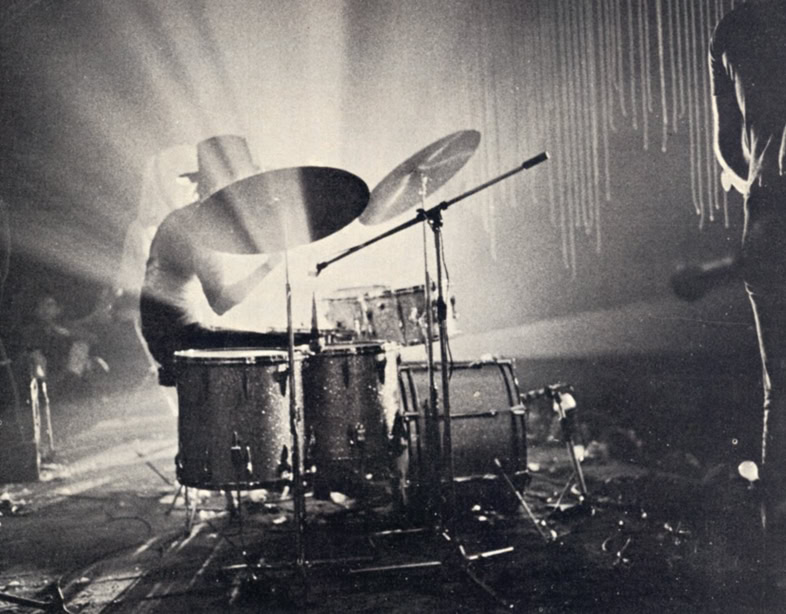
 CONCERT DATE | 26 June 1969 « The Final Lunacy! », Royal Albert Hall, London, England

Picture by Robert ELLIS.
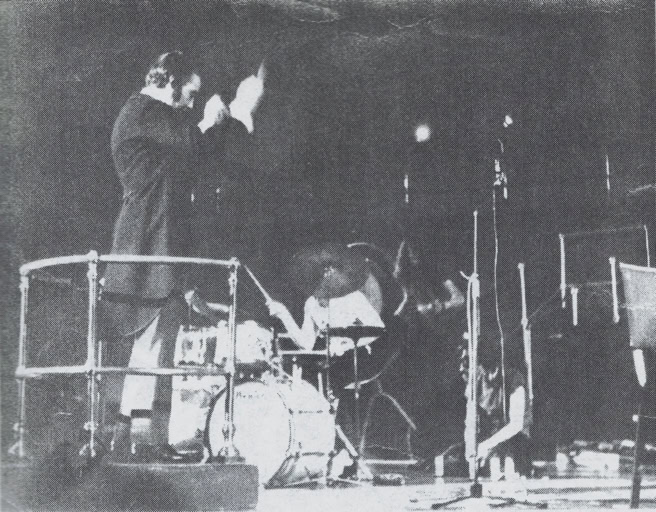
Robert Lancaster:

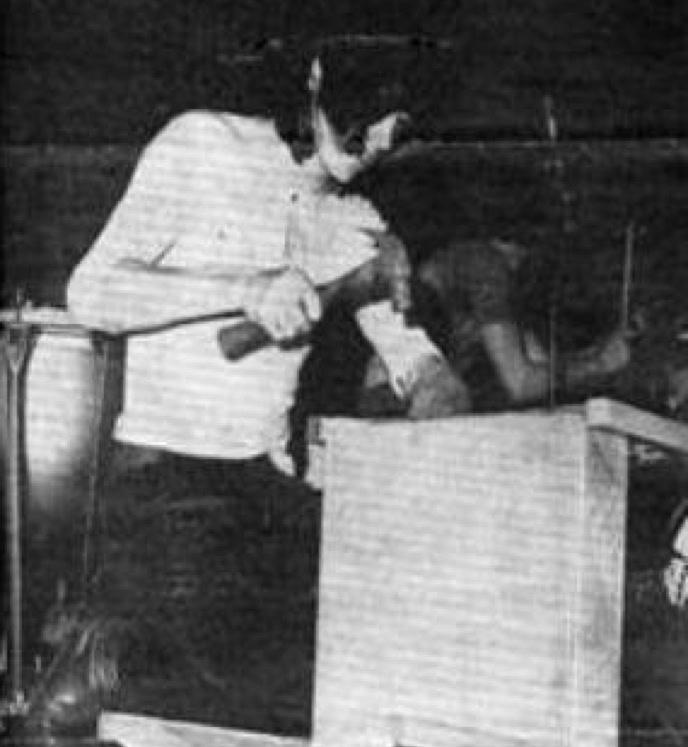
«The sound of birdsong filled the hall and then the evening started with part one, "The Man", and "Daybreak" the bucolic and lovely "Grantchester Meadows" followed by "Work" a percussive piece with Rick Wright sawing and hammering wood to make a table. Unfortunately one leg fell off to the laughter of the audience but further hammering reattached the leg for the next section "Teatime" where the table was used for the band to drink tea on stage. After tea came "Afternoon", "Biding My Time" with Rick Wright playing trombone and blistering guitar work from David Gilmour which brought huge applause from the audience. Nick Mason's drumming featured prominently in the next piece "Doing It" with, as I remember, the recorded voice of Alec Guinness appearing in the short pauses. Next came what was for me the highlight of the first part: "Sleep" and "Nightmare" which later became Cymbaline. This was Pink Floyd at their most atmospheric and best with the combination of Rick Wright's keyboards and pre-recorded voices enveloping the audience and sending shivers up my spine. The slow descending keyboard notes faded into a ticking clock and alarm closing "The Man".

RAH 1969 Richard "The Journey" opened with the sound of breaking waves and seabirds before "The Beginning", better known as "Green Is The Colour" which segued into "Beset By Creatures Of The Deep", ("Careful With That Axe Eugene"). "The Narrow Way" followed with some fine slide guitar. Then "The Pink Jungle" came to life.  Based on "Pow R Toc H" this featured some amazing animal noises from Roger Waters that filled the hall with sound and merged with "The Labyrinths Of Auximenes" a reworking of "Interstellar Overdrive" again enveloping the audience with sounds. The sounds faded away to applause as footsteps were heard circling the hall. Doors creaked opened and closed and a gorilla roamed the auditorium. A gong sounded, almost inaudible against the applause, and "Behold The Temple Of Light" began, a slow piece with, once again, some wonderful soaring keyboards. Towards the end of this piece Rick Wright left his keyboards and went to the Royal Albert Hall pipe organ and began to play "The End Of The Beginning", the final part of "Saucerful Of Secrets". While this was being played the brass section of the Royal Philharmonic Orchestra came on stage led by the conductor, Norman Smith, who looked startled at the applause but quickly beamed at the reception. The ladies of the Ealing Central Amateur Choir then followed.

RAH 1969 David and RogerThe brass section accompanied the organ and then stopped as the choral part began, the most wonderful combination of voices and organ music. Then the band and brass came back culminating in a musical climax accompanied by the firing of two Waterloo cannon and a pink smoke bomb. The audience came to their feet cheering and applauding what was, for me, the best ever performance by Pink Floyd.»

«Brain Damage website - Review», 30 September 2008 


Derek Jewell:

«What the four-man Floyd do is to mingle their voices, guitars, organ, drums, vibraphone, trombone, timpani and gongs with electronic and stereophonic effects thrust around the arena from a  battery of boxes and speakers. Edge-of-the-world sound shiver; footsteps clump around the dome; voices whisper; a train thunders; a jungle erupts»


The show featured the Ealing Central Amateur Choir conducted by Floyd's producer Norman Smith.

Nick Mason:

«We actually had norman smith who was our producer conducting it as well and it was meant to be a rather grand finale to the piece with that

with that whole section in fact we also had we had inquired we had the horns but most important of all we had the hammond we actually had the uh albertal organ  that rick played»

«Nick Mason 2011 Part one - Interview with Philippe GONIN», Popular and Film Music Analysis by Philippe Gonin, 4 July 2011.


Performance included a roadie dressed as a monster who piss by his fake tail and band members sawing planks of wood on stage.

Peter Dockley:

«My performance accompanied a piece which included the sound of water dripping in a cave. I'd quietly make my way through the stalls, sniffing those in aisle seats. Once people got over the shock, they were fine. Though a girl in the front row one night screamed  (...) I'm skipping around like a lively orc from The Lord of the Rings».

«I was Pink Floyd's tar monster!», Mojo, July 2018.

 MAIN EVENT  | After the show, the band decided to fire their manager Bryan Morrison!


Bryan Morrison:

« My management of the Floyd was to cease, or rather was to come to an abrupt stop, on the night of 26 June 1969. It had become obvious that the band, who were now working continuously building an everbigger fan base, needed the next step up. They had to do a major concert, as opposed to the club circuit, but it was a gamble, because the kind of place they needed to play had to be a big capacity venue. Undoubtedly the most prestigious London venue then and now is the Royal Albert Hall. This beautiful building, inspired I am sure by the Colosseum in Rome, was to be the springboard for the band to put them well and truly on the map. However, there were no promoters around who believed the Floyd could sell out such a large venue, the capacity being in the region of five thousand, so it fell to yours truly to take the plunge. The booking fee was the staggering amount of £350. It sounds such a paltry sum today – but back then it was a fair amount of money.

What happened next was quite incredible. Within hours of the tickets going on sale, the ‘house full’ sign was put up; we literally sold out in a little over two hours. It was to be my first and last concert promoting the Floyd. The concert was a tremendous success; the press and the audience all went potty for this new phenomenon.

Having talked to a few of the press and media boys at the end of the gig, I walked into the dressing room, and everybody was euphoric; we all knew what huge strides had been made that night. 

After ten minutes of conversation with the boys, Roger Waters asked me to step outside for a minute, as he wanted to talk to me about something urgent. 

Roger’s first words were those spoken so many times in the world of rock ’n’ roll: « Bryan, you’re fired. You are not our manager anymore » I would like to say I was gobsmacked; however, with Roger Waters, nothing really surprised me. Having just promoted their most important gig ever, I would have hoped that he could have gone to bed, had some bacon and eggs in the morning, come to see me in the afternoon, thanked me for the last couple of years, then doubly thanked me for putting on the gig that was the precursor for ever more extravagant events in the years ahead. But no, he just spat out, ‘You’re fired.’ I was hardly surprised, therefore, when many years later the same Roger Waters decided that Pink Floyd should be no more, much to the

chagrin of Rick, Dave and Nick, but fortunately for all of us they won their court case to keep the band’s name, and he lost. The pity of it is that I was within months of passing my management of the band to Steve O’Rourke anyway, as I will explain in a later chapter »

« Have a Cigar! - The Memoir of the Man Behind Pink Floyd, T.Rex, The Jam and George Michael », Bryan Morrison, 2019 


 CONCERT DATE | 28 June 1969 « Saturday Dance Date », Winter Gardens Pavillion, Weston-Super-Mare, England

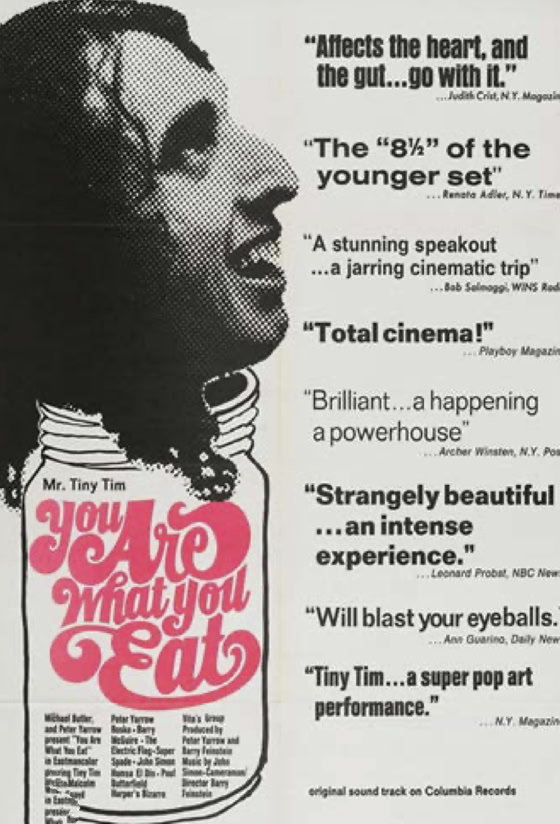
 MISCELLANOUS | 29 June 1969, The band attend the premiere of the movie « You are what you eat » at the Windmill Theatre of London

 CONCERT DATE | 30 June 1969 « President's Ball », Top Rank Suite, Cardiff, Wales

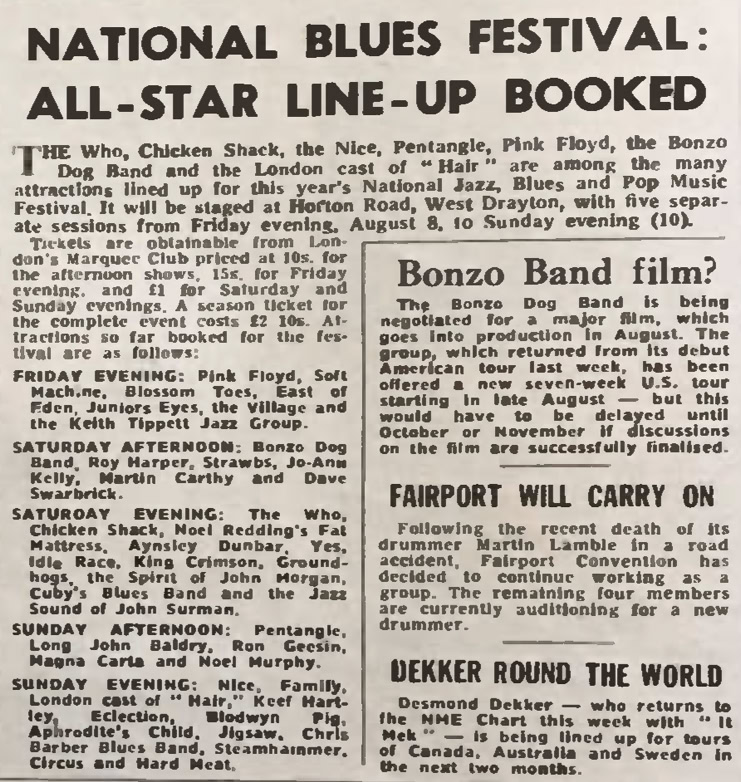
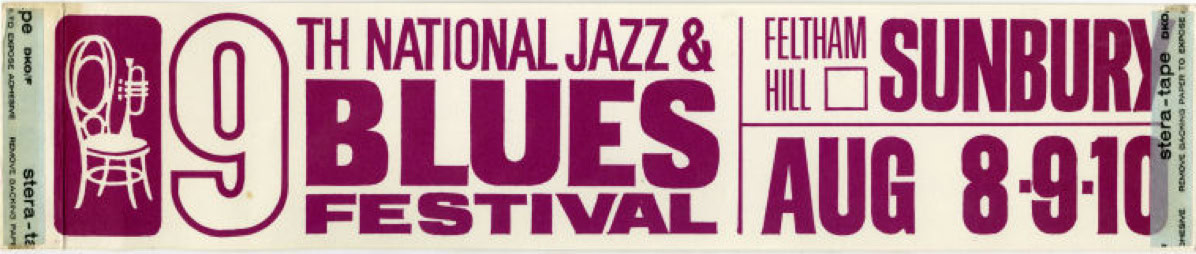
 MAIN EVENT | The line-up for the forthcoming « National Jazz & Blues festival » is known at the beginning of July.

« New Musical Express », 5 July 1969.
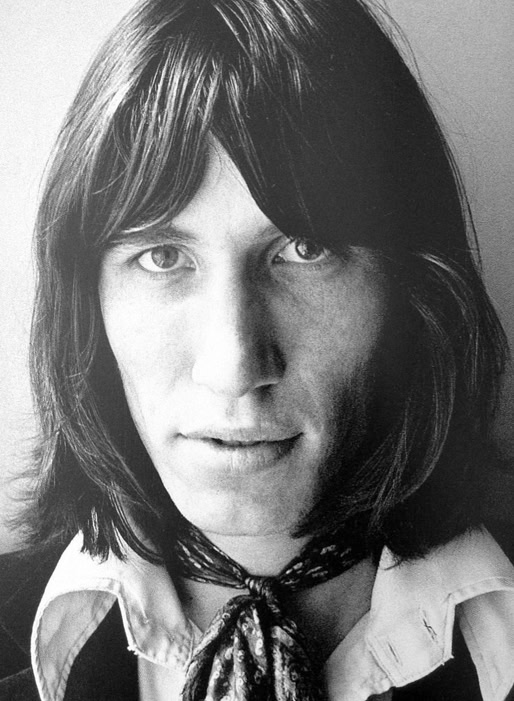
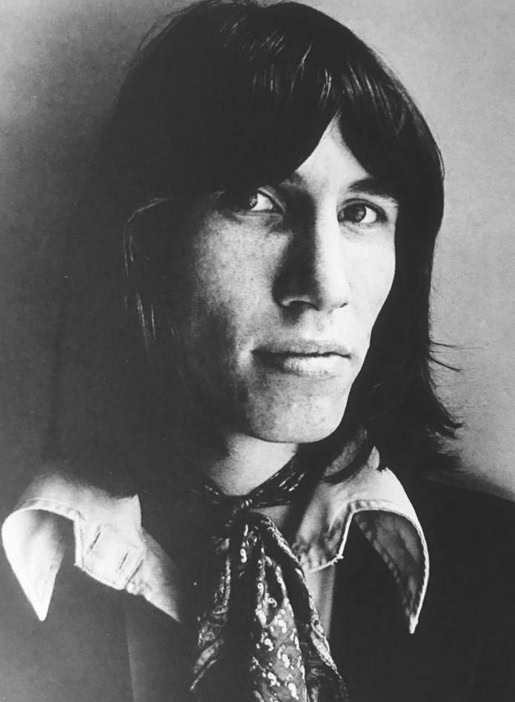
Roger WATERS by Barrie WENTZELL
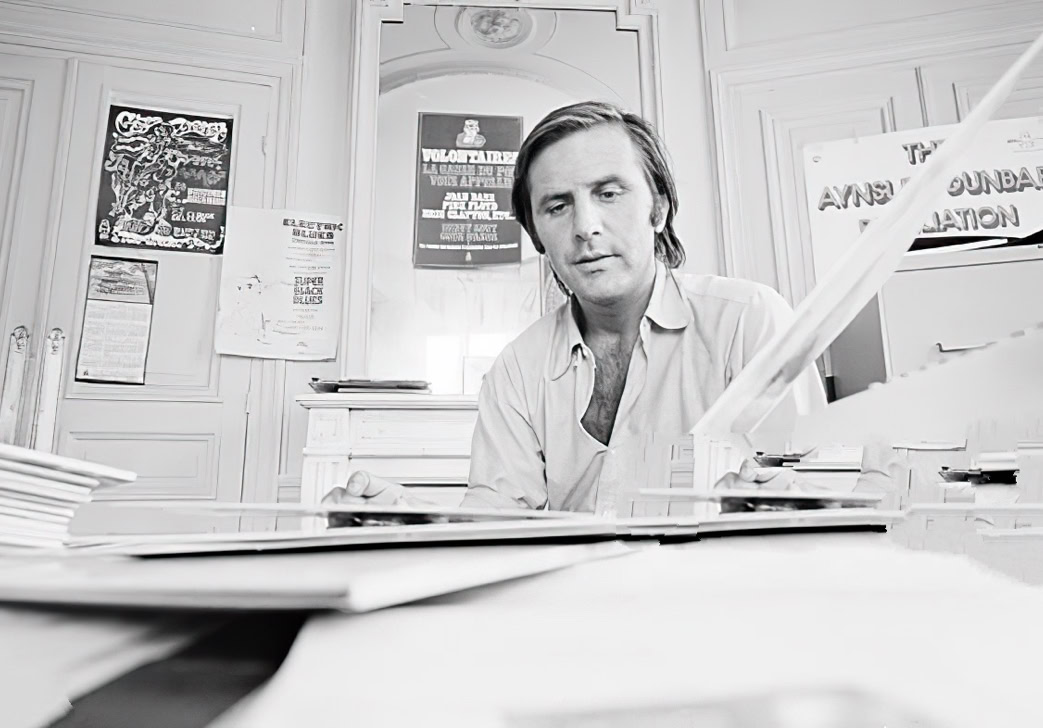
 MAIN EVENT | On July 1969, Jean Georgakarakos, director of the label « Big » launches the idea of organizing a Pop Festival in Paris (following the success of the « Pop Event » festival of his friend Jo Dekmine, the owner of Theater 140 in Brussels). 

When Pierre Latès join the project, he phones Frank Zappa to make sure he participates and try to have Captain Beefheart too. Jacques Biséglia and Paul Alessandrini who join the project decide to involve Archie Sheep, Sunny Murray…

Jean Georgakarakos by Jean-Claude DEUTSCH
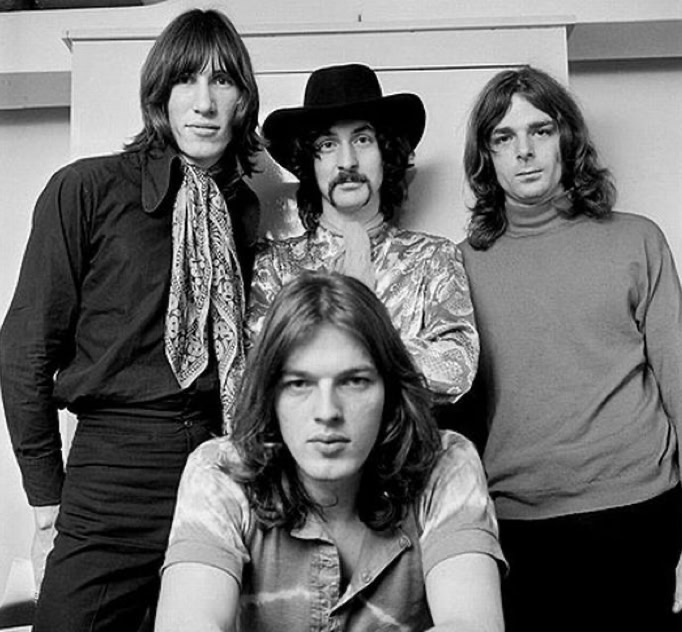
 CONCERT DATE | 4 July 1969 Selby Festival, James Street Recreation Ground, Selby, England


«Pink Floyd produced some lovely sounds, and those crashing supernatural chords could be heard a quarter of a mile away. The Floyd didn’t have the time or stage space to do some of their recent works such as «Man», so they concentrated on shorter, more exciting pieces like Interstellar Overdrive. The group can be very gentle too, with things like Green is the Colour and know the art of building up the mood. Add to that a whole roast ox to feed the hungry and a bar until midnight to satisfy the parched. The whole festival marks the 900th anniversary of the Abbey. I hope they have another in 100 years’ time!»

Yorkshire Evening Post

 TV APPAREANCE | 20 July 1969, the band is invited by BBC One to provide an improvisation for the Moon landing during a special TV « So What If It's Just Green Cheese ? ».

See this page and this page for more details.

David Gilmour:

« We were in a BBC TV studio jamming to the landing. It was a live broadcast, and there was a panel of scientists on one side of the studio, with us on the other. I was 23.

The programming was a little looser in those days, and if a producer of a late-night programme felt like it, they would do something a bit off the wall. Funnily enough I've never really heard it since, but it is on YouTube. They were broadcasting the moon landing and they thought that to provide a bit of a break they would show us jamming. It was only about five minutes long. The song was called Moonhead - it's a nice, atmospheric, spacey, 12-bar blues.

I also remember at the time being in my flat in London, gazing up at the moon, and thinking, "There are actually people standing up there right now." It brought it home to me powerfully, that you could be looking up at the moon and there would be people standing on it.

At the time, Pink Floyd had been doing rather well. For a while, the band had been somewhat erratic and its reputation was sinking. I joined in 1968, 18 months before the moon landing. By then we were beginning to climb back up again.

It was fantastic to be thinking that we were in there making up a piece of music, while the astronauts were standing on the moon. It doesn't seem conceivable that that would happen on the BBC nowadays.

We didn't make any songs out of the jam session. We did, on occasions, do music live that would be a jam session of some sort; that would have some structure which we would organise ourselves. And I've heard documentaries where I recognise my music. It's very odd to be watching a documentary and to hear something that you know is yourself, but you have no recognition of when you did it or how. I've never forgotten Moonhead, though.

After all, it's not hard to remember exactly where I was.».

« My moon-landing jam session», The Guardian, 2 July 2009.


 MISCELLANOUS | After this show, the band fly to Europe as guests on some TV show. See this page for more details.

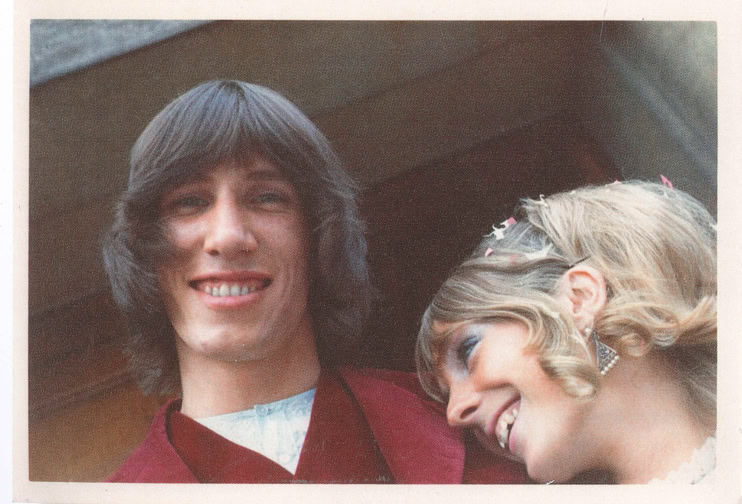
 MISCELLANOUS | Roger Waters marriage with his girlfriend Judy Trim

Roger and Judy Waters

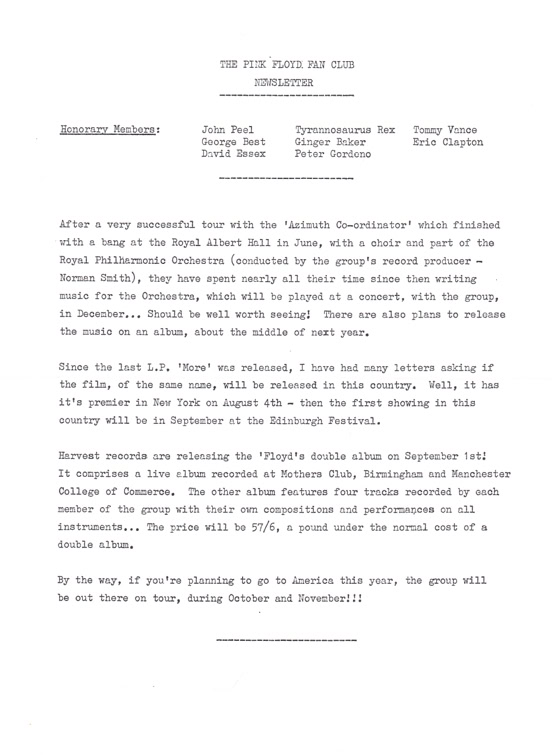
A Pink Floyd fan club newsletter
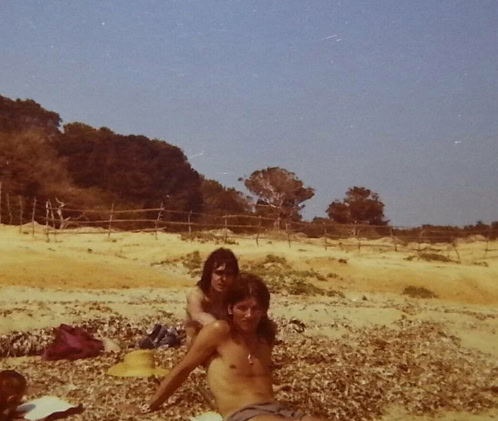
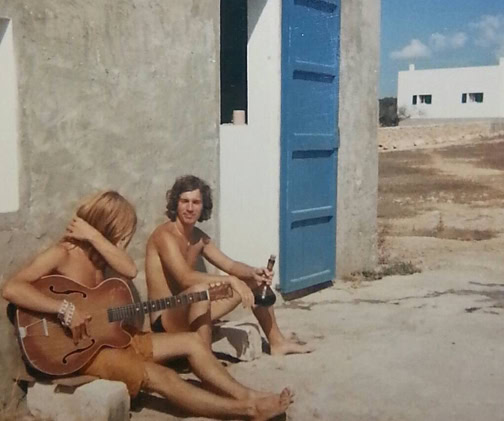
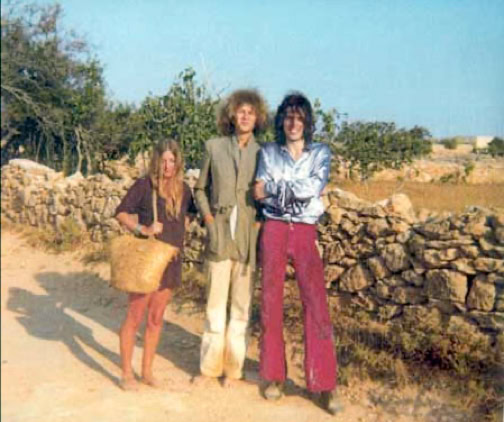
 MISCELLANOUS | In August 1969 Syd was back in Formentera (two years after his forced vacation.
He is joined by his friends Ian « Emo » Moore, Aubrey Powell and John Davies

Left: Syd and Ian Moore, Center: Ian Moore and John Davies. Right: Mary Wing, Marc and Syd Barrett
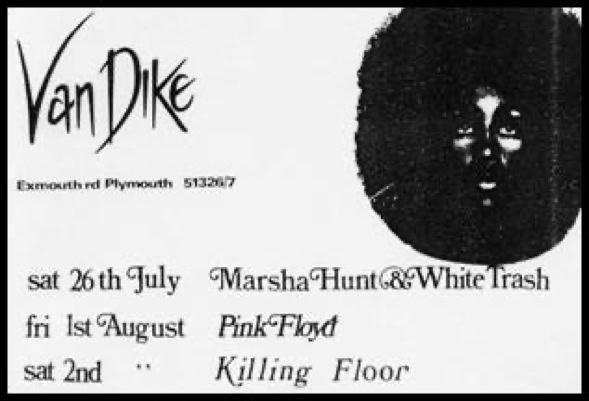
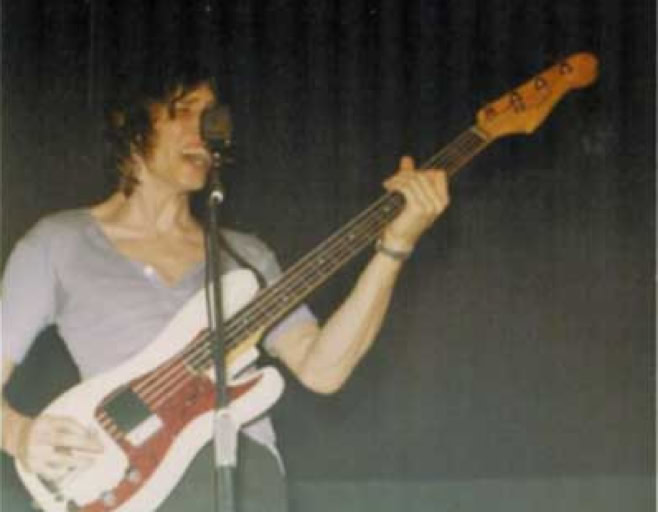
 CONCERT DATE | 1st August 1969 Van Dike Club, Devonport, Plymouth, England

Picture by Stephen JOHNSON

 MISCELLANOUS | 7 August 1969. Rick Wright is married with Juliette Gale who sings with the future Pink Floyd (Sigma 6)

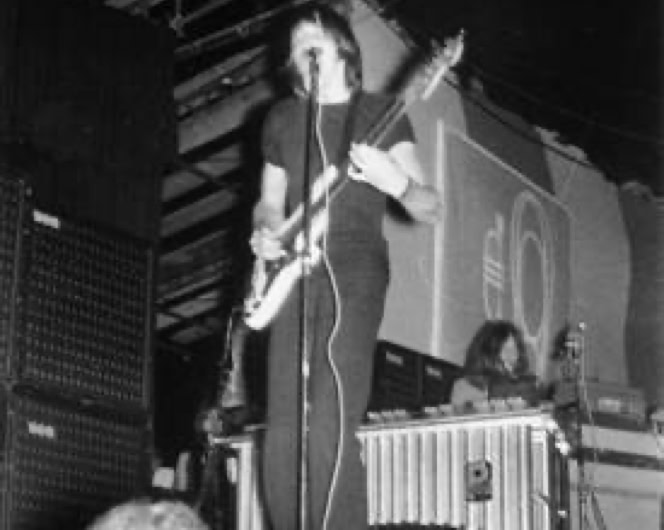
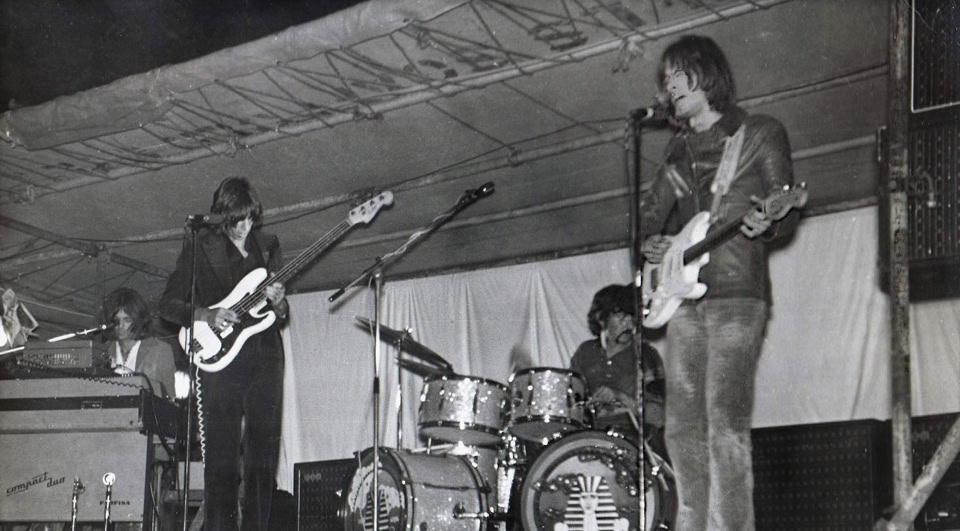
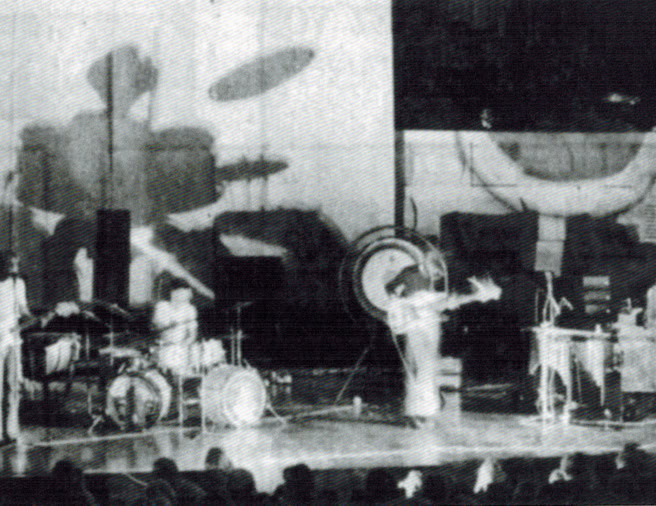
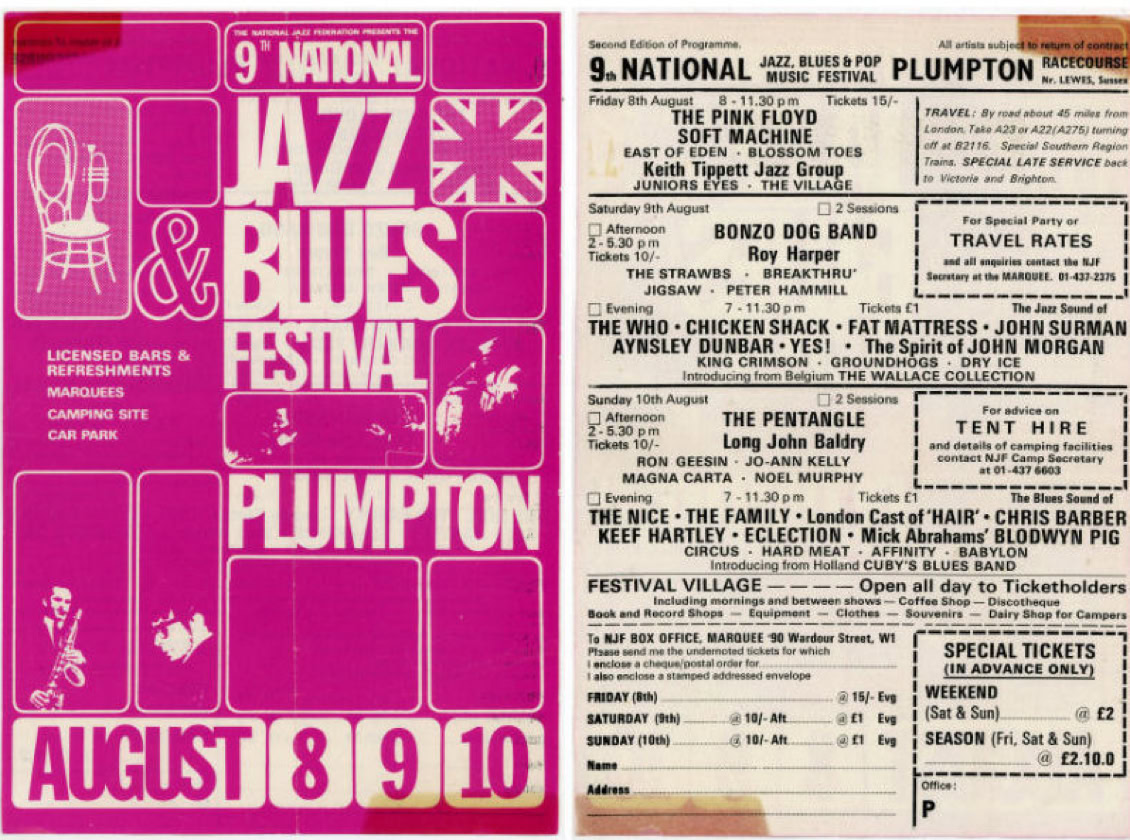
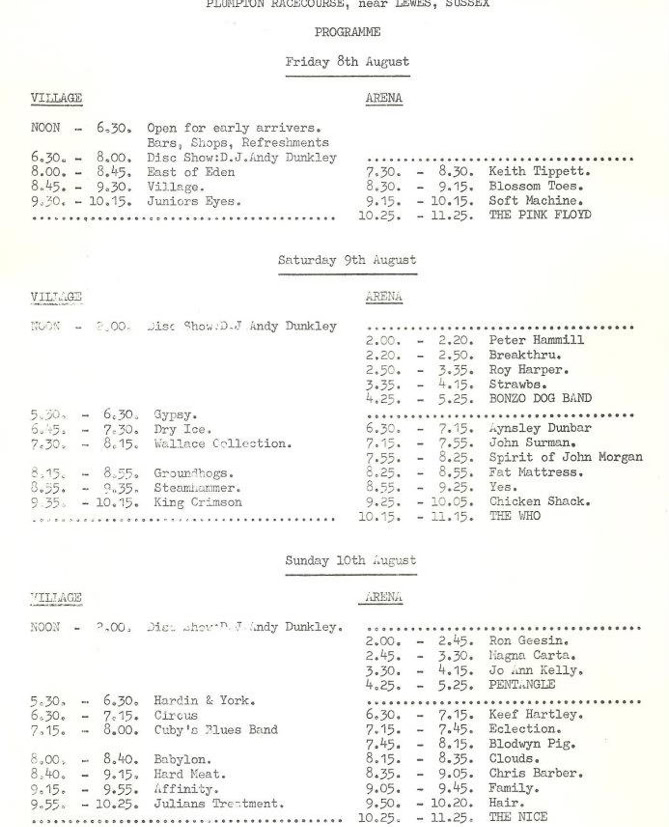
 CONCERT DATE | 8 August 1969 « 9th National Jazz Pop Ballads & Blues Festival », Plumpton Racecourse, Plumpton, England

This open-air concert, initially scheduled at Horton Road in Middlessex, had to be moved due to the turnaround of local authorities. At the Plumpton Racecourse, the organizers encountered power supply difficulties which caused an hour-long interruption in the middle of the Soft Machine passage. Pink Floyd, who was passing by, played in the middle of the night before a half-asleep audience.
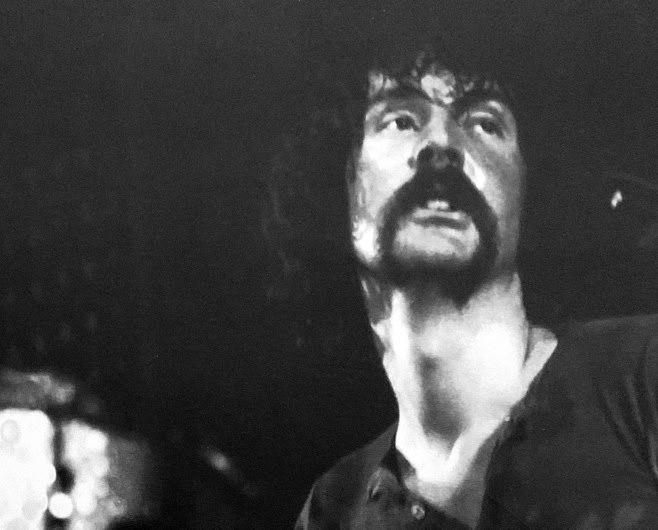
Picture by Bruno DUCOURANT
«The last day of the Ninth National Jazz and Pop Festival at Plumpton racecourse, Sussex, ended quietly yesterday. Many of the 50,000 people attending the festival went into the village for refreshment after the water supply failed for two hours. Mr Brian Somerville said that the villagers provided crates of milk bottles full of water, and canisters of water. «This helpful act by the villagers is a complete reversal of what last week they thought would be happening to the village during the festival», he said. The villagers and parish council had been mesmerized by the smooth running and orderliness of the three days, «If there are any objections to us coming here next year I am sure they will not be from the village»

Many of the audience had slept overnight in the hedgerows. Many carried sleeping-bags, rucksacks, and guitars. Yesterday’s performance started at 2 pm, after thousands of long-haired, suntanned girls and youths had congregated in the field which sloped downhill towards the stage. The atmosphere was similar to that of the free concert given in Hyde Park a month ago by the Rolling Stones. The Pentangle were the afternoon stars, among half a dozen groups, and the big-name artists of Friday and Saturday were the Pink Floyd, Soft Machine, Bonzo Dog Band, and The Who. It was the first time the festival had moved out of London. The usual volunteer security force of 200 was in operation, but Mr Somerville said they had not been needed to act in any physical way. Most of their time had been taken up with administrative jobs such as ticket and money collecting, and running various bars and stalls. For those who did not want to pay the 2s mightly camping fee, the hedgerows and fields were their beds. «

I drove to Lewes this morning and the hedges and ditches on the approach roads to the festival were full of people in sleeping bags and blankets», Mr Somerville said. Before yesterday’s concerts people wandered around the festival buying anything from joss sticks to “cokes ” and ice-cream, to books, and records. Mr Somerville said that without doubt the festival would make a profit, but it must do so to support other events organised every year by the National Jazz Federation»

«Villagers 'mesmerized' by pop concert organisation», The guardian, 11 August 1969


«Suddenly, the lights returned. An ocean of hair became a mass of tanned faces as each camper looked up to see the Pink Floyd beginning, their spot, Pressmen looked for lost change on hands and knees and fidgeting pop stars ambled off in pursuit of the correct toilets. Apologies for the delay rang out from the stage and the Floyd began the evening’s last attraction. They produced the same atmosphere of mysticism that made them famous in the days of London’s Middle Earth with droning organ wailing and hollow guitar chords. It became a cavernous drawl at times and extracted boredom instead of hypnotising, but parts of the long “Cymballine” were pretty and inviting. The wistful piece conjured images of the sea shore and sweet communication with nature before building into heights of electricity as sharp as a stiletto. It then sank into unfortunate improvised effects which should have been confined to the recording studio and only distracted from the whole presentation»

«Jazz Rock 69 - Lon Goddard visits the Plumpton Race», Record Mirror, 16 August 1969


«Pink Floyd gave a disappointing performance. They were guilty of over-indulgence and despite high placing on the card did not come up to expectations»

 «Nice time at the pop race», Disc&Music Echo, 16 August 1969

Bruno Ducourant (photographer):

«Friday 8th August 1969, 10:30 p.m. The first evening of the three Plumpton Festival shows. Keith Tippett, The Blossom Toes and Soft Machine have opened, putting up with stage problems and power failures, it’s now time for «Floyd». The band - with already four albums behind them - are to perform (for a fee of £600 of those days) tracks from «Ummagumma»»

«My generation, only rock and roll ?», Bruno Ducourant, October 2014

 RECORD RELEASE | 9 August 1969 Pink Floyd's Soundtrack From The Film « More » is released in the US, but failed to chart.

 CONCERT DATE | 9 August 1969 Paradiso, Amsterdam, The Netherland

The concert was planned to be record by a Holland radio but failed for technical problems
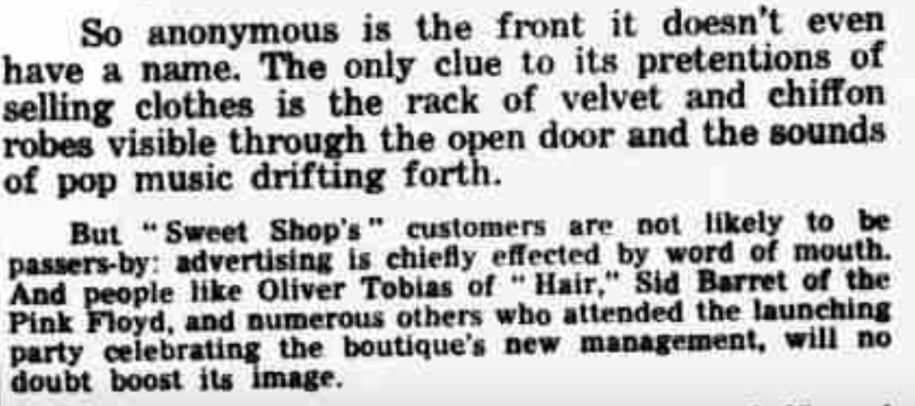
 MISCELLANOUS | 13 August 1969, Syd Barrett is seen at the opening of « Sweet shop » store (a psychedelic- fashion boutique as « Granny take a trip » or « hung on you »).

« Westminster & Pimlico News » 22 August 1969

 MISCELLANOUS | 29 August 1969, Jack Bruce releases his song « Theme from an imaginary Western ». 

This title will be an inspiration for the future Atom Heart Mother (song).
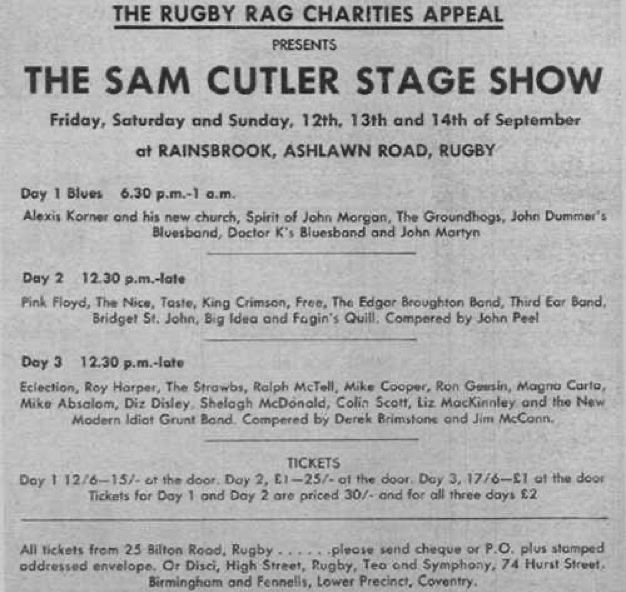
 CONCERT DATE | 13 September 1969 Sam Cutler Stage Show, Rainsbrook, Ashlawn Road, Rugby, England

Only knew picture of this gig. Photography by David GOODWIN
« The festival itself ran over three days and featured a different form of music on each day, a similar format used on the early National Jazz and Blues festivals. The Friday, headlined by Alexis Korner and also included The Groundhogs, was the blues day. Saturday was progressive rock day and included The Pink Floyd, The Nice, Free, Taste, King Crimson and The Edgar Broughton Band. Sunday saw folk rock bands like The Eclection and The Strawbs and also included Roy Harper and Coventry's own New Modern Idiot Grunt Band. 

Cost of entry was 12 shillings and sixpence (65p) for day one, a pound for day two and 17 shillings and sixpence (87.5p) for day three. Alternatively, a weekend ticket was available for £2. Among the ticket outlets were Disci on the High Street in Rugby and Fennells on the Lower Precinct in Coventry. 

However, to put the whole thing into a little perspective this was late 1969 and some of these bands were still in their infancy. The Nice were fairly well established having just released their third album during September. The Pink Floyd's then current release was 'Ummagumma' and I am guessing that their set list would have been similar to the live disc from that set. King Crimson had yet to release their eponymous debut album. In fact they had been playing live since April » 

« The £2 ticket for 3-day festival featuring Free and Pink Floyd», The Telegraph, 4 March 2003

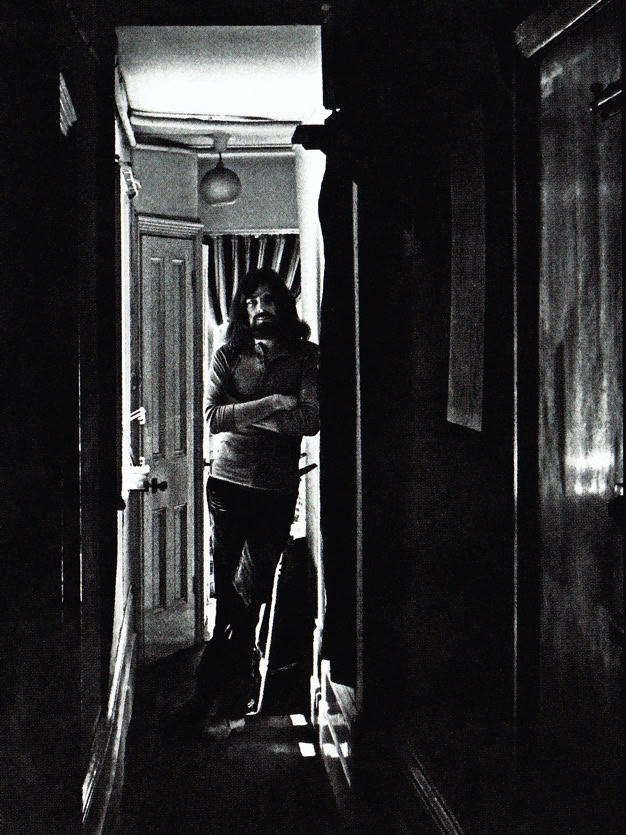
Rick at home, 1969. Photography by Storm THORGERSON
 PRESS MENTION | Wright gives some news about the band projects

Richard Wright:

«We start recording again in December—the idea for the album will probably come out of our next concert tour, we haven’t released all that many albums — we’ve only done four since we started. We’d like to try and release four by year from now on — and I think we shall Probably be able to — we should have a lot of free time from now on. Eventually we’d like to build our own studio — at the moment we have to record everything in the EMI studios, and that does tend to restrict us a bit. Not that the studios aren’t good — but the record company sets aside a period of time, say two weeks, in which we have to record. 

It can quite easily happen that we aren’t feeling our best over some of this time, or we can’t really work out all our ideas  as we’d like to. It’s impossible for us to phone up and say we’d like to do some recording. Anyway, we’re all going to build our-own little studios where we can work out our ideas and record them»

«Pink Floyd », Top Pop & Music Now, 15 September 1969

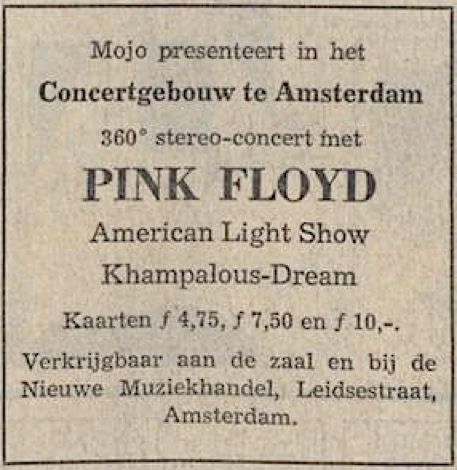
 CONCERT DAYE | 17 september 1969 Concertgebouw, Amsterdam, The Netherlands

The concert was recorded for the radio. Later released on the « Early Years » boxset.
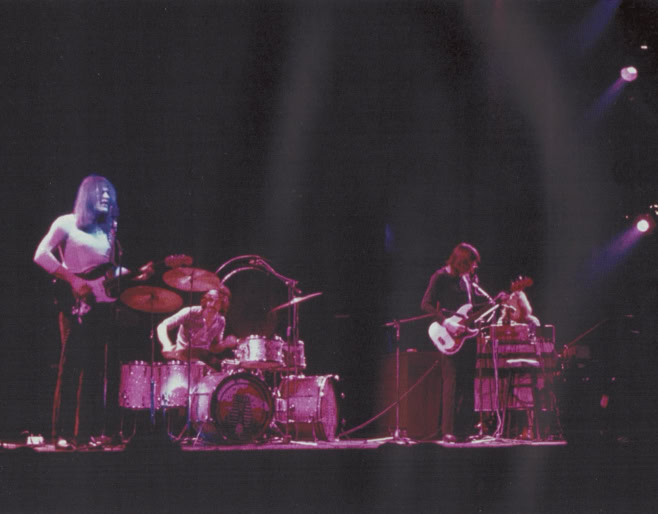
Picture by Nico VAN DER STAM
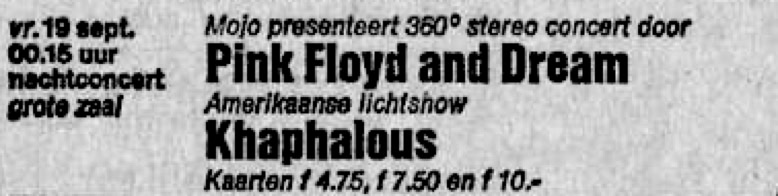
 CONCERT DATE | 19 September 1969 Grote Zaal, De Doelen, Rotterdam, The Netherlands

«De vier man sterke formatie is terecht befaamd om haar bestudeerde muziek: vaak zangerig en melodieus ais aanzet tot forse klank-executie. Op zijn terrein heeft The Floyd baanbrekend werk verricht. Maar gisteravond was inderdaad de neiging te constateren om vormen uit de modem-klassieke muziek te gebruiken. In dit geval met weinig uitwerking: het steriliseert en het klinkt gewild. Het Floyd concert bestond uit twee delen, die bij elkaar horen: „24 Uur uit», het leven van een man en de reis die hij maakt. De gewraakte tendens zit in het laatste deel: de reiseen collage van fragmenten die het alledaagse bestaan verbeelden. De compositie is helder, de arrangering is vindingrijk, het geheel heeft allure.

Tn deel twee gaat dat allemaal mis. De „reis" eindigt heel literair (en dus loodzwaar) in het niets. Het abstract gegeven verzandt in fraai klinkende elektronische geluidenreeksen. En ook de stereo-apparatuur moet zo nodig uitgebreld worden gedemonstreerd. Het optreden van The Dream uit Tiel, waarmee het programma begon, maakte een conventionele en vervlakte indruk. De Kaphalous Lightshow die hen drie kwartier begeleidde, was armoedig van technische afwerking en leek nog het meest op een stuntje voor een h.bs. »

«Concert Pink Floyd eerste deel raak, tweede deel», Het Vrije Volk, 20 September 1969

Aubrey Powell:

«(…) I always remeber one night when their manager Steve O'Rourke collected cash from a venue in Holland, and he went upstairs to his hotel room on the top floor but didn't know where to put the cash. So he opened the window, put the money into the drain. Then he went out with the guys to dinner, and while he was out it pourred with rain. When he came back, the money had washed away»

«To Infinity... And Beyond!», Uncut, May 2019

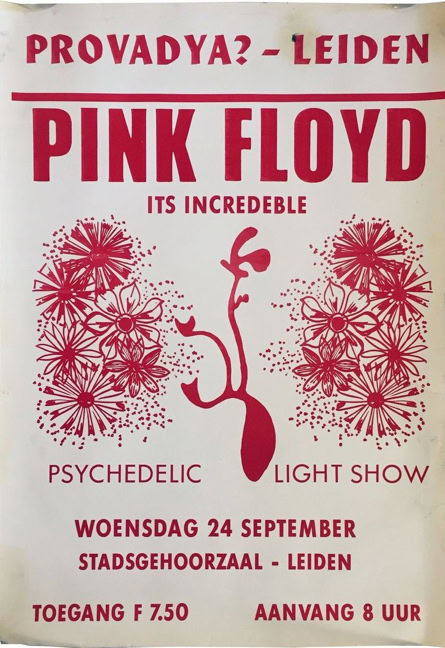
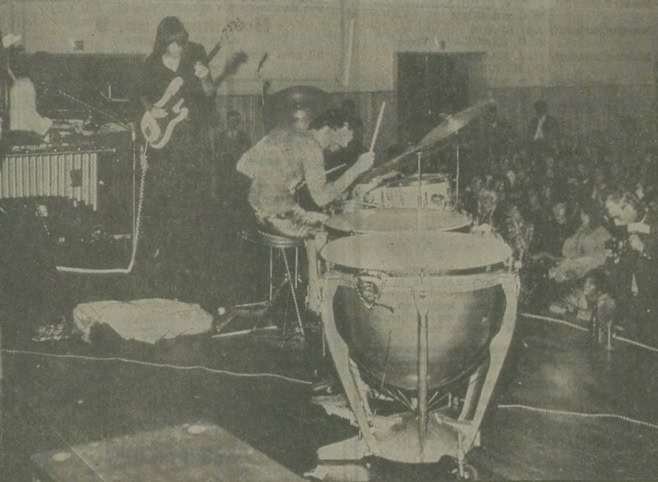
 CONCERT DATE | 24 September 1969 Stadgehoorzaal, Leiden, The Netherlands

Picture by Rotterdam Nieuwsblad

 CONCERT DATE | 25 September 1969 Staargebouw, Maastricht, The Netherlands

 CONCERT DATE | 25 September 1969 Staar Monstrous, Maastricht, The Netherlands
With many cancelled concert, the band is asked to play an extra gig on afternoon the same day in an underground Club of Maastricht called « Staar Monstrum »


Jan Smeets (Promoter):

«De tour was georganiseerd door Cyriel van den Hemel, die later naar Londen is verhuisd. In de begintijd van Pinkpop heeft hij me nog wel eens wat artiesten aan de hand gedaan, zoals Colin Blunstone (...) De zaal  was lelijk en kaal en ademde een Oost-Duitse sfeer, maar de akoestiek was goed. Pink Floyd was nog een echte undergroundgroep die in het decor gebruik maakte van vloeistofdia’s, door cabaretgroep Neerlands Hoop plastische kankergezwellen genoemd. Ik vermoed dat dit het eerste popconcert van betekenis in Maastricht was. Tot op de dag van vandaag vertel ik nog wel eens dat ik ooit Pink Floyd naar Maastricht heb gehaald, en dan kijken ze me met grote, ongelovige ogen aan»

«Pink Floyd, live in... Maastricht», Zuiderlucht Website, 3 March 2011


Roger Waters:

«Op een dag vroeg hij ons of we wat extra geld wilden verdienen door ook ’s middags te spelen. Hij gaf ons een adres waar een school bleek te zijn. We speelden in de gymzaal voor lagere schoolkinderen die hun 

vingers in de oren hielden en begonnen te huilen. Een paar minuten later kwam Cyriel het ‘podium’ op en fluisterde in mijn oor: «Wie ave ze money, go now!»»

«Pink Floyd, live in... Maastricht», Zuiderlucht Website, 3 March 2011

 MISCELLANOUS | 25 September, the « Paris Festival », now sponsored by « Ricard » company, is moved to the Parc de Saint-Cloud (near Paris).

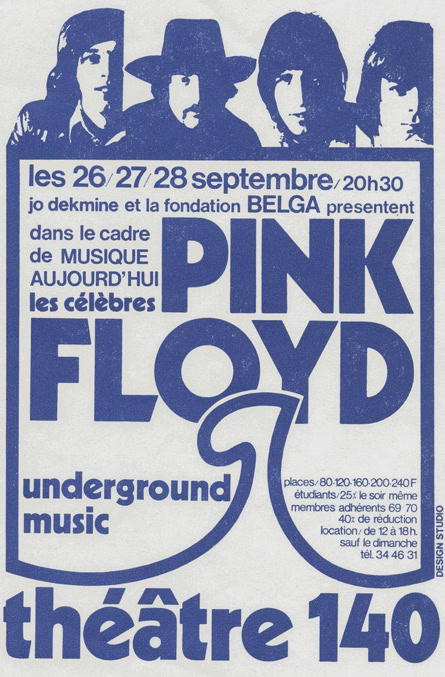
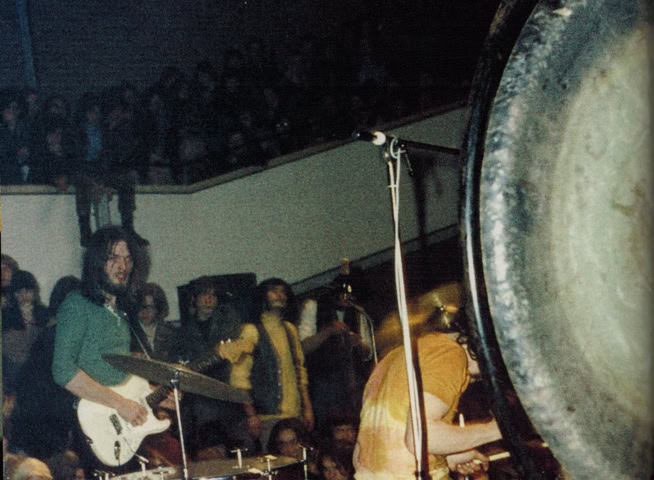
 CONCERT DATE | 26 September 1969 Theatre 140, Brussels, Belgium

Picture by Charles BETERHAM

«Au pays des rêves avec le Pink Floyd. Ça commence par des chants d'oiseaux. Puis un musicien entre en scène et entame, à la guitare, l'interprétation d'une douce mélodie.

Un deuxième guitariste rejoint le premier et ils chantent avec toujours, en fond sonore, le pépiement des oiseaux. On croit rêver : c'est l'éden, un univers où tout est beau et calme. Tout à coup, c'est le réveil brutal : un sifflement strident retentit ; un train est lancé à toute allure dans une chambre d'écho. De la démence. Le contraste est saisissant, mais pas désagréable. Au contraire. Ainsi débute le spectacle du Pink Floyd, présenté en pré-ouverture de la saison 69-70 du Théâtre 140.

La suite est à l'image du début : contrastée, surprenante et haletante. Le principe de base respecté par les membres du Pink Floyd est simple. Il consiste, lors de l'interprétation de chaque thème, à recréer une ambiance particulière. C'est ainsi que, tour à tour, on se retrouve au milieu de la jungle avec des singes qui jacassent, au bord de la mer avec le bruit des vagues et le cri des mouettes, dans un village africain en fête avec le bruit des tambours, timbales et autres percussions, communiant avec des religieux d'Extrême-Orient aux sons du gong. etc. Avec l'aide d'instruments les plus divers et les plus inattendus (gong, scie, marteau, etc.), et bien sur avec l'aide des effets de l'électronique, ils composent de véritables petites fresques musicales. Cela n'a rien de commun avec du travail bâclé ; c'est élaboré, bien construit, solide et original ; un réel ouvrage de création. Mais ce qu'il y a de plus merveilleux dans l'univers du Pink Floyd, c'est qu'il incite au rêve. C'est une véritable drogue : une drogue à conseiller, car elle procure des plaisirs immenses sans être nocive. Un regret, peut-être : le "light show" annoncé n'a pas été présenté»

«Première au 140 », La Dernière Heure, 29 September 1969

 CONCERT DATE | 27 September 1969 Theatre 140, Brussels, Belgium

After this show, the Belgian DJ made an exclusive interview of David Gilmour. You can read it here
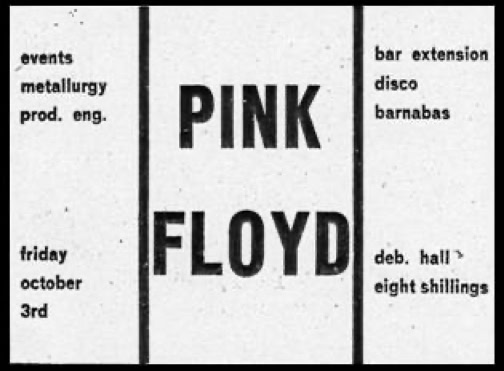
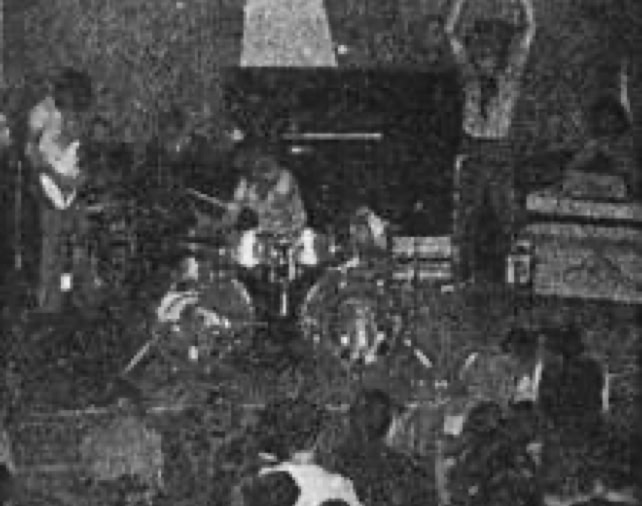
 CONCERT DATE | 28 September 1969 Theatre 140, Brussels, Belgium

«S’il est vrai que notre civilisation est celle du bruit, les Pink Floyd en sont un des plus dignes représentants. Ces cinq jeunes, reconnaissons-le, y mettent tout leur cœur pour faire déferler sur la salle - jusqu'à dimanche soir celle du Théâtre 140 - des ondes sonores qui semblent d'ailleurs parfois naître de la mer : ricanements de mouettes, impacts de vagues.

Mais quand l'océan semble submerger le public il est bon d'avoir les tympans bien protégés. Il n'est pas question de gouttelettes debussystes d'un jardin sous la pluie mais de paquets de notes, de lames de sons préenregistrés, de raz de marées nés d'explosions nucléaires sous-marines.Le programme affirme que le groupe est le porte-parole musical d'une nouvelle vague. Pour demeurer sans doute dans la métaphore maritime. Le programme parlait aussi d'un « groupe musical composé de lumière et de son ». La première formation, parait-il, à tirer des effets du mélange son-images. « A leur étrange musique répondait tout au jeu de colorations ». Force nous est de dire qu'en dehors d'un écran de fond rose -  « Pink » oblige - pour la première partie et vert pour la seconde, l'appareillage électrique semblait plus concentré sur le secteur « son »,

que sur celui de la lumière. Mais il parait que les bariolages a coups de projecteurs psychédéliques sont dépassés, remises au grenier où peut-être

la nouvelle vague de 1990 les découvriront pour nous les resservir à quelque sauce lunaire. Tous les groupes « pop » utilisent les effets lumineux, c'est pourquoi les Pink Floyd les abandonnent. Cette politique d'originalité pourrait évidemment les amener à redécouvrir le silence... Et la musique dans tout cela? Reconnaissons une volonté et même une incontestable réussite dans la recherche d'effets nouveaux. L'électronique peut beaucoup et nos cinq musiciens savent s'en servir. Comme de leurs guitares, de l'orgue, du mélotron aux sons révolutionnaires, de la batterie assiégée en règle, de timbales attaquée à bon escient, d'un spectaculaire gong oriental et même d'un bon vieux trombone qui permit une plaisante évocation de l'évolution du blues vers le « pop ». Il parait que les Pink Floyd fabriquent la musique de demain. Espérons quand même que ce n'est pas de cette manière que chanteront nos lendemains»

« Beaucoup de sons et peu de lumière … », Le Soir, 29 September 1969

 CONCERT DATE | 3 October 1969 Debating Hall, Birmingham University, Edgbaston, Birmingham, England

 CONCERT DATE | 4 October 1969 New Union, Reading University, Reading, England

 CONCERT DATE | 10 October 1969 Edward Herbert Building, University of Loughborough, Loughborough, England

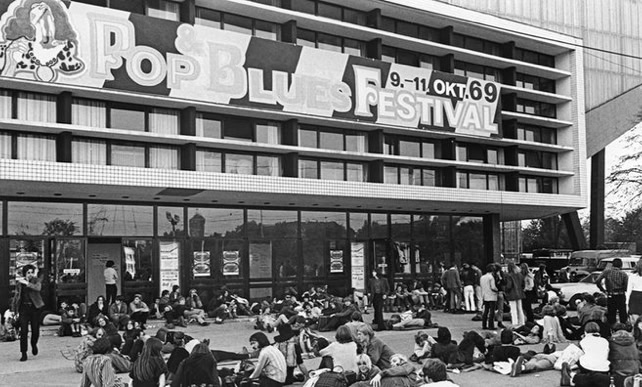
 CONCERT DATE | 11 October 1969 « Internationales Essener Pop & Blues Festival '69 », Gruga Halle, Essen, West Germany

The band has been planned to be the head-line of the Detroit Festival but due to the schedule, they decided to participate to the Essen Festival instead.

«The Pink Floyd have been booked for a one-night gig. A space-age gig. In Detroit.

Journey there and back is 7,450 miles and it’s home the next morning. But then the Floyd are playing to the American science-fiction writer’s convention»

«Pop circular», Daily Mirror, 11 October 1969

 MAIN EVENT | 11 October: finally the prefecture de Police de Paris refused the use of the grass of Reuilly (in the contest of reminiscence of the riot occurred on May 1968). 

With the help of the reporter of « Nord Matin », the festival find a new place on the other side of the border, in Belgium The organizers turn to Belgium, in Kortrijk on October 10, an agreement is obtained. The plan B is followed in parallel with Tournai. Initially, the Belgian army accepts at first but returns finally on its authorization

17 October, only one week before the beginning of the Festival, the organizers found a place with the help of a Belgian farmer, Mr. Decock near Amougies and thanks to the 5500 m2 marquees of Alfred Delacherie, also Belgian


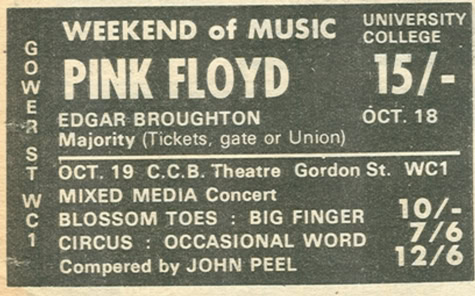
 CONCERT DATE | 18 October 1969 University College London, Bloomsbury, London, England

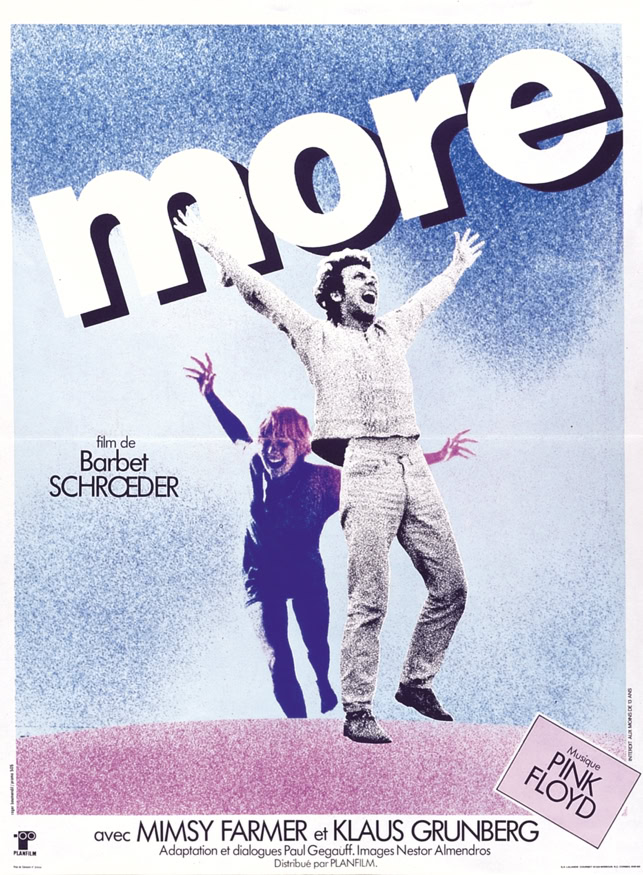
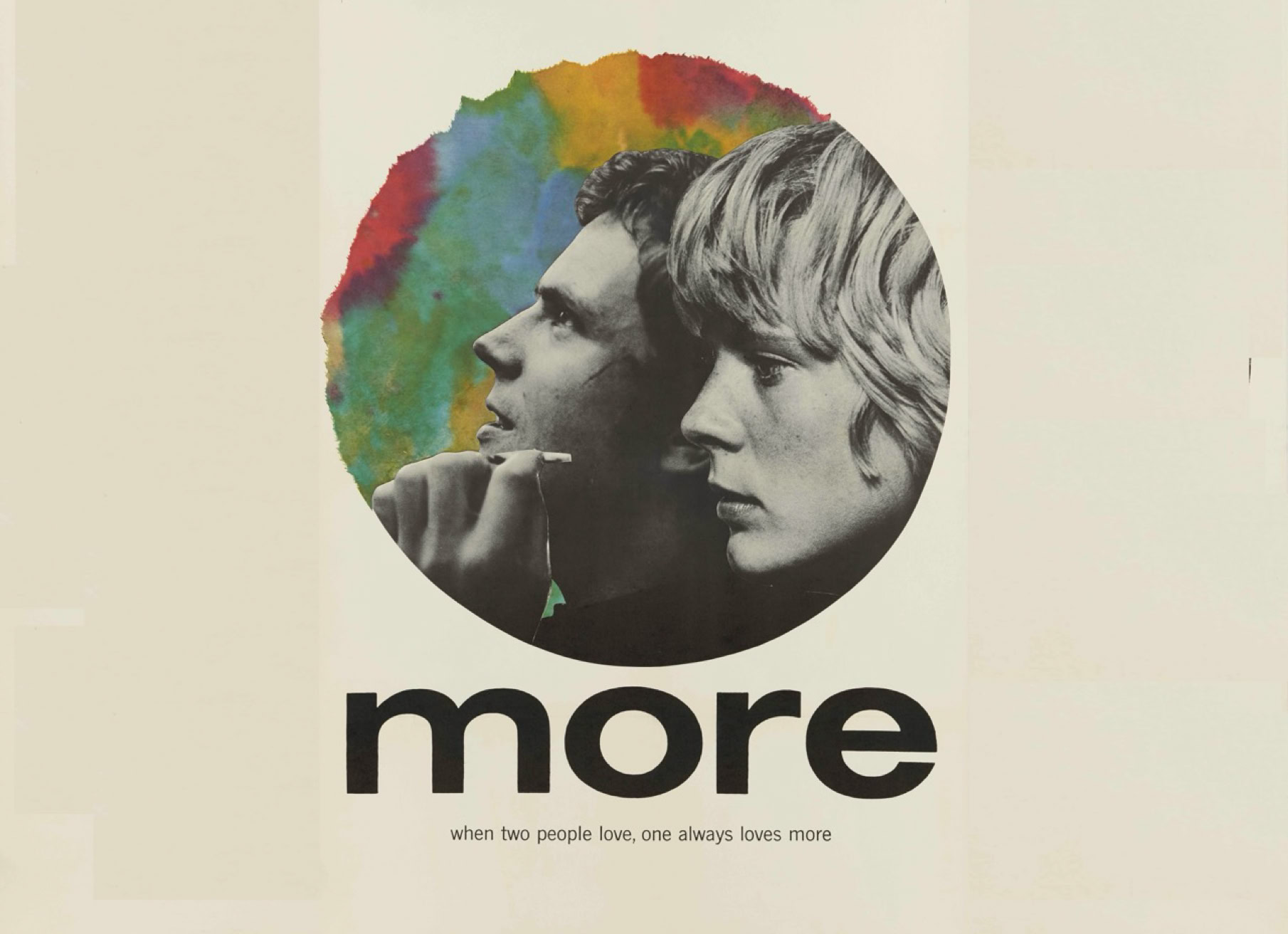
‍ FILM RELEASE | 21 October 1969, « More » is released in France

Interviewer: «Comment vous est venue l’idée de prendre les Pink Floyd pour la musique ?»

Barbet Schroeder: «Il fallait un groupe qui ne se trouve ' pas trop loin de l’endroit où je montais le film, pour pouvoir collaborer avec eux sur les images mêmes. J’en suis très vite venu au Pink Floyd, qui représente pour moi. le meilleur groupe anglais actuel. De plus, leur musique possède un sens de l'espace qui s’allie parfaitement au cinéma, qui est lui-même art de l'espace»

Interviewer: «Ont-ils assisté au tournage du film ?»

Barbet Schroeder: « Non. Préoccupé par d’autres problèmes, je n'ai pas eu le temps d’organiser cela à l'avance. Mais, ils sont venus à Paris pour voir le premier montage, puis je leur ai envoyé une liste avec les durées et diverses indications; je suis parti à Londres avec une copie du film, cl nous avons travaillé à l’enregistrement pendant une semaine, tous les - jours - de minuit à neuf heures du matin. On se levait en fin d'après-midi pour voir le travail effectué la veille sur les séquences du film. Le soir. les images bien en tête, ils se remettaient à composer; je surveillais les durées au chronomètre. 

C'était époustouflant, car ils n'ont pas l’habitude de travailler aussi vite (ils sortent généralement un album tous les six mois). Ils ont eu là une période d’inspiration extraordinaire. dont ils étaient eux-mêmes stupéfaits. Au niveau des acteurs et des techniciens. nous avons eu la même chance tout au long du film, ils se sont donnés à fond»

Interviewer: «Du point de vue de mixage, il me semble que la musique passe souvent très faiblement ?»

Barbet Schroeder: « Oui. il est très ennuyeux que les salles de cinéma ne mettent pas le son plus fort, je n’arrête pas de passer les voir, pour qu'ils corrigent ce défaut. En fait, j'ai réalisé un mixage très étudié, avec des parties chuchotées et d’autres au contraire, plus fortes (le générique en particulier). Je n’ai pas toujours employé la musique à un très haut niveau, par exemple dans la séquence où Stéphane rentre chez lui de mauvaise humeur. On serait trop pris par le charme de la musique, j’ai donc diminué son intensité. pour que l’image regagne de son importance»

Interviewer: «Quelles sont pour vous les qualités musicales des Pink Floyd ?»

Barbet Schroeder: « On entend beaucoup de musique psychédélique, délirante, mais jamais très achevée. Chez eux. ce qui me fascine, c’est leur maîtrise absolument fabuleuse dans l’invention et le délire, et une entente depuis longtemps établie. Il y a une recherche extraordinaire. sans aucune concession, qui s’annonce de plus en plus riche, et toujours un immense goût de la beauté, des sonorités qui font rêver»

«La tête de «More»», Actuel, March 1970


Nick Mason:

«We'd done little bits of working with film, and it was one of those things that we were quite good at. The fact that we didn't always work to songs formats meant that we could devise stuff that could be made to fit, with crossfades. More was three weeks of work or less. There wasn't much sense of worrying about it, we just got on with it. The fact there were tunes being put together for More must have given us more confidence for the next thing»

«To Infinity... And Beyond!», Uncut, May 1969

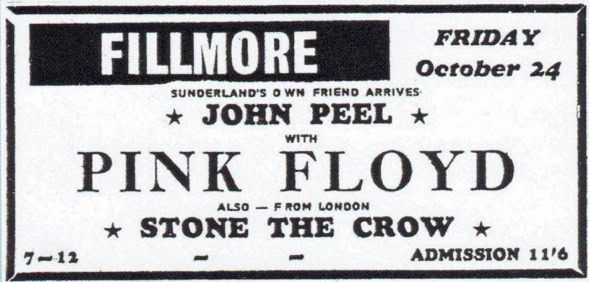
 CONCERT DATE | 24 October 1969 Fillmore North, Locarno Ballroom, Sunderland, England

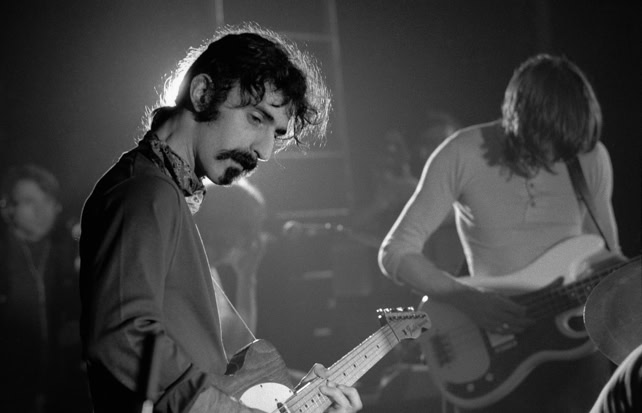
 CONCERT DATE | 25 October 1969 « Actuel Festival », Mont-de-l’enclus, Kluisbergbos, Belgique

«Plongés que nous étions dans cet univers, nous fûmes transportés dans un autre monde, celui, onirique et multi-dimensionnel, du Pink Floyd : frissons, flou ombrageux qui pénètre les sens. Cette musique qu’en un temps on appela psychédélique, faite non de performances de solistes, mais grâce à la richesse et la maîtrise instrumentale, la possibilité de création en groupe. Cette musique immatérielle que l’on croyait difficilement reproduisible sur une scène, ils surent le faire revivre, emplissant d’une nuit brisée d’éclairs cet îlot à la dérive. Oui, le voyage. Pas de science-fiction, un climat où les sensations s’interpénètrent, où le tourbillon des notes susurrées, puis amplifiées, puis magnifiées, s’étale, matelas de formes, en zébrures infinies. Astronomy Dominé, Saucerful of Secrets, puis les thèmes de «More». Un grand moment, lorsque Zappa vint se joindre au Pink Floyd: pris dans une suite de vertiges, les sons arrachés s’étalent, se désintègrent, reprennent leur course. Ce fut une partie libre, totalement libre, détours, contours, retours, les sons devenant de plus en plus tendus, vers la fusion dans l’extase. Ce fut une partie de free musique, au sens jazz du terme. Rapprochements, contacts, de nouveau retours, cavalcade effrénée de notes fabuleuses. une grande leçon d’intégrité par les membres du Pink Floyd, musiciens accomplis, pouvant facilement dériver, mais qui savent fondre leur propre voix vers la cohésion, vers l’oeuvre»

«Les folles nuits d’Amougies», Rock & Folk, December 1969.


«Pink Floyd ne donna pas la version 70 de son show, comme il l’avait fait quelques semaines auparavant au 140. Ils pratiquèrent une musique inventive, brutale tout en nuances en en couleur, extrêmement captivante. Zappa tenta la bœuf avec eux. Je l’ai senti gêné»

«Amougies interdit», Best, December 1969


«Les plus attendus de la soirée ... se font attendre: il s'agit du "Pink Floyd", groupe de premier plan à qui nous devons déjà d'excellents disques (souvenez-vous de Intersteller Overdrive (sic)) et la musique du film «More» (Barbet Schroeder, le réalisateur de "More", est aujourd'hui un spectateur parmi les autres). Le Pink Floyd, démontre sa suprématie: agressivité, jeux de lumières, saturations savantes, suraigus contrôlés, technique sûre à tous les degrés. La musique prend ici une autre dimension envoûtante. Personne ne peut résister à cette magie ... et surtout pas Frank Zappa qui bondit sur la scène pour improviser avec ses copains »

«Amougies, festival maudit», Salut Les Copains, January 1970.

Picture by Guy LEQUERREC

Interviewer: «Au festival d’Amougies, en novembre 1969, vous avez fait un bœuf avec Frank Zappa ?»

Gilmour: «Bouf ! ... Il a joué une chanson avec nous parce qu’il était employé -‘par les organisateurs. Il devait jouer un morceau avec chaque orchestre».

Interviewer: «Quel morceau avez-vous interprété ?»

Gilmour: «« Interstellar Overdrive ». Il a joué au moment de l’improvisation sur un accord pendant 20 minutes».

«Les Pink Floyd en studio», PopMusic Superhebdo, April 1972


Mason :

« Franck Zappa est certainement l’un des très rares musiciens à pouvoir jouer avec nous. Le peu qu’il fît à Amougies était terriblement juste. Mais c’était une exception. Notre musique et notre mise en place sont telles qu’il était très difficile de venir jammer avec nous ».

« Interview avec Nick Mason », Rock & Folk, Mars 1973.

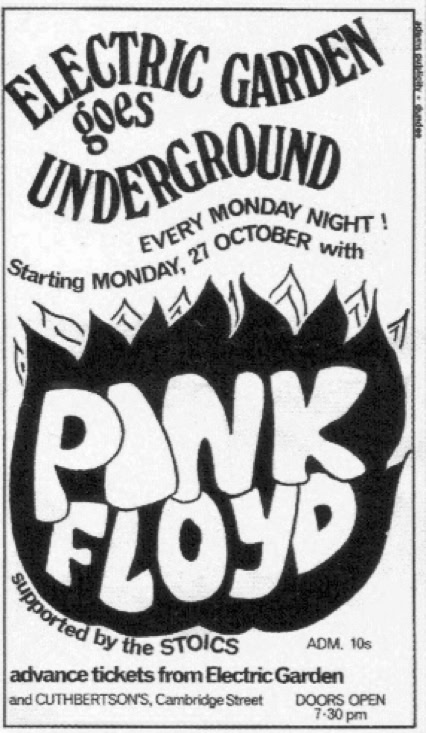
 CONCERT DATE | 27 October 1969 Electric Garden, Glasgow, Scotland

 MISCELLANOUS | 30 October 1969 The band take a flight to USA for the major event: « Black & Magic » festival.

«The Pink Floyd have been booked for a one night gig. A Space-age gig. In Detroit. Journey there and back 7,450 miles and it'. home the next morning. But then the Floyd are playing to the American science - fiction writers' convention»

«Pop Circular», Daily Mirror, 11 October 1969

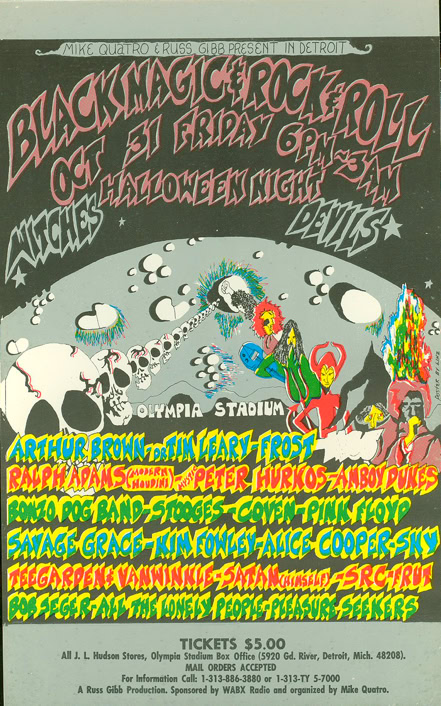
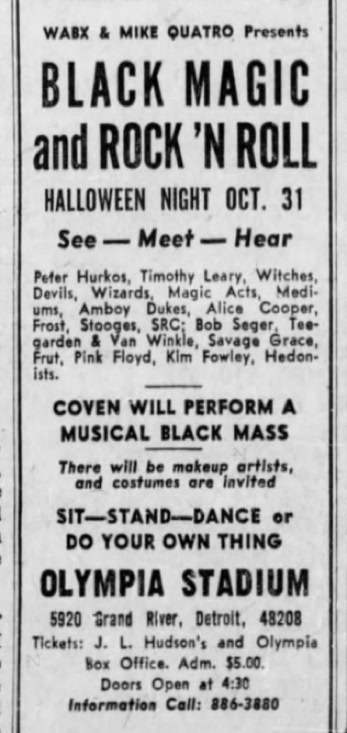
 CONCERT | 31 October 1969 «Black Magic & Rock & Roll», Olympia Stadium, Detroit, USA

The appearance of the band was cancelled at the last minute. More details on this page.

«The Detroit promoter of a 'Black Arts Festival' at Olympia Stadium Halloween night falsely advertised four major rock acts he never had under contract for the event. None of the four acts - The Crazy World of Arthur Brown, Pink Floyd, Kim Fowley and the MC5 - appeared at the Friday night show that 12,300 persons paid $5 each to see. Seven other acts that were advertised also did not appear for various reasons. They were the Detroit Amboy Dukes and the Bob Seeger System, the California group Alice Cooper, the English Bonzo-Dog Band, drug advocate Dr. Timothy Leary, occultist Anton Levey and the Frost of Saginaw»

«Acts billed, didn't appear», Free Press, 7 November 1969

Richard Wright: 

«While we were in America, we were asked to play at a voodoo convention. Sadly, we couldn’t make it because the American Musicians’ Union wouldn’t let us play. It would have been marvelous. All the voodoo cults from all over the world meeting up with all the science fiction writers»

« Still Progressing But Starting At The Top Again », Beat Instrumental, January 1970

 CONCERT DATE | 1 November 1969 Main Debating Hall, Manchester University, Manchester, England

«First term at university and the list of bands up to Christmas was published…..big (at the time) names, every Saturday night ..….. Blossom Toes, Chicken Shack, Duster Bennett, Soft Machine, Ten Years After, Fairport Convention, Pink Floyd, Family (being the ones I remember) and possibly Colosseum and Keef Hartley too. The Main Debating Hall was on the top floor of the student union building, about 4 or 5 floors up. It was rectangular, about 120-150 feet long, with quite a high stage at one end. The support band was always set up to play on a low stage either at the back of the room or on the right-hand wall. The support band that night was Stone The Crows with Maggie Bell on vocals and Les Harvey on guitar (sadly he was killed a couple of years later, whilst she went on to bigger, but not necessarily better, things).

Whilst I don’t particularly recall details of many individual songs that night, I remember thinking it was the first ‘proper’ concert I’d been to by the Floyd. It was a relatively small, intimate venue (as well as the bands listed above, I also saw Led Zeppelin there a year or two later). It was standing only and, not being packed, it was fairly easy to get from the bar out the back to a position about 20 feet from the stage. First time I’d been close enough, and with a good straight-on view, to see all the WEM amps and speakers with their little red lights in the darkness (‘we’re ready’), and then being close enough to see everything that they did. The one song that does stick out in my mind is Set The Controls a) because it was the first time I’d seen Roger go ape-shit with his gong and b) because the quiet spacey passage in the middle was so ethereal. I don’t think they had a light show but they played this in near darkness with just the Hall’s stage lights sweeping around. Also, they’d ditched the surround-sound quad system and the Azimuth Co-ordinator just controlled left/right from the PA on the stage. A great show…….»

«Recollections of Early Floyd Shows» (Simond), Yeeshkul Website, 8 March 2015

 CONCERT DATE | 2 November 1969 London College of Printing, London, England

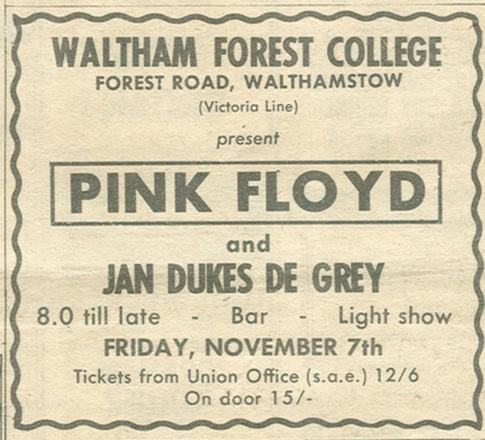
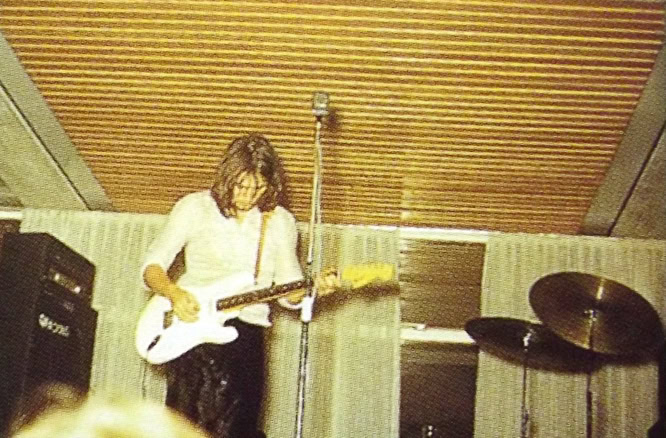
 CONCERT DATE | 7 November 1969 Main Hall, Waltham Forest Technical College, Walthamstow, London, England

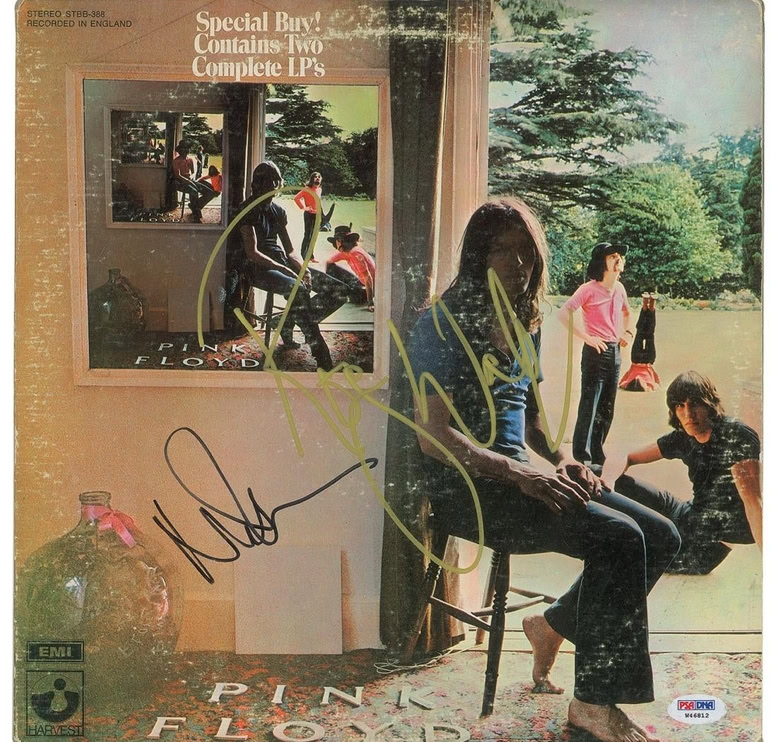
 RECORD RELEASE | 7 November 1969 « Ummagumma » is released in the UK and reached No. 4 in the UK charts.
The album was released a day later in the US and reached No. 74. 

Outtakes of the back cover photo session taken on the Royal Air Force Biggin Hill Airport near London

 MISCELLANOUS | The subsequent German dates were cancelled because the recording sessions in Roma for the « Zabriskie Point »

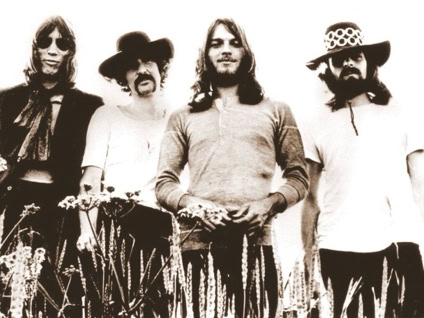
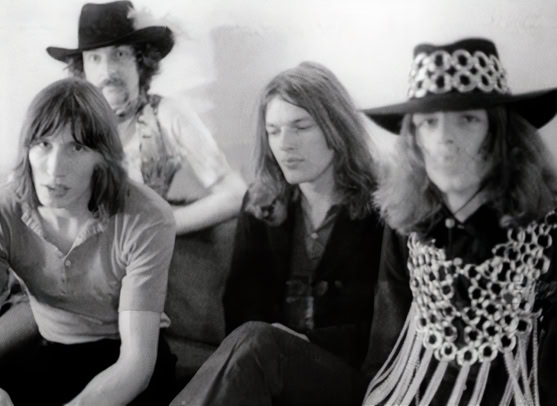
 PHOTO SESSIONS | A photo session is held with the famous photograph Ray Stevenson.

Pictures by Ray STEVENSON

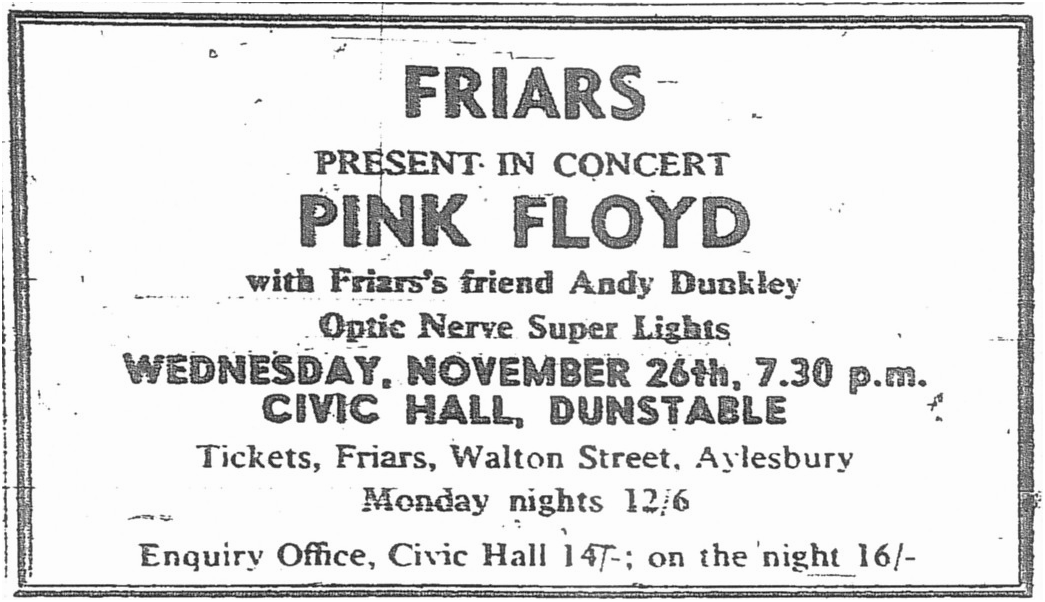
 CONCERT DATE | 26 November 1969 Friars Club, Queensway Hall, Civic Center, Dunstable, England

«A colossal version of astronomy dominé, left the audience breathless from the onset and it provef to be quite an evening for Floydian favorites with Interstella (sic) Overdrive, Green is the Colour and Careful with that Axe, Eugène following in quick succession. Richard Wright is an outstanding organist who really shone on Dominé and the inevitable Saucerful of Secrets with which they concluded their set.

Nevers has a piece of music been guaranteed to have such a devastating effect on an audience as the dramatic climax of Saucerful and the resultant

ovation brought the group back to play an encore. 

They obliged with the beautiful Cymbaline from the album «More» (…). An incredible evening, with incredible music from a truly incredible group»

«Quite an evening for Floydian favourites», Saturday Telegraph, 6 December 1969

 CONCERT DATE | 27 November 1969 Mountford Hall, Liverpool University, Liverpool, England

«…..and three weeks later we went over to Liverpool to stay with an old school friend who was at university there and who’d thoughtfully got us all tickets to see the Floyd…….happy days!! I can only vaguely remember the Hall where the show took place. I seem to think it was a fairly modern building with a square hall with a large low(ish) stage at one end. I don’t recall whether or not it was seating or standing. I assumed that they’d just do the same songs as 3 weeks earlier in Manchester and it started out that way. Then (and I don’t recall any announcement) they went into The Man. Our friend hadn’t seen the tour earlier in the year so was unfamiliar with some of the songs. I’m pretty sure they didn’t bother with a tea-break, and the hammering wood section was dropped for something more percussive (I can picture Roger playing timpani/kettle-drums which may, or may not, have been here) – so it was a more ‘restrained’, more ‘musical’, rendition of The Man – possibly done on the spur of the moment hence no ‘props’? I recognised a new piece as coming from their new LP Ummagumma but couldn’t place what it was (sorry if you were hoping for a vivid memory of Sysyphus but I just don’t have one). My overall feeling was that this was a less relaxed performance than 3 weeks earlier – maybe it was the hall, maybe the audience, maybe the material – but I enjoyed Manchester slightly more than Liverpool (despite the historically rarer material played)»

«Recollections of Early Floyd Shows» (Simond), Yeeshkul Website, 8 March 2015

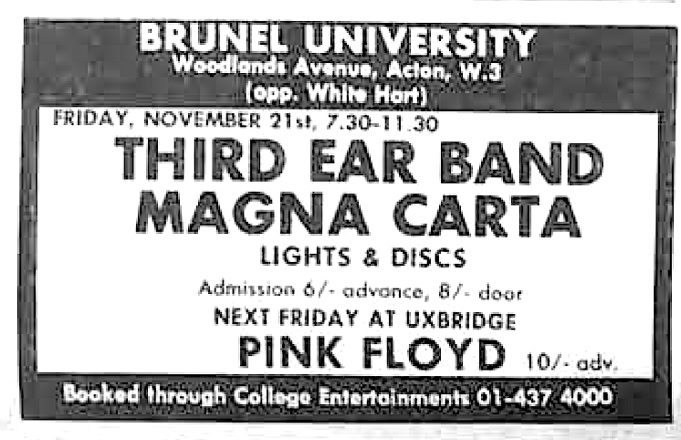
 CONCERT DATE | 28 November 1969 « Brunel University Arts Festival Weekend », Refectory Hall, Brunel University, Uxbridge, England 

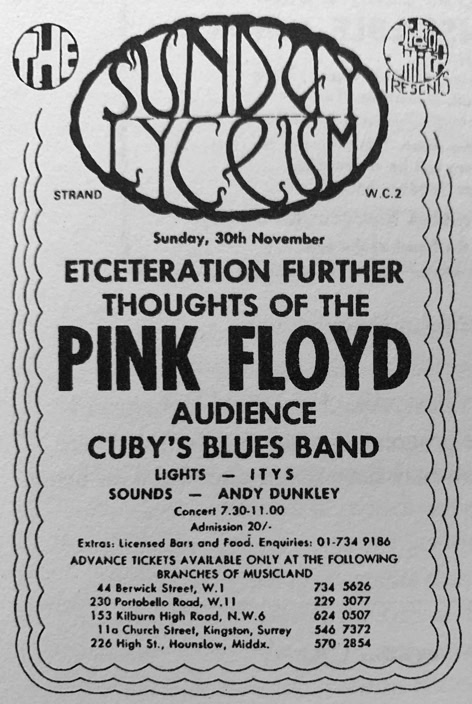
 CONCERT DATE | 30 November 1969 The Lyceum, Strand, London, England

 PRESS MENTION | Another evidence about the desire the band want to work with an orchestra:


Rick Wright:

«We want to write a complet work for the orchestra and ourselves so that the group is another part of the orchestra»

«Pink Floyd have the last laugh», New Musical Express, 13 December 1969

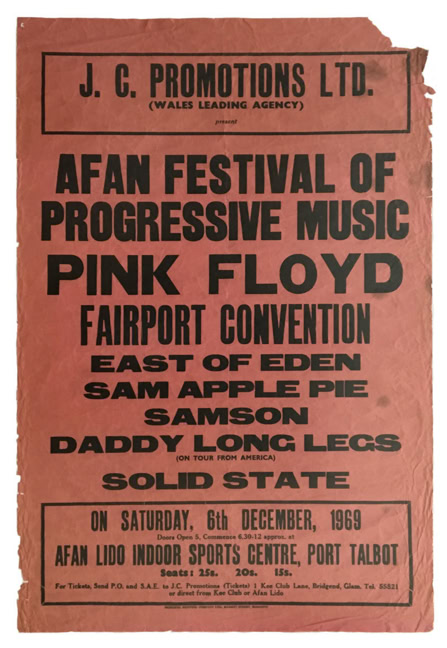
 CONCERT DATE |6 December 1969 « Afan Festival of Progressive Music », Afan Lido Indoor Sports Centre, Port Talbot, Wales

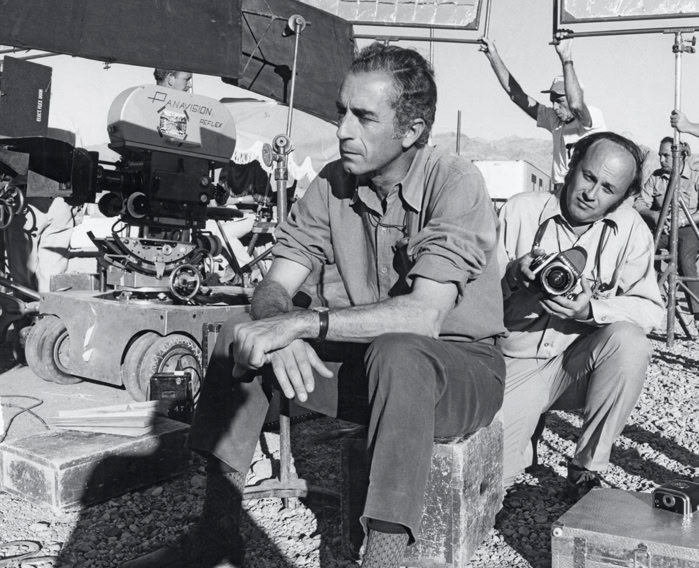
 RECORDING SESSIONS | From 12 to 15 December 1969 Recording sessions for the « Zabriskie Point » soundtrack at the  EMI Studios, Londres, Angleterre

Antonioni on the set of « Zabriskie Point », Mojava Desert.

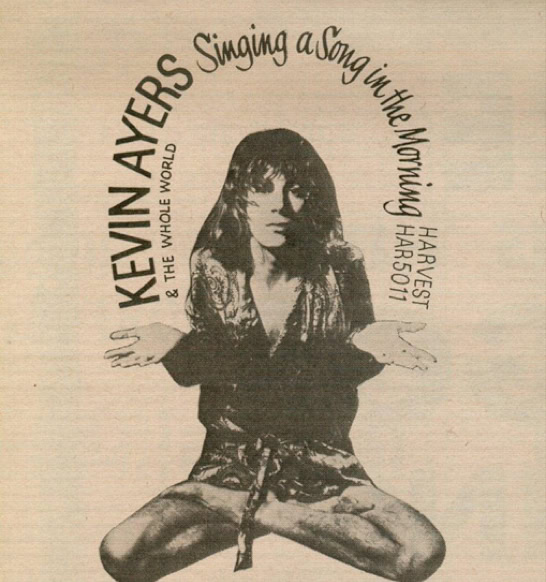
 RECORDING SESSIONS | 17 December 1969 Kevin Ayers turned up at Barrett’s flat in order to tempt him out to a session at the EMI studios.
The track, titled at the early stage Religious Experience (the definitve title will be Singing a song in the morning, is the Syd’s only know guest appearance.

Kevin Ayers:

«It was totally chaotic, as I remember, Indon’t think it was together at all. We couldn’t use any of the stuff because it was all over the place»