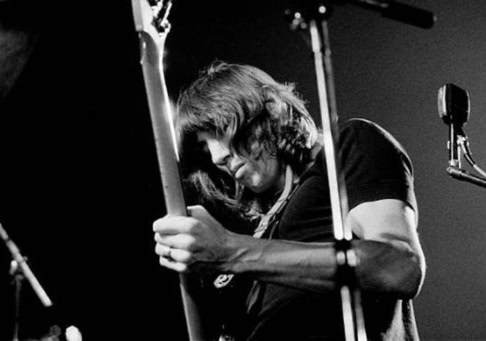
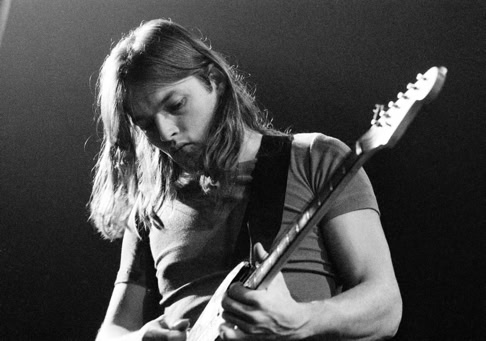
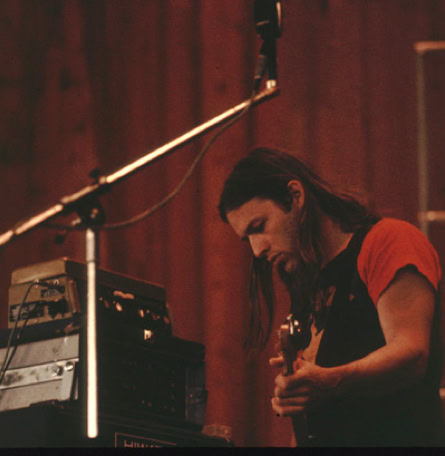
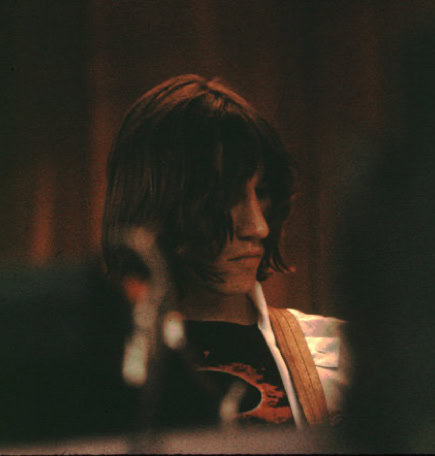
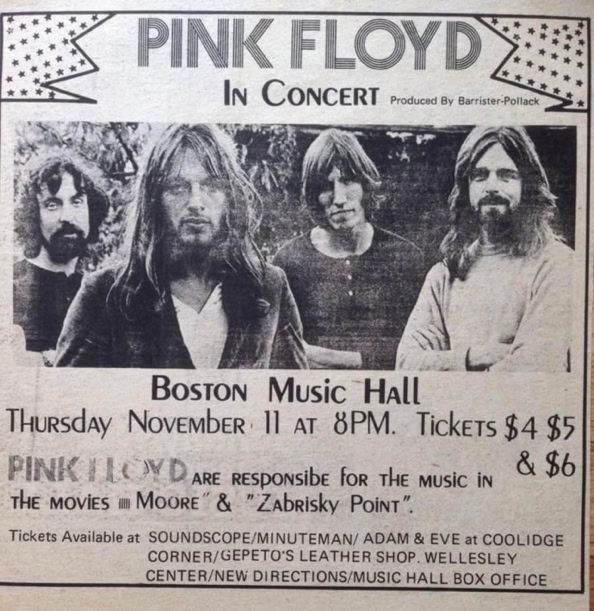
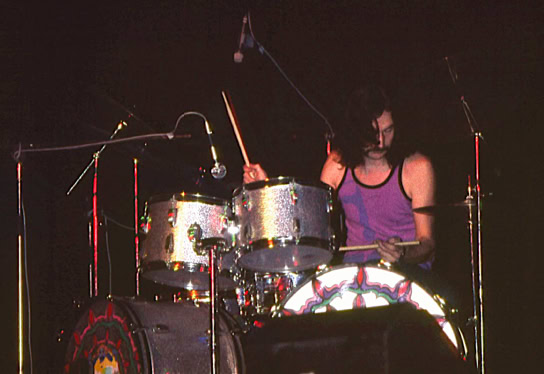
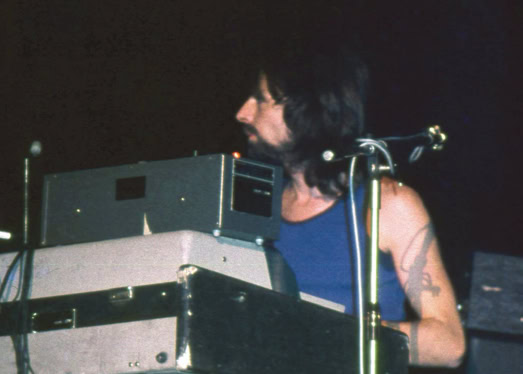
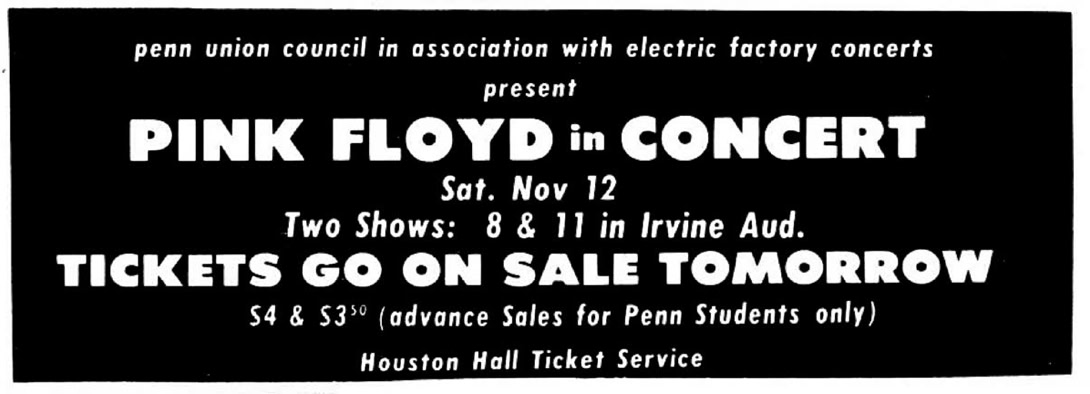
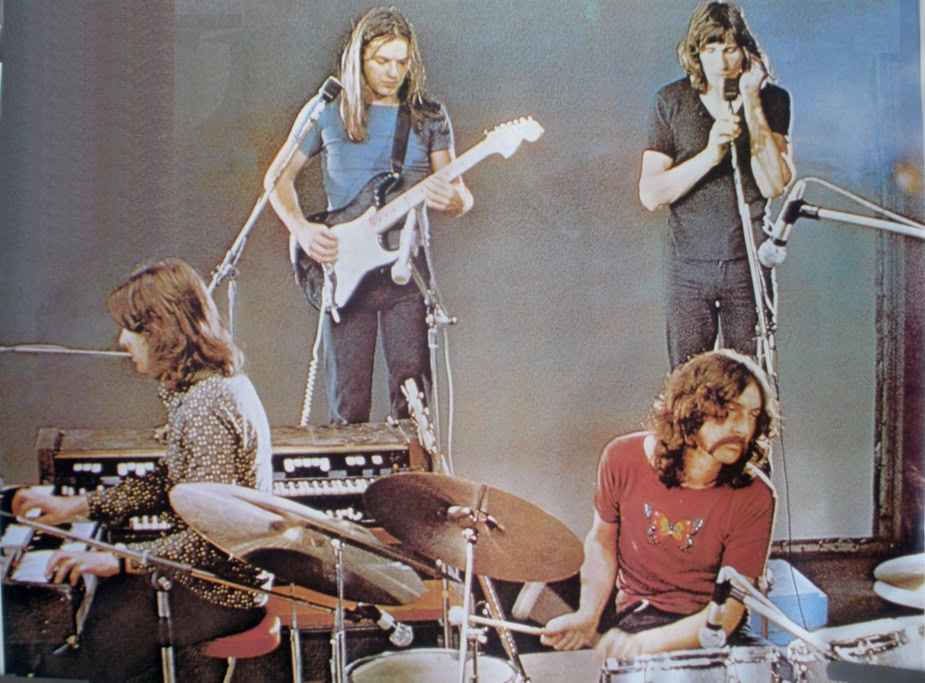
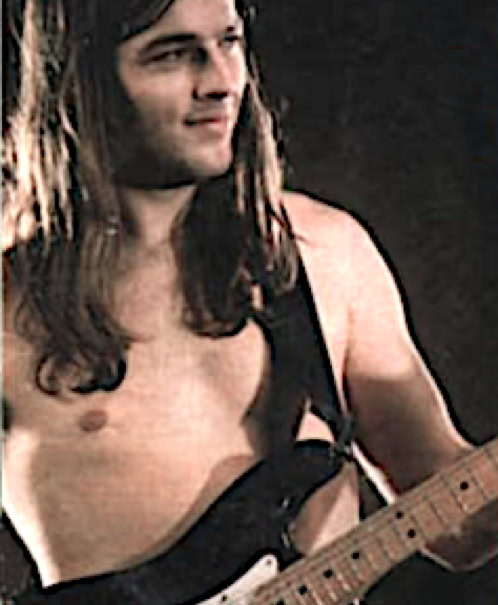
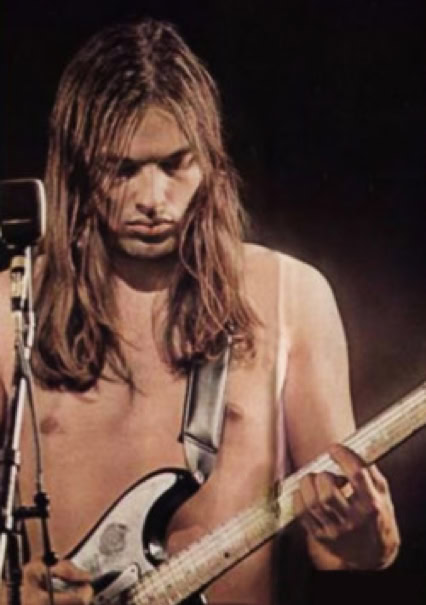
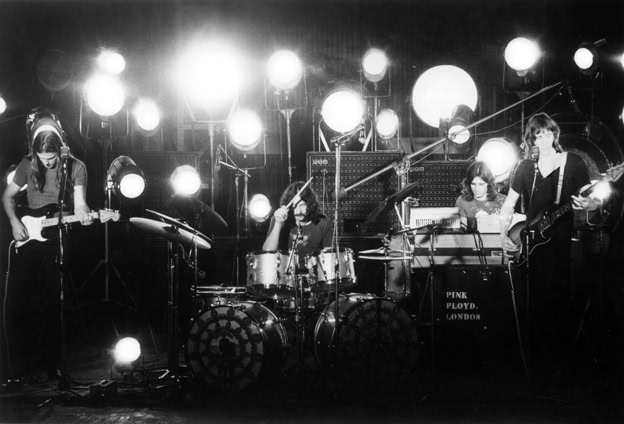
The photographs displayed on this page were meticulously identified to correspond to the exact date and the name of the source the time they were captured. However, errors may occasionally occur. If you notice any discrepancies or inaccuracies in the dates or other details, please let us know by sending an email here.
Your feedback is invaluable to me, and we will acknowledge your contribution by citing you as a contributor.
- 0entries indexed on -
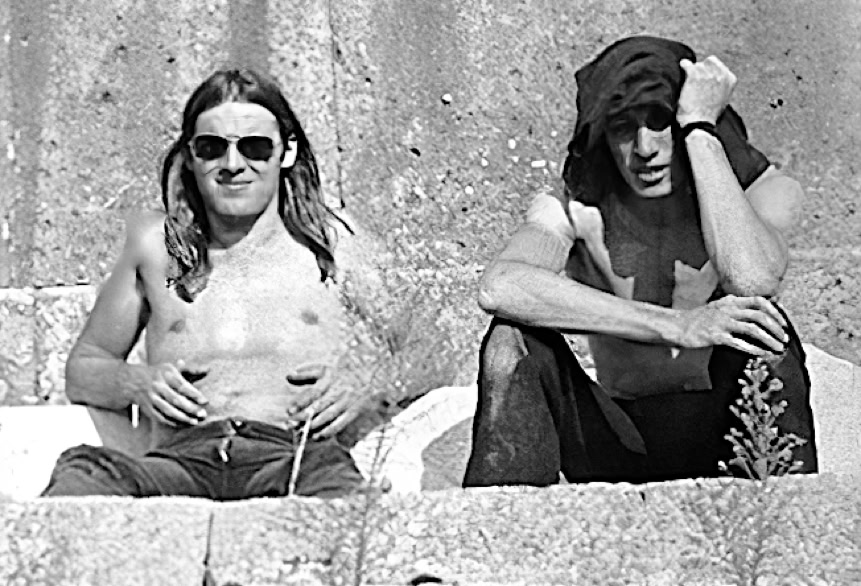
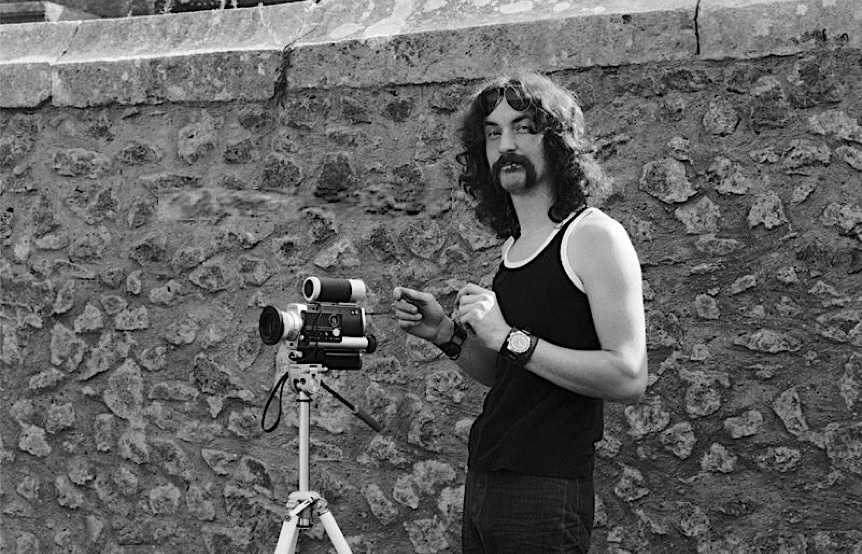
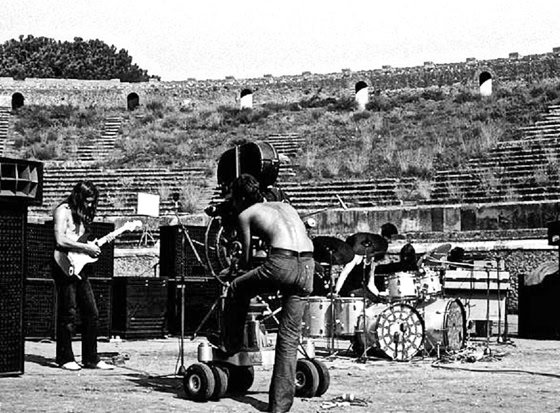
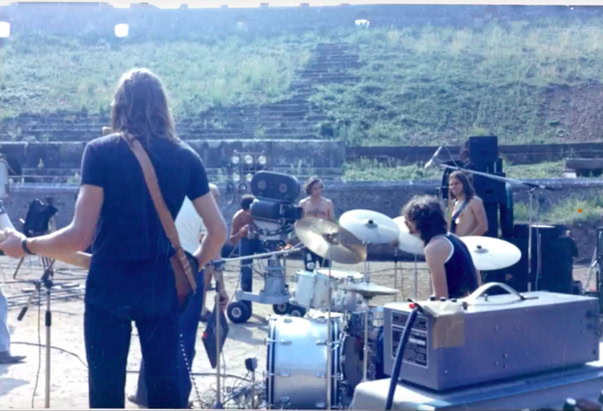
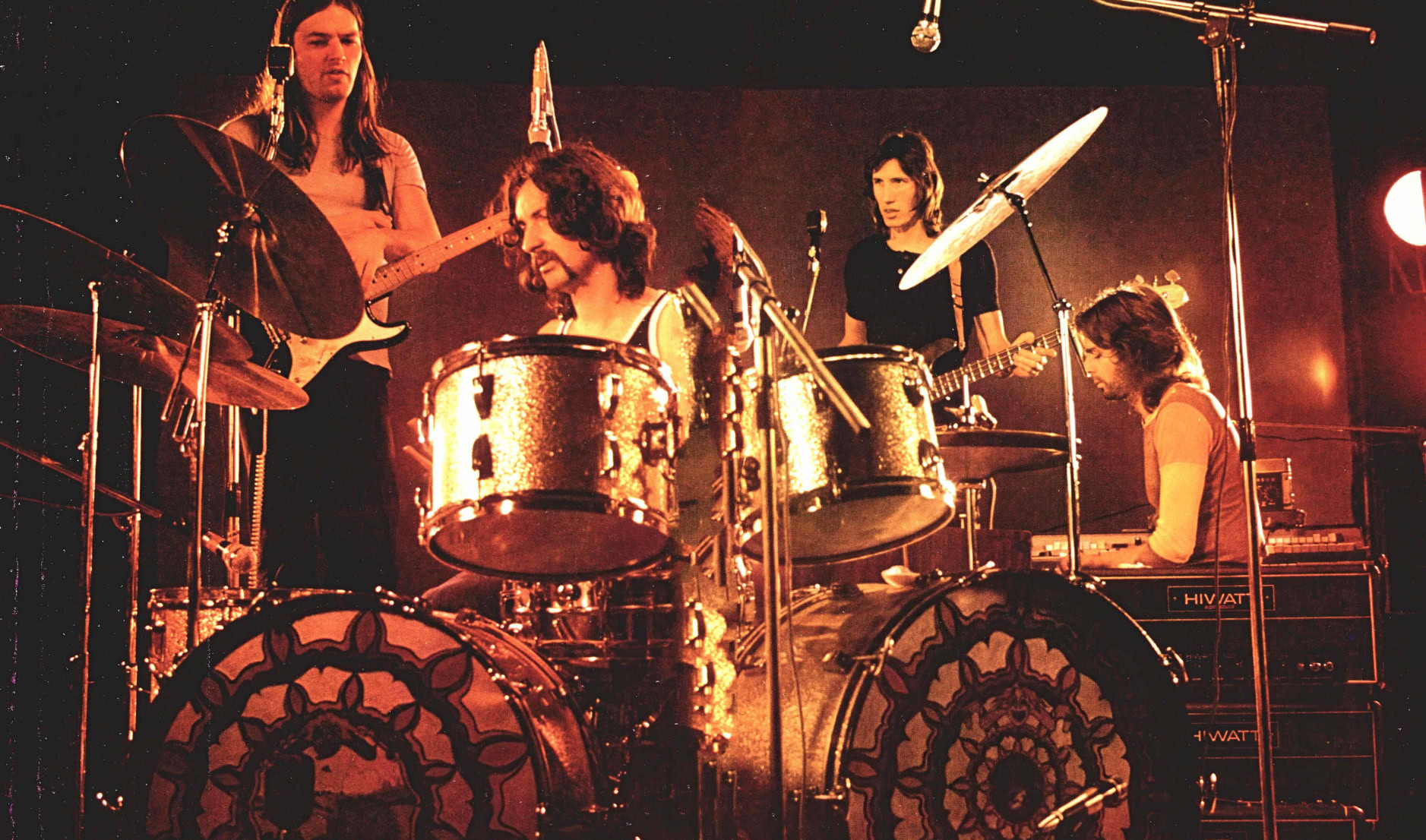
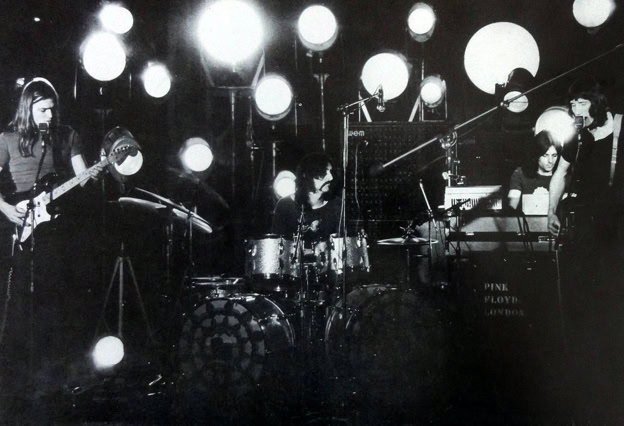
MISCELLANOUS|Early July 1971. The band agreed to participate to the Adrian Maben’s movie.
Nick Mason:
«Steve O’Rourke [Floyd’s manager at the time] came to us and said, ‘There’s this France-based documentary maker wants to do a film. The deal we did turned out to be very hard work, and we never saw any money from it for a long time »
« Interview: Pink Floyd's Nick Mason, Engineer John Leckie Discuss the Making of 'Meddle'», Tommy Udo, Avril 2012
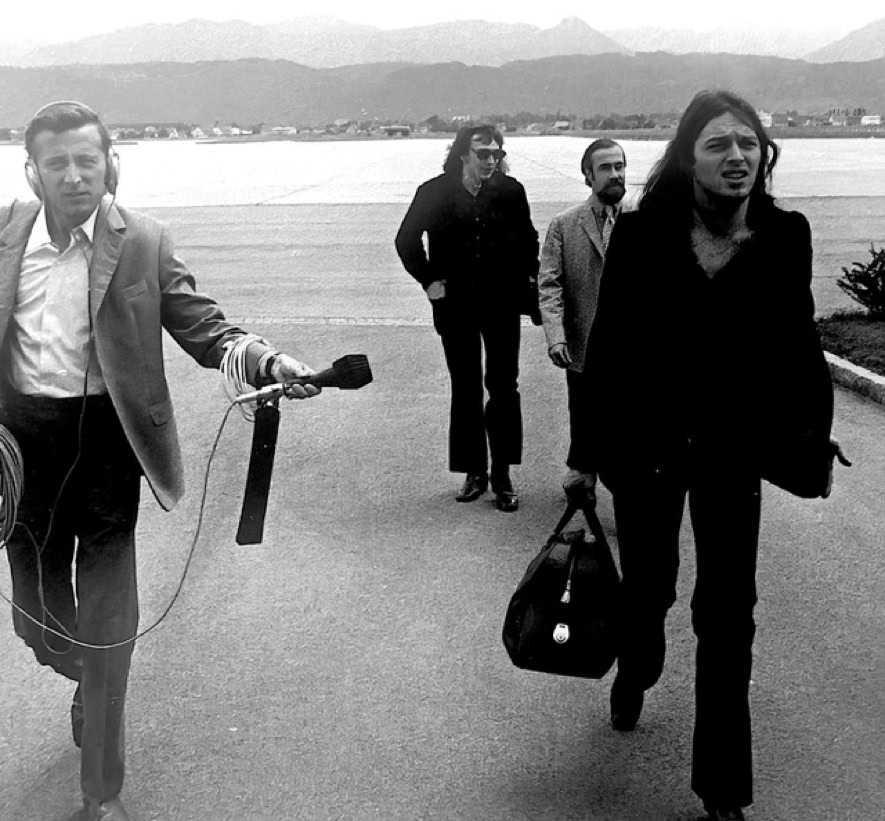
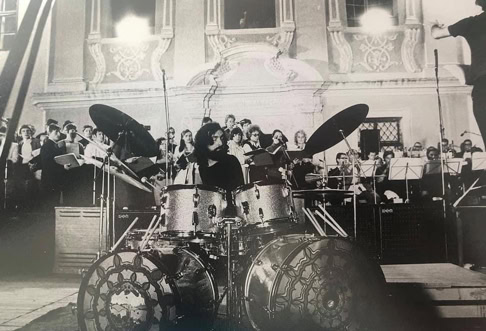
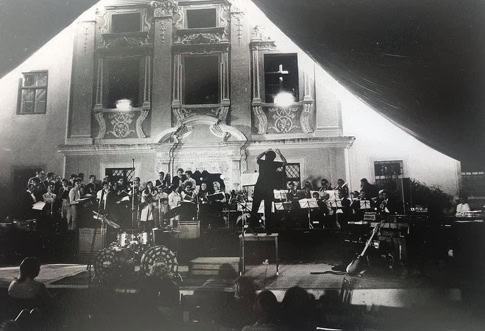
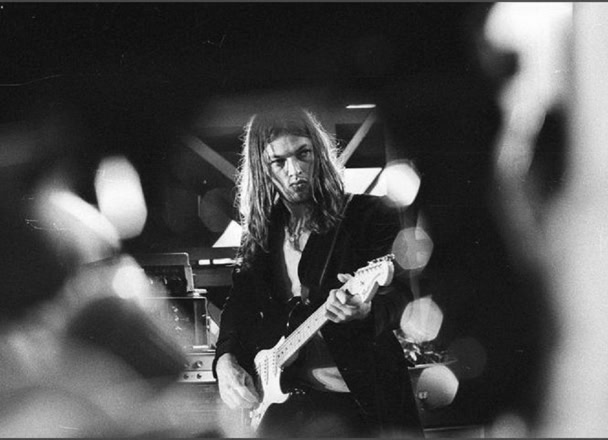
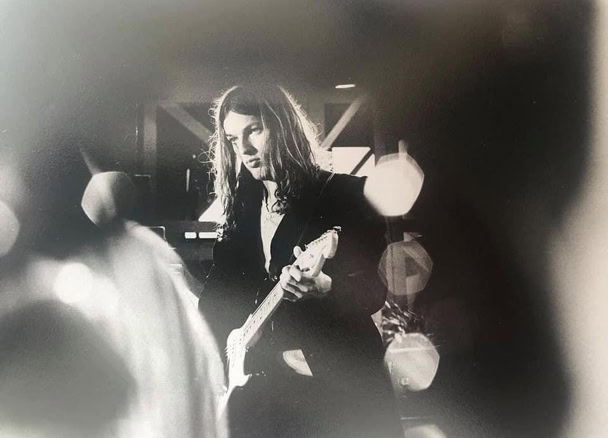
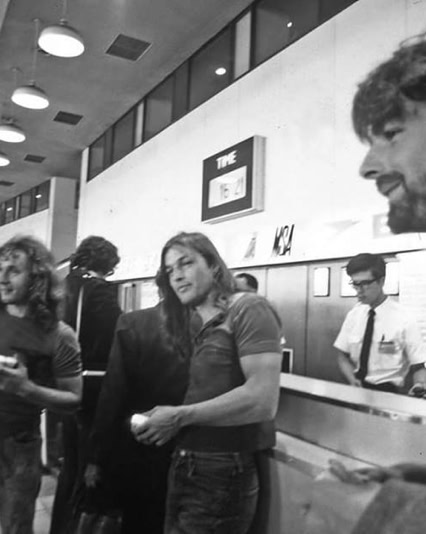
The band arriving in Austria
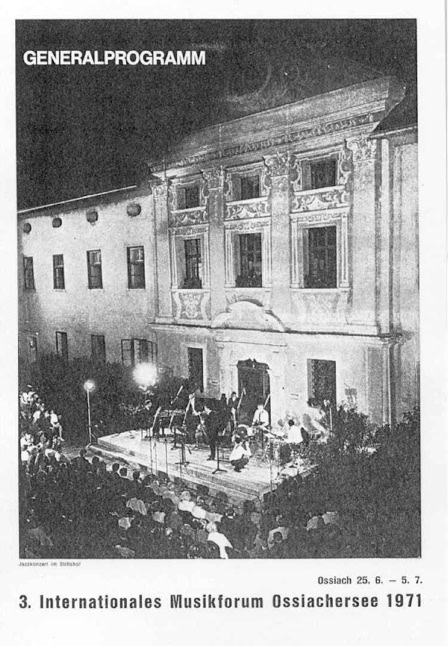
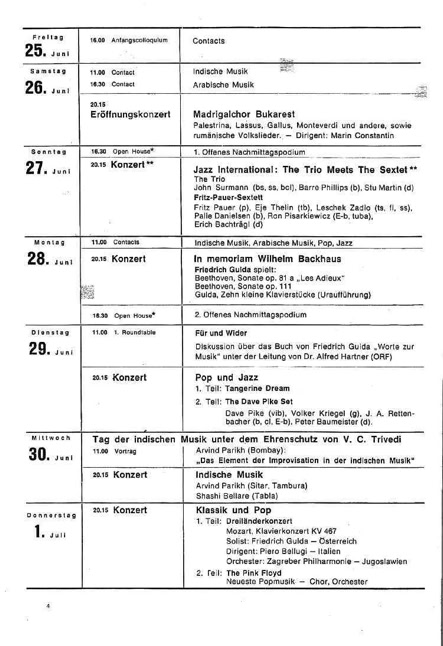
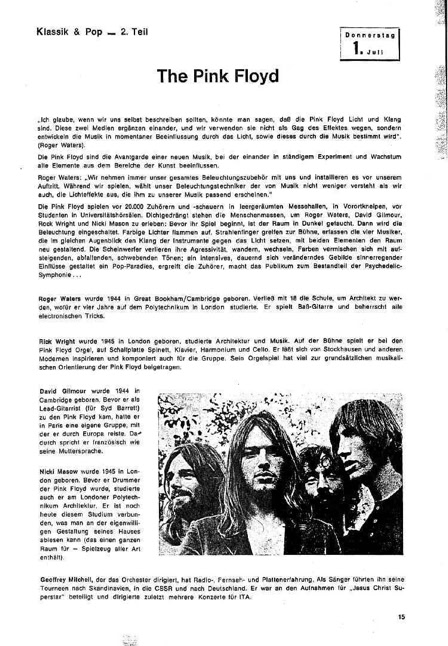
Programme for this show
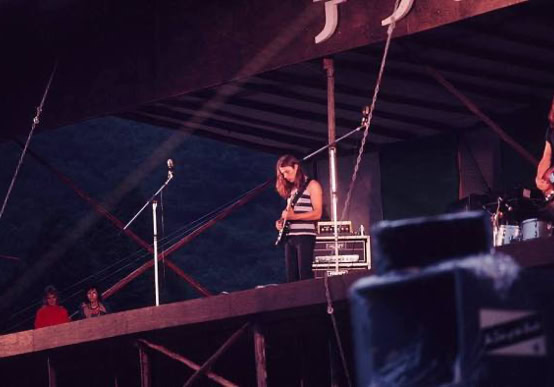
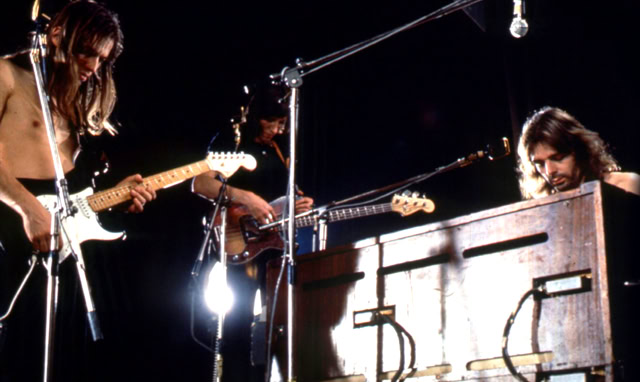
CONCERT DATE|1st July 1971 «Musik-Forum Ossiachersee 1971 », Congress Center, Villach, Austria
The Austrian TV shot some sequences of the movie.
« We were put up in this wonderful lakeside hotel overlooking Lake Ossiach. I don’t think i’ve stayed anywhere more glamorous in my life. After the performance, we were on this balcony, and all four of them were spliffing away like mad and offering me drugs and things like that. I said «No, no, i don’t that». It had gone awfully well and i rember them saying «i wish we could do it again». Later in the hotel lobby, Steve O’Rourke said «and what was your fee?» When i told him, he said «Oh, that won’t do» and gave me the double «What currency would you like?» He had a suitcase full of dollars, pounds, francs and marks»
«Scream thy last scream», Uncut, November 2016.
Photography by Michael LEISCHNER
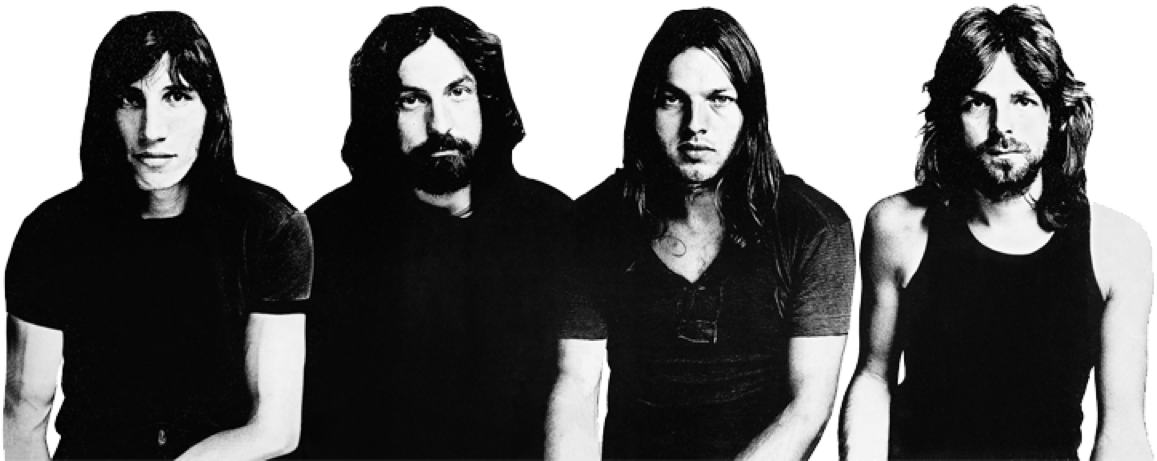
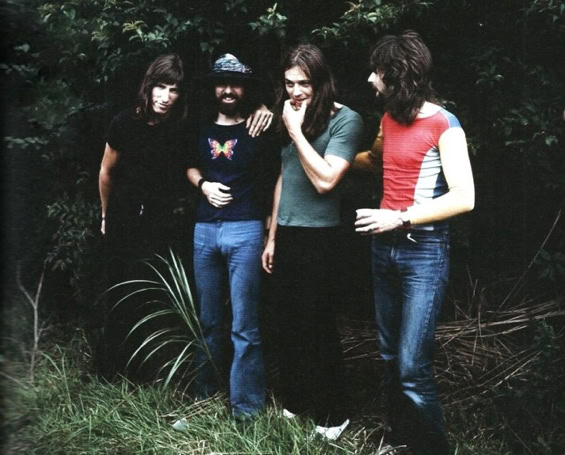
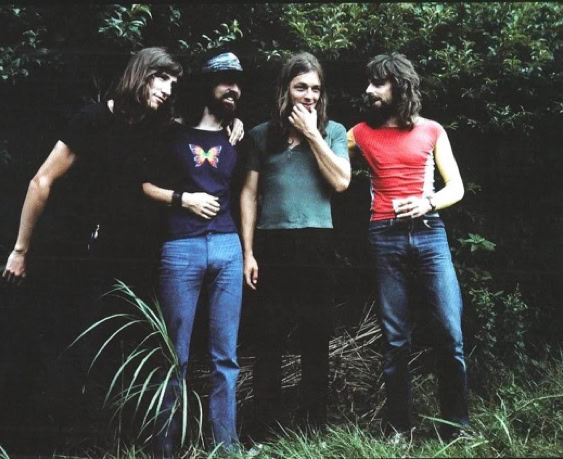
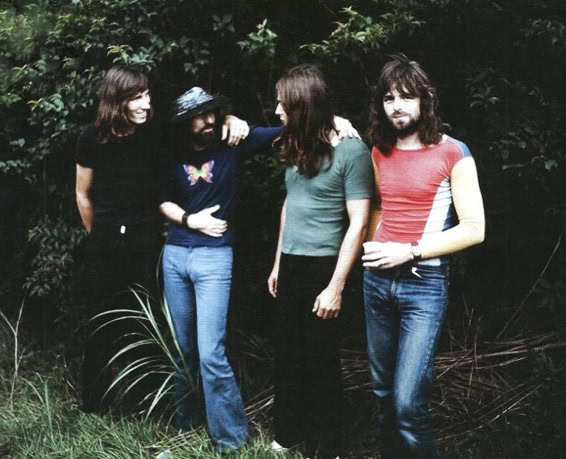
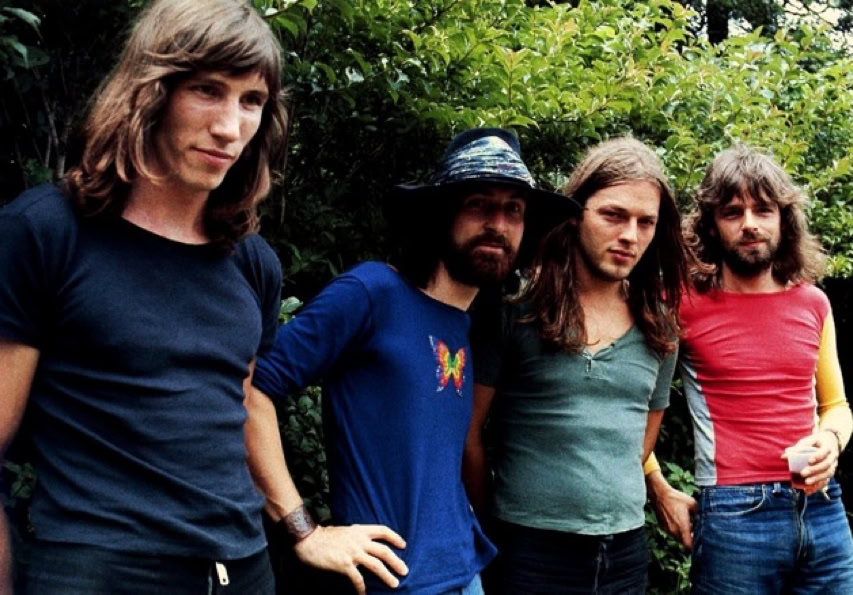
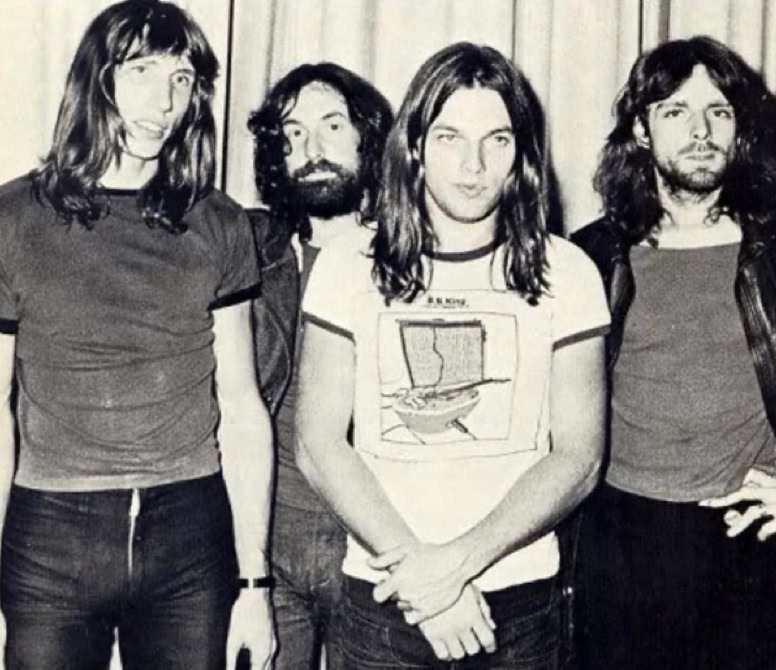
MISCELLANOUS|The band gives instruction to Hipgnosis for the inner sleeve of «Meddle»
Aubrey Powell:
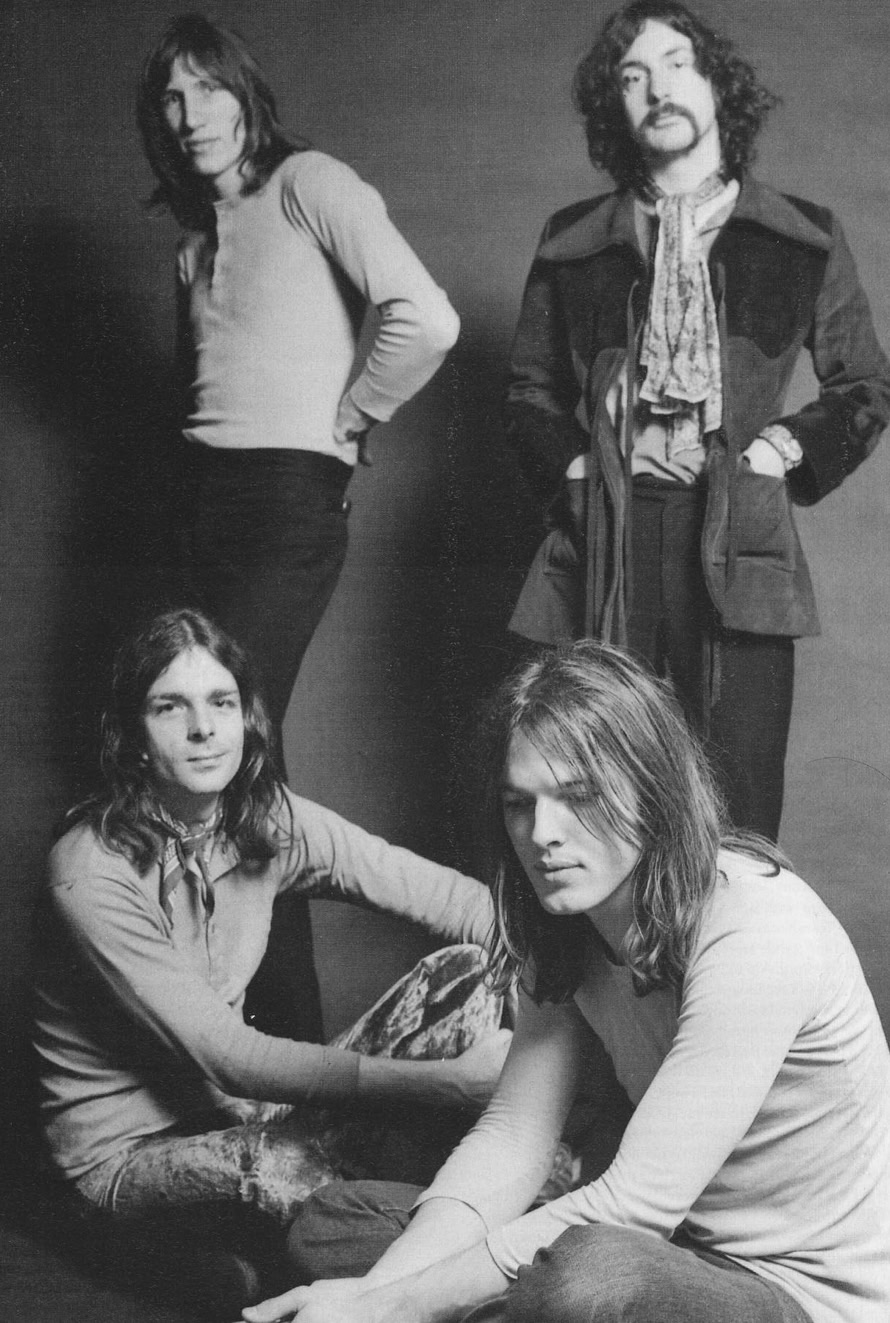
«I had a brief from Roger: «I don’t want any fancy trickery, none of your Hipgnosis funny ideas. I want a straight photo of us sitting in a row» The idea was to take something very, very conservative that was the opposite of wild-haired rock’n’roll imagery, to get totally away from that. they actually came into our studio at two different times, that’s why it’s so dark because I joined two sessions together, I shot them in pairs. It’s so straight it’s oddly surreal, that picture»
«Special Animals», Mojo, April 2017
Gilmour:
«Roger's got this fabulous dimple in his chin that only shows under stress»
«David Gilmour interview», Record Collector, May 2003
CONCERT DATE| 5 July 1971 Lancaster University, Lancaster, England
Simond (Audience member):
«Home turf! The university campus had been built from scratch during the 1960s and, as a consequence, was something of a concrete jungle….. but they did put on some good shows!! The hall was a low square building with a square concert hall and an outer area with bar and seating. We (my brother and a couple of friends) arrived about an hour before showtime. There may have been a support band, I can’t remember but we didn’t see them. We wandered into the hall and there was all the familiar equipment set up on stage. I may be wrong but I think they were still using the WEM amplification and speakers. Anyway, it all looked reassuringly familiar. There weren’t too many people there [I must comment on that later!] so we went out to the bar where there were about 8 to 10 round tables, each about 3 feet in diameter, thus accommodating 4 people comfortably, or 6 to 8, starting to get a bit squashed in. We got beers from the bar and sat at one of the tables. The place was still fairly empty but people were starting to trickle in. A few people came and sat at the next table to us and got some beers in. I glanced round idly, just people watching, and, I kid you not, (I SWEAR to you) it was the whole band plus a couple of others (roadies?). They were sitting there, with pints of beer, only a couple of feet from our table, just chatting and laughing. (…)
However, notwithstanding that preamble, it was a stunning show. Plenty of room to move around (just imagine that now). The highlight was my first hearing of what was to become Echoes (I think they introduced it as The Return Of The Son Of Nothing). This is still one of my all-time favourite Floyd numbers – there’s an elegance in its simplicity. I’m pretty sure that they also did Atom Heart Mother (for my fourth and final time). I can’t remember too much else about the set list (if only I had my scrapbook…..no, no, no! you can’t say “if only”!)»
«Recollections of Early Floyd Shows» (Simond), Yeeshkul Website, 9 March 2015
RECORD RELEASE| 17 July 1971 «Relics» is released in the US, and reached No. 153 in the charts.
RECORDING SESSIONS| From 19 July to 29 July 1971, the band enter in the Morgan Studios of London for mixing sessions of «Meddle».
Photography by Kim GOTTLIEB
David Gilmour:
“At that moment, we all had the same objectives,” says Gilmour. “As for those deeper philosophical and political differences, you just stick ’em on the side at that point in your life. The collective ambition is more important.” Until, of course, everyone reverts to type.
«in the heart of Darkness» Mojo, October 2007.
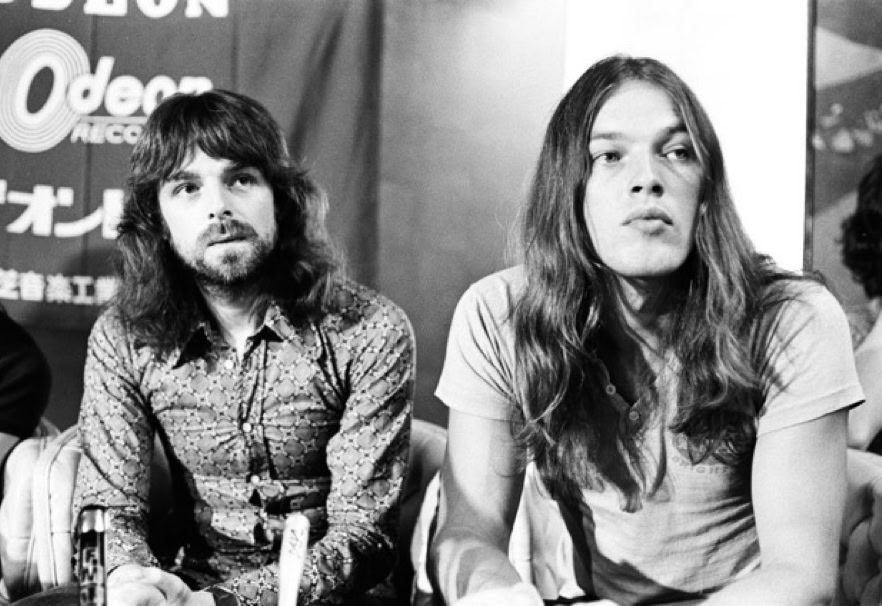
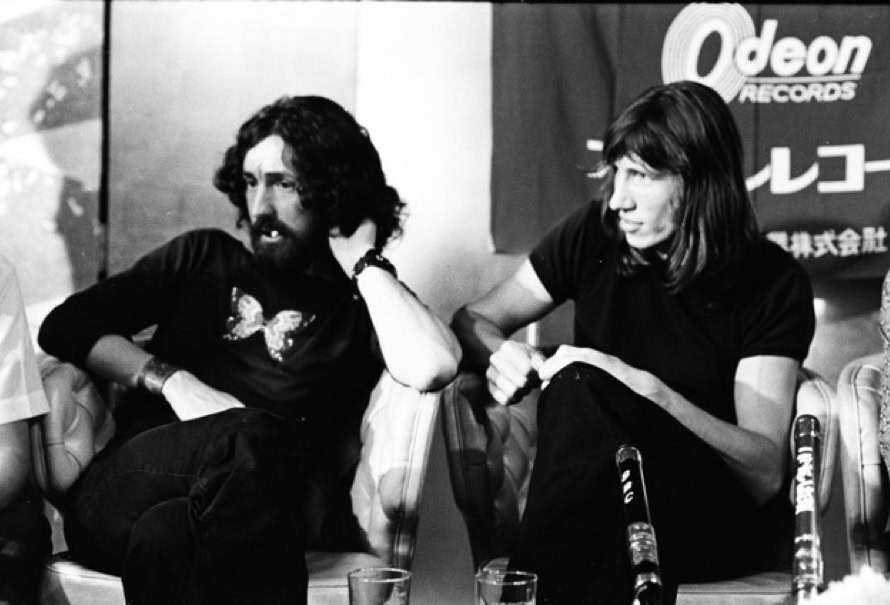
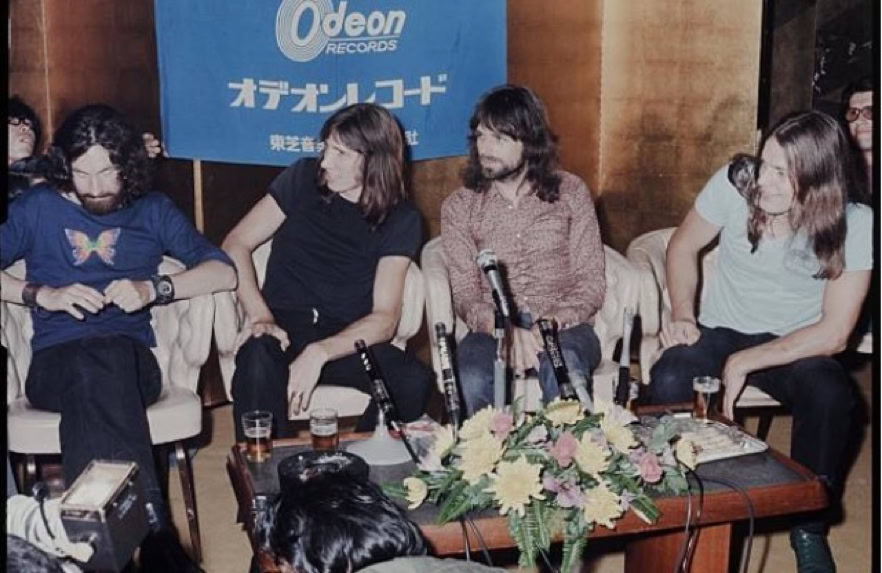
MISCELLANOUS| 31 July 1971, Pink Floyd Landed in Tokyo Airport, Japan
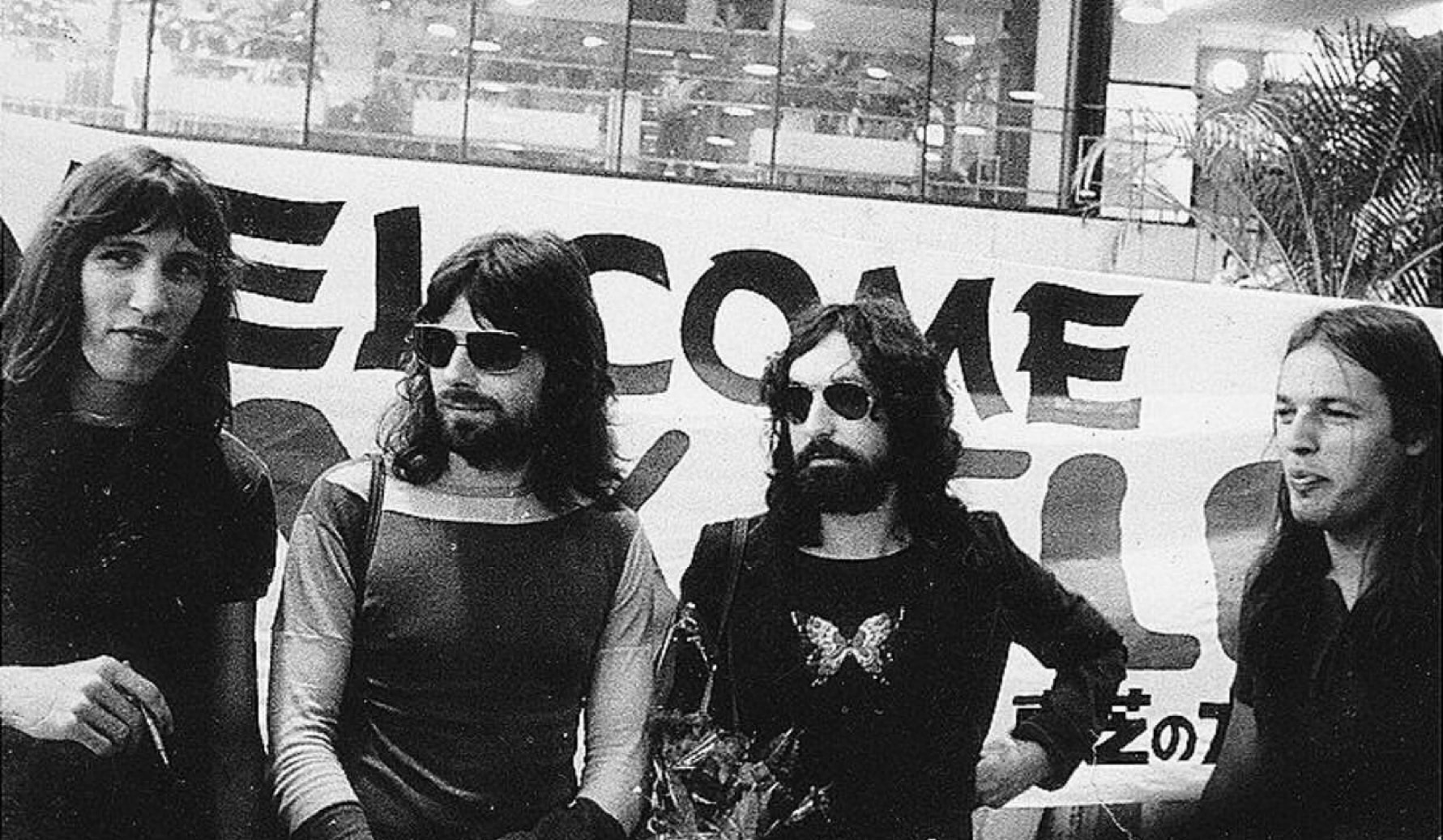
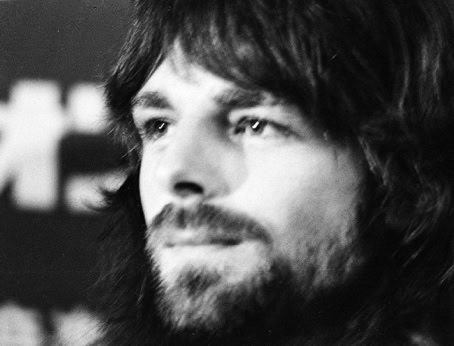
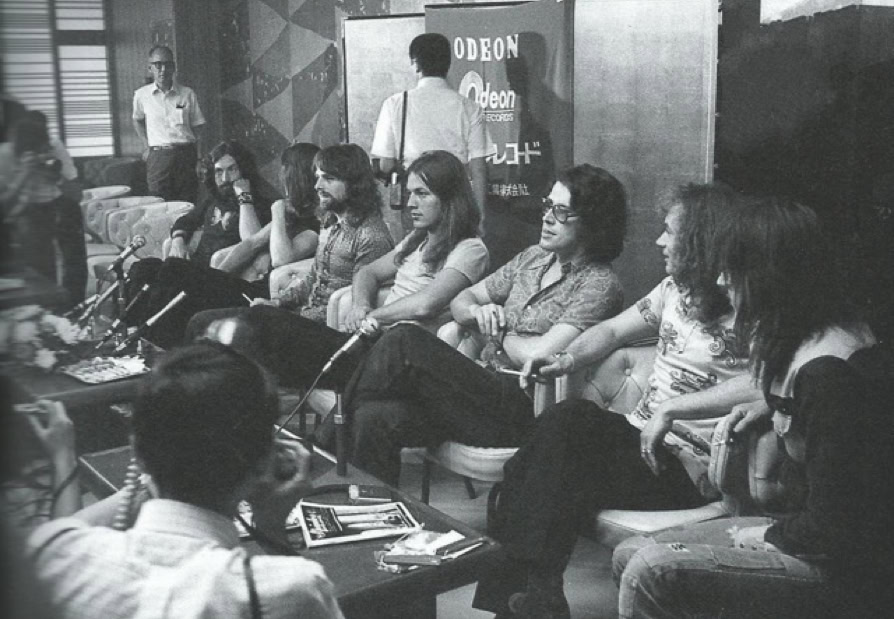
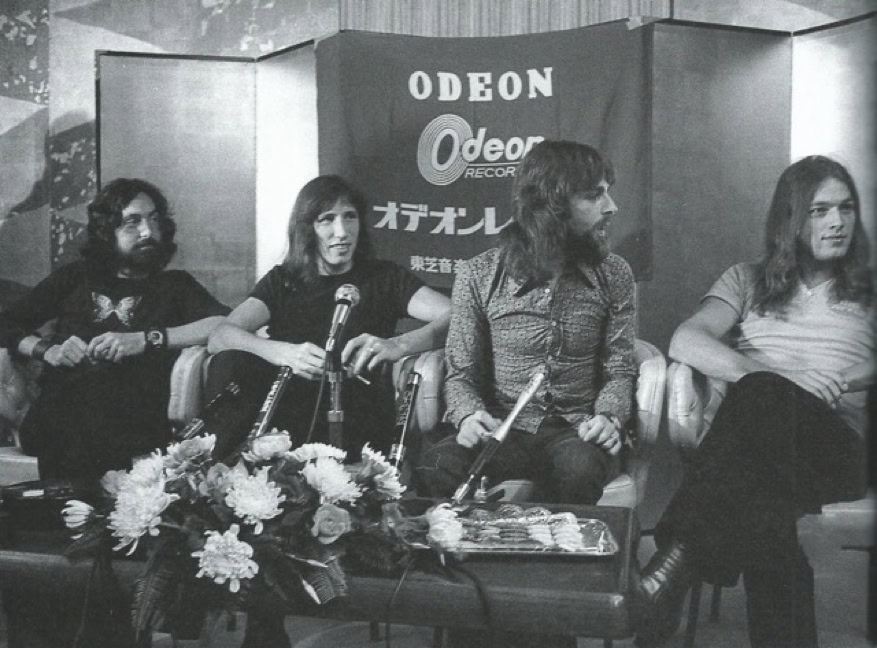
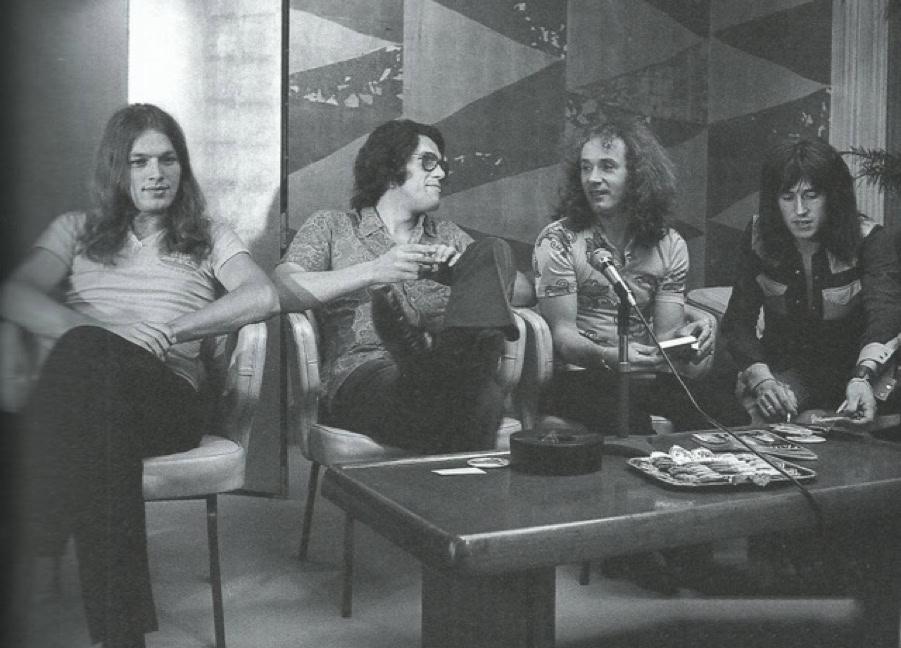
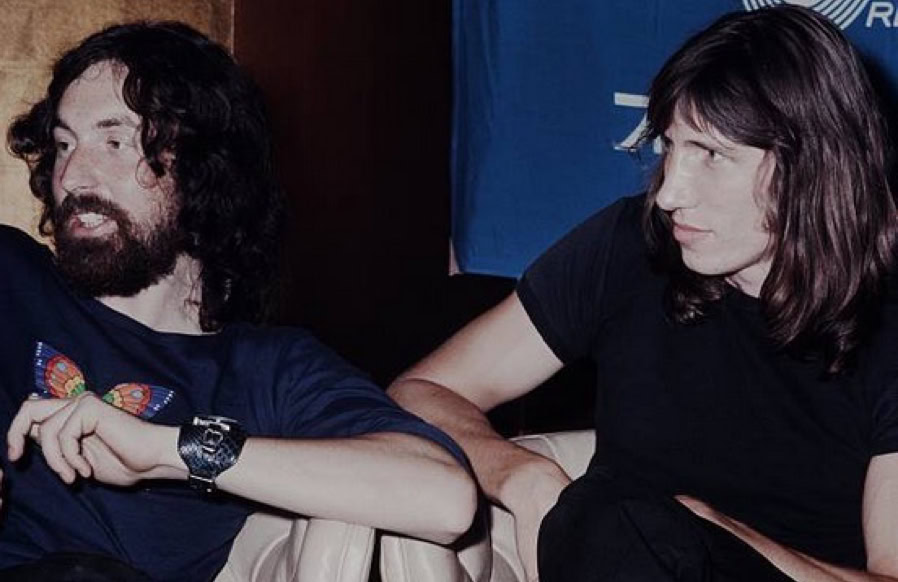
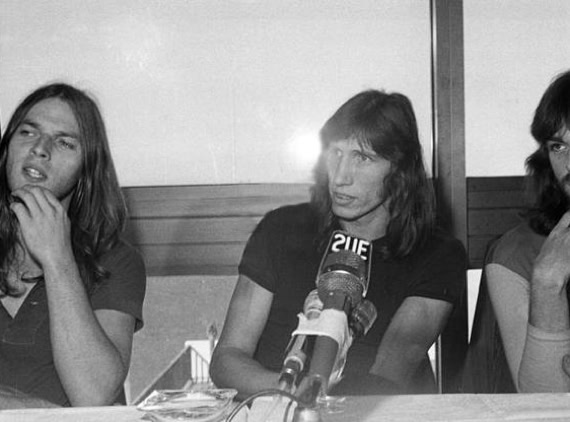
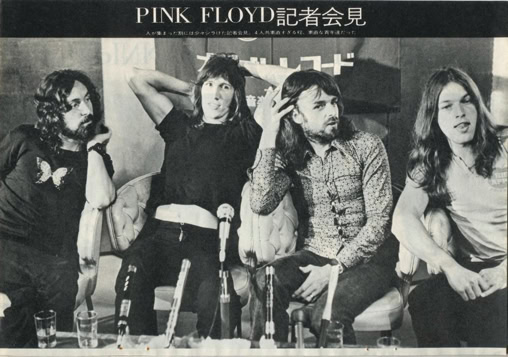
MISCELLANOUS| 1st August 1971, a massive press conference is organized at the Airport
PRESS MENTION| Early August 1971, the editor of «Oz Magazine» Richard Neville is condemned to 15 month jailing because a cover showing a penis (Issue May 1970).
Roger Waters:
«But in a way it was good that the judge was such a pig (...) it stretches the credibility of it all. Such an obviously put-on thing, but that seems to be the climate in England»
«Pink Floyd wanting to 'turn people on and amaze everyone’», Unknow Source, August 1971
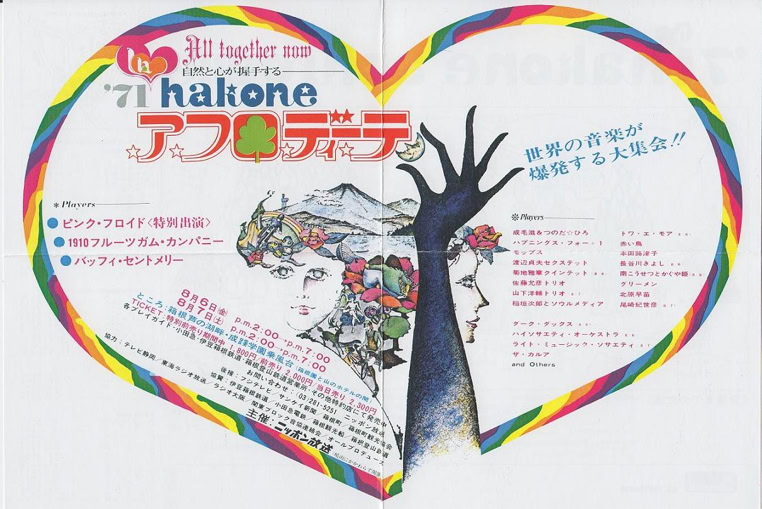
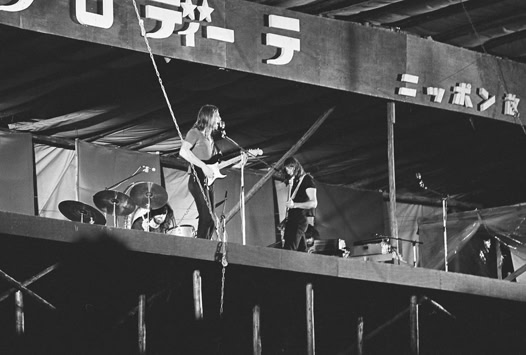
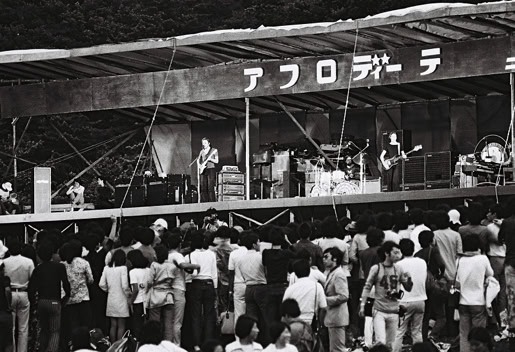
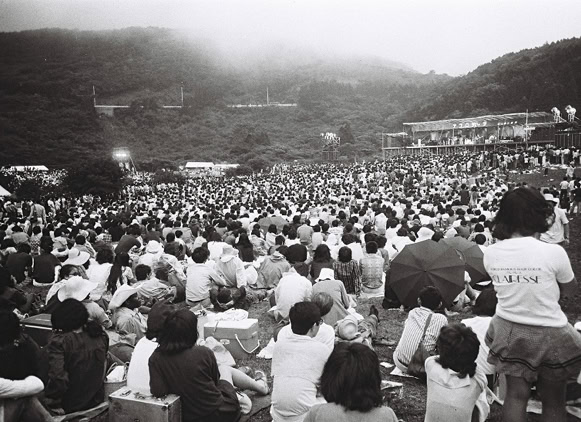
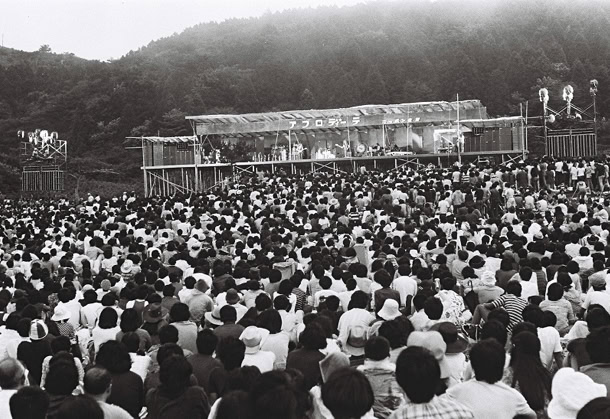
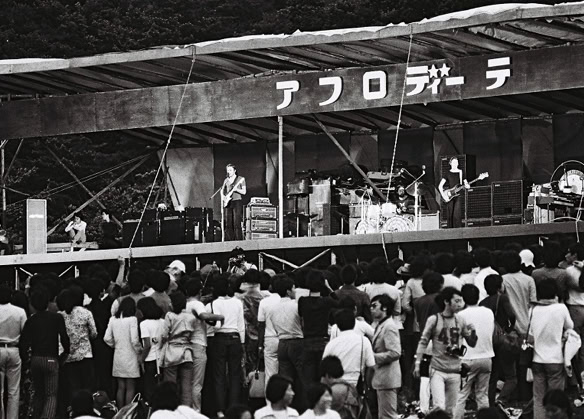
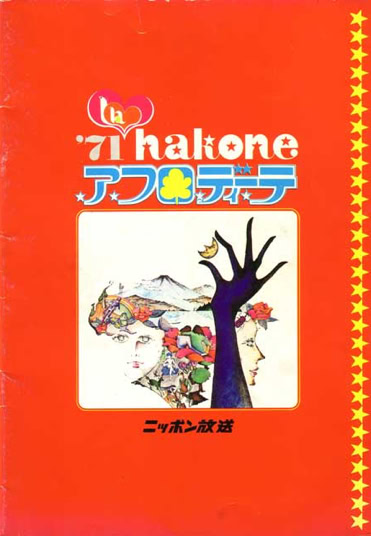
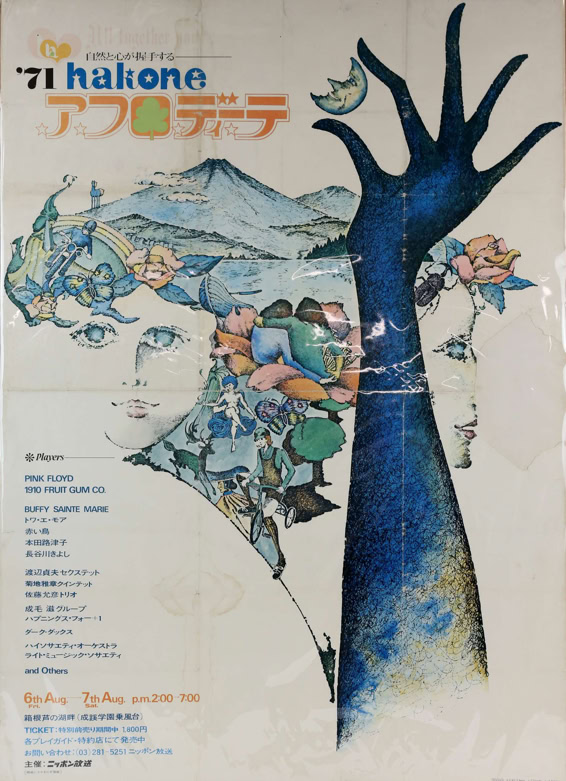
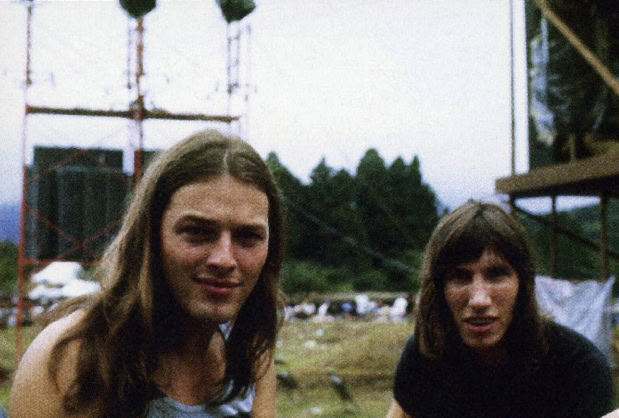
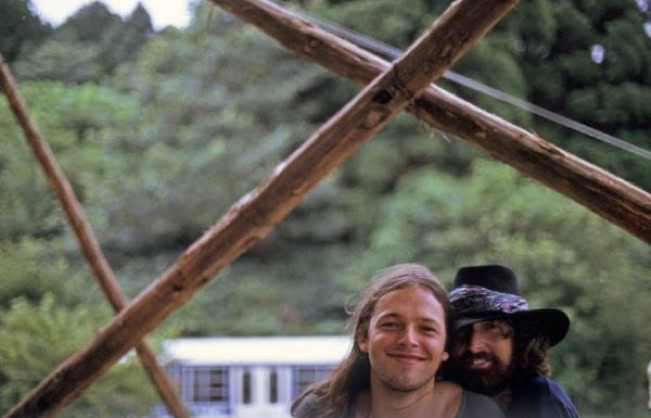
CONCERT DATE| 6 August 1971 «’71 Hakone Aphrodite», Fuji-Hakone-Izu National Park, Hakone, Japan
Interviewer: «Beaucoup de vos concerts se sont tenus en plein air, le meilleur et le pire souvenir ?
Nick Mason: « Les meilleurs sont toujours liés à ces endroits exotiques où nous sommes allés : Australie, Veni-se, au Japon à Hakone, le 6 août 1971. Car, si tu as la chance que les cieux soient avec toi, cela peut être fantastique, surtout lorsque tu joues à ce moment particulier où la lumière du jour commence à décliner et que la nuit arrive. Les lumières disparaissent et tu allumes la scène, ou plutôt les lumières qui t'entourent se mettent à rayonner vraiment»
«Pink Floyd - Interview Nick Mason», Jukebox, November 2005
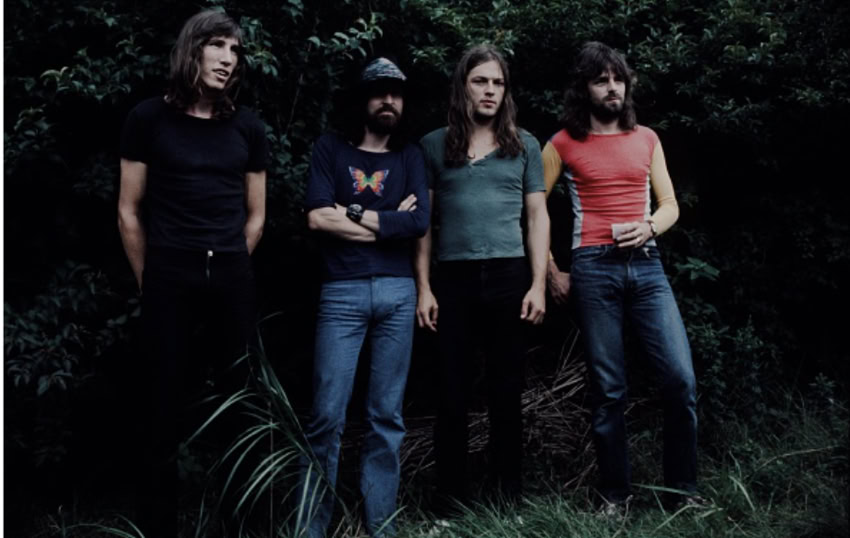
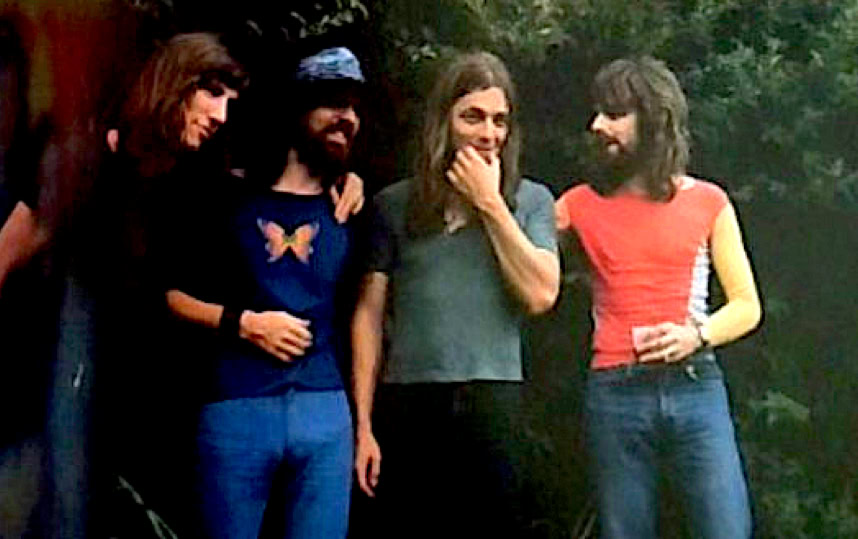
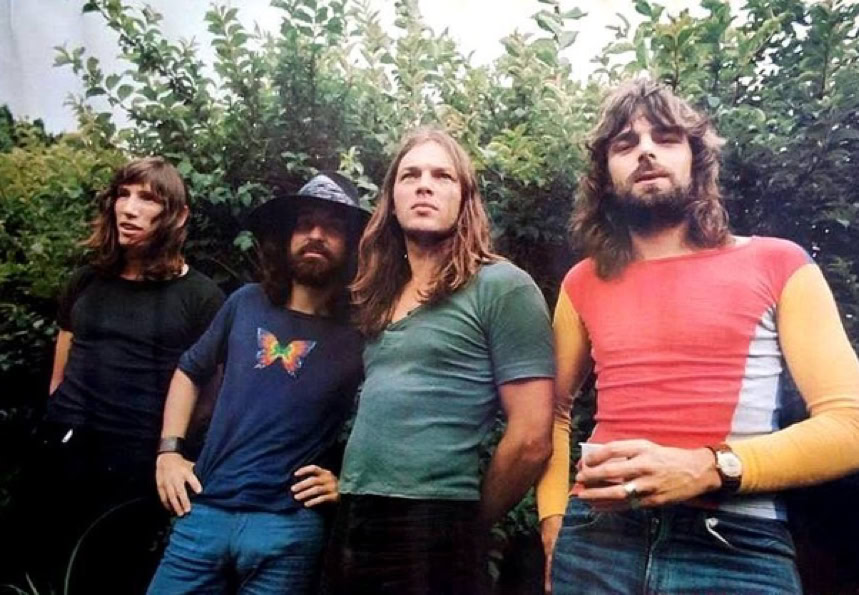
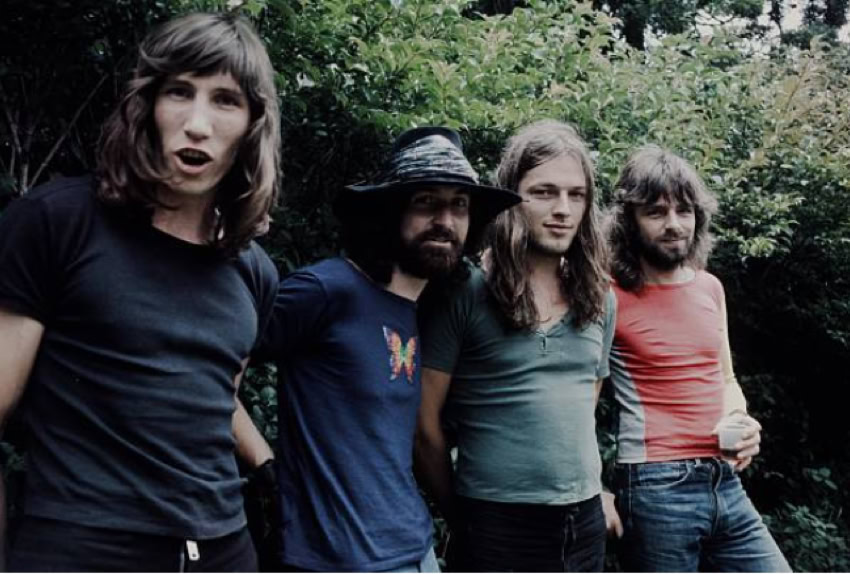
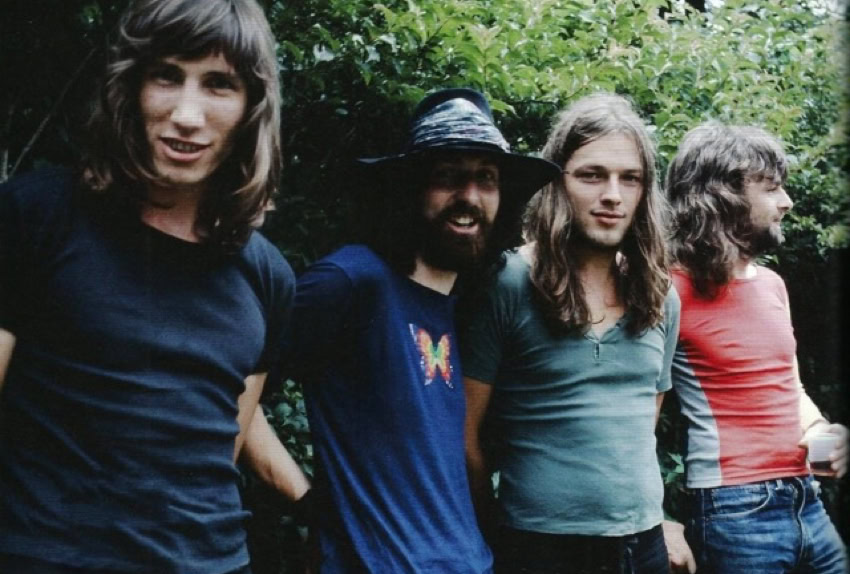
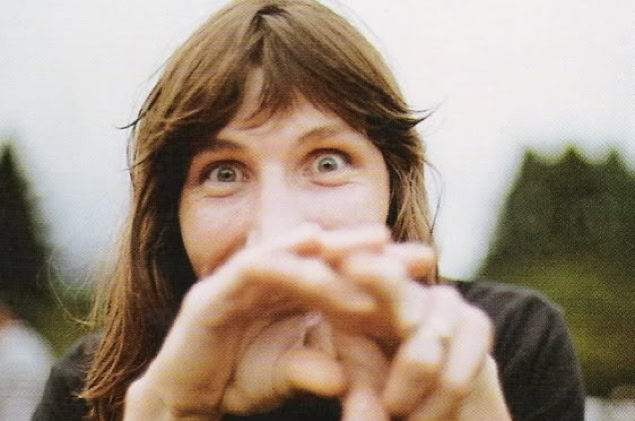
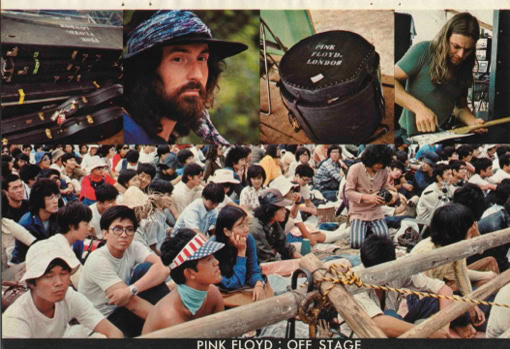
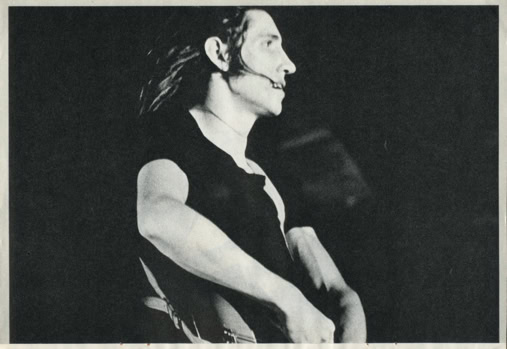
PHOTO SESSION| Prior the first gig, the band is photographed by Koh Hasebe for «Music Life» magazine
Photographies by Koh HASEBE
Hakone Festival programme.
CONCERT DATE| 7 August 1971 «’71 Hakone Aphrodite», Fuji-Hakone-Izu National Park, Hakone, Japan
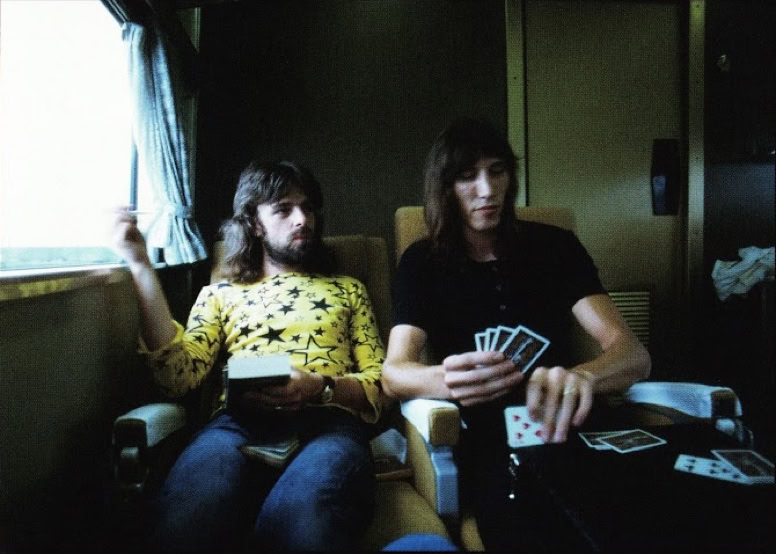
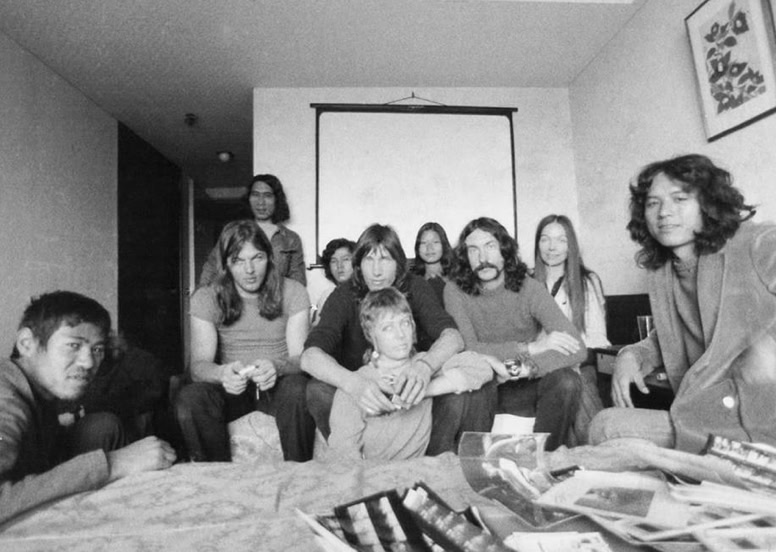
Left: Rick and Roger in transit. Right: the band (and the then-Roger’s wife) receives Japanese journalists and fans at the hotel.
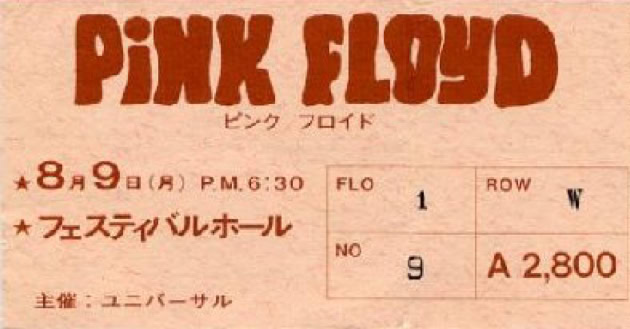
CONCERT DATE| 9 August 1971 Festival Hall, Osaka, Japan
Photographies by Judy Trim-Waters
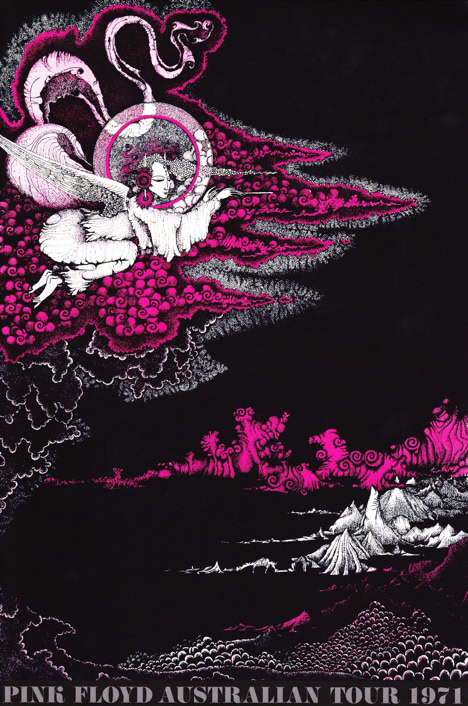
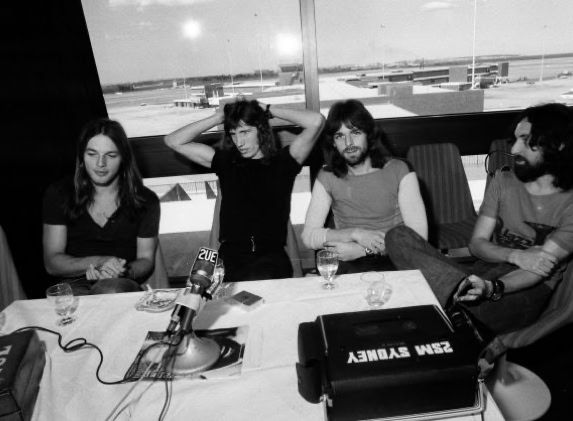
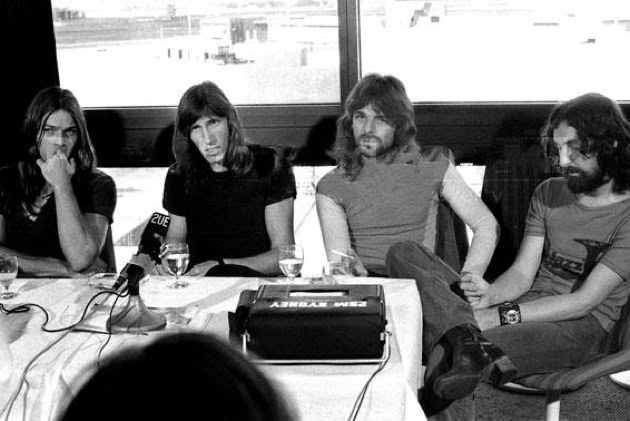
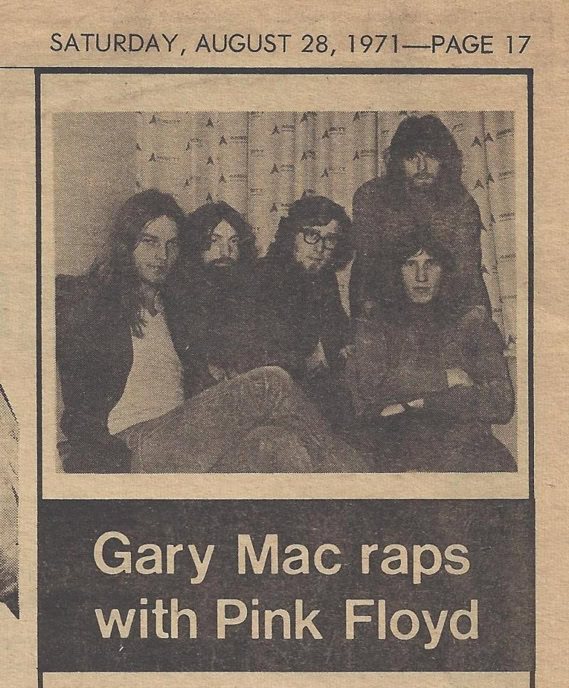
MISCELLANOUS| 11 August 1971 The band is landing in Australia. At the Melbourne Airport they were interviewed by Gary Mac for Go-Set (a 24 page music newspaper). Australian journalists, not realizing that the Floyd disliked talking about the music, actually received a couple of decent interviews with all the members of the band. Mac's interview plus a review of the Melbourne concert appeared in the Saturday, 28th August 1971 edition of Go-Set (volume 6, number 35).
« The British pop group Pink Floyd arrived in Sydney by air to day for two concerts in Sydney and Melbourne from which they said they expected to net £23,000 »
« Group hopes to net £23,000 », Belfast Telegraph, 11 August 1971
Interviewer: «What was their objective in Australia ?»
David Gilmour: «Turn all the people on and amaze everyone»
«Pink Floyd wanting to «turn people on and amaze everyone»», Unknow Source, August 1971
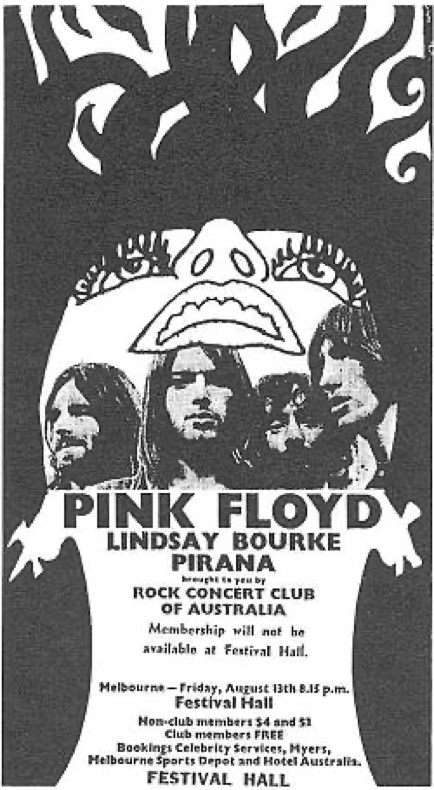
CONCERT DATE| 13 August 1971 Festival Hall, Melbourne, Australia
Picture by « Go-Set Magazine »
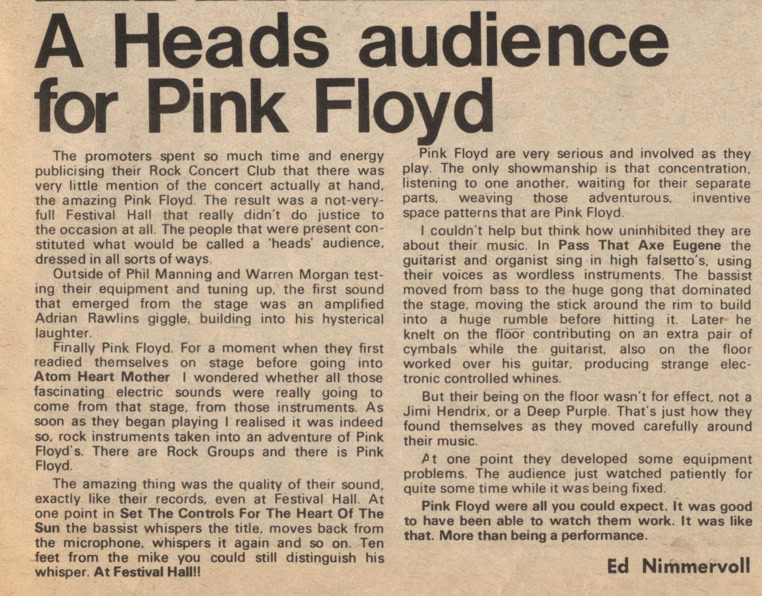
«The promoters spent so much time and energy publicising their Rock Concert Club that there was very little mention of the concert actually at hand, the amazing Pink Floyd. The result was a not-very-full Festival Hall that really didn't do justice to the occasion at all. The people that were present constituted what would be called a 'heads' audience, dressed in all sorts of ways. Outside of Phil Manning and Warren Morgan testing their equipment and tuning up. the first sound that emerged from the stage was an amplified Adrian Rawlins giggle, building into his hysterical laughter.
Finally Pink Floyd. For a moment when they first readied themselves on stage before going into Atom Heart Mother I wondered whether all those fascinating electric sounds were really going to come from that stage, from those instruments. As soon as they began playing I realised it was indeed so. rock instruments taken into an adventure of Pink Floyd's. There are Rock Groups and there is Pink Floyd.
The amazing thing was the quality of their sound, exactly like their records, even at Festival Hall. At one point in Set The Controls For The Heart Of The Sun the bassist whispers the title, moves back from the microphone, whispers it again and so on. Ten feet from the mike you could still distinguish his whisper. At Festival Hall!!
Pink Floyd are very serious and involved as they play. The only showmanship is that concentration, listening to one another, waiting for their separate parts, weaving those adventurous. inventive space patterns that are Pink Floyd. I couldn't help but think how uninhibited they are about their music. In Pass That Axe Eugene the guitarist and organist sing in high falsetto's, using their voices as wordless instruments. The bassist moved from bass to the huge gong that dominated the stage, moving the stick around the rim to build into a huge rumble before hitting it. Later he knelt on the floor contributing on an extra pair of cymbals while the guitarist, also on the floor worked over his guitar, producing strange electronic controlled whines.
But their being on the floor wasn't for effect, not a Jimi Hendrix, or a Deep Purple. That's just how they found themselves as they moved carefully around their music. At one point they developed some equipment problems. The audience just watched patiently for quite some time while it was being fixed. Pink Floyd were all you could expect. It was good to have been able to watch them work. It was like that. More than being a performance»
«A heads audience for Pink Floyd», Go-Set, 21 August 1971
Guy Hughes:
«The Melbourne Festival Hall is renowned for its poor sound, but the Floyd along with their quad sound were able to overcome the hall's shortcomings. The hall was only about half full owing to almost non-existant promotion. At both concerts Pink Floyd were supported by other bands, a very rare occurrence indeed! Pirana came on first and played for one hour followed by Lindsay Bourke. Both bands were well below the Floyd standard of extreme freeform improvisation.
After a ten minute break (9:30pm approx), Pink Floyd came on stage and Roger announced "Good evening. This is called Atom Heart Mother". They then went into a sixteen minute non-orchestrated performance of the piece. After a minute or so of tuning up, Roger announced, "We're just going to retune then we're going to do two things together. The first of which is a song from the soundtrack from the film More, which I hear was banned over here, and it's called Green Is The Colour. And the second is an instrumental called Careful With That Axe, Eugene". Both songs together lasted fourteen and a half minutes. This was either the last, or the penultimate, performance of Green Is The Colour (I'm not sure if it was played in Sydney). After that, Roger said "This next thing is a new piece, and it's called Echoes. And it's going to take us a minute or two to get it together because one of our lenses has burnt out". This was the first time it was announced as "Echoes" (and lasted twenty two minutes), but it still had the alternate lyrics for the first verse and chorus, and the quick ending without the multi-tracked choir as at the Montreux 1971 gig.
The band then played a twelve and a half minute Set The Controls For The Heart Of The Sun without announcing it. They then played an eleven minute Cymbaline before Roger proclaimed "Okay. This is going to be our last tune. Thank you all for coming. It's called A Saucerful Of Secrets and we'll see you again some time". Unfortunately the original tape ran out after five and a half minutes into Saucerful. The show was recorded about fifty yards from the stage using a Sony TC80 mono portable cassette recorder, smuggled in a schoolbag, and a normal position BASF cassette (chrome wasn't available in 1971)! Pink Floyd, Melbourne 1971 ticketWith the Melbourne concert out of the way, Pink Floyd made their way to Sydney for an afternoon performance at Randwick Racecourse. Before they went on stage, they were interviewed for the GTK (Get To Know) programme in one of the rooms at Randwick (see transcription in the Pink Floyd Interviews section of this site). The GTK programme was a short (five to ten minute) music show that was screened weeknights before the 6pm news. The Floyd interview lasted for nearly nine minutes. This is the only interview on film that features all four members talking together !»
«Brain Damage Magazine»
Interviewer: «Why have you dropped 'Interstellar Overdrive' from your material? Out of all Syd's songs this one seems to have the closest affinity to the present band»
Gilmour: « Well only because of age - we were getting sick of it. It was us really because the audiences were still well into it. It's no desire to leave Syd out or anything, we have been doing "Astronomy Domine" up until very recently which was a Syd song. Most of the old Syd songs are incompatible with what we do now, so there's no point»
Interviewer: «… like your’ new Piece "Echoes". Is it going to be recorded ?»
Gilmour: « It's the whole of one side on our new album. We have three or four weeks free after we get back to England so we hope to get it out about mid-September in America and England»
«Alan's Psychedelic Breakfast», Daily Planet, 15 September 1971
Nick Mason:
«A highlight of this trip was that we got to meet the film director George Greenough I Ie showed us some footage from a film he was making called Crystal Voyager, a documentary celebration of surfing. Using a camera strapped onto a surfer’s body, he had been able to shoot film within the tubes formed by breaking waves, further enhanced by sunrises and sunsets It was stunning. We gave George permission to use our music for his film and in return have enjoyed a reciprocal arrangement where we have used his film - updated from time to lime - at virtually all our subsequent shows. For the 1994 Division Bell tour he supplied some new footage of even better quality to project during ‘Great Gig In The Sky’.»
«Inside Out: A Personal History of Pink Floyd», Nick Mason, 2005
PRESS MENTION| On the occasion of the visit to Australia, the group receives its first massive press coverage
On the left: « Go-Set », 21 August 1971. On the right: « The Sydney Morning Herald », 14 August 1971.
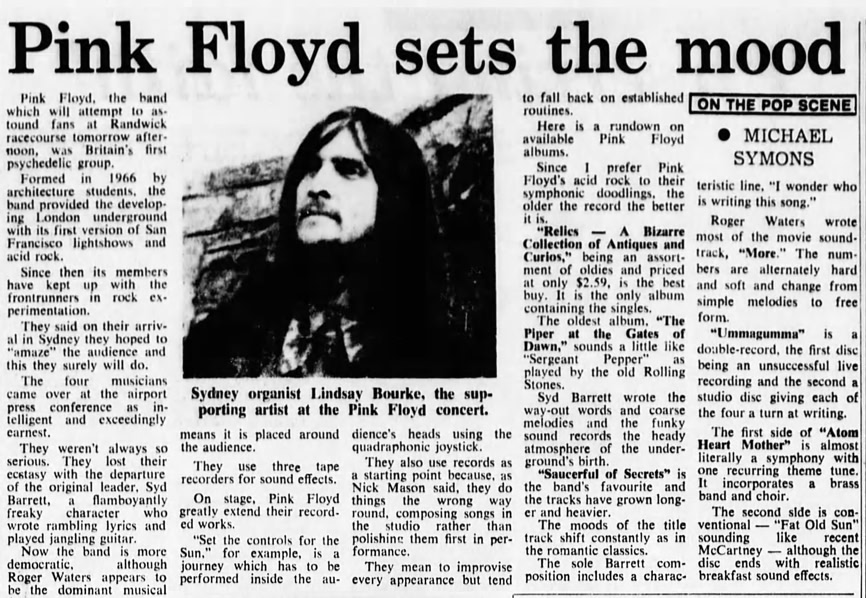
CONCERT DATE| 15 August 1971 St Leger Stand, Randwick Racecourse, Sydney, Australia
Photographies by Philipp MORRIS.
Peter Calcroft
I, too, attended the Sydney show in question, in 1971. Unfortunately it was a very poor show, and the author above is right in blaming the organisers... it was not at all the fault of the band.
There was a gale force wind blowing across the audience and the band was huddled together on a small, makeshift stage that barely contained their equipment. The sound, that we the audience heard, was just a loud din, barely recognisable as music. I can still remember the look of frustration and distress on David Gilmour and Roger Waters faces as they tried to make the best of the appalling conditions. I made up for it, however, by seeing them again, under ideal circumstances this time, whilst visiting the UK some years later. This later show remains one of the main highlights of my more than thirty years of concert going.
Please understand, though, I was only thirteen years old at the time, and had not yet developed any sense of the importance of what I was witnessing on that day in 1971. However, even as a boy, I was quite perceptive and able to recognise the fact that the problems of that afternoon were not of the bands' making. What also surprised me was the small size of the crowd. I don't know the exact numbers but it couldn't have been more than four or five thousand people. That, and the "host", "on-stage announcer", call him what you will, pleading with the crowd, "Please, people, The Pink Floyd are perfectionists!". This, in response to the moans and groans from the audience about the delays in getting the show started».
«Brain Damage Magazine»
The band was filmed by the Australian TV for the famous TV show « Get to Know » (see this page for more details)
« The Pink Floyd concert at Randwick Racecourse on Sunday, August 15 was probably the most miserable and unpleasant overseas pop show yet staged in Sydney (…) The beauty of Pink Floyd’s music weren’t enough to make up the impossible conditions (…) When the Floyd began, we were surprised to find that we could now catch occasional glimpses of the lead guitarist and organist, due to the shifting of the speakers. And the music made me think that maybe everything would be alright. It was a lovely instrumental with lingering, mournful guitar notes and high moaning from the singers. (…) The Floyd’s numbers, though all much allike, featured a variety of atmosphere effects - whispering, screaming, explosions, hurricanes and the most hysterical and terrifying electronic noises I have heard. The Floyd bought a giant gong on stage, and I imagine it was quite an experience to see it being bashed, for those who were in the right position.
After the classics, Set the controls for the heart of the sun and Sauerful of secrets, the Floyd left, to let us get «back to our warn firesides» as the lead guitarist said. But enought of the audience had seen and heard the full show to start a loud clamour for more and the Floyd returned and obliged with a long freak-out»
«Pink Floyd flattered», Soundblast, September 1971
MISCELLANOUS| 17 August 1971 The band is on transit to Hong Kong.
Nick Mason:
«On a stop over at I long Kong airport heading home we phoned the Hipgnosis studio to brief Storm on the cover design for Meddle. The title had been hastily concocted and, maybe inspired by some Zen-like image of water gardens, we told Storm we wanted ‘an ear under water’. Time differences meant that neither party was on top form for the telephone discussion, but even across the intervening miles, we could hear the sound of Storm’s eyes rolling»
«Inside Out: A Personal History of Pink Floyd», Nick Mason, 2005
Storm Thorgerson:
«I didn't understand the title, either, nor the specific suggestions made down a crackling phone line from the Far East by the band. They had gone on tour to Japan in 1971 and had taken their wives with them. I wonder what that was like? (I just realise, as I write this in 1997, that here's a possible reason for that title. Spouses do not as a rule accompany bands on rock 'n' roll tours. Perhaps the wives in this instance altered or even disrupted the usual patterns of tour activity, just by being there or by wanting, naturally, some attention. None of those wives remained, since the Floyd all remarried by ‘choice', including the manager. And the moral was...don't meddle girls, or the game is up.) We enlisted the 5/4 expertise of Robert Dowling esquire to take the initial photographs of the ear in close up and the brightly ht rings of water. Robert was a professional, a specialist, eminently reliable and could shoulder the responsibility, especially if there was a cockup. Good plan. The two separate images, ear and water were sandwiched together - ‘sandwich' being a technical term for super-imposition - to produce the final indifferent result. No fault of Robert's, more “a long-distance what the fuck are you talking about, I don't know if I like that idea very much, but I'd better do the best I can" kind of a fault»
«Mind Over Matter», Storm Thorgerson, 1997 Edition.
Robert Dowling (photographer):
«I met Storm Thorgerson through my brother in law who owned a design group.Storm needed an expert, he and Aubrey Powell didn’t have the facilities or equipment necessary for the brief and I fitted the bill. There were no out-takes. It was a very simple still life. We hired a model from a nearby agency, shot this ear, then shot droplets of waters and sandwiched the two photos together. It was very controlled»
«Paintbox», Q Special Edition, October 2004.
Mock up of the cover
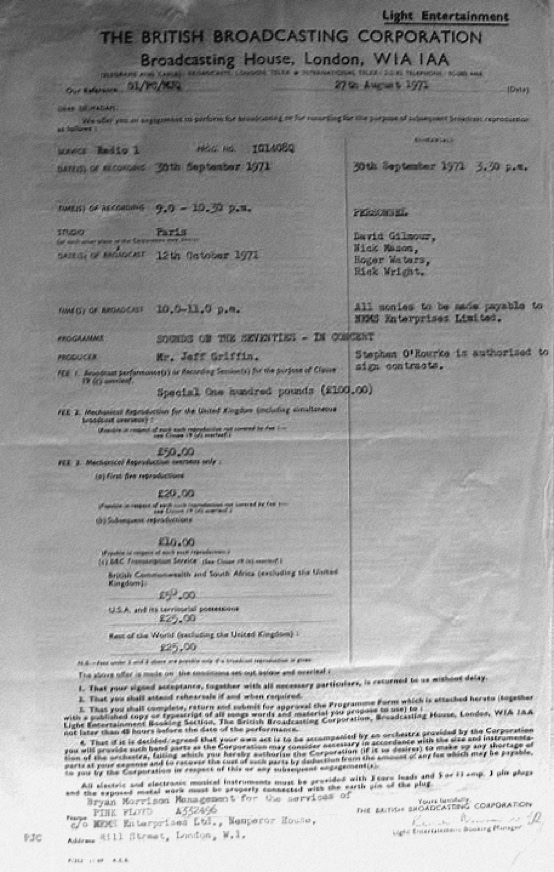
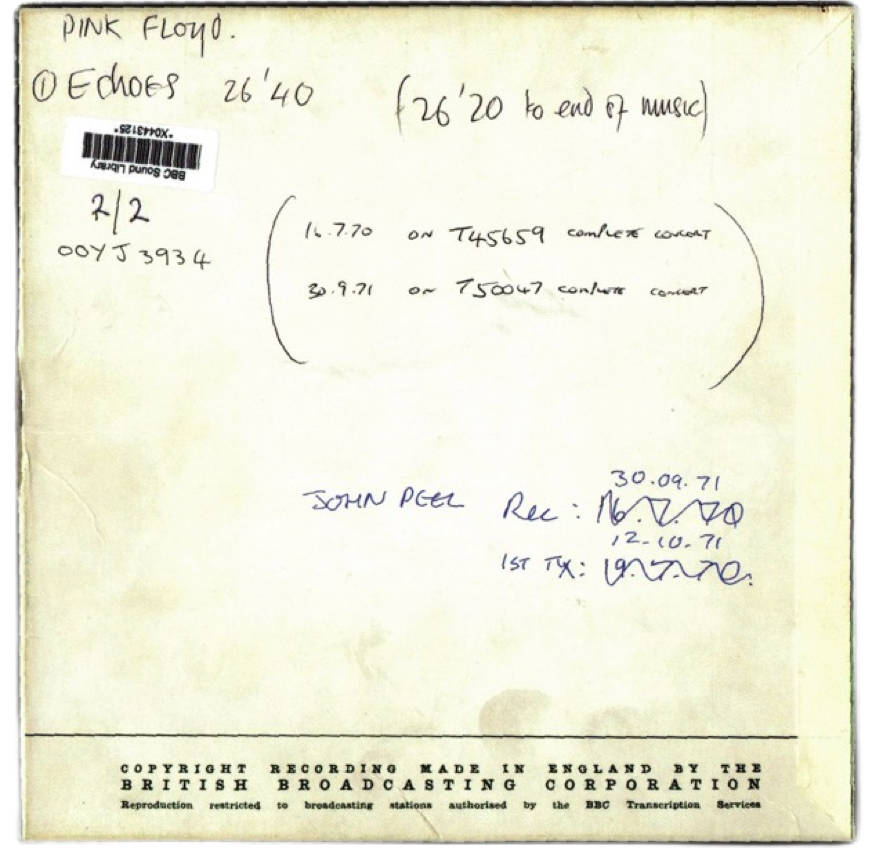
MAIN EVENT| Late August 1971, The band iagreed to give a performance for «John Peel Session». It will be the last appearance of the band in radio
BBC contract.
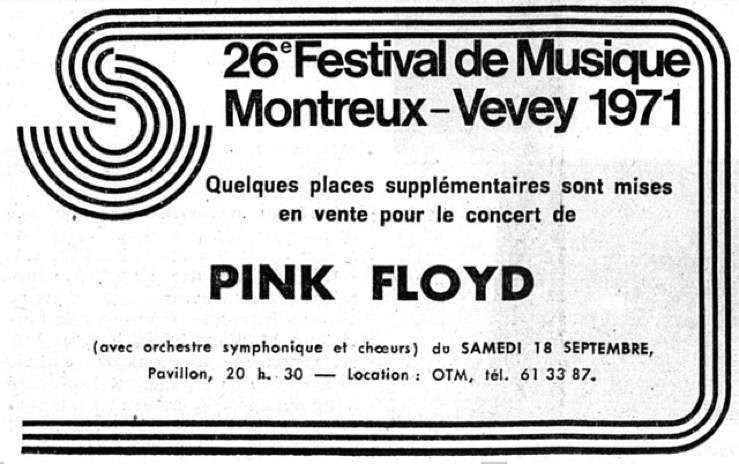
MISCELLANOUS| 18 September 1971 After a short vacation, the band come to Swiss to play at the famous classical festival of Montreux.
CONCERT DATE| 18 September 1971 «Festival de Musique Classique», Pavillon de Montreux, Montreux, Switzerland
Right picture by Alain OGHERI.
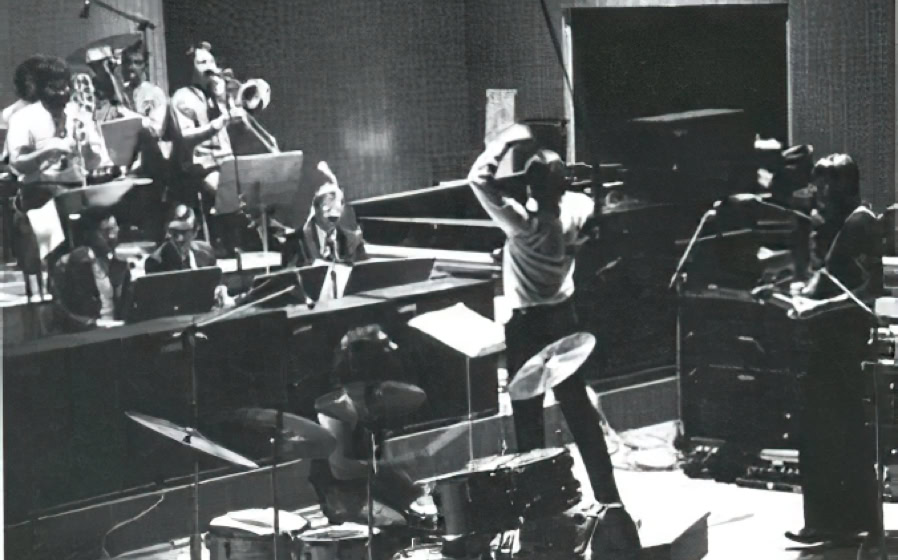
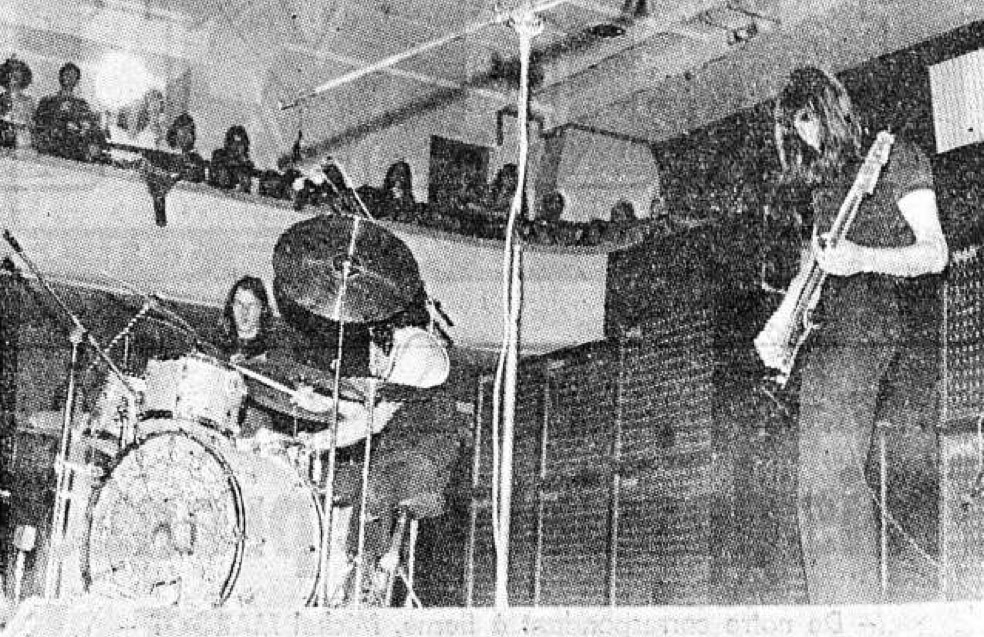
«Quel merveilleux week-end que celui de samedi et dimanche durant lequel, dons le cadre du festival du septembre musical de Vavey-Montreux, Pink Floyd s’est produit deux fois consécutivement ! Le premier concert était divisé en deux parties : les quatre musiciens du groupe débutèrent discrètement par une nouvelle composition qui donna une impression d’évolution de leur musique vers un côté plus rythmé, sans toutefois omettre cette fameuse recherche de vibrations sonores si bien maîtrisée par toute la machine que représentent Gilmour, Wright, Mason, Waters, les régisseurs du son et leur impressionnant matériel. Les autres interprétations, plus connues déjà, telles que Set the controls for the heart of the sun ou Cymbaline, nous mirent sur orbite avant l’événement de la soirée Atom Heart Mother. Cette seconde partie réunissait des chœurs et des solistes d’instruments à vent d’un orchestre symphonique londonien. Cette suite musicale prouve qu’une liaison entre deux styles différents pouvait se réaliser; et chacune des formations le fit à merveille, d’une manière si décontractée qu’on aurait pu croire à de la supercherie. Mais le son était utilisé de telle façon qu’une trompette en valait dix et quelques voix (environ vingt personnes des deux sexes) une chorale. De cet Atom Heart Mother, nous en garderons un exemple pour celui qui doute de la valeur musicale decertaines formations dites « Pop » et s’il fallait chercher « l’erreur », nous reprocherions un manque de sûreté et quelques bavures des cuivres de l’orchestre symphonique. Le final imposant laisse l’auditoire dans l'enchantement, si bien que le «bis» bruyant nous permit de goûter un génial Saucerful of Secrets achèvent un rêve que certains retrouvèrent au concert du lendemain».
«Pink Floyd : génie de la technique et de l'imagination», Nouvelliste, 25 September 1971.
«Samedi 18 septembre, le Pavillon de Montreux accueillait le groupe anglais des Pink Floyd et ses nombreux admirateurs. Depuis quelques semaines, plus aucune place n’était libre ; la raison de cet engouement était la venue d’une partie des musiciens de l'Orchestre philharmonique de Londres. C’est cependant un Pink Floyd tout simple qui s’est présenté sur scène. Son répertoire alors laisse toujours un envoûtement différent au spectateur. D’un même talent irréprochable, sa musique, ambassadrice d’un style unique, conquit la salle comble. Si d’habitude cette « musique » est le propre de la jeunesse, samedi, tous les âges étaient représentés. Cette réunion heureuse s’accordait au rythme d’un concert pop mêlé de classique. Avec les chœurs et les musiciens présents pour la circonstance.
Pink Floyd a tracé en deuxième partie un ineffaçable souvenir de sa technique. Mêlé à un orchestre symphonique, sa musique distillait un agréable paradoxe. Doublée par les chœurs, cette suite a trouvé le chemin de son succès. Un délirant rappel sur scène venait récompenser Pink Floyd. Ainsi après sa venue, il nous est possible de tirer des conclusions. Pink Floyd fut certes aussi talentueux que par le passé. Le choix de la salle cependant nous laisse étonné. La place était diminuée par les rangées de chaises et la scène continuellement baignée d’un éclairage fixe peu propice à la réception d’un tel concert. Chacun pensait découvrir Pink Floyd avec un orchestre philharmonique et des des chœurs, beaucoup n’ont retrouvé que Pink Floyd avec son incontestable verve musicale»
«Après un concert …», Nouvelliste, 23 September 1971
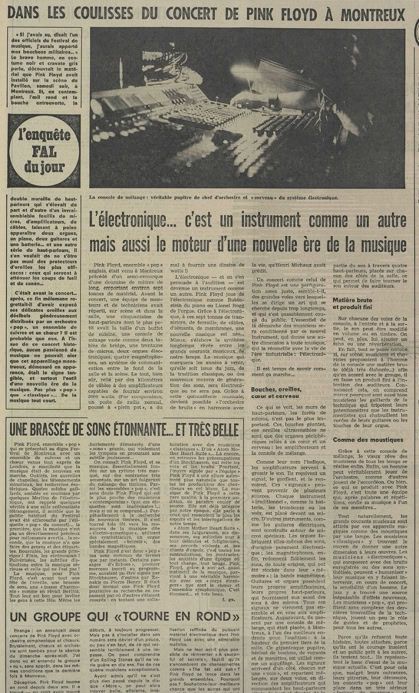
«Pink Floyd, ensemble « pop» qui se présentait au digne Festival de Montreux avec un ensemble de cuivres et un choeur venus tout exprès de Londres, a manifesté que la musique était de nouveau en marche. Oubliés, les querelles de chapelles, les tâtonnements minutieux, les recherches ésotériques. Quatre solides gaillards, assistés en coulisses par quelques Merlins de l'électronique, ont rappelé quelques vérités à une salle enthousiaste (étrangement, il semble que le public habituel du Festival avait été effarouché par l'étiquette « pop » du concert)... la première, que la musique n'est pas un divertissement précieux pour mélomanes avertis... la seconde. que la musique n’a que faire des genre* et des étiquettes. Bousculés, les grands principes ! Finis, les cérémonials 1 Pulvérisées, les subtiles distinctions entre la musique sérieuse et celle qui ne l’est pas I La musique, pour Pink Floyd. c’est avant tout une fête de l'oreille, une brassée de sons, une « masse d'harmonie » comme on rêvait Berlioz. Tout leur est bon pour inviter les gens à cette fête. Même les hurlements démesurés d'une « sono» géante, qui violentent les tympans en procurant une subtile jouissance ... On connaît Pink Floyd. et sa musique. Essentiellement fondée sur un rythme très marqué. sur des contrastes très accentués, sur un art fulgurant du mélange des timbres. Parmi les ensembles * pop •, c'est sans doute Pink Floyd qui est le plus proche des musiciens « contemporains » (que ces étiquettes sont inadéquates !... mais si on se comprend...). Perpétuellement à la recherche de nouveaux timbres, il s'est tourné très tôt vers les ressources de la musique dite « électro-acoustique ». utilisant des synthétiseurs, un orgue spécialement « bricolé », des bandes magnétiques.
Pink Floyd n'est donc « pop » (nu sens commun du terme) que par instants. Certains passages d'« Echoes >. premier morceau inscrit au programme, auraient pu être signés par Stockhausen. d'autres par Xénakis ou Pierre Henry. 11 était donc normal que Pink Floyd poursuive sa recherche en repassant par où d'autres s’étaient essayés : en tentant une collaboration avec des musiciens « classiques ». D'où « Atom Mother Heart Suite »... Là encore, on retrouve les préoccupations d'un Stockhausen. qui mêle les voix et les bruits. Pourtant, l'œuvre signée par « l’équipe » Pink Floyd a une allure autrement plus naturelle que toutes les productions des chercheurs en col blanc. La musique de Pink Floyd a cette rare qualité, à la première audition. de paraître couler de source. Elle est déjà intégrée par notre époque, elle parle â ceux qui ressentent le plus les espoirs et les interrogations de notre temps. « Atom Mother Heart Suite ». dans ses fulgurances, ses dissonances. ses mélodies tour 6 tour délicates et fuligineuses, ses accords violents et ses chants «l'espoir, c’est toutes les contradictions, les contrastes, les anxiétés d'une époque où tout change, tout bouge. Pink Floyd, grâce à son art quasi instinct il de la musique, parvient h une véritable harmonie avec ces « corps étrangers » que sont le chœur et l'ensemble symphonique. C'est étonnant... et très beau»
«Une brassée de sons étonnante … et très belle», 24 Heures, 21 September 1971
«L’Initiative est heureuse d’intégrer au Festival de Montreux un concert de pop music, même si ce n’est pas d’une originalité transcendante, puisque Montreux est devenue, depuis quelques années, une cité-pop. En outre, la réputation des Pink Floyd est telle, parmi les amateurs du genre, que la salle était comble bien avant la date du concert. et qu’il fallut ajouter une représentation dimanche. aussi vite complète : non par des festivaliers, mais par des fanas du groupa accourus de la Suisse entière. Si l'Initiative fut heureuse, elle n’atteint donc pas exactement son but qui était surtout d'élargir les perspectives du Festival et de dégourdir un peu les habitués. Combien y en avait-il dans la salle samedi, de ces habitués ? Assez naïvement peut-être, je nourrissais à l'égard du pop - que je connaissais par disques seulement - un préjugé favorable : musique réellement populaire, a laquelle les jeunes loot universellem«»*, acquis. Et musique qui. croyala-je. s'adonne A une forme de recherche, et ne te contente pas de séduire. Las 1 11 faut bien déchanter. Far rapport aux recherche* icnores de la musique contemporaine, le pop ne va pas très loin. Le rythme et la forme cfl «ont d’une simplicité — pour ne pas dire d'une banalité — récllemeaf de tout repos, et de la plu« ctau-ftlquc pureté. Los œul* éléments originaux en sont Voipeet annote et surtout technique. Il est toutefois difficile da juger, en concert, de l'originalité scmorc. le nombre de décibel* noyant In subtilité des* mixages et les prestation des quatre musiciens. C'eet d’autant plus regrettable que cm traitements de sons en d.icct «ont peut-être l'a*pect la plus original du pop : le procédé n'est guère utilisé en musique contemporaine En revanche, cette dernière offre, en motlèTc d'« Improvisation collective «. une richesse et une originalité beaucoup plus grandes.
On Altar.claU a vue curiosité la suite « Atom Heart Mother » qui réunit aux quatre rouii-
clen* pop un ensemble d'harmonie (troèe tiompeUev. trci* trombone*, trot* cor* et un tub*) et un choeur m.xte : c'en était la première et un:que représentation suies*. ainsi que U dernière exécution publique qu'en donnaient les pro ta go ni rtc», venus do Londres pour l'occasion. Hélas, l'adjonction d'un cnacmfctc scml-symphonique, traité sur le modo «variétés» avec une banalité d'écriture aux effet* *»ent tellement « pompiers ». n'ajoute vraiment rien au genre, bien au contraire. Les ceux enoesr.b!«* — venu et voix — ne permettant aucun des bruitages eonorM qui font l'jnté/êt du pop. et n'ajoutent rien non plus sur le plan rythmique.
En on p»ji m «iamandor «'Il Mt uUUde multiplier le nombre dea exécutanU, alors que par do* effet* technique*. 1« pincement d'une corde du guitare fait plus de bruit qu'un orchestre symphonique de cent vingt musicien*..cMal* le phénomène pop ae porto bien : salle comble, délirante A tou* coupe; «ans compter los innanmbrablr* rescapée qui, autour du Pavflkm, » pressent don* l'espoir de trouver une plnco rendue ou un interetic* H»ur permettant de se gllwer duna 1« Mdle. Ce qui est compter son* le service d'ordre, extrêmement renforcé...
«L’heure du pop avec les Pink Floyd», Journal de Genève, 20 September 1971
«Le temps d’une glissade sonore dans l’infini suffit pour fondre la pensée de chaque spectateur dans un univers irréel. Nos âmes, encore étonnées de se trouver là, furent emmenées dans une chevauchée fantastique au rythme de la guitare basse. Le paysage s’illuminait des folies de l’orgue. Nous nous promenions, extasiés, au son de cette voix si douce qui surgit alors. Un étrange chemin nous conduisit dans une sombre steppe balayée par une violente tempête, rendue plus inquiétante encore par ces cris et sifflements venus d’un peu partout. Un retour à la cavalcade effrénée termina le premier morceau inédit de « Pink Floyd ». Ensuite, « Pink Floyd » a joué quelques anciens morceaux, conservant leur structure magique désormais très au point. A l’intérieur de ces structures, ils ajoutent des sons encore inconnus pour la plupart, improvises sur le moment même. Ainsi samedi soir et dimanche après-midi le groupe a-t-il retrouvé une certaine agressivité, une spontanéité aussi, perdue dans « Atom Heart Mother ». Cette pièce à l’écriture classique très rigide nous à été présentée avec chœur et orchestre samedi. Nous avons été déçus, ce qui aurait dû être le clou de la soirée n’a pas été à la hauteur de ce que le disque laissait espérer. Une interprétation par trop « pompier » de la partie des cuivres en est sûrement la cause ; ainsi qu’un manque de cohésion entre les différents corps de musique. Par contre, nous avons trouvé l’interprétation de dimanche, sans chœur ni orchestre, nettement supérieure parce que mieux intégrée dans l’ensemble du concert»
«Magie féérique à Montreux: Pink Floyd», L’Express, 21 September 1971
CONCERT DATE| 19 September 1971 «Festival de Musique Classique», Pavillon de Montreux, Montreux, Switzerland
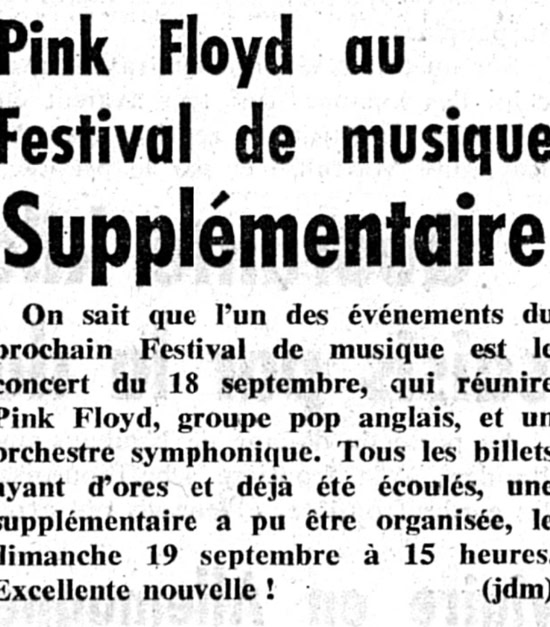
This concert was added at the last minute following the success of the first concert
«Expérience fascinante pour le non-initié que j'étais à l'univers montreusiens des concerts-pop. Mais mauvaise surprise, même si le concert du dimanche fut supérieur à celui de samedi, la comparaison entre l'écoute à la radio et la présence permettant de l'affirmer. Pourtant, l'addition du « Pink Floyd » — quatre musiciens plus des ingénieurs du son qui lui donnent sa véritable grandeur — et d'un orchestre symphonique avec chœurs de paraissait être un spectacle à découvrir. Le deuxième concert était annoncé comme semblable au premier, sauf dans un petit texte d'avant-dernière heure présentant la prochaine visite de Richie Heavens. Téléphone pour éviter tout malentendu : pas de problème nous dit mercredi dernier notre troisième interlocuteur. Il y aura bien chœur et orchestre aussi dimanche. Dimanche, rien. Une annonce samedi soir, paraît-il. Mais qu'importe, tous les billets sont vendus. Dimanche, silence le plus total sur cette absence. Etonnante attitude des organisateurs de Montreux qui ont pourtant l'habitude de relations correctes avec leur public. Cela mérite bien une petite explication. Car il est difficile de se défendre de l'impression de « s'être fait avoir »... Cette musique si planante l’est bien sûr grâce au génie des musiciens mais aussi grâce à la technique poussée d’une sonorisation parfaitement mise au point et sans cesse contrôlée par deux artistes techniciens virtuoses de la quadriphonie. Un parfait exemple de ce travail prend forme dans l’épisode des pas, comédie sonore donnant l’impression qu’un homme traverse la salle en ouvrant des portes et en les refermant bruyamment. Ce passage prenait bizarrement place au milieu du morceau « Cymbaline », thème composé pour le film « More ». De même, tout au long du spectacle, les sons les plus forts étaient ceux qui tournoyaient dans la salle, obligeant l’auditeur à entrer corps et âme dans la musique. Un des morceaux les plus remarquables, le plus inattendu aussi, fut « A Saucerful of Secrets ». L’espace interplanétaire, un monde de planètes et d’étoiles, de comètes qui filent à toute allure, tout un décor de science-fiction qui petit à petit se fixe aux sons d’orgues et de percussions. Quand la folie touche au paroxysme, on attend que quelque chose se passe... nous sommes poussés à bout, jusqu’à ce que l’événement enfin se produise : le batteur part dans un solo très rapide, accompagné de cascades de sons plus fascinants les uns que les autres venant de partout, nous envahissant. Ces derniers de plus en plus nombreux submergent la batterie, à tel point que le batteur vaincu, s’arrête pour lui-même ne plus rien faire qu’écouter ces déchaînements de l’univers en fusion. Soudain, en arrière-plan, très doux, l’orgue — qu'on n’avait pas entendu d’abord — viendra mettre de l’ordre dans cette anarchie sérielle pour bientôt se retrouver seul, pur, rejouant le thème. Basse et guitare se mettent à l’unisson, puis la voix revient en dernier. C’est dans l’harmonie et la beauté que finit ce merveilleux concert»
«Magie féérique à Montreux: Pink Floyd», L’Express, 21 September 1971
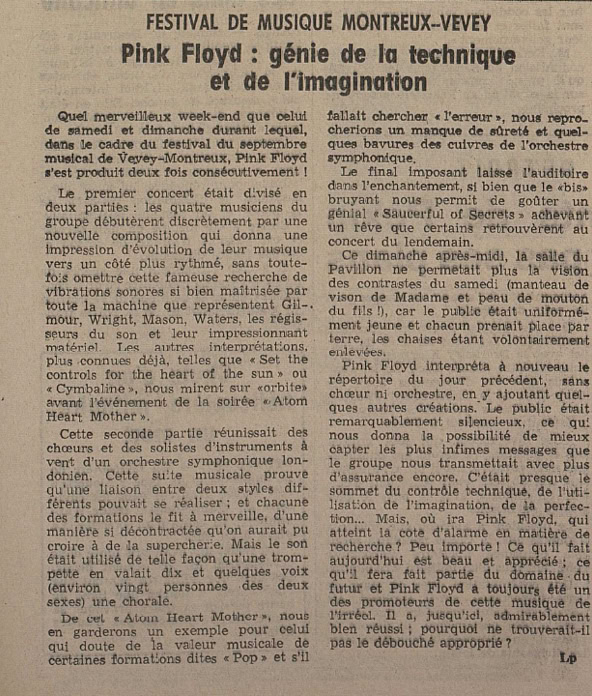
«Ce dimanche après-midi, la salle du Pavillon ne permettait plus la vision des contrastes du samedi (manteau de vison de Madame et peau de mouton du fils !), car le public était uniformément jeune et chacun prenait place par terre, les chaises étant volontairement enlevées.
Pink Floyd interpréta à nouveau le répertoire du jour précédent, sans chœur ni orchestre, en y ajoutant quelques autres créations. Le public était remarquablement silencieux, ce qui nous donna la possibilité de mieux capter les plus infimes messages que le groupe nous transmettait avec plus d'assurance encore. C'était presque le sommet du contrôle technique, de l’utilisation de l’imagination, de la perfection ... Mais, où ira Pink Floyd, qui atteint la cote d'alarme en matière de recherche ? Peu importe ! Cé qu’il fait aujourd'hui est beau et apprécié ; ce qu’il fera fait partie du domaine du futur et Pink Floyd a toujours été un des promoteurs de cette musique de l’irréel. Il a jusqu’Ici admirablement bien réussi ; pourquoi ne trouverait-il pas le débouché approprié ?»
«Pink Floyd : génie de la technique et de l'imagination», Nouvelliste, 25 September 1971.
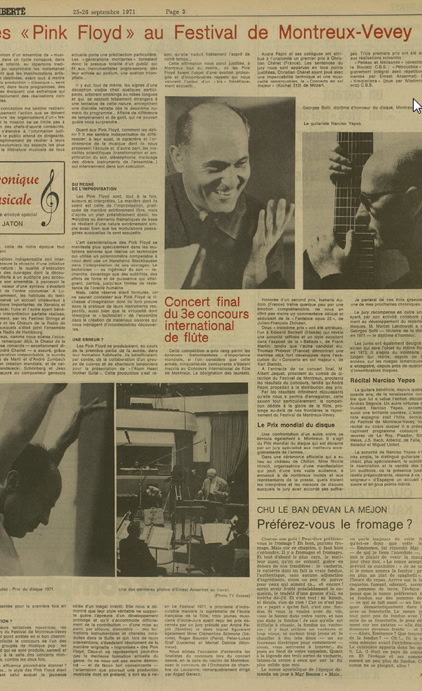
«Inviter le Pink Floyd au Festival de Montreux, c'était des l’abord faire fi des cloisonnements qui asphyxient la plus grande partie de la musique contemporaine. Isolement des créateurs face à l’opinion lorsqu’ils deviennent les otages de petites chapelles de spécialistes, mais aussi ségrégation parmi le public lui-meme chez qui les termes « pop » ou « classique » déclenchent des réflexes d’intolérance injustifiables sur le plan musical. Dans cette perspective, l’initiative courageuse des organisateurs montreusiens rejoint peut-être des courants intéressants et réels : le ja/z d’avant-garde et la musique contemporaine, par l'intermédiaire de leurs’ représentants les plus confirmes. Tony Williams, John Cage ou Pierre Henry, viennent s’abreuver à la source pop (Clapton, Soft Machine ou Zappa).
La voie que suit Pink Floyd n’est pas précisément la synthèse de ces recherches. mais reste à la limite de l’expérimental dans une tentative de longue haleine pour maîtriser l’électroacoustique qui. de simple outil d'amplification, devient un instrument original. Depuisquelques années déjà, Roger Waters, Rick Wright, Nick Mason et David Gilmour sont parvenus à une telle maîtrise technique de celte forme d'expression qu'ils ne rencontrent plus d’obstacles à l’expression de leur lyrisme au-delà de la rigueur matérielle de leurs interprétations. D’où (album «UmmaGumma») une musique complète qui comble lee sens au lieu de les submerger par le déchaînement des appareils. Réhabilitant la véritable improvisation. Pink Floyd a besoin du contact avec le public pour dépasser les structures de ses morceaux ; cette grande première montreusienne ne remplissait certes pas les conditions de communion nécessaires et la démonstration a pu paraître froide, limitée à la poursuite des schémas connus. Dans cette optique, le concours des choeurs et de l’ensemble de cuivres londoniens s'est révélé comme un compromis peu stimulant lie Pink Floyd ne recommencera du reste plus ce genre de concerts) au point de réduire à peu de choses l’élan extraordinaire de « Atom Heart Mother Suite »».
«Pink Floyd», Gazette de Lausanne, 29 September 1971.
«Etrange : on annonçait deux concerts de Pink Floyd avec orchestre symphonique et chœurs. Brutalement, chœurs et orchestre sont tombés pour la séance du dimanche après-midi.
J’al donc vu et entendu le groupe «nu », sans apprêt, dans les mêmes conditions que la dernière fois à Montreux.
Déception. Pink Floyd tourne en rond depuis deux ans. Il a trouvé — ou croit avoir trouvé — la bonne formule, au demeurant très belle. Mais voilà : Pink Floyd est condamné, pour ce qu'il présentait d'espoirs à débuts, è toujours progresse. Mais pas à s'installer dans son numéro sans dévier d'un pouce, ou peu s'en faut, de ce qui ressemble terriblement à une impasse. On peut comprendre d'un Rolling Stones qu'il ne varie guère en dix ans. Pas de ces quatre musiciens exceptionnels.
Ayant admis qu'il ne s’est plus rien passé depuis le disque « Moro», on peut alors trouver belle, affolante, intéressante, exaltante, magnifique ou subtile la progression on crescendo galopant de chaque morceau. Fantastique aussi l’utilisation raffinée du puissant matériel électronique dont Pink Floyd use avec une admirable maîtrise.
Mais ne leur est-il plus possible de réinventer « A Saucerful of secrets », faut-il qu’ils s’encombrent de chansonnette comme « The fat old sun » (sic) ?
Pink Floyd se lance dans de grands ensembles. Pourquoi pas ? Souhaitons-leur meilleure chance que les autres qui ont tenté l’expérience et ont signé leur arrêt de mort. Je pense seulement aux Nice …»
«Un groupe qui tourne en rond», 24 Heures, 21 September 1971.
Rick Wright photographd at Montreux
« Journal de Montreux », 7 August 1971
REHEARSALS| 21 September 1971: Rehearsals in the Command Studios of London
Photographies by Alec BYRNE
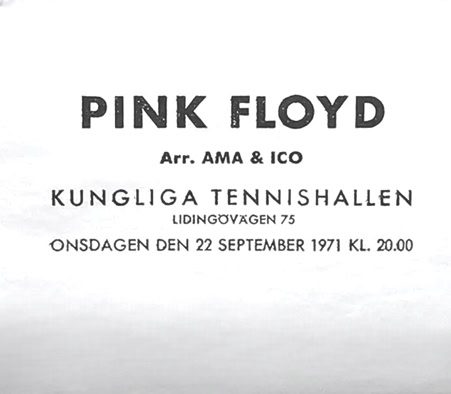
CONCERT DATE| 22 September 1971 Kungliga Tennishallen, Stockholm, Sweden
Photographies by Mats ANDERSSON
«Det började med den halvtimmes försening, som tycks vara obligatoriskt för alla popband p& besök. Under tiden hann en yngling i ljusblå tröja -och ballong i handen bli s& pass påtänd att han för upp p& scenen. Men då kom ett uppbåd poliser och kastade ut killen från hans 40 kronorsplats. Tumult och buanden. Men så kunde konserten med Pink Floyd börja och den började bra. En 20 minuter lång låt i släpande tempo. Ordlös sång som med ekoeffekter lät som en änglakör. Så en stegrad intensitet till en effekfull avslutning, medtre ton watt. Det var bra ocjh man kände sig nöjd. Men när det andra, numret och tredje numret också Ver 20 njjnuter långa och uppbyggda på samma sätt som det första blev det för mycket äv de vackra gitarr-ackorden och den ordlösa sangen. Det var ingen hejd på hur vackert allt kunde bli.
Jag klarade det inte. Jag gick i pausen liksom många, många andra. Sån här musik aka man inte sitte och höra i en konsertsal. Den ska. mart höra på skiva hemma i myshörnan och sätta på när man känner sig i stämning för den»
«Ingen hejd på det vackra», Aftonbladet, 23 Septembre 1971
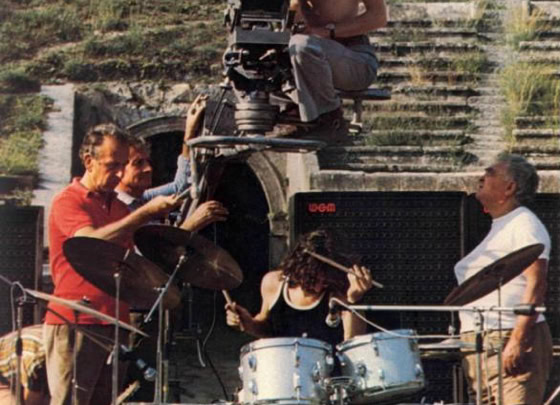
MISCELLANOUS|Just after the Copenhagen show, almost all the equipment of the band is packed to Italy via London for the «Pompeii» project. Adrian Maben must pay the transport for £2,000 (thank to his mother!) to avoid Steve O'Rourke ask the cancellation of all project. The four cameras (three Mitchell, One arriflex) came from the Cinecitta studios while the sound system came from the Europa Sonor Studios in Boulogne-Billancourt near Paris.
Adrian Maben:
«I gave it to Steve thinking that this film had better get started immediately before everybody changed their mind. In retrospect, I think that is was the right thing to do because it meant that there could be no turning back»
«The making of Pink Floyd live at Pompeii», Sam Sleiman, 2014
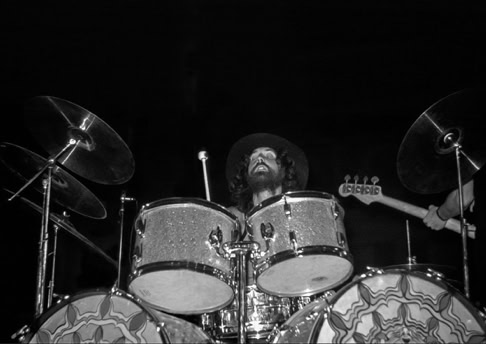
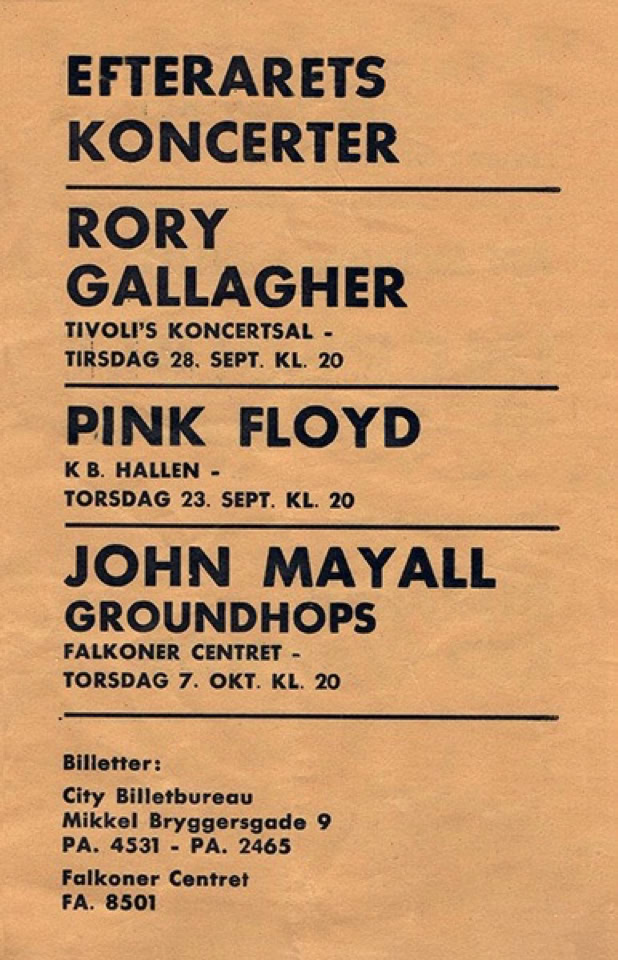
CONCERT DATE| 23 September 1971 KB Hallen, Copenhagen, Denmark
Photographies by Jorgen ANGEL
«I disse for koncertlivet sá strenge tider er det kun megetsjaeldent, at hallerne er fyldte. Derfor er det dobbelt gladeligt, at netop en udpraget eksperimenterende gruppe som Pink Floyd i aftes var i stand til at stoppe KB-Hallen. Koncertens begyndelse blev forsinket tre kvarter pâ grund af brandvasenets betankeligheder.
Selve koncerten blev som ventet. Det mest velartikulerede publikum, man 1 lang tid har set, modtog Pink Floyds science fiction musik med entusiasme og forbloffende fá applaus'er pá de forkerte steder.
Gruppens tekniske apparat (velnok det mest imponerende i verden) fungerede perfekt ligesom samarbejdet mellem de fire musikere. Mest imponerende var deres udgave af ›Atom Heart Mother«, der blev gennemfort uden at virke markbart forringet trods manglende baggrundskor og orke-ster.
Det ville vare forkert at fremhave nogen bestemt i gruppen men i KB-Hallen var guitaristen Roger Gillmour mere i forgrunden end ved tidligere lejligheder. Der er folk, som har udtrykt en negativ holdning over for Pink Floyd, begrundet med, at gruppen er kold. Det er den mäske ogsa, men i sa fald er det som et stortglas isafkolet hvidvin pá en varm, ter sommerdag»
«Pink Floyd stoppede KB-Hallen», Aalborg Stiftstidende, 24 September 1971
Roger Waters:
«We actually went to a live show In Denmark which was extraordinary. It went on too long, and certainly long before the end we were ready for hamburgers and chips. Let’s go now. It was all very school-boyish and patently obvious It was for people who didn’t have the right schooldays. The shows are just a tourist thing anyway. I can’t imagine the Danes going. It’s only for old geezers of about fifty. It’s all unreal»
«Deep Waters», Melody Maker, 9 October 1971.
REHEARSALS| 26 September 1971. More rehearsals at the London’s Command Studios
REHEARSALS| 29 & 30 September 1971. The band rehearsals for the John Peel session at Granada Studios
Roger Waters:
«We've been rehearsing a John Peel show and recording. We go to America this week for our fifth tour, and we’ll be gone five weeks»
«Deep Waters», Melody Maker, 9 October 1971.
Press book for the « John Peel » session
RADIO SESSION| 30 September 1971. Last ever BBC session for the band at the Paris Theater at London for John Peel. Pink Floyd play Fat old sun, The Embryo, One of these days and Echoes.
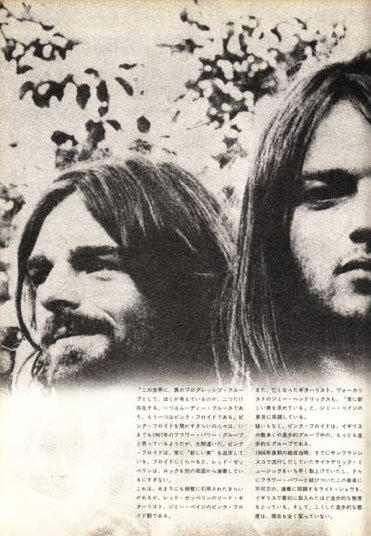
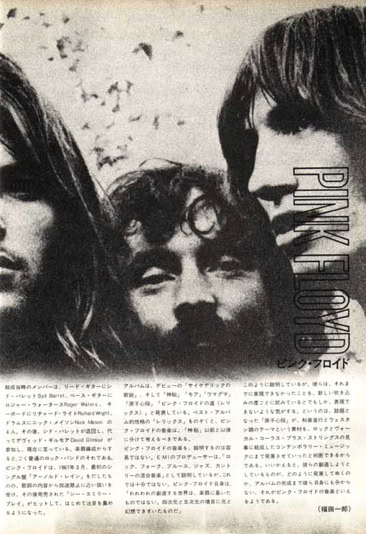
PRESS MENTION| October 1971. Special «Pink Floyd in Japan» report in the October issue of the Japanese of «Music Life».
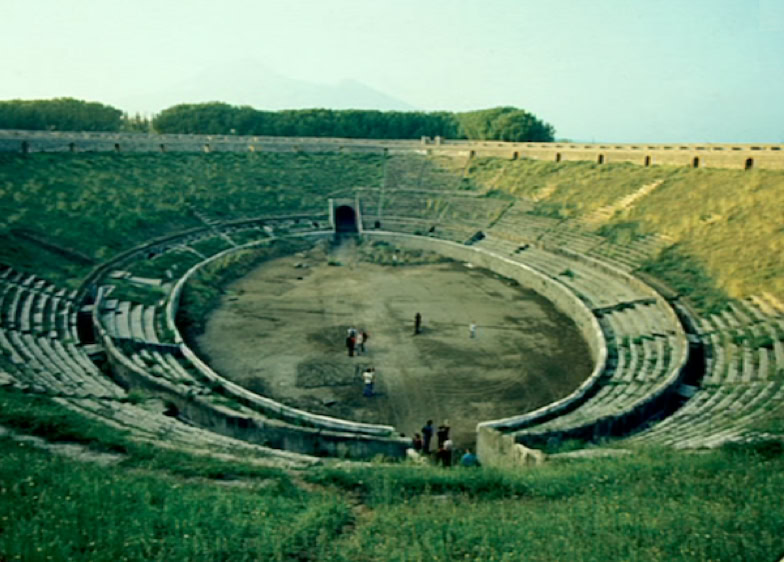
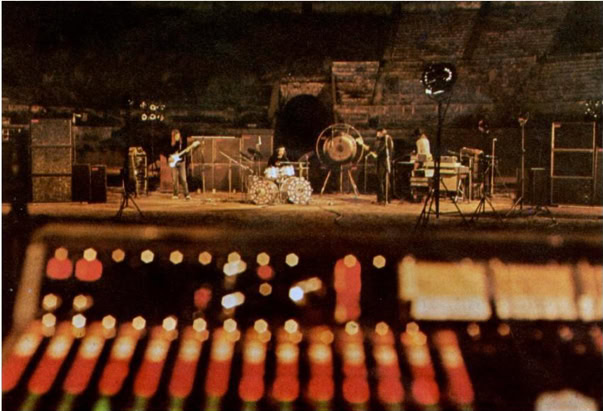
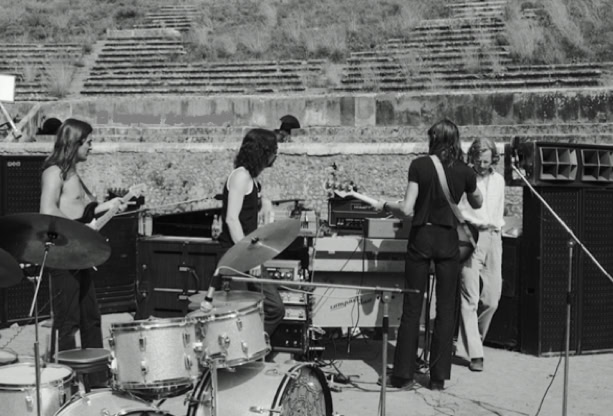
FILMING SESSIONS| 1st October 1971: The first day of shooting is delayed while the Floyd stay to «Grand Hotel Royal» of Rosario. While the technical crew try to fix the electrical problems, Adrian takes some shot of the Arena set-up (who will be included later in the beginning of the movie).
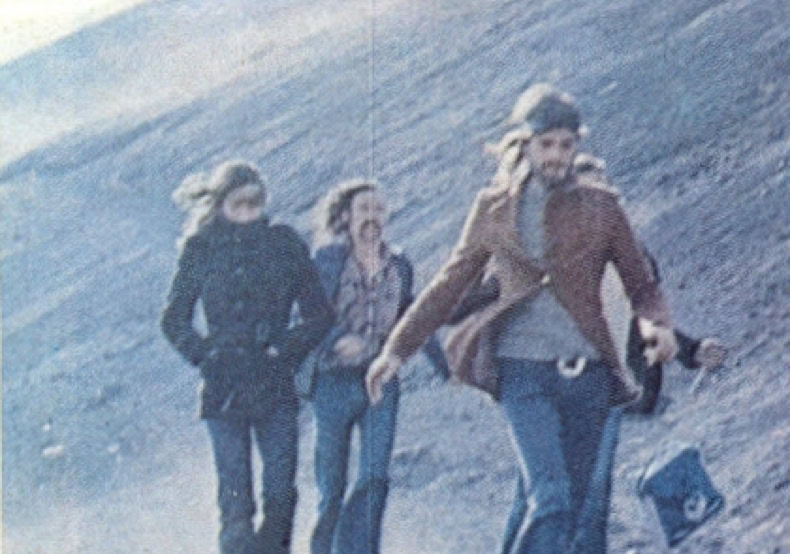
FILMING SESSIONS| 2nd October 1971, the technicians are still working on the problem of power surge. Maben asks the group to wandering near the Pozzuoli volcano to have sequences who can be interpolated in the live sequence (the reels are not sufficient in terms of length and number). At the end of the day, the problems are being resolved (electricity is definitely routed but power remains insufficient).
FILMING SESSIONS| 3rd October 1971. The electrical problems are being solved but with all these delay, the planning became almost unsustainable . Peter Watts suggested to bring in their own technician, the «London's magician with electric» according him. Steve O'Rourke gives a demo of Echoes (on a flexible disk) at Maben. He agreed to include it but cut in half. Initially, Maben had timed the filming with the group in July with Astronomy Dominé (one of his favorites). The band want to substitute One of these days for Astronomy (for commercial reasons). Set the Controls and Careful are kept and A Saucerful is dealed by Maben who see the last as the climax for the film.
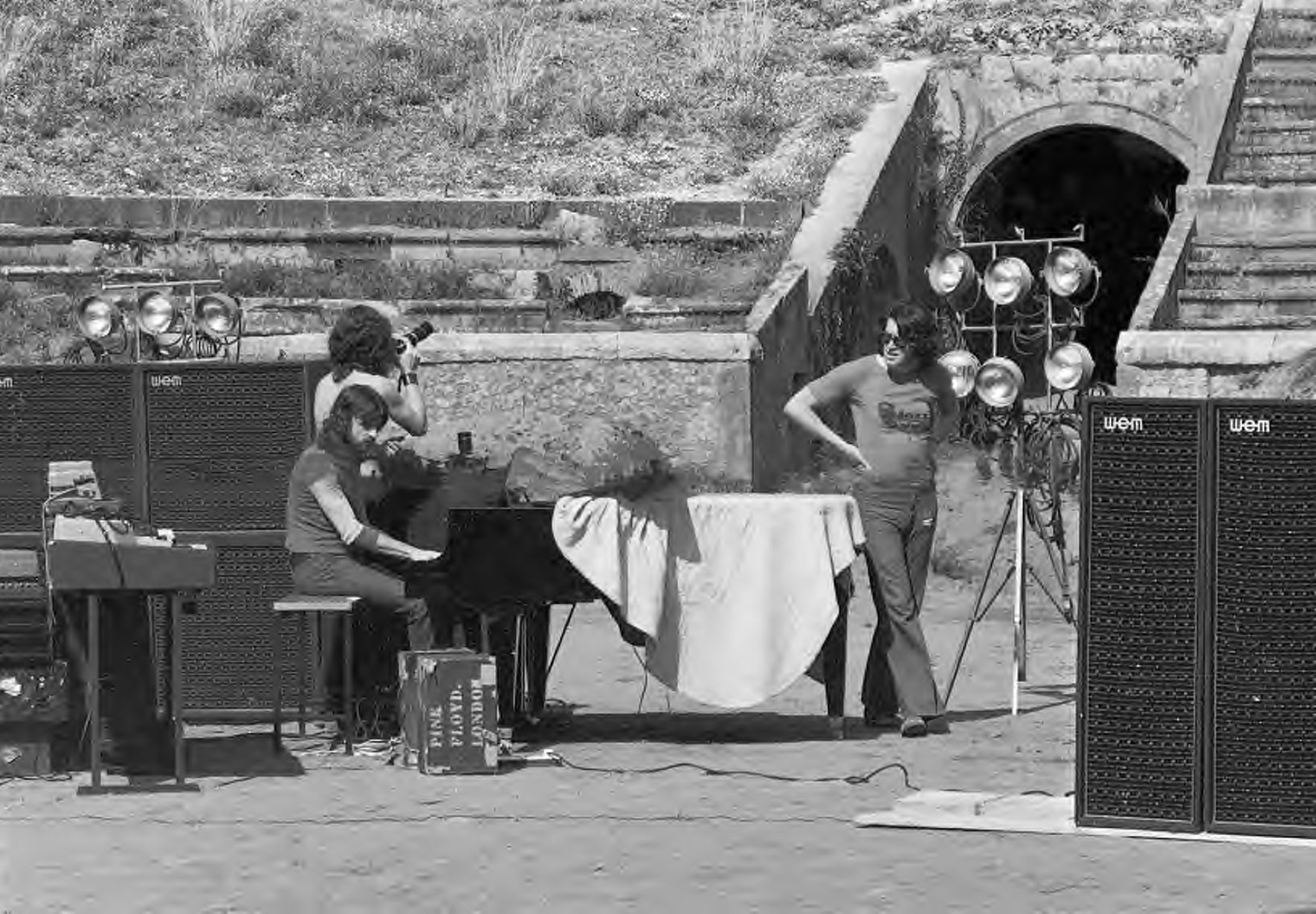
Photographies by Jacques BOUMENDIL.
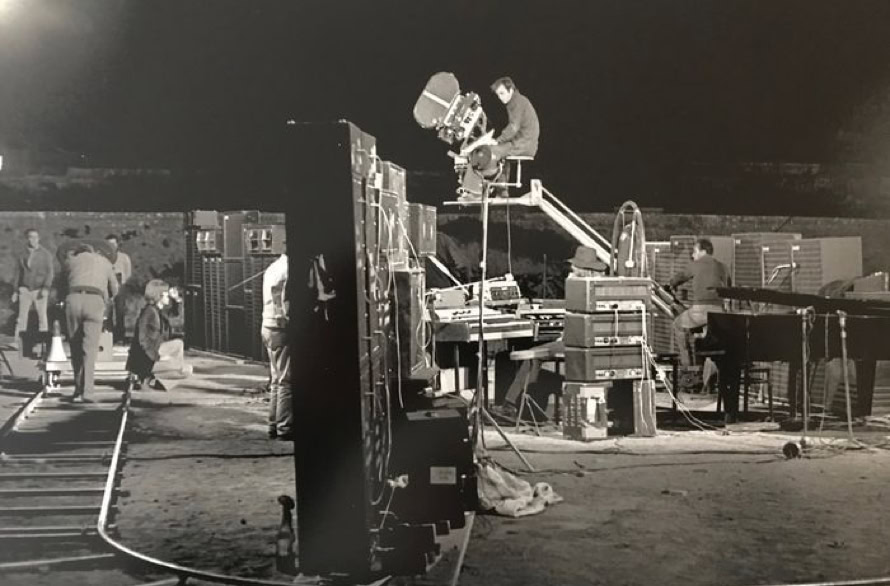
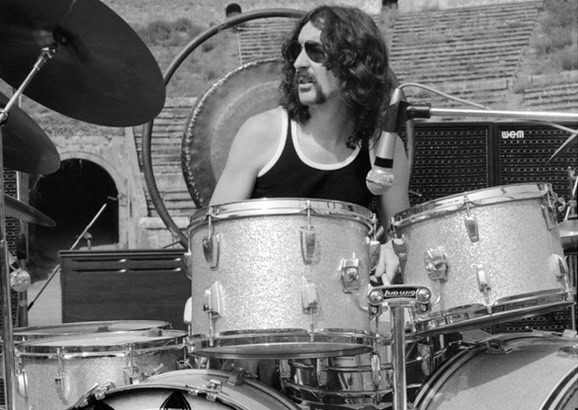
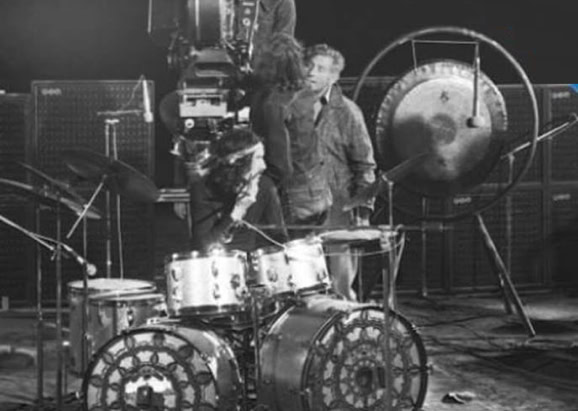
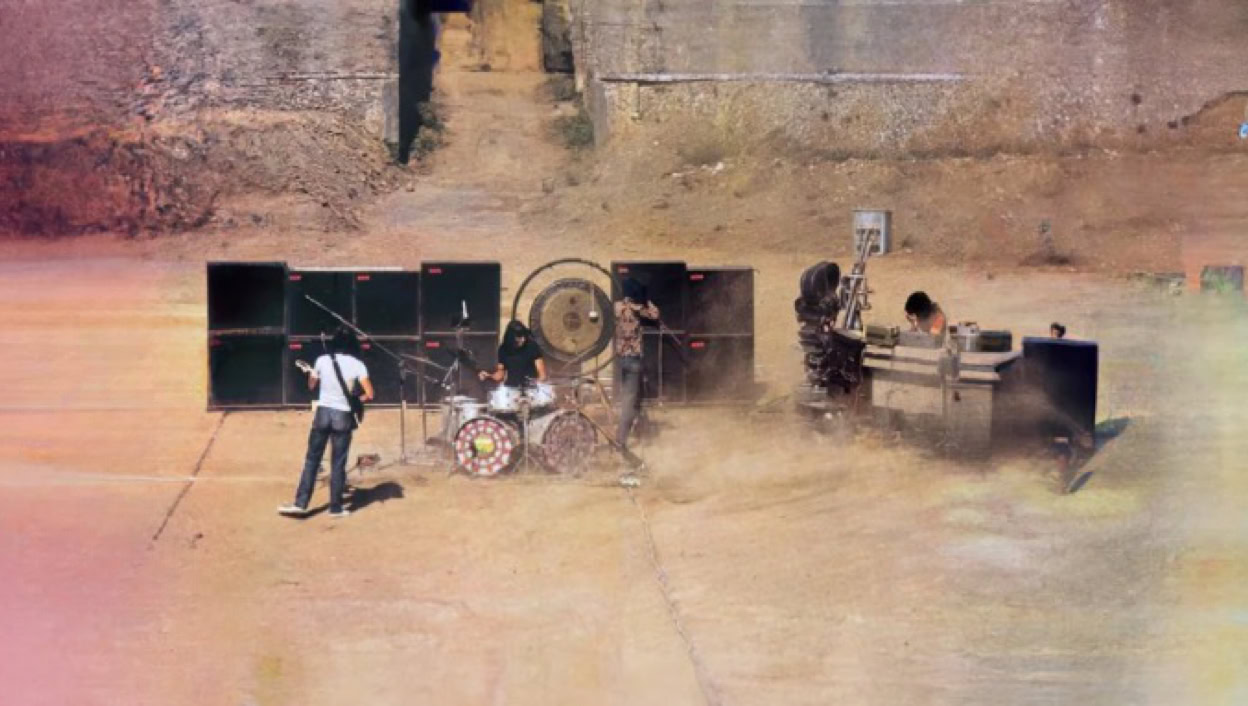
FILMING SESSIONS| 4 October 1971 The band plays Echoes and A Saucerful during the day and One of these Days in the evening
Photographies by Jacques BOUMENDIL.
FILMING SESSIONS| 5 October 1971. The Floyd did more takes for these three titles. After each take, the group goes to the mobile studio parked near the amphitheater to listen to the tracks which slows down the schedule for the other titles.
Photographies by Jacques BOUMENDIL.
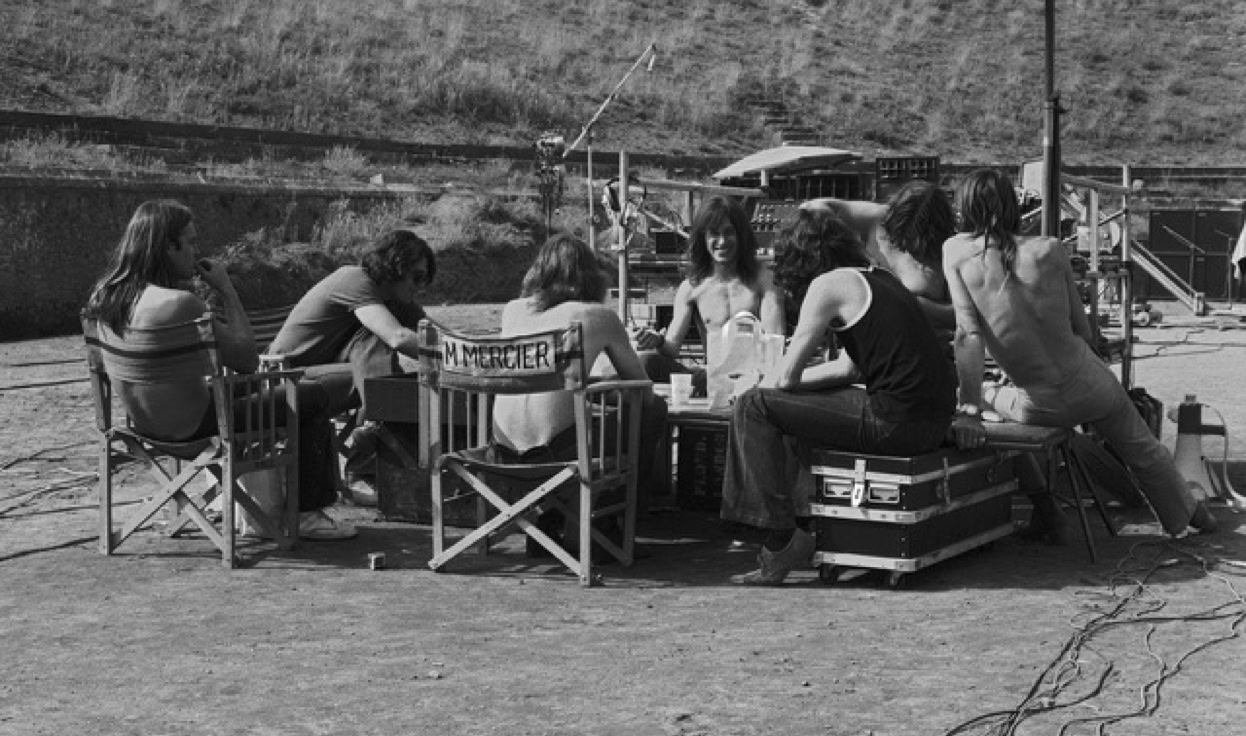
Maben asks the group to film them during lunch because he appreciates their humor. The group turns down the idea.
Photography by Jacques BOUMENDIL.
FILMING SESSIONS| 6-7 October: New shooting sessions. Only parts are recorded due to stock issue. Audio is recorded on the 8-track Ampex loaned by Europa Sonore studios: like the seagulls part of Echoes which will be filmed in studio but on the audio captured in Italy). The band hadn’t no more time to record Careful and Set the Controls. Steve agreed to to do more filming sessions.
Nick Mason:
«it turned out to be a very useful and, I think, a very good film. It was a controlled environment, as there was no audience, so we could cut, stop and reshoot. But the open air and the dust and everything else made it feel like a real live show. There was a bit of grit to it»
« Interview: Pink Floyd's Nick Mason, Engineer John Leckie Discuss the Making of 'Meddle'», Tommy Udo, April 2012
CONCERT DATE| 10 October 1971 Great Hall, Bradford University, Bradford, England
The band was victim of scalpers who sold many fake tickets
MISCELLANOUS| 11 October 1971,. The « Live at Pompeii » footage is developed in a two-day run session at the Pathé Studios Éclair
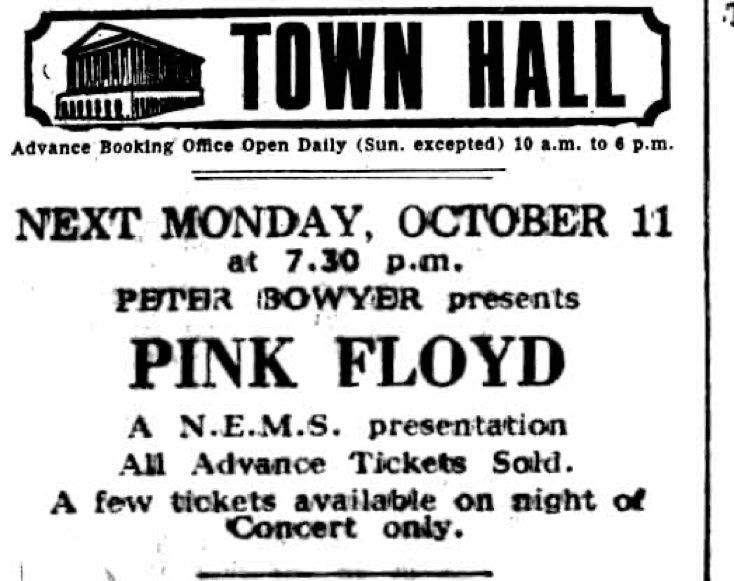
CONCERT DATE| 11 October 1971 Town Hall, Birmingham, England
«Pink Floyd’s concert at Birmingham Town Hall on Monday — their first major British gig since May — was intended to be a warm-up for their latest American tour. But they were unable to have a full dress rehearsal because new equipment they were expecting failed to arrive.
The result was a 25-minute delay in starting the first set and long gaps between numbers while they sorted out problems with the gear. Apart from the opening number, “ Careful With That Axe, Eugene,” Pink Floyd confined their material before the interval to items from the “ Atom Heart Mother ” album. They were accompanied by choir and orchestra when they last played this music In Birmingham, but their quadraphonic system still enabled them to produce a remarkably full sound for a four-piece unit.
A sample of the stuff to be heard on their next album, “ Meddle,” was provided with the inclusion of “ echoes ” and “ One Of These Days ” in the second set. Strangely, both numbers incorporated the same howling wind effects. “ Echoes ” proved the more ambitious work, lasting some 30 minutes, while the funkier “ One Of These Days ” is obviously still very much in the formative stage. Pink Floyd also performed the familiar “ Set The Controls For The Heart Of The Sun” and “ Saucerful Of Secrets,” finishing off with some impromptu blues».
«Live - Pink Floyd», Melody Maker, 16 October 1971
RADIO SESSION| 12 October 1971, broadcast of «sound of the seventies» at 10pm on BBC recorded on 30 September at Paris theater
FILM RELEASE| 14 Octobre 1971, German release of «Love and Music», a rock documentary dedicated to Kralingse Bos Festival.
MISCELLANOUS| 14 Octobre 1971. A mix-down of the tracks for the Pompeii movie is made at the studios Europa Sonore by Charles Raucher.
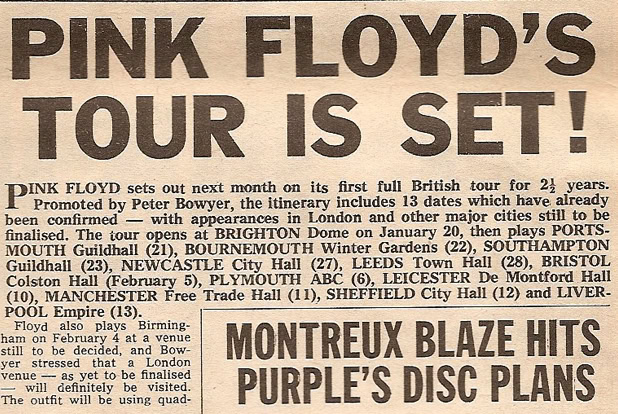
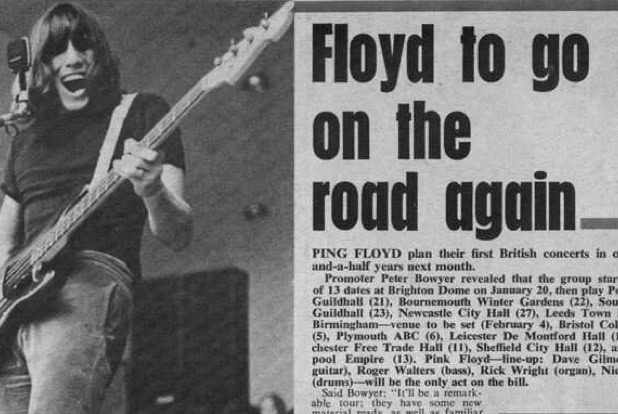
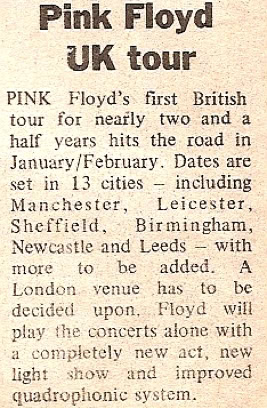
PRESS MENTION| 15 October 1971. The British press announces a major British Tour the next year.
Roger Waters:
« In January we'll be doing a whole tour of England, about 12 days. and we may do the Festival Hall. London, again»
«Deep Waters», Melody Maker, 9 October 1971.
Said Bowyer (promoter):
«It’ll be a remarkable tour; they have some new material ready as well as familiar recordings. they(‘ll have their own lighting with them, too; portable columns and pneumatic gear, operated by Arthur Max from America’s Fillmore. There’ll also be quadrophonic sound».
«On the Road Again», Disc & Music Echo, 11 December 1971.
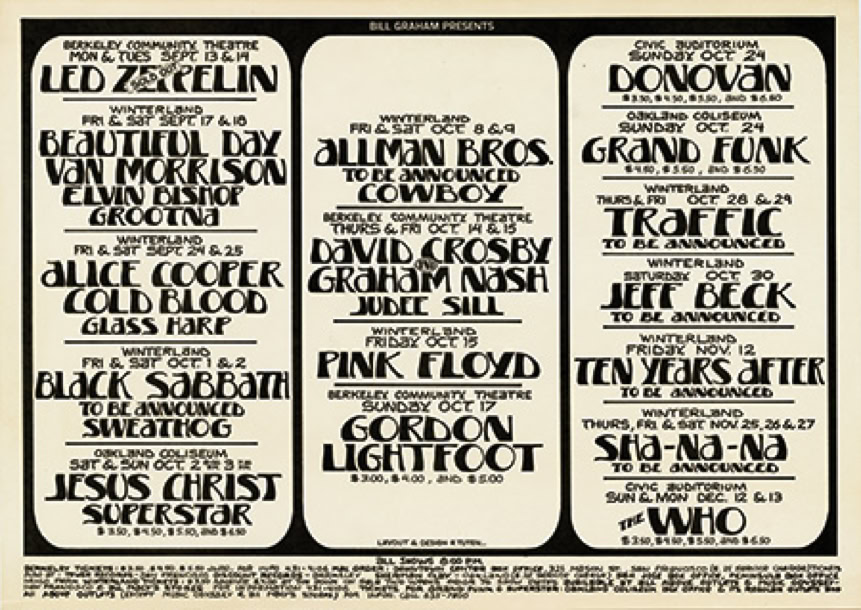
CONCERT DATE| 15 October 1971 Winterland Auditorium, San Francisco, USA
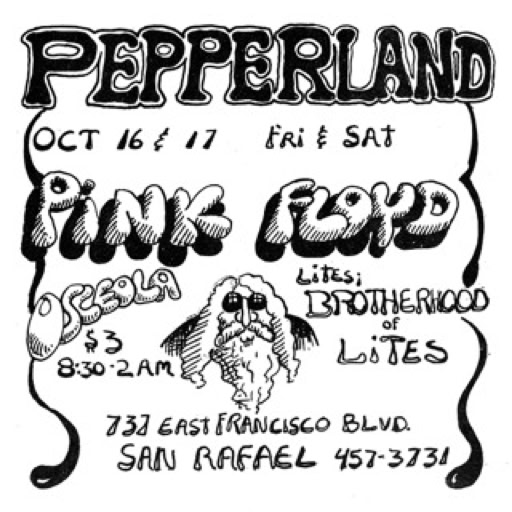
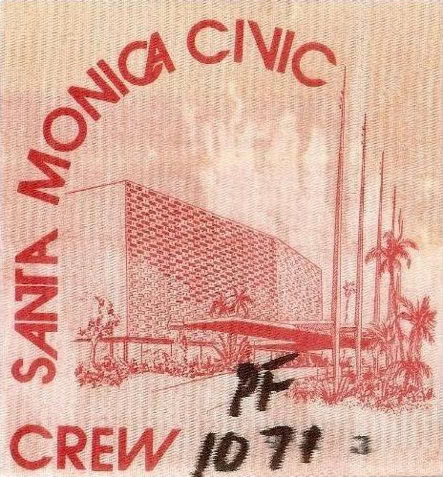
CONCERT DATE| 16 October 1971 Civic Auditorium, Santa Monica, CA, USA
According Record World (November, 20th), this gig took in $16,200 for a crowd of 2,868.
«Pink Floyd, those jolly cosmic wanderers from across the Atlantic, soared into Los Angeles the other night to perform before a packed house (2,500) in Santa Monica, Los Angeles being prime territory for the group.
Their stage mannerisms are somewhat subdued, but this only heightens the effect of their music, which has the capacity to conjure up images and moods ranging from the somber tones of a funeral dirge to the high-intensity cacophony of a soaring missile. To the uninitiated. Pink Floyd’s music sounds as though it is being played through some sort of a dimensional time warp.
This effect is achieved through the use of a wide array of electronic contrivances. In addition to reverb and echo-chamber effects, the real star of the show is their quadraphonic send system, which gives the listener the feeling that he is immersed in 360 degree sound. After intermission, Pink Floyd performed a number that clearly demonstrated the use of quadraphonic. It was a mini-movie in sound, executed in total darkness, which centered on the footsteps of a man as he seemingly walked around the auditorium opening assorted doors as he went along on his merry way.
It was quite stunning. Musical kudos go out to David Gilmour on lead guitar and to Roger Waters on brass gong. Their talents were exemplary on “Fat Old Sun” and “Set the Controls for the Heart of the Sun” as well as “Echoes from their latest Harvest (Capitol) album, “Meddle.” When it comes to far-out music, one would have to go a long way to out-futurize Pink Floyd»
«Talent on Stage», Cash Box, 30 October 1971
«I know what's past Is past, but at the Pink Floyd concert I kept hoping Syd Barrett would walk onto the stage during one of the many equipment breakdowns, stand in front of one of the mikes — naked, maybe — and sing that song In which he tells everyone they can ride his bike. O.K., I realize Syd went unmarketably crazy hack In '68 and the group has ever since been Roger Waters (bass), Rick Wright (keyboards), Nick Mason (drums), and, as Barrett's replacement on guitar, David Gilmour. What the new Pink Floyd did on the two albums following Barrett!s leaving almost made me think Syd's more aesthetic Insanity could be done without, surpassed (But then there was "Astronomy Domine," the best thing on"Ummagumma"— indeed, the group's highwater mark —which was a Barrett composition stretched to eight minutes).
Much of the music was a continuation of the first album's mad spirit (Barrett composed almost every song on ''The Piper at the Gates of Dawn"). The rest, though, came across as an opposing reaction to that harsh instability. Quiet. Rest. Peace. Pink Floyd's music since has been a gradual further edging away from the early schizophrenic music. ''Atom Heart Mother," one side of the same-titled album, blended classical-music and rock forms In the most pleasing way to date, but ... On the other side, the songs there revealed the peace of the new Pink Floyd evolving into near-lethargy. A purposeful move, though, into an attempt to capture the soul-sound of large spaces—space Itself, the sea, the desert, the human mind, Soft and open. No Barrett obsession-compositions. (...) So when Pink Floyd's music sings of our mad world moderately, however well, it Is incomplete, and in a concert the sound reaches a point of diminishing returns, where the audience (meaning me, of course) begins to tire of spacey Porpoise noises and wants to rock. It never happened at the Santa Monica Civic. What did happen? There was all that famous Pink Floyd equipment, including quad sound and pre-recordedtape sound effects. One of these sound effects was the first sound we heard, that of the surf, as on (from?) the first "Environments" record. This played while the lights went down and the group tuned up, Embarcation "Careful with That Axe, Eugène," the "Zabriskie Point" suspense song that builds with terrifying Inevitability tea scream — the scream here (by Waters) more ghostly than on "Umma-gumma", where It was hysterically desperate. Gilmour's guitar echoed the voice-scream seconds later, and the song shook the Civic. Grand Funk's not the only loud group around. Grand Funk Is also not the one taking Itself too seriously. "Fat Old Sun" from the "Atom Heart Mother" album came next, augmented by the chirping of birds on tape, an example of the predom-Merit Pink Floyd sound — a lazy song, a lazy performance, sung with an often-breaking voice by Gilmour. Fragility. It got tighter sharper at the organ solo, but one thing became apparent: this was going to be an audience-shy performance. It was as if the group
were rehearsing before empty on stage unused till now was banged, and the group did one of their live standards, Set the Controls for the heart of the Sun, composed and sung by Waters. The organ resounded about the room through the 360-degree system. The sellout audience showed more respect than enthusiasm for the Stockhausen-like song. It was a young audience, respecting an elder sound. It they could dig It, It was probably due less to a fascination with the gimmickry and equipment than with the suggestions in the music — suggestions of winds and waves, stars, Viking ships, spaceships, miles and miles of strange underwater realms; things just within our awareness, tar beyond our knowing. This ability to suggest Is the current main strength of Pink Floyd. Atom Heart Mother was done sans chorus and orchestra, well enough but again lacking anyparti ruins excitement. Then there was an intermission. Technical gremlins beset Pink Floyd during their second set. After only one song, Waters walked to the mike and said, "There's Just been a major electrical break-down, which is causing great despondency on my left. But me, I'm not that bothered." Organist Wright WAS bothered, and there was plenty of cause for him to he then and throughout the remainder of the concert. The Leslie box for his keyboards, was, as Waters later explained, "Tucked", it continued getting tucked, and the repeated attempts to repair it or reroute his Instruments' amplification through other equipment caused long pauses between each number of the second set, giving the frustrated performers In the seats a chance to shout out what was on their (on the average) small minds. Despite the trouble, a rendition of Cymbaline was very affecting. It's a fine song, with Gilmour singing lines like «Doctor Strange is always changing signs» and the chorus, «It's high time, Cymbaline».
In the middle of the song was a tape that had heads turning, following some invisible searcher walking quadraphonically about the hall, opening doors. Each door would open upon a snarling dog, a giggling girl, the clattering sound of something falling, an applauding crowd, etc. The searcher quickly shut each door and opened others until the final door brought an explosion and a return to the song.
Echoes, the long (21-minute) work on the new album was announced, but had to be postponed whilst the keyboards again were worked upon. A 'modified version" of "Echoes" followed, in which Gilmour Imitated the screeches of hump-back whales on his guitar, he and Wright sang some beautiful lyrics (much like those of Yes) another Pink Floyd epic, constructed with almost classical form and order. Too much order. When the group left the stage the call for an encore seemed exactly like many I've seen at classical-music concerts, where respectful but unexcited audiences rose as if out of obligation.
Why not? — that's how Pink Floyd had played. The encore was, I believe, Sysyphus (sic) by this time, it was getting hard to tell all those spacey epics apart. As It began, someone wasted his breath crying for Barrett's quite different sort of epic, Interstellar Overdrive, last year's encore at the Civic.
But the group is leaving Syd's music out completely (only from their own performances; they've produced two solo Barrett albums recently). So Sysyphus was a more-of-the-same ending. By now the stately, contemplative tones were becoming boring. When Waters attacked the gong a final time, with a vigor that sure stemmed more from frustration and practice than musician's enthusiasm, I wondered how long it would take him to knock It over. It took about thirty seconds. What the concert needed, and Pink Floyd Is capable of delivering, was intense, scary, flaming mad music to balance all that order. A little schizophrenia and less stagnation would have been so line»
«Pink Floyd: too much order», The Staff, 22 October 1971
The same day, Nick Mason and Rick Wright give an interview to Ted Alvy for KPPC-FM (a Pasadena radio)
Ted Alvy photographed around this time
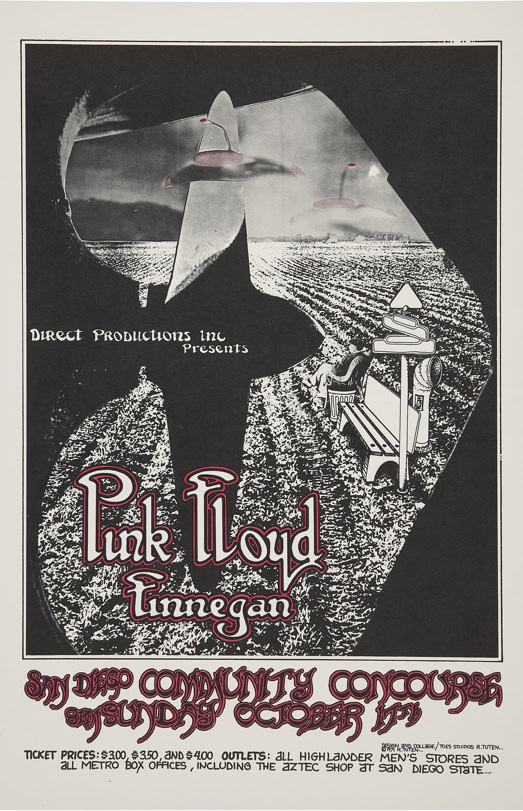
CONCERT DATE| 17 October 1971 Convention Hall, Community Concourse, San Diego, CA, USA
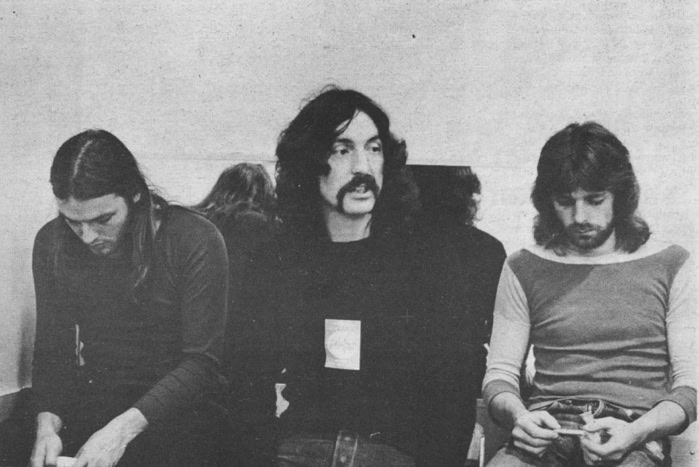
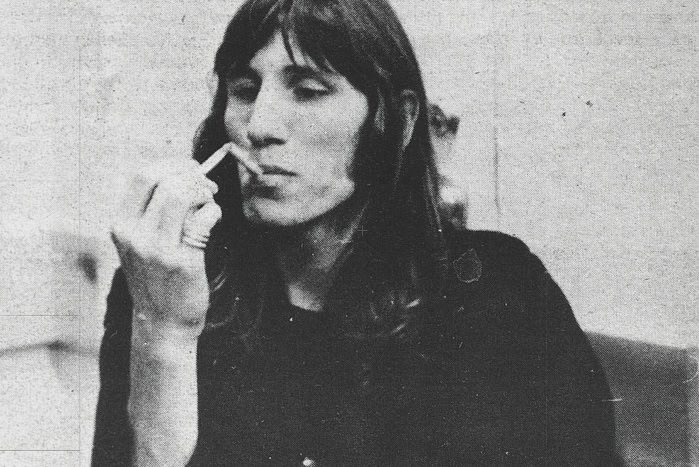
The band was photographed backstage by a Dutch magazine.
MISCELLANOUS| 17 October 1971 Press Presentation of the Echoes’ Quad Mix at the Roundhouse of London. This track will eventually appear on «Pink Floyd early years 1965-1972» boxset may years later
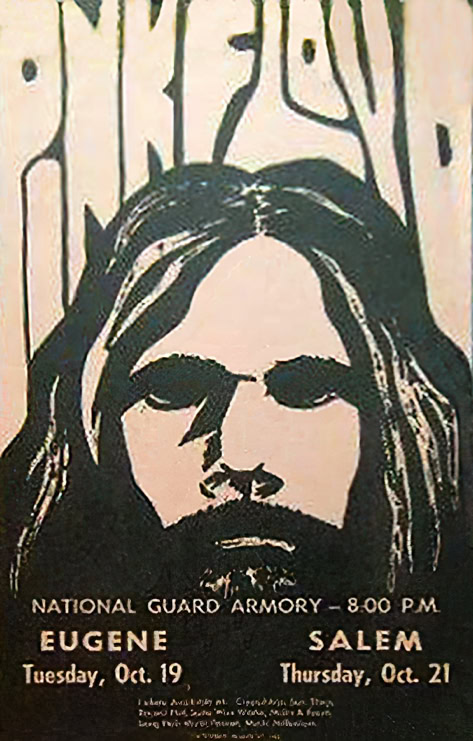
CONCERT DATE| 19 october 1971 National Guard Armory, Eugene, USA
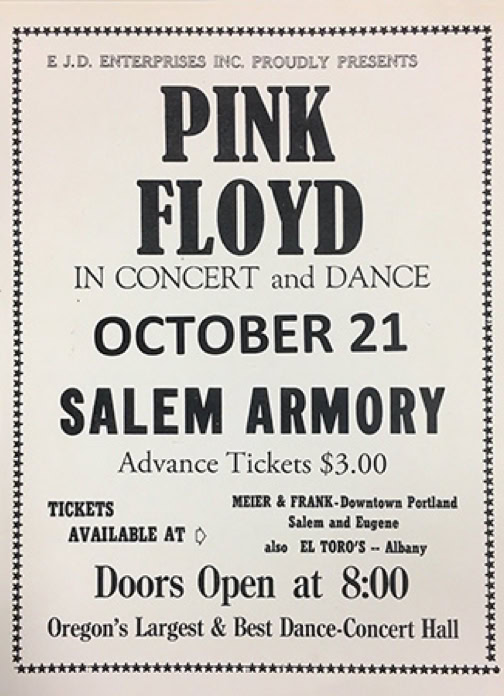
CONCERT DATE| 21 October 1971 Salem Armory Auditorium, Salem, USA
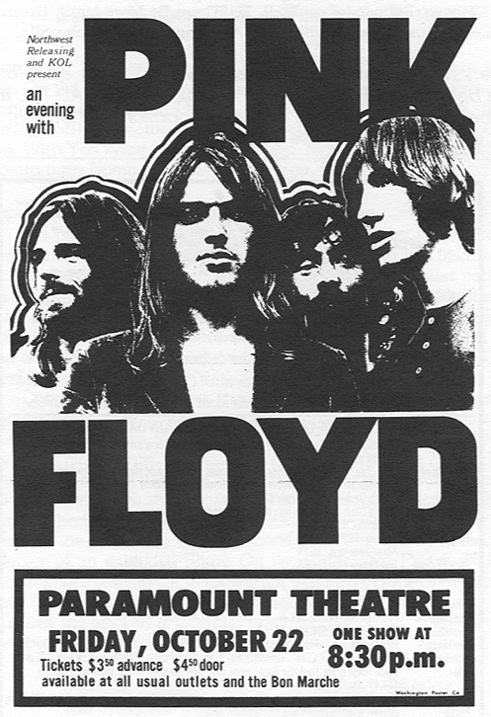
CONCERT DATE| 22 October 1971 Paramount Theater, Seattle, USA
« (…) « Meddle » had just been released and was quickly becoming a popular album among lots of hairy students. All this was doubly exciting for me, for not only was this the first opportunity for me to see the Floyd, who'd recently become my favorite band (the Beatles having broken up not long before, to my great sorrow), but one of my first concerts of any stripe.The day of the show I skipped classes so I could ride the bus down to Seattle to meet a friend. We arrived at the Paramount mid-afternoon to find a short line of acid-head types waiting for the doors to open (these were the days before assigned seating was common place), including, as I recall, a tall, Gandalf-like character with a staff, long graying hair, and English accent and many unlikely stories about the cosmos. When the doors opened, we scrambled in and got seats about ten rows back and center to the stage. Unfortunately for my long-term memory (and the factual accuracy of this article) we took some of Dr. Leary's medicine, so what follows is approximate ...
Around the perimeter of the Paramount's interior were WEM speaker columns, the early Floyd sound system. Just after the lights went down to start the show, the sound of footsteps circled the theatre, giving the willies to a few folks whose dosage was beginning to kick in. The Pink Floyd shuffled on stage dressed in their usual jeans and dark-colored T-Shirt. Astronomy Domine was the first tune, rendered with great power; the band took us all out on a psychedelic limb, with only Rick's frail organ holding the music together. I remember being surprised by Roger having Rick re-tune his bass after a few songs. I guess the rumors of Rog not having the greatest sense of pitch has some validity, or at least was the case then. A somewhat abbreviated Atom Heart Mother was performed. I recall it being much heavier in concert than on the album. Set The Controls featured Roger bashing an enormous gong which exploded in fireworks at the climax. Also played were A Saucerful of Secrets, Careful With That Axe Eugene (terrifying scream from Rog), then Dave and Roger sat down with acoustic guitars for Green is the Colour and Grantchester Meadows. An aspect of attending rock shows in those days that is different than today was the attentiveness of the audience. However, one crazed individual at this show kept yelling «Boogie!» at quieter moments. Roger finally had enough of this guy, approached the microphone and said «Excuse me. This is not a boogie... we don't do boogies!» Everyone applauded and cheered! Electric again, the band performed Cymbaline (with Roger singing lead!) and One of These Days. Echoes was the encore num-ber I believe, although I'd welcome some confirmation from any BD readers who may have attended this show (Echoes may have been the encore as well as A Saucerful of Secrets - ed) My impression of Pink Floyd was one of quiet power and mystique; I recall chatting later with someone about how it was too bad they were only a cult band («Dark Side» was still nearly two years in the future)!
I feel privileged to have seen the Floyd play live as a growing force and as pop cultural icons, but this 1971 concert has a special place in my heart as an experience of wonderment, space and potentiality that I haven't had since. Viva la Floyd !»
« A parting of the mists of memory », Bruce Hazen, Brain Damage #35
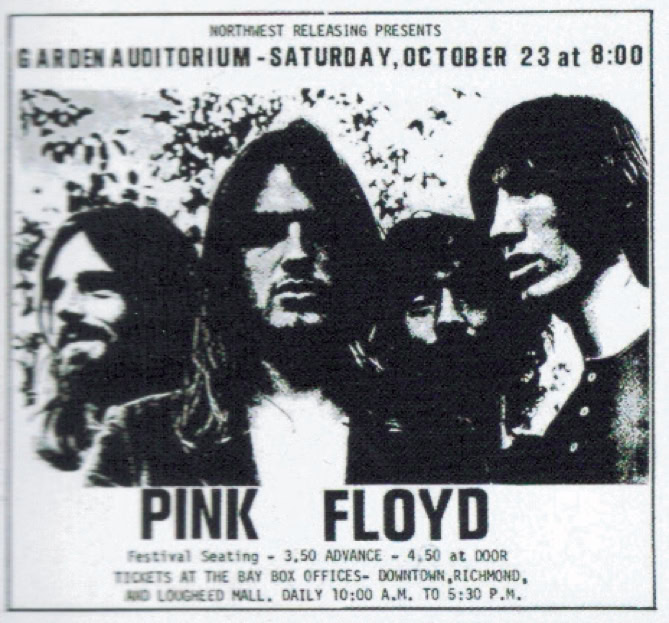
CONCERT DATE| 23 October 1971 Garden Auditorium, Vancouver, Canada
«For the rapt, parked audience in the Gardens Saturday night, the Pink Floyd could do no wrong. And for the first half of the concert. I agreed. Pink Floyd: part I. A half hour late in starting, but that’s forgivable if the wait is worth it. It becomes obvious that Pink Floyd have the uniqueness, when they choose to use it. every rock group claims but few deliver. But they are not a rock group anyway, not in the limited sense of certain label-inviting sound. Take the way drummer Nicki Mason handles the tympani like a slow tidal wave. Yet it’s not gimmicky. Nor is there anything gimmickry about lead guitarist Dave Gilmour’s occasional vocals: his voice can be a quivering echo or a barely audible sweetness merged into the instrumental whole. At its best, the Pink Floyd sound is loud, relentless but never violent. Sometimes n is mellow in the most positive sense: i.e. it does not turn you into a passive cabbage no matter how stoned you may be. The effect is active euphoria. A delicious combination. A rare accomplishment.Maybe it is because, as one many concerts ago critic said. The Floyd are not only good musicians but musical technicians. There is a sensitive precision in their way of blending keyboard, drums and guitar with electronic effects. Other worldly but controlled. They seem to know exactly what they are doing each second
Pink Floyd: part II The sensitive precision is dissolving fast. Loosening up here means losing something. Like the sense of musical integrity that impressed me at first The famous bird calls that characterize the group are growing into a jungle Very nice bird calls they are, hut suddenly we’re into a massive indulgence in sound effects — trains, surf crashing, hum cane howling, crowds murmuring. sirens threatening, more birds Even a pause in full darkness as in invisible giant clomps through the auditorium. What hovered on gimmickry is now drowning in it. The volume grows into an assault. Did I say “never violent’ ? It's violent now, hut still not hard Only careless I feel vaguely betrayed. The beginning was so right, but once the beautifully blended expertise had captured me, it sagged into lazy games . . While those who never noticed are still shouting for more »
« Flip side mars Pink Floyd show », The Vancouver Sun, 25 October 1971
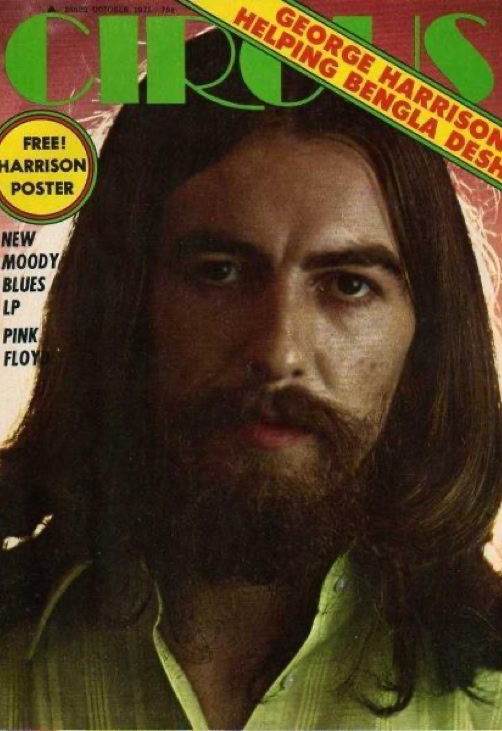
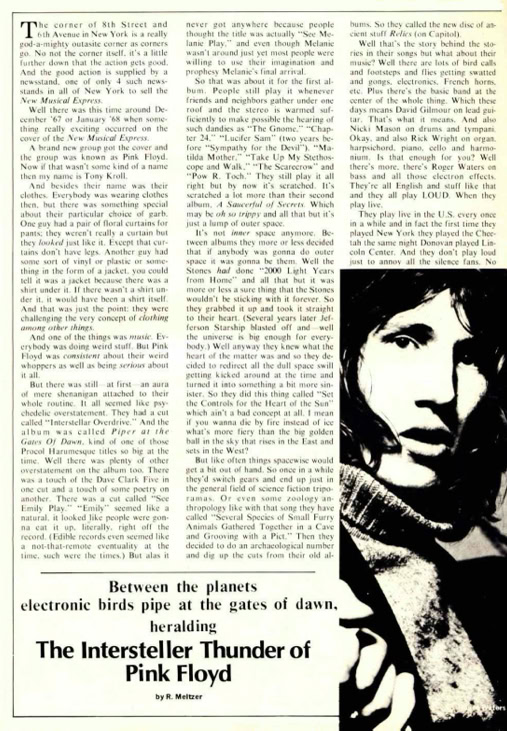
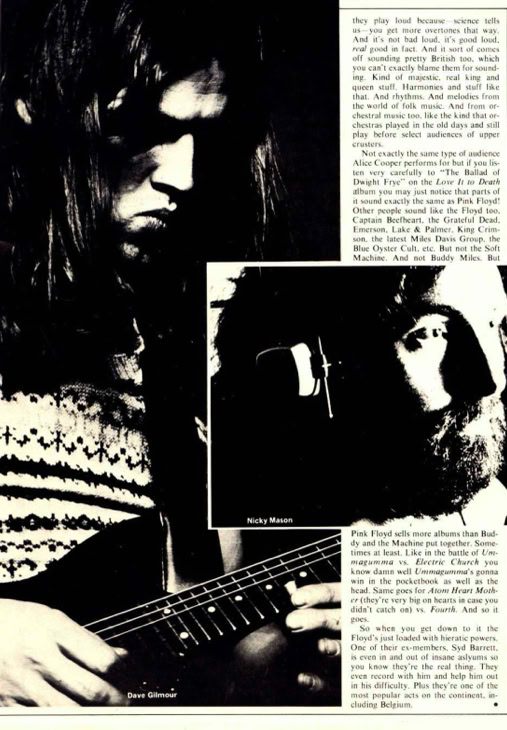
PRESS MENTION| October 1971. The band receives a big coverage in the magazine « Circus »
October issue of « Circus » magazine
CONCERT DATE| 26 October 1971 Eastown Theater, Detroit, MI, USA
«Pink Floyd invaded Hill Auditorium. Thursday night with extra-terrestial music. Their influence on other groups is impossible to discern because nobody can approach their grasp of psychedelic music. Pink Floyd's first albums appeared in the States sometime in 1967, on the heels of the other vital but undiscovered British group, the Yardbirds. But whereas the Yardbirds' innovations in electric - instrument sound clearly showed up as influences on later groups, no group has been able to follow up on the wizardry of Floyd.
The standard rock-group set up: lead guitar, bass, organ, and drums. Plus a few magic and moogic boxes which this group can wield to get sound effects you cannot believe could be heard off record. Sure, they in effect bring a whole studio into the auditorium with them, but even though some sounds are on tape, watching the guitarist slide up the neck and knowing the final tones started there, five filters previously, is still damned exciting because these guys have mastered what they are doing.
People unfamiliar with the group may have heard the FM favorite "See Emily Play," or remember the soundtrack from "Zabriskie Point." They played the latter; i.e. "Careful With That Axe, Eugene," earlier stuff from "Saucerful of Secrets" album, and a version of "Atom Heart Mother," which you can't believe four people with I-don't-care-how-many boxes could pull off.
Dealing with cosmic and magical themes as does Pink Floyd, it is difficult at times not to slide toward the punkishness of Black Sabbath, or the soppiness of T-Rex. Floyd rarely slips from a genius level, having made an art of molding and virtually curving sound, based on negative space, a frequent use of reverb, and projecting speakers. Their music is closest to hymn, an elegiac quality flows through the perfectly paced crescendos and interludes; even screams fit into the continuum. The first half of their set had music flowing out of the roots of the earth. It was light years from jazz in structure, but reached with tendrils that would have made Dean Moriarity of On The Road jump up and down screaming YES! YES!
More of the same music the second half; while you were wondering how four dudes in levis could pull themselves into a group and radiate the same concept out to an audience as coming from a single entity, at the same time they were convincing you that all music was the same in the ecstatic sense of sameness.
But the pre-encore cut from their new album was a bittedious and by the end the people who were too foolish to go out in the hall while Guardian Angel wasted time and ears with blaring rock probably could not pay the attention Pink Floyd requires»
«Pink Floyd: showing that ecstatic unity of all that's music», The Michigan Daily, 30 October 1971
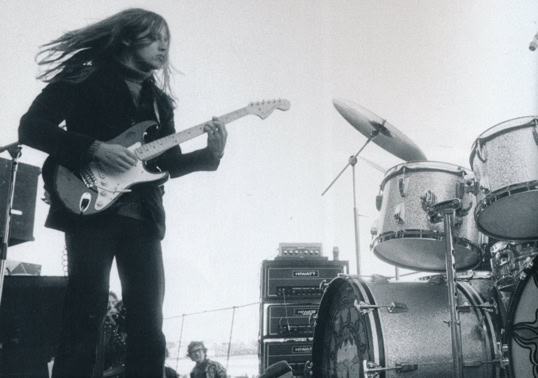
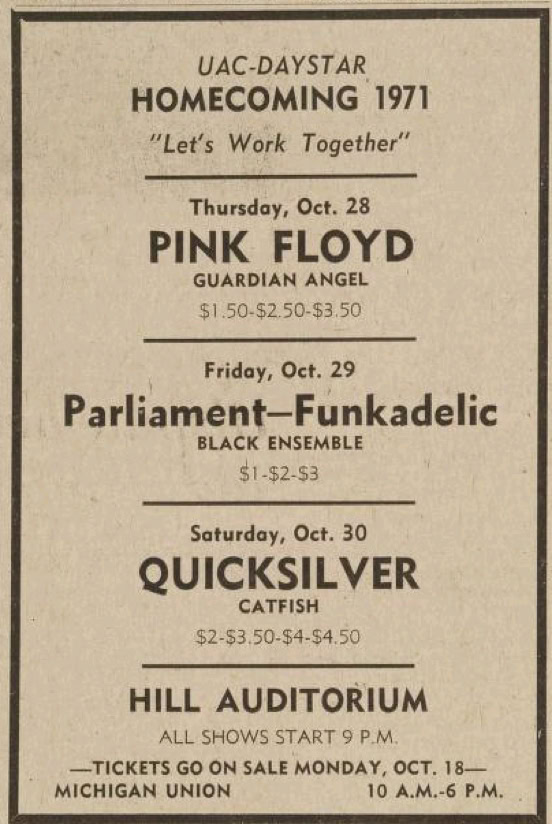
CONCERT DATE| 28 October 1971 Hill Auditorium, University of Michigan, Ann Arbor, USA
Pictures by Jim JUDKIS
«Pink Floyd invaded Hill Auditorium. Thursday night with extra-terrestial music. Their influence on other groups is impossible to discern because nobody can approach their grasp of psychedelic music. Pink Floyd's first albums appeared in the States sometime in 1967, on the heels of the other vital but undiscovered British group, the Yardbirds. But whereas the Yardbirds' innovations in electric - instrument sound clearly showed up as influences on later groups, no group has been able to follow up on the wizardry of Floyd.
The standard rock-group set up: lead guitar, bass, organ, and drums. Plus a few magic and moogic boxes which this group can wield to get sound effects you cannot believe could be heard off record. Sure, they in effect bring a whole studio into the auditorium with them, but even though some sounds are on tape, watching the guitarist slide up the neck and knowing the final tones started there, five filters previously, is still damned exciting because these guys have mastered what they are doing.
People unfamiliar with the group may have heard the FM favorite "See Emily Play," or remember the soundtrack from "Zabriskie Point." They played the latter; i.e. "Careful With That Axe, Eugene," earlier stuff from "Saucerful of Secrets" album, and a version of "Atom Heart Mother," which you can't believe four people with I-don't-care-how-many boxes could pull off.
Dealing with cosmic and magical themes as does Pink Floyd, it is difficult at times not to slide toward the punkishness of Black Sabbath, or the soppiness of T-Rex. Floyd rarely slips from a genius level, having made an art of molding and virtually curving sound, based on negative space, a frequent use of reverb, and projecting speakers. Their music is closest to hymn, an elegiac quality flows through the perfectly paced crescendos and interludes; even screams fit into the continuum. The first half of their set had music flowing out of the roots of the earth. It was light years from jazz in structure, but reached with tendrils that would have made Dean Moriarity of On The Road jump up and down screaming YES! YES!
More of the same music the second half; while you were wondering how four dudes in levis could pull themselves into a group and radiate the same concept out to an audience as coming from a single entity, at the same time they were convincing you that all music was the same in the ecstatic sense of sameness.
But the pre-encore cut from their new album was a bittedious and by the end the people who were too foolish to go out in the hall while Guardian Angel wasted time and ears with blaring rock probably could not pay the attention Pink Floyd requires»
«Pink Floyd: showing that ecstatic unity of all that's music», The Michigan Daily, 30 October 1971
A girl named Virginia Hasenbein first met David Gilmour, backstage during the after-concert party. She will be married to David near 4 years later
Ginger Gilmour:
«I’d met David five years before, at a concert at the University of Michigan. I wasn’t really a fan of the band at that point, although I had their album Ummagumma, but a friend had just come back from London where he’d got to know one of the band’s roadies and he invited me backstage. David came up to me and said, «Hi, I’m David». He had big blue eyes and that English look, with the long hair, tight black Sterling Cooper jeans and a black t-shirt that read «That’s all folks».
I was so nervous because I was very shy and it really was love at first sight. I’d always dreamed of that happening and when it did, it was like, «Is this really happening? What do I do?». When he invited me to join him on tour and then go back to England with him, I didn’t hesitate. But living in England was a real culture shock. Woodley was a mock Tudor house and it was so cold».
«Pink Floyd guitarist David Gilmour's ex-wife on being married to a rock star: «It really was love at first sight»», The Telegraph, 5 August 2016.
Left: David (and his T-shirt) pictured at this gig. Right: Ginger on September 1971.
Ginger Gilmour:
«He asked to Roger Waters to distract my first boyfriend (laughs)»
«Dark Side of the Man», Week-End Magazine, 2015
MISCELLANOUS| Late October 1971. The edit process of «Live at Pompeii» begin with the help of the future director José Pinheiro. The first step is to check if the film would be in sync with the sound
José Pinheiro:
«I remember how we watched, ever so carefully, the long and slow forward zoom of Echoes. By the time Nick came in on drums, it was clear that the two sources had been successfully paired, much to Adrian's relief!»
«The making of Pink Floyd live at Pompeii», Sam Sleiman, 2014
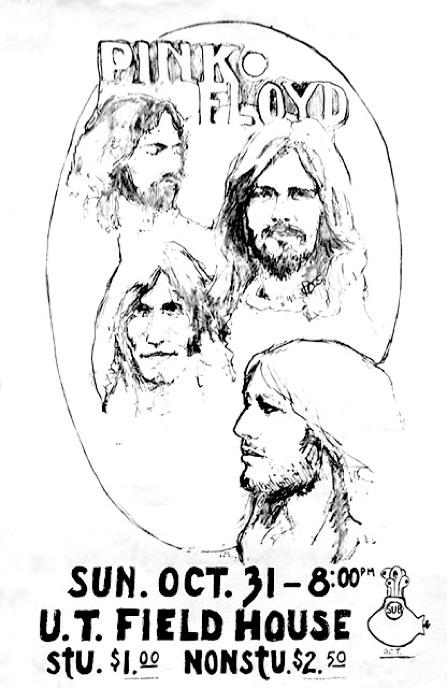
CONCERT DATE| 31 October 1971 Fieldhouse, University of Toledo, Toledo, USA
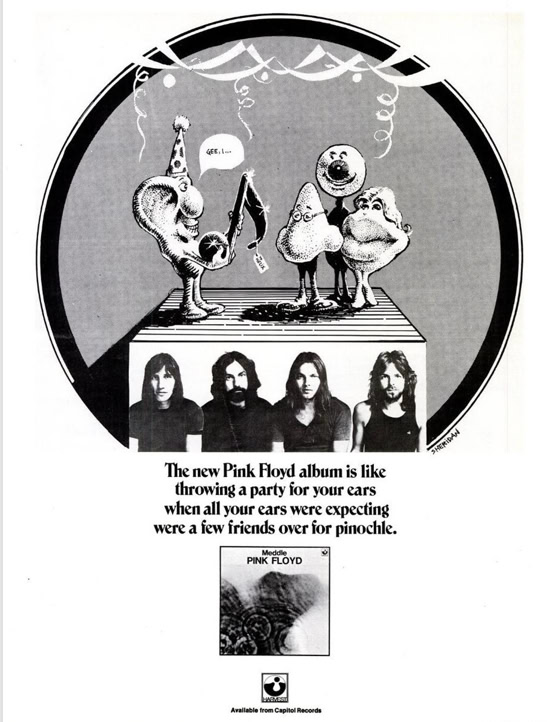
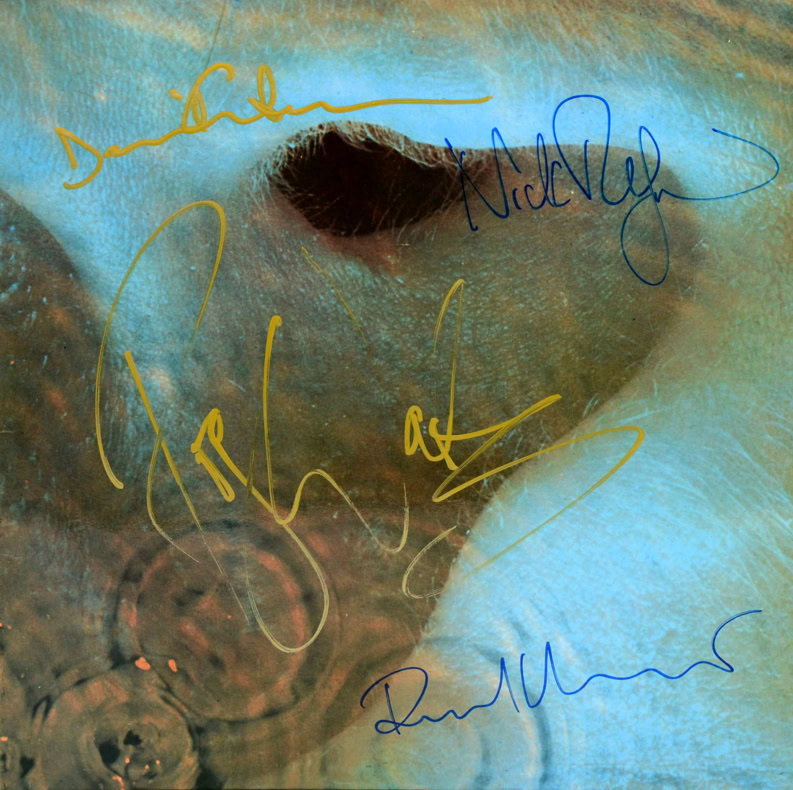
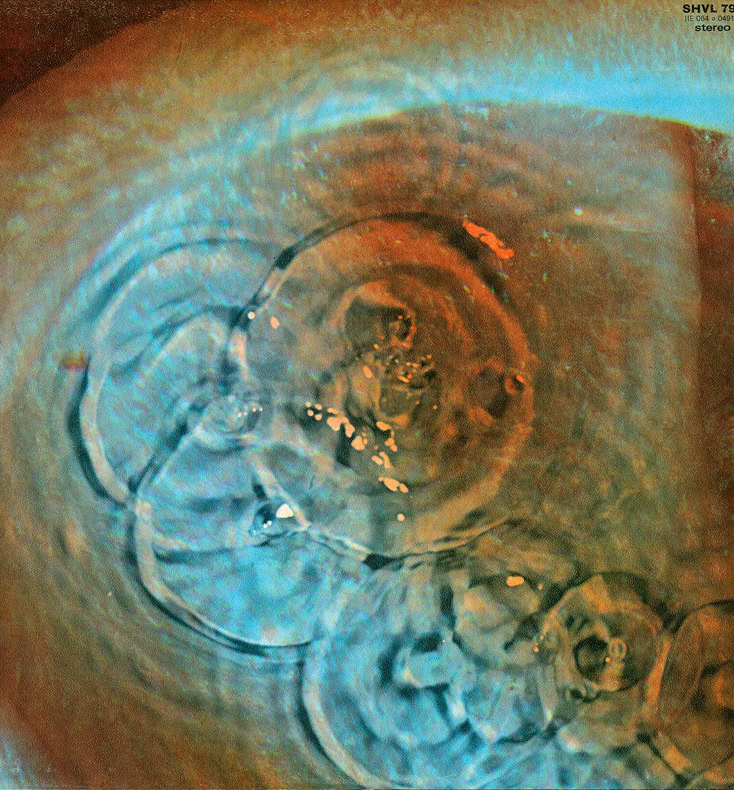
RECORD RELEASE| 31 October 1971, the sixth album of Pink Floyd «Meddle» is released this day in US. He reached #70 in the «Billboard 200» charts.
Front cover (with the signatures of the band) and back cover of the first issue (1971)
EMI Press book for the release of « Meddle »
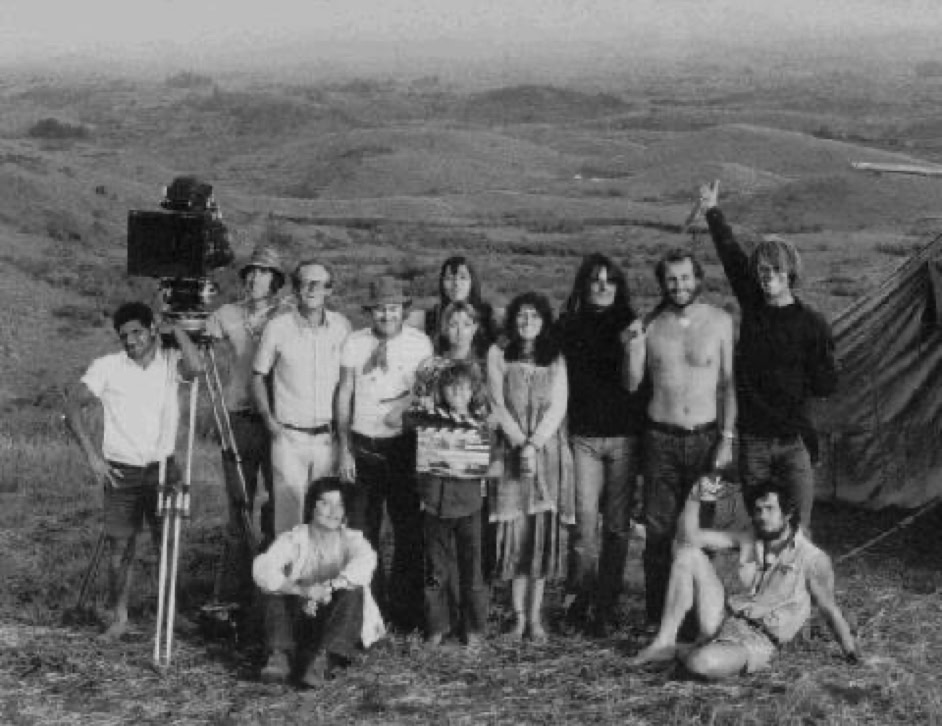
MISCELLANOUS| Late October 1971. The last sequences of the new Shroeder’s film «La Vallée» was finished in New Guinea
The Film’s crew on the last day of the shooting.
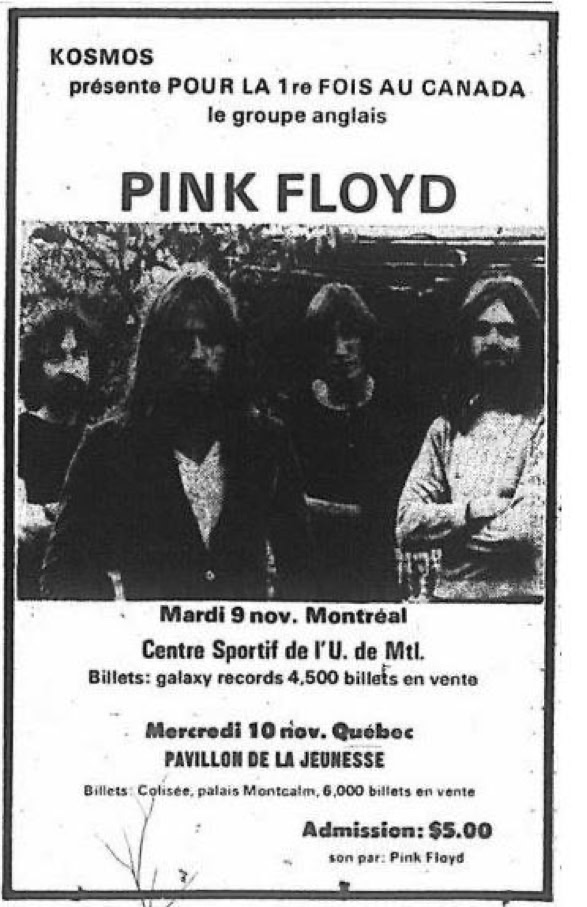
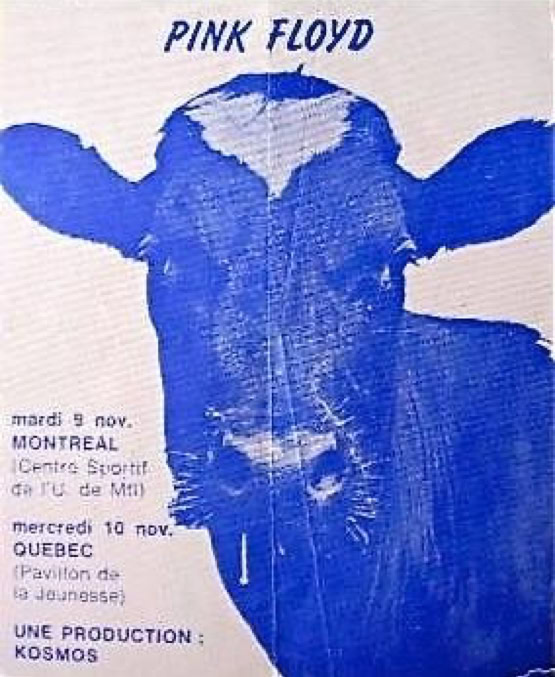
PRESS MENTION| November 1971, the french press talking about a possibly concert at Paris for the 30 December.
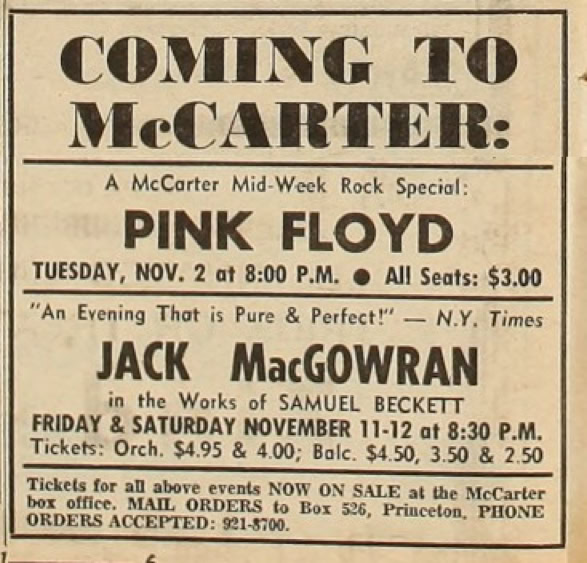
CONCERT DATE| 2 November 1971 McCarter Theatre, Princeton University, Princeton, USA
Pictures by Terry COULTON
«La quantité de matériel était telle que la scène semblait crouler sous les six tonnes d’enceintes, amplis et autres équipements étudiés pour permettre aux Pink Floyd de se produire dans une salle dix fois plus grande […] Les décibels m’ont fait fuir à la moitié, un concert génial mais presque impossible à supporter pour qui a des oreilles normalement constituées.»
«Pink Floyd», Jean-Michel Oullion
«Unreceptive as they may be, the Floyd are undeniably good musicians with a unique style of composition. Their main strength, and their claim to the kingship of psychedelia, is their mastery of electronics — they proved perfectly capable of reproducing the synthetic soundstorms and whispery, sibilant, echoing vocals that characterize their albums in concert. In fact, they actually surpassed their studio work by employing a quadrophonic sound system that, piloted by the organist with a modified joystick control, could seemingly place the group’s sound effects anywhere in the theatre. The illusion of movement was sufficiently astonishing tint anyone attending the concert drugged must have gotten a far bigger dose of psychedelia than he had bargained for.
The magnificent six-ton sound system that accomplished this — the stage was piled ten feet high with amplifiers, while more equipment was set up in the balcony — was also quite sufficient to fill a hall the size of, say, the Spectrum. In McCarter, it was literally painfully loud, and I must admit that sheer volume drove me out halfway through a concert I was otherwise enjoying very much»
«Voices - Kris and Floyd Survival of the fittest», Daily Princetonian, 4 November 1971
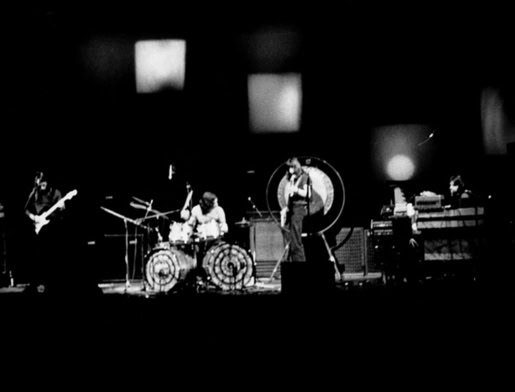
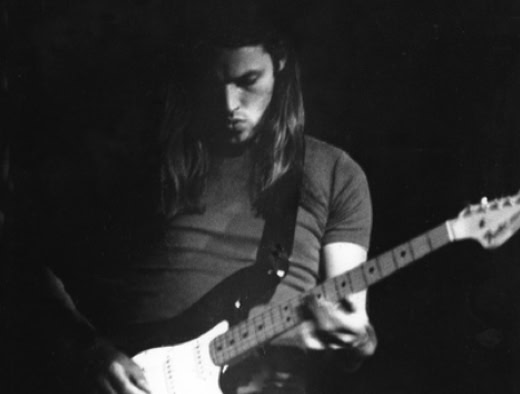
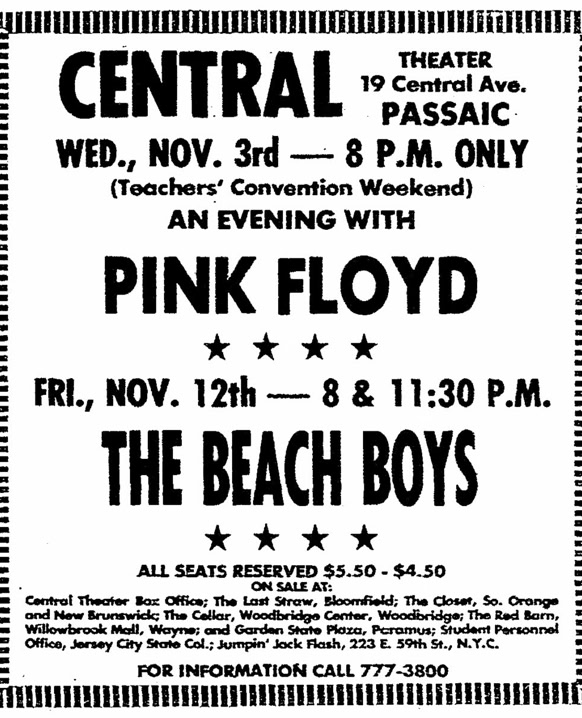
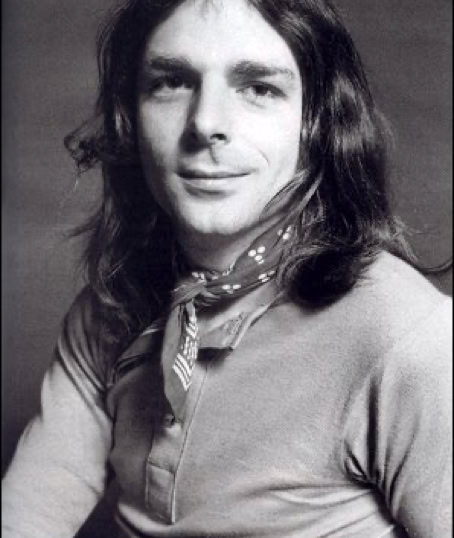
CONCERT DATE| 3 November 1971 Central Theatre, Passaic, USA
«Pink Floyd and Gong and an assortment of sound gadgets to meddle your mind hidden about the Central Theater stage Nov. 3.
Pink Floyd music is more hallucination than imagery; ideal trippy music full of enigmatic mazes to get lost in and audial balls to bounce with. PF music is a hypnotic "Echoe" and literally of a different dimension.
PF music doesn't create an atmosphere so much as it becomes one, like a sandstorm on the moon whirlpooling in quadrophonic fury around you. PF music almost makes sound a visual, painted, possibly filmed with noises. "Several Species of Small Furry Animals Grooving in the Forest with a Piet" or "Careful With that Axe, Eugene."
And like the ad says, Pink Floyd music is "like throwing a party for your ears when all your ears were expecting were a few friends over for pinochle* But it*s when Pink Floyd encores at the Central with a straight blues number that you really start to wonder »
«Pink Foyd and the Beach Boys», The Free Aquarian, 15 November 1971
CONCERT DATE| 4 November 1971 Loew's Theatre, Providence, USA
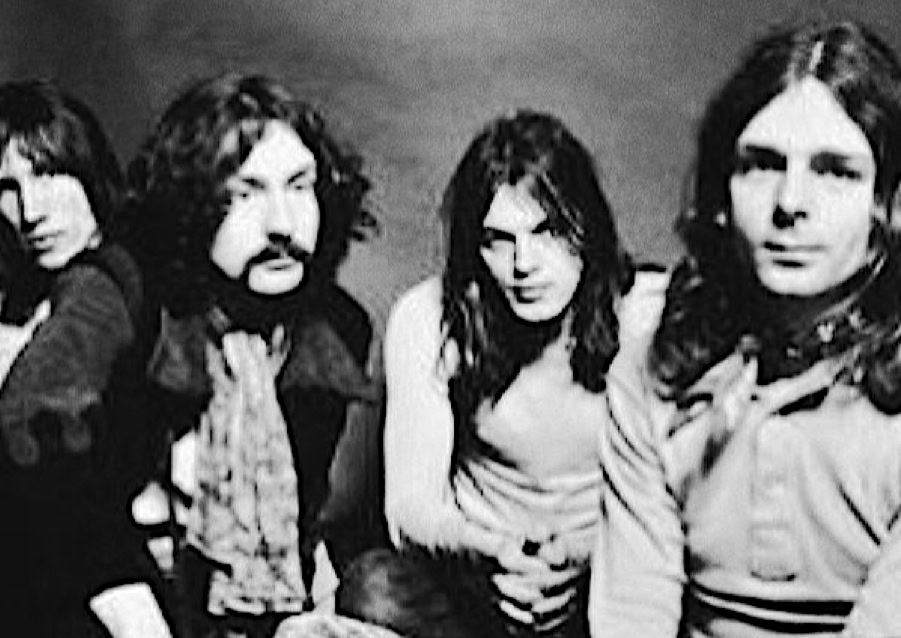
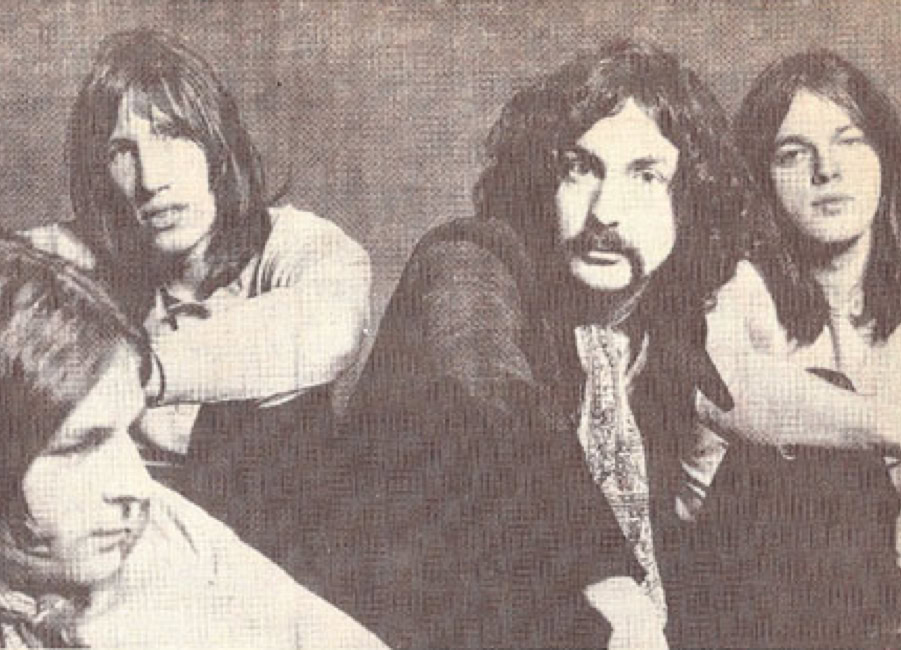
PHOTO SESSION| 5 November , the band meets the photographer Reanne Rubinstein for a photo session at 58 third avenue, Manhattan
Reanne Rubinstein:
«They had no entourage, make up or publicists. It was just them and me»
«David Gilmour, my life in Pink Floyd», Mojo, April 2006
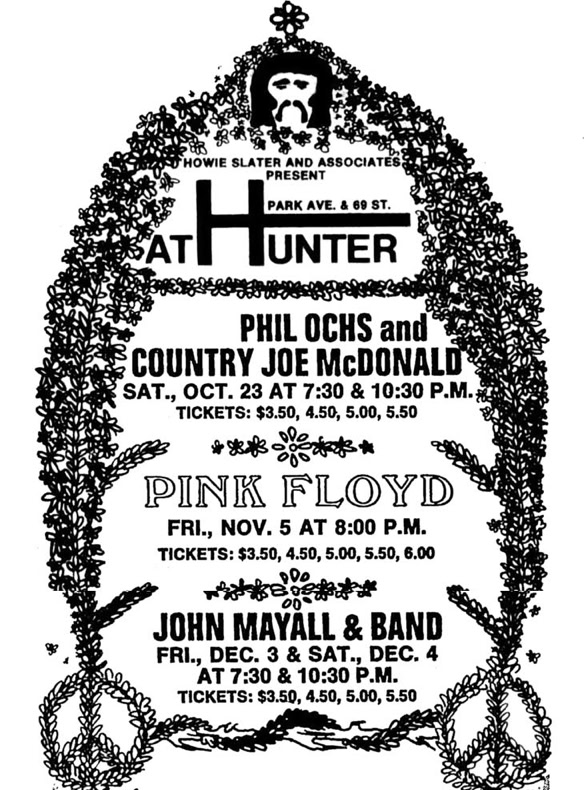
CONCERT DATE| 5 November 1971 Assembly Hall, Hunter College, Columbia University of New York, New York City, NY, USA
«We’re really making emotional music, I wouldn't it's intellectual," said David Gilmour when I talked to him this week about Pink Floyd. Nonetheless, the group has a very devoted, more o: less cultist audience here who think that they are more intellectual than not, and the audience treated their Carnegie Hall concert this week as if it were almost a religious event.
The incredibly loud, spacey music, accompanied by those great sound effects created an atmosphere that was really cosmic.
Pink Floyd played for almost three hours, and despite some minor problems, they were a huge success with a totally sold out crowd of 2,900 people. It was almost the end of their tour, one that consisted of many one-nights in different cities. When I spoke with David he emphasised also that the band was getting a bit tired of having to play the same material night after night.
"In England it's different," he said. "We can do anything we like really. We've often gone onstage and done material that we've never done before and the audiences are used to us and they love it. But in the States, it's more or less like we have to play our 'hits'." And indeed, the typically rude New York audience did shout out for "Astronomy Domine" and unbelievably enough, "See Emily Play." To that, Roger Waters just sneered and said, «You must be joking!»»
«The trouble with Pink Floyd’s hits» Disc, 11 December 1971
CONCERT DATE| 6 November 1971 Emerson Gymnasium, Case Western Reserve University, Cleveland, USA
«Some rock concerts seem destined to be special events. Take, for instance, the appearance of Pink Floyd this Saturday in Emerson . Gym. Pink Floyd is the group whose innovative music was admired by the Beatles back in 1967, when Pink Floyd's musical head trips were appreciated only by a small circle of super freaks. Now, many of Pink Floyd's explorations seem almost trite, since so many other groups have adopted them in part, yet concentrated application of strange outer-space sound. effects is uniquely Pink Floyd's and most other groups attempting to imitate them have degenerated into noisy doodling. Pink Floyd's is totally head music, polar opposite to that of the "Git up and boogie" school, and ideally a situation would have been provided in which the listener could sit back in comfort and sink himself mentally into the band's deep, cerebral sound. Due to the most blatant example of promoter disregard for an audience that I have yet witnessed, the keen edge was taken off the music as one attempted to make oneself even slightly comfortable. Twenty minutes before show time the gym was crammed and full of heavy smoke, a strain on even the strongest lungs. By the time the group began to play, there was no elbow room anywhere, people were standing eight to ten deep in the exit doors and more were sitting in the lobby. Others were turned away, even those who had purchased a ticket in advance. There has been much talk lately about providing a pleasant and sane atmosphere in which to listen to rock music. If ever a group deserved such an atmosphere, Pink Floyd did. It irritates me that poor planning or greed or some other motive could result in such a complete fiasco. Despite this, one couldn't help admiring the creative playing of the group. Beginning with a standard blues guitar line that wouldn't make the group stand out from twenty other good bands, journeyed into a vast gallery of eerie sounds which surrounded the audience on all sides, making it particularly a pity that so many had to sit in the lobby. The group's overall sound is slow, measured, floating and cold. The title of one of the numbers "Set Your Controls for the Heart of the Sun" gives a clear picture of the sort of feeling the group provokes. A concert by Pink Floyd is an all too rare pleasure and I hope that the next time around, external matters will not intrude upon this pleasure»
«Terrible planning», The Observer, 9 November 1971
«We heard foot steps Saturday night. We heard a baby cry, and the sound of birds twittering. Who was that girl we heard giggling and who was that with the axe? It was Pink Floyd packing them in at Emerson gym for one of the most successful concerts this school has had this year, drawing over 3000 people. There was Pink standing amidst a towering array of amplifiers, and electronic equipment playing for over three hours their special brand experimental rock built on the group's almost inexhaustible source of expression. Having been together for over six years they developed a sense of timing and musical sense which has been noticeably lacking in many of today's 50,000 watt groups. The audience recognized this and responded accordingly. It's hard for any group to keep an audience totally absorbed, especially in Emerson where the conditions are less then adequate for such a large crowd. Pink Floyd could, lifting the listener into every world imaginable. Their music often relies heavily on recorded effects played with the music as in High Time Cymboline where the imaginative use of tapes let us hear the footsteps of a person as he walked from room to room. Add to this the total darkness of the gym,and excitement became stunning. Organist Richard Wright's use of the melotron was another highlight of the concert. Echo stood out as his finest solo where his soaring and driving work were outstanding. Then there was Careful with
that Axe Eugene. All I can say about this ditty is that you shouldn't see it if you haven't all your faculties. You'll need them. There were the old favorites of course such as "Atom Heart Mother" or "Set The Controls for the Heart of the Sun." All very enjoyable although sometimes monotonous. It was a successful concert. It made money and it was entertainment. We were crowded but after it was over all we remembered was the music. Fie on you who didn't go»
«Pink Floyd concert-two views: Best concert ever», The Observer, 9 November 1971
PRESS MENTION| Early November 1971. For the first time, the band is announced for a short tour in Québéc.
CONCERT DATE| 8 November 1971 Peace Bridge Exhibition Center, Buffalo, USA
« The constant experimentation and innovation which has become Pink Floyd's trademark is something based on fluidity — a constant straining relationship between the music they're playing and what they can do with it. Last Monday the fluidity just wasn't there. A stiffness, a rigidity seemed to be the basis of their performance. Nothing truly dynamic wormed its way to the surface.
Recreations and creations When they started to play they sounded exactly like their recordings. So you say, «Well, they make some pretty complex records», granted, but when you have a 16-track control panel hooked up to a quadrophonic speaker system, you simply don't recreate, note for note, what you've done before — that's staleness, not creation. Besides, a recording is just a piece of material which came out of some musician's head on a particular set of days, and its sound depended on his environment, what he had for dinner, what kind of hangover he has, how ill he felt. Any number of momentary environmental factors make a record.
It's a creation which is extremely important to an artist, but it certainly should take a secondary position to the actual making of that music before a live audience environment, which should be conducive to a creative situation (though a good deal of the time these days it's not, and often acts as a destructive mechanism for creativity). Improvisation on set themes is essential to the core of rock n' roll. Without it the thrill would certainly be gone.
A rock n' roll group (and all there really are nowadays are rock n' roll groups and just plain roll audiences — we, as an audience, have almost lost sight of the rock aspect — somebody's taken the bomp from the she-bomp) — must be able to weigh the delicate balance between performance and rock n' roll fluidity — they must learn to 'adapter adapter.' The stones do it with great success, Boz Scaggs comes across, the Doors used to, the Dead as well. All of the groups which formed the boom had this ability to strike the performance/creative balance.
Even the Beatles knew how to attain this balance. Yet, their's was on another level altogether —their collective genius worked to create so much on record that their conventional need for live performance was sublimated for the need to perform via their chosen medium.
Mercury, but not the Sun Pink Floyd began by attempting to set everyone's controls for the heart of the sun, but they fizzled out after a brief visit to Mercury, attained momentarily in 'Fat Old Sun' from the Atom Heart Mother record and the inevitable 'Set the Controls ...' a standard which presented a few moments where Pink Floyd liquidized themselves and pushed on into interstellar overdrive. Reaching Mercury ain't bad mind you, but it sure isn't the sun. Sounding like the music of the ancient Krells from Altair they leaped into hyperspace only to return maimed and exhausted. The mood of the evening was set. Flash paper was an added attraction offered up by a member of the audience and people kept trying to sell me acid and NTA (whatever that is). Roger Waters walks on stage, a few shouts of «allright Roger» play across the seated audience; he's wearing sneakers. They pick up their instruments and launch into a song entitled, "The Embryo." Still another layer of mood is set. The atmosphere almost becomes compelling when they launch themselves into "Atom Heart Mother" minus orchestral accompaniment. It sure sounds a lot better this way than with the gawd orchestrations presented on the Ip, and they tell me that it didn't sound all that bad when they did it live with an orchestra. The borderline of fluidity was being reached as this number progressed. The band began extrapolating rather than performing. All in all, the first set had the trappings of success, yet it was still a performance and that bothered me a whole lot. A rock n' roll recital I didn't need and didn't want. Starting the second set with what just might be the definitive Pink Floyd song called, "One of These Days" from their new album Meddle, they immediately set out to dazzle and transcend performance. Roger Waters had his bass plugged into the organ, Rick Wright played a synthesizer, and the 16-track console was working overtime as they set up an intense rhythmic pattern between gushes of recorded wind. A stunning song which is my favorite because of its image-producing capabilities —musically they created a scene from another dimension, another time. I responded immediately by connecting the song with a poem I had written. It amazed me how solid the connection was made, a total event had been created in my mind. Listen to "One of These Days" and see- if these words don't fit, besides I told Dianne I'd let her see the poem (…) After One of these Days, they headed into "Careful With That Axe Eugene" with Waters edging his way back and forth from the microphone creating sounds in preparation for his patented scream. And when it comes you know it's there. A complete mood of malevolence is set up by this song and to say the least you felt quite menaced, as if Waters would float down from the stage platform and do something incredibly evil. Of course, for Water's scream aficionados we all know that his scream in "Come in 51, Your Time's Up" is absolutely bone crunching. Next they did "Cymbaline" from the More soundtrack. The number was highlighted by a stereophonic journey through opened and shut doors. Footsteps were heard hauntingly circling the auditorium pausing momentarily to open up doors which had noises ranging from dogs barking to people cheering. Finally, they did "Echoes" and it remains one of the most solidified piece of fluidity they've ever done. We almost reach the sun on this one.And yet, the crowd had the audacity to ask for an encore»
«Pink Floyd: That certain something is missing», The Spectrum, 12 November 1971
MISCELLANOUS| Prior the Canadian leg of his American tour, the band gave a press conference at the «Holiday Inn» hotel of Montréal
Nick Mason:
«Nous ne sommes pas encore très grands en Amérique du Nord. Mais ça augmente lentement. Notre vrai territoire, c'est l'Europe, la France en particulier. Je ne crois pas que cela tient à une différence de genre de musique. Au fond, nous sommes un groupe expérimental et nous aimons bien faire ce que nous voulons avec chaque album. Si nous aimons bien plaire quand nous composons, nous essayons pas de plaire. Je crois que nous faisons depuis longtemps un genre de musique bien particulier qui commencent, d'ailleurs, à faire école. La plupart des groupes actuels sont modelés sur le canevas de Cream ... pas nous.
Nos concerts sont généralement très structurés. Avant de présenter une pièce, elle est solidement travaillée; quand nous en sommes satisfaits, nous la jouons.
Les idées qui y sont exprimées viennent d'un peu tout le monde. Quand nous travaillons ensemble, un d'entre nous arrive avec une idÈe qu'il expose; elle accroche ou non. Bien sûr, nous pourrions improviser aussi, jammer. On croit que c'est très difficile. Ca ne l'est pas tellement car on peut toujours faire des erreurs qui passent généralement inaperçues; puis quand ça ne va plus du tour, on en revient à la structure prévue.
Interviewer:« Quelle est la situation du rock en Angleterre ?»
«Elle est bonne et elle s’améliore. L'ouverture d'un nouveau théâtre exclusivement consacré au rock, un peu comme les ex-Filmore, est excellente. La musique rock devient beaucoup plus sophistiquée en Europe, musicalement parlant et en ce qui concerne la présentation. Nous ne sommes pas de grands showman comme les Who, par exemple, mais nous essayons aussi d’améliorer notre présentation au niveau des éclairages des lightshow"
Interviewer: «Quel est votre guitariste préféré ?»
«C’est incontestablement Hendrix»
«Les Pink Floyd à Montréal», Main Mise, December 1971
CONCERT DATE| 9 November 1971 Centre Sportif, Université de Montréal, Montréal, Québec, Canada
«Soyons francs, soyons brefs: le concert de Pink Floyd au magnifique stade de l’université de Montréal a été un triomphe éclatant pour tous ceux qui étaient sur la mescaline, le LSD-25 (et autres) , les cookies au hash ... il n'a été qu'un succès pour ceux qui étaient sur le bon vieux pot de grand' mère. Ça se comprend: on est dans l'espace total ou on ne l'est pas. Ce qui est sûr, c'est que le groupe fait une musique fascinante, de près ou de loin, que leur mixage est certainement le meilleur existant actuellement, que leur son quadriphonique vous fait passer des frissons dans le dos"
«Les Pink Floyd à Montréal», Main Mise, December 1971
« Il y a quelques années, j'avais eu le privilège de voir et d'entendre ces Grands Pink Floyd au centre sportif de l'U.M. J'avoue qu’ils n'avaient déçu personne; le light show était un peu moins spectaculaire mais, la MUSIQUE, wow! cloué à mon siège, je croyais pas en re- venir. Meilleurs? non, différents: une sorte de musique de chambre-rock pour freaks avertis... la petite salle de l'U.M. se prêtait mieux à cet- te grande Musique. Les Fans étaient tous d'accord»
«Six impressions d’un show à l’Autostade», Main Mise, August 1975.
CONCERT DATE| 10 November 1971 Pavillon de la Jeunesse, Québec City, Québec, Canada
Pictures by Jean Savard
«C’était le 10 novembre 1971, au Pavillon de la Jeunesse. À l’époque, Pink Floyd n’avait pas encore atteint le pic de popularité qu’il aurait au lendemain de The Dark Side Of The Moon. On trouvait dans le répertoire des relents des premières années psychédéliques et hautement exploratoires, avec des pièces comme Atom Heart Mother ou A Saucerful of Secrets. Comme Meddle venait tout juste de paraître, les compositions One of These Days et Echoes étaient aussi au programme, selon les informations qu’on peut trouver dans le Web.
Le passage des Floyd était loin d’être passé inaperçu: le Soleil avait envoyé pas moins de quatre personnes pour couvrir l’événement ou partager leurs impressions. Michel Belleau avait vu un «happening musical d’une rare intensité»; Léonce Gaudreault évoquait une «concélébration des sons»; Paul Roux, qui trouvait quelque chose d’à la fois extra-terrestre et intérieur aux compositions, parlait de «musiciens de l’extraordinaire», tandis que François Demers optait pour une approche poétique afin de décrire ce qu’il vivait et conclure que la musique des Anglais était «programmée et réussie comme lorsque l’agencement technique devient harmonie. Il y avait eu communion entre la foule de Québec, qui avait réservé un accueil très chaleureux, comparativement à celle de Montréal (eh oui, l’éternelle rivalité), et les musiciens. Plus de 2000 spectateurs avaient déboursé un gros 5$ pour le concert"
«Y étiez-vous? Pink Floyd à Québec, en 1971», Le Soleil, 2 Octobre 2016
«Après avoir découvert un public plus "spectateur" la veille à Montréal, les musiciens de Pink Floyd ont reçu un accueil "actif" mercredi soir dernier à Québec. Vers 19h30 plus de 2,000 personnes s'entassaient déjà dans l'enceinte survoltée du Pavillon de la Jeunesse pour vivre un happening musical d'une rare intensité dont plusieurs se souviendront comme d'un très beau moment de notre histoire du spectacle rock.
D'ailleurs les musiciens eux - mêmes ont avoué avoir donné le meilleur spectacle de leur tournée américaine ce soir-là à Québec. Les participants au concert ont fait découvrir aux Floyd un sens de la participation très "américain" comme par exemple d'illuniner la salle en allumant des chandelles ou des allumettes. Les musiciens sont apparus dans une salle éclairée de mille feux qui scandait le rythme avant même que les instruments aient lancé leurs cris. Certains arrivent déguisés de dentelles et de chiffon, masqués comme pour un bal du Moyen Age. Plus loin un autre groupe déplie avec majesté sur le sol un immense drap rose: la cérémonie religieuse peut maintenant avoir lieu. Il n'en fallait pas plus pour embarquer les Floyd dans l'accomplissement d’un geste d'amour, à certain moment un véritable sacrifice tribal mené à travers toutes les époques et tous les genres musicaux: un soir privilégié parce que préparé et conçu dans l'amour. "A distinctive rock act whom people will remember", pouvait-on dire après ce concert des Floyd»
«On pourrait en écrire encore beaucoup sur ces musiciens anglais dont le déploiement électronique est sans contredit unique et .allié à une rare maîtrise musicale chez chacun des membres du groupe. N'avez-vous d'ailleurs pas remarqué (je parle à ceux qui étaient là) comme l'amour les transforme, les épanouit; de quelle façon ils sont attentifs les uns aux autres en ajustant leurs instruments par exemple ?
Et cette communion musicale entre les musiciens d'abord et avec le public ensuite se remarque aussi dans la façon dont ils se transmettent le leadership de la musique. Dans plusieurs groupes, de véritables conflits surviennent lorsque l'un d'eux veut assumer le lead musical: chez les Floyd on est au-dessus de tout ça.
D’ailleurs la plus grande simplicité les caractérise dans tous les gestes qu'ils posent tant sur le "stage" qu’à l'extérieur. Ils demandent par exemple de ne faire aucune présentation officielle avant le concert. La fête appartient vraiment aux gens dans la salle. Difficile aussi de passer sous silence que le concert des Floyd mercredi soir est l'aboutissement d'une action lancée il y a, un an par le groupe Kosmos. Ce soir-là était pour tout le groupe un grand soir. Et au moment de l'entrée sur scène de Pink Floyd, la nervosité et le trac ont soudain disparu pour faire place au conterttement, à cette sorte de satisfaction profonde lorsqu'on a l'impression d'avoir accompli quelque chose de très beau"
«Pink Floyd, Québec, 10 novembre 1971», Le Soleil, 13 November 1971
Jean-Marie Moisan (audience member)
«Je ne me souviens pas qui… Je sais pas si c’était Roger [Waters] ou l’autre [David Gilmour]. Il était sur le milieu de la scène. Il avait un genre de bouton rond. Il nous parlait, en anglais évidemment, et il faisait tourner le son dans le Pavillon de la jeunesse. C’était vraiment wow!»
«Il y a 50 ans, la musique de Pink Floyd résonnait à Québec», Radio-Canada website, 6 November 2021.
Andrée Gosselin (audience member):.
«Le son était vraiment spécial dans le temps. J’avais jamais vécu ça. La lumière était rosée, il y avait beaucoup de boucan qui faisait que l’ambiance était feutrée».
« Il y a 50 ans, la musique de Pink Floyd résonnait à Québec», Radio-Canada website, 6 November 2021.
Daniel Jacob (Kosmos’ crew member):
«Un moment donné, Richard Wright me dit : «Tu peux te prendre une bière». Je comprends! J'avais travaillé toute la journée! Je me penche parce que la caisse était par terre, et je regarde d’en bas, Gilmour me regarde comme s’il était Dieu le père. Il avait ses deux pieds sur la caisse. Pis là, il m’a dévisagé… Je me souviendrai toujours du croisement des regards du kid avec son héros! Il a fini par enlever ses pieds très lentement. J’ai ouvert la boîte et j’ai pris deux bières! Ça, c’était ma paie. J’ai eu deux secondes de regard intense avec David Gilmour»
« Il y a 50 ans, la musique de Pink Floyd résonnait à Québec», Radio-Canada website, 6 November 2021.
CONCERT DATE| 11 November 1971 Music Hall, Boston, USA
Pictures by Jim KOZLOWSKI
«There was a mystical atmosphere last night at the Music Hall as Pink Floyd ushered an enthusiastic near-capacity crowd into its eerie musical living theatre. Ail night long I searched for words to do justice to the special atmosphere that Rick Wright on keyboards, Nicki Mason on drums, Roger Waters on bass and gong and David Gilmour on guitar create out of what has to be the most elaborate set of equipment in rock today. Perhaps their spell could be called hypnotic rock: A somnambulant, electric, sensuous, chilling rock. With their 360 degree speakers, they can give the illusion that their music is coming from anyplace above, behind, around, or in front of the audience.
"Careful With that Axe, Eugene" starts with an apprehension-creating dronning beat that lulls as it heightens tension. It proceeds to slowly build to an agonizing screaming crescendo, then starts its way back down, the song's energy ebbing to a final gasp. Set the Controls For the Heart of the Sun," undoubtedly was the emotional peak of the performance. this outer (inner) space flow starts with a jungle night drum calling to unnamed spirits. The whispered lyrics bring you to the void, the beginning of life. As elemental lights play in patterns, the gong stirs the air, rising to the point of searing crashes, until then you are there, you've arrived. There were other songs, other environments. "Atom Heart Mother," and "Echoes" from their new album, "Metal," but there really isn't too much I can add »
«Pink Floyd brings cosmos indoors at Music Hall», Boston Globe, 12 November 1971
CONCERT DATE| 12 November1971 Irvine Auditorium, University of Pennsylvania, Philadelphia, USA
CONCERT DATE| 13 November 1971 Chapin Hall, Williams College, Williamstown, USA
CONCERT DATE| 14 November 1971 Pritchard Gymnasium, State University of New York, Stony Brook, Long Island, USA
Pictures by greg CHRISTMAN
CONCERT DATE| 15 November 1971 Carnegie Hall, New York, USA
« Pink Floyd posed an interesting question at its Carnegie Hall concert Monday night: Is pain a viable form of musical enjoyment? No, I'm not being entirely facetious. By the end of the program, my hearing mechanism felt as though it had been assaulted by sounds just this side of the decibel output of an atomic bomb. And yet, surprisingly, there were times when the loudness itself—pain and all—acted as a quite effective element in the music's dramatic contrasts. The English rock group's music was concerned with textures for their own sake, with vast, almost unending densities of sound that swept around the hall's four strategically placed speaker systems. Rock rhythms surged in and out of the music; a vocal appeared and then disappeared; shouts, screams and garbled chants drifted in and out, All of it was extremely impressionistic head music, obviously intended to push the listener into his own musings.
Much of it was fascinating. Some of it wasn't. Pink Floyd's musicians lack a much‐needed ability to edit their music as they make it. Taken, say, in an hour‐and‐a‐half dose, electronic, improvised trip music can be extremely effective; pushed to the limits of a three‐hour program, it collapses of its own weight.
By the evening's close, Pink Floyd had depleted its creative juices and was beginning to depend upon the easy tricks of higher and higher volume levels. As the sound reached and then passed the threshold of pain, I was rudely distracted from the quite pleasant trip around the insides of my eyeballs that had occupied me for most of the evening. And pain, intriguing as it may be at times, is no real substitute for musical tripping »
« Volume Goes Up and Up at Pink Floyd's Concert », New York Times, 17 November 1971.
« The incredibly loud,’ space} music, accompanied by those great sound effects created an atmosphere that was really cosmic. Pink Floyd played for almost three hours, and despite some minor problems they were a huge success with a total sold out crowd of 2,900 people.
It was almost the end of their tour, one that consisted of many one-nights In different cities. When I spoke with David he emphasized also that the band was getting a bit tired of having to play the same material night after night. “In England it's different," he said. “We can do anything we like really. We’ve often gone onstage and done material that we’ve never done before and the audiences arc used to us and they love it. Hut in the States, it's more or lees like we have to play our ‘hits’. And indeed, the typically rude New York audience did shout out for Astronomy Dominé and, unbelievably enough, See Emily Play. To that, Roger Waters just sneered and said « You must be joking! » »
« The Trouble with Pink Floyd hits … », Disc, 11 February 1971
CONCERT DATE| 16 November 1971 Lisner Auditorium, George Washington University, Washington D.C., USA
«Pink Floyd performed Tuesday night in Lisner Auditorium at GW. Overall it was a fine, but loud concert. What they lacked technically, they made up for with originality. The performance almost defied description. They had speakers set up throughout the auditorium through which special sound effects were fed. The organ player seemed to be directing the sound from one speaker to another and the end result was sound which actually seemed to move around the auditorium. It was the closest thing I've heard (or seen) to visual sound"
«Pink Floyd», American Eagle, 19 November 1971
«This was no ordinary rock show -- it was the closest thing that rock music has to show in the way of avant-garde music»
«Pink Floyd: Rock Music Novelties», Washington Post, 17 November 1971
PRESS MENTION| During the New York stop, David gave some interviews to the press
David Gilmour:
«I think that we're intellectually ahead of what's happening in music, but it's not all down to intellect. We've never thought of ourselves as avant-garde; basically, for us, it's emotional music, that avant-garde thing was something put upon us. I don't know about other groups catching up with us.
There are other groups getting closer to what we're doing. "Audiences throughout the world are getting more and more the same as far as we're concerned. In England, we've got a better and more dedicated audience. and they expect us to do anything we want. We've never been as daring in the States as we've been in England. We've set out there to perform an evening without playing anything we've ever done before and only giving ourselves the day of the concert to prepare, and people dig it, no rules no anything.
We've done another concert tour in England that was about a man on a journey, sort of a story line, but we avoided calling it a rock opera. We had a monster who wandered in from the back of the audience. We did that a couple of years ago and people in England still expect us to surprise them. In the United States, however, we've come over and played pretty well, but it's been pretty standard Pink Floyd stuff»
«Electronic key to PF sound», The Columbia Record, 21 December 1971
CONCERT DATE| 19 November 1971 Syria Mosque Theater, Pittsburgh, USA
CONCERT DATE| 20 November 1971 Taft Auditorium, Cincinnati, USA
«Ce concert, le dernier de la tournée, présente plusieurs caractéristiques qui lui confèrent un intérêt particulier. Deux titres furent joués en public pour la dernière fois dans l’histoire de la carrière de Pink Floyd : «Cymbaline» et «The Embryo». Concernant ce dernier, la version interprétée ce soir là fut la plus longue jamais jouée en concert, avec plus de 28 minutes. La raison en fut une panne de l’orgue de Richard Wright. Durant la réparation de l’instrument, les trois autres continuèrent à jammer et ont peut reconnaître dans ces improvisations des extraits de morceaux connus tels que «Careful with that axe» ou «Echoes», mais aussi des extraits de morceaux qui n’existaient alors qu’à l’état d’ébauche ou bien qui n’étaient même pas encore en projet tels que «Money», «Breathe», «Any Colour You Like» et «Sheep», ce qui est un bon enseignement sur la genèse de la musique de Pink Floyd»
«Pink Floyd is a monumental rock group. When it takes over an auditorium, it becomes a caldron of sound. The group proved it Saturday night when it trans formed Taft Auditorium into a sorcerer’s den of music and light. The huge Chinese gong, the pounding of the drums, the weird whistles through the sound system, the trick vibrato of the electric organ and lights bathing the stage In pure green, red, and blue all combined like a magic potion into a genuine rock spell. The first song of the concert lasted 35 minutes.
And that was 35 minutes of a little singing and a lot of instrumental interweaving of electric guitars, drums, organ and special electronic effects. The loudspeakers for the concert were located not only on the Stage. but also the walls of theater. Occasional squawks could be heard coming from the back during most of the music, but it was specially effective when everything suddenly started playing from the rear. All four men making up Pink Floyd are excellent.
The singing and the songs themselves might be termed bland. But it was the totality that had the tremendous effect, not just one thing such as words.
The music was loud. The best of it sounded like banshees, or the last wild ride in Berlioz’s “The Damnation of Faust” And it ad the excitement of a screaming crowd at a football game.
I especially liked the drummer, Nicki Mason. He plays with his whole arm instead of just his wrist, and he gets big, gutty sound from all the drums(…)He also knows how to piay the cymbals like a musical instrument (…) IT shows in the feeling of order and even melody, in everything they do.
The concert was sold-out to a friendly appreciative-- bunch of teen-agers. Pink Floyd will be back in Cincinnati"
«Pink Floyd weaves Rock spell», The Cincinnati Enquirer, 21 November 1971
The band back to England just after this show.
«Emo remembers the day that David returned from America, In 1971, and brought me with him to the flat in Warwick Way. I was so shy and innocent. He said David was really proud and showed me off. I had no idea. He said it was evident how much we were I n I love. We were always kissing and holding hands. To Emo, the beauty of David's face could launch a thousand ships and he found I the same in mine»
«Memoirs form the Bright Side of the Moon», Ginger Gilmour.
PRESS MENTION| Late November 1971. After the critical and public success of their late US tour, the band is definitely established on the American musical scene.
« Big Spring Daily Herald », 12 December 1971.
REHEARSALS| 29 November - 8 December 1971 Pink Floyd spent two weeks at Decca Studios in West Hampstead. The band is writing and recording ideas for a new piece with the working title of «Eclipse». This session has been immediately organized follows the end of the American tour during the band has declared, in various interviews, «to die of boredom» playing same songs every night. During the month of December of this year, the group jam in order to come up with new ideas. Thus, Waters brings out the title Breathe (taken from the soundtrack of "The Body") which Wright reworks based on the Kind of blue of Miles Davis. Waters pulls out The Dark Side of the Moon (future Brain Damage) written during the “Meddle” sessions, finds Money's riff and the band is re-working Richard Wright's Violent Sequence into Us & Them.
photography by Nick Mason, December 1971.
Roger Waters:
«I can’t remember the last time we had a rehearsal (…) Often the cause of groups splitting is when people freak and can’t come up with new stuff, which is what happened to us. But we’re very healthy now, though (…) I really have no idea what is going to happen next, but we’re going to be much lighter and more efficient»
Cited in «Pink Floyd», Rick Sanders, 1976.
Nick Mason:
«I don’t feel that there is any definite course of progress in our music. People see continuations and progressions, but it’s not apparent to us. We just get an idea for something and then we try to do it»
Cited in «Pink Floyd», Rick Sanders, 1976.
PRESS MENTION| Early December 1971. Advertising for the next British Tour for the beginning of the next year.
«It’ll be a remarkable tour; they have some new material ready, as well as familiar recordings»
«Floyd to go on the road again», Disc & Music, Echo, 11 December 1971
RECORDING SESSION| From 13 December to 20 December 1971. Second shooting of «Pompeii» project in Paris. To fix the continuity problems for the tracks shoted in Italy, the visual effects director, Michel Ygouf, suggest to use some Transflex screens. The band first disagreed (especially Roger) but there is no others way to adjust the synchronicity of the sequences. The band record Set the Controls for the Heart of the Sun, Careful with that axe, Eugène and Mademoiselle Nobs
Pictures by Araldo Di Crollalanza, Danièle Légeron, Madonna Bouglione and Victor Rodrique.
Eventually, the group acceded to Maben's request to be filmed during the lunch sessions (see above: October 1971). Roadie Chris Admason buy some oysters and beers at the « Brasserie Lorraine » next to the studio. Adrian shoot the sequences. There will be released on the documentary « Le festin des Huîtres »
Pictures by Adrian Maben
Adrian Maben:
«This second shoot at the Studios de Boulogne went surprisingly smoothly, and we filmed three additional numbers: Careful With That Axe Eugene, Set The Controls For The Heart Of The Sun and Mademoiselle Nobs [a reworked version of Meddle's Seamus]. While in Paris, the group visited the Europa-Sonor Wagram studio, and spent the day improving what had already been recorded and eating oysters. Fortunately|had brought with me a 16mm camera, some film and a cameraman. The laughter, the cutting remarks and the jokes about oysters somehow summed up the Floyd as they were at the end of 1971»