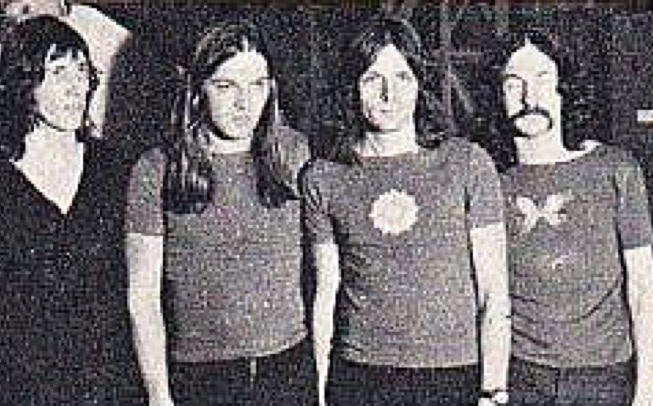
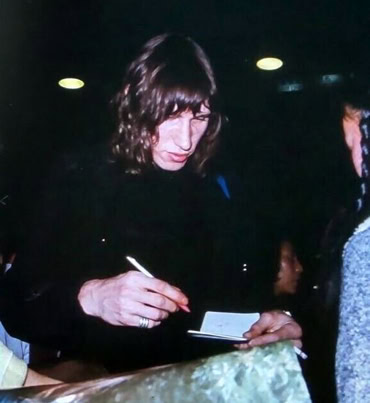
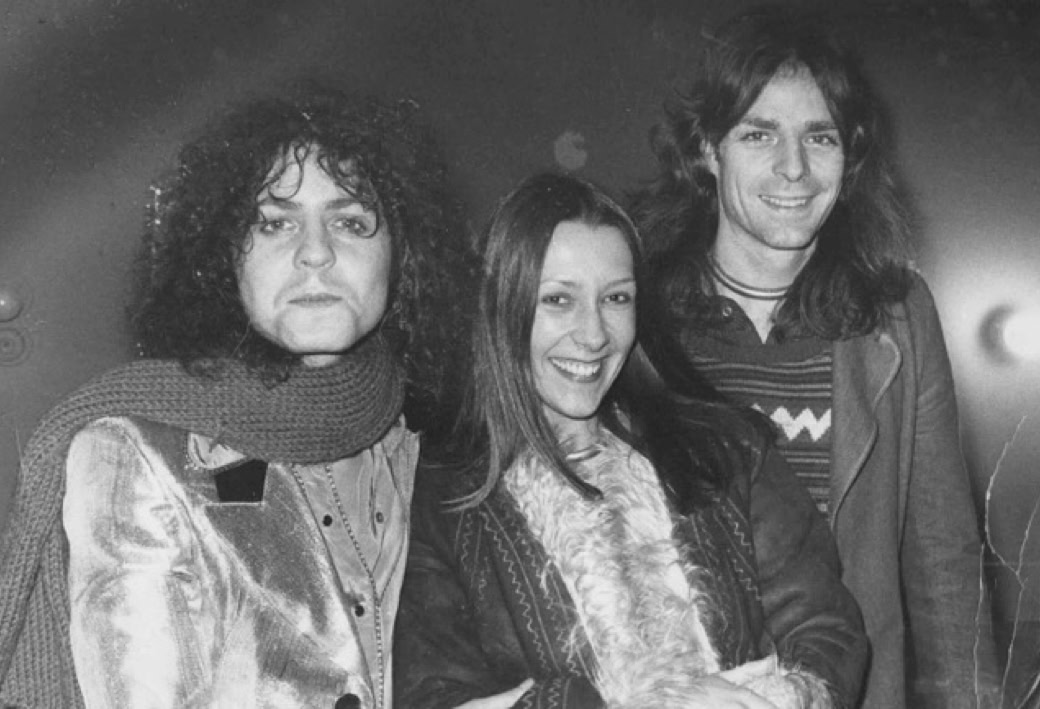
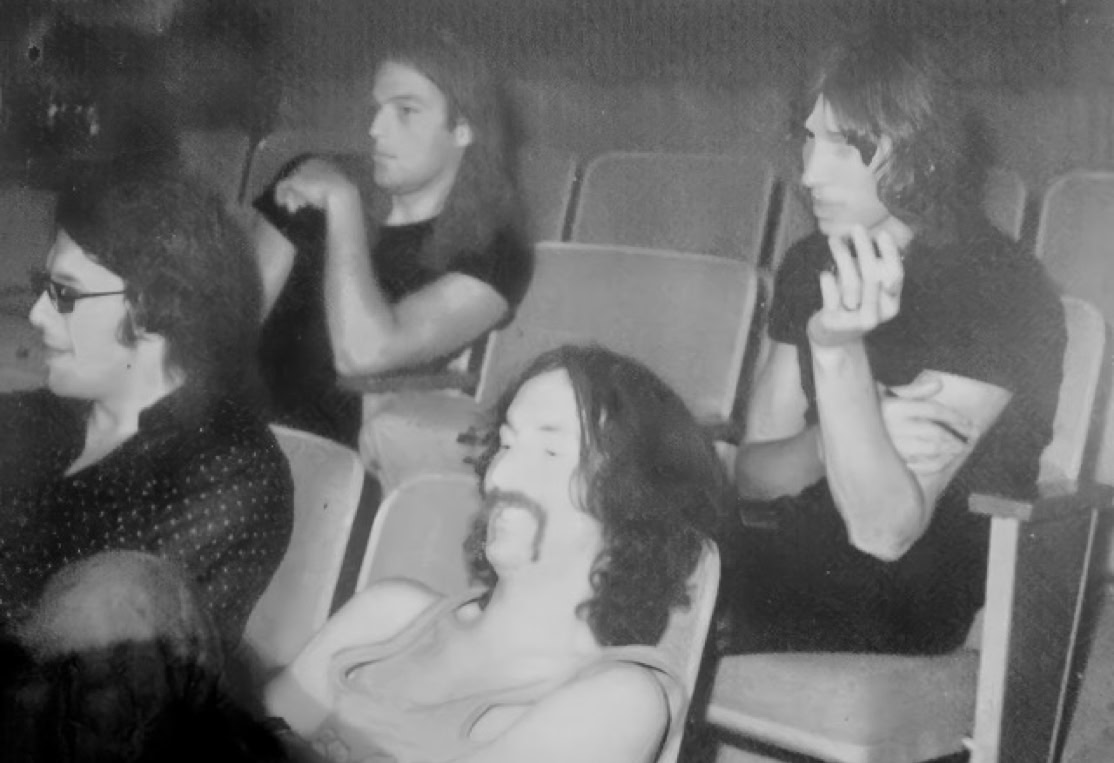
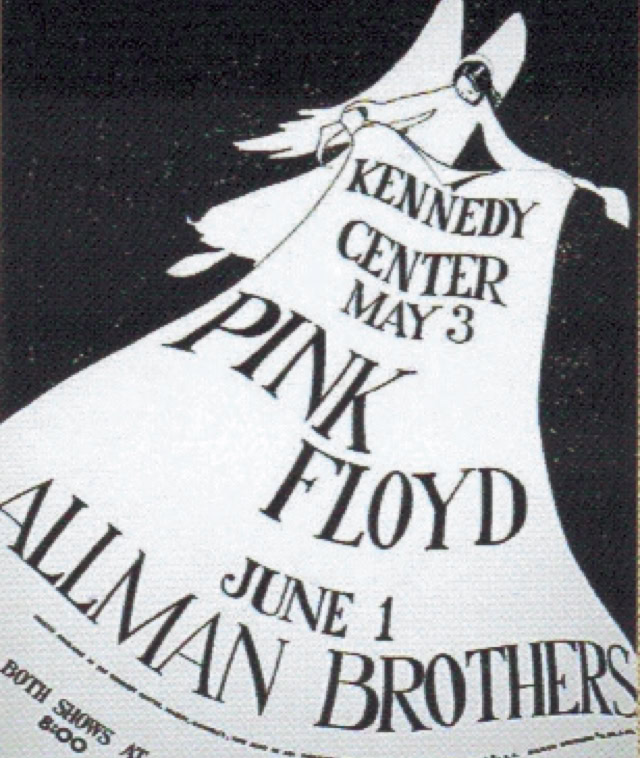
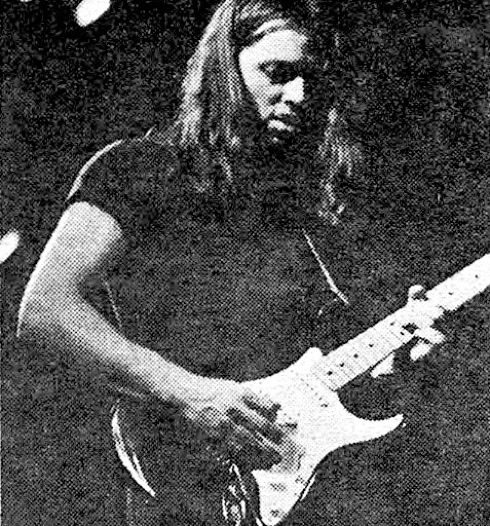
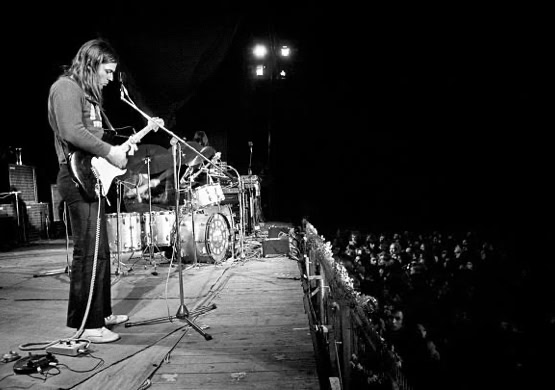
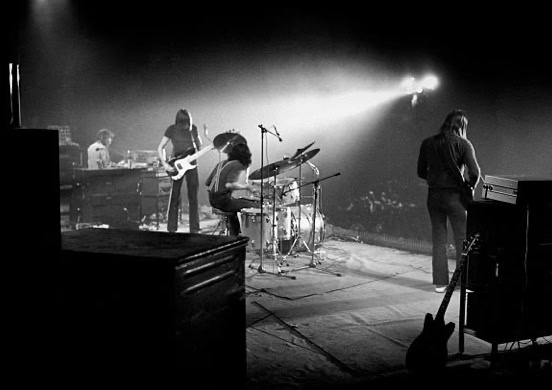
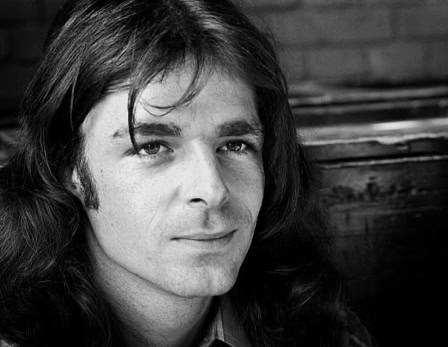
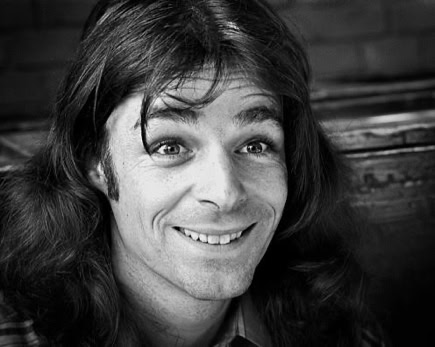
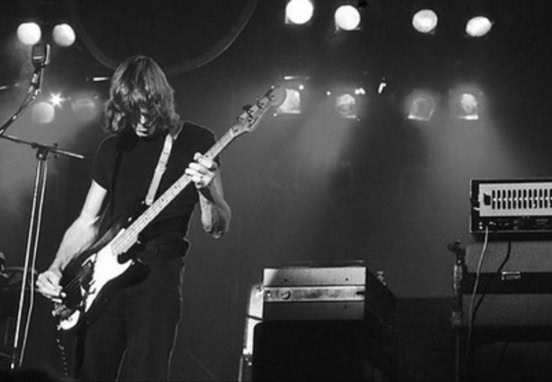
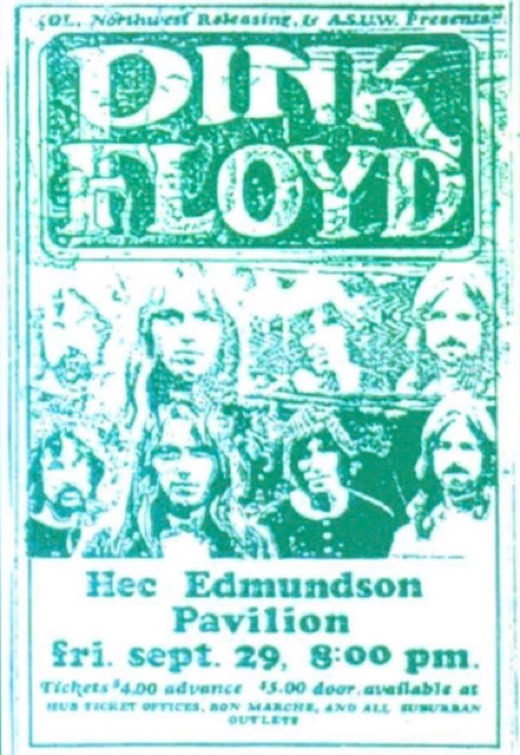
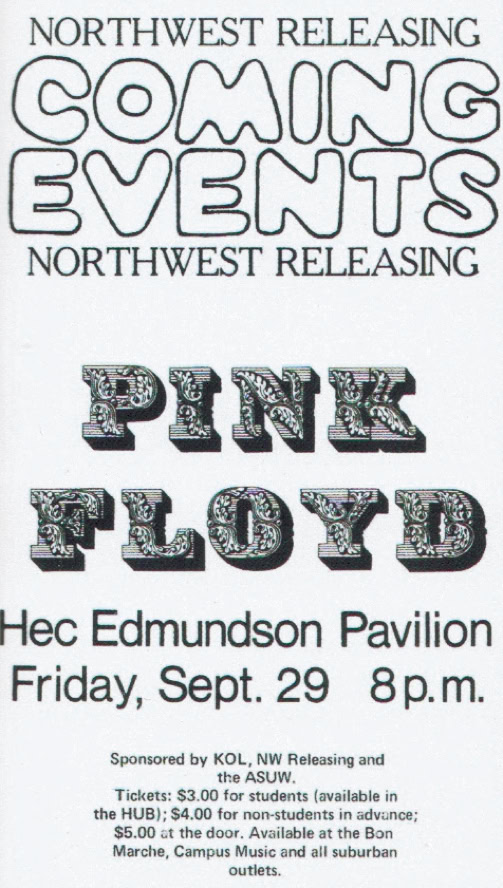
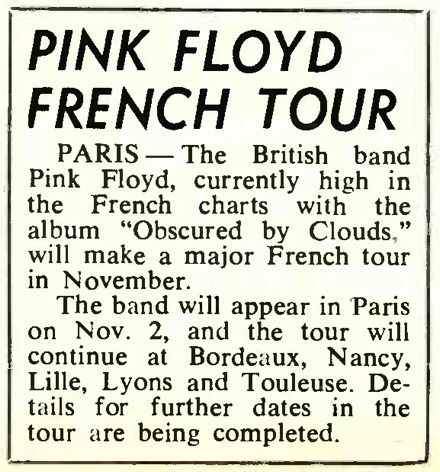
The photographs displayed on this page were meticulously identified to correspond to the exact date and the name of the source the time they were captured. However, errors may occasionally occur. If you notice any discrepancies or inaccuracies in the dates or other details, please let us know by sending an email here.
Your feedback is invaluable to me, and we will acknowledge your contribution by citing you as a contributor.
- 0entries indexed on -
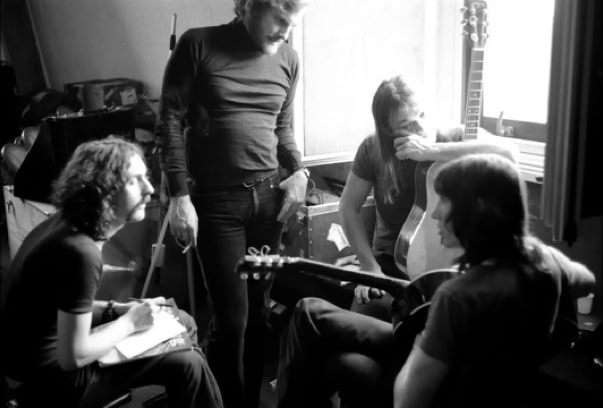
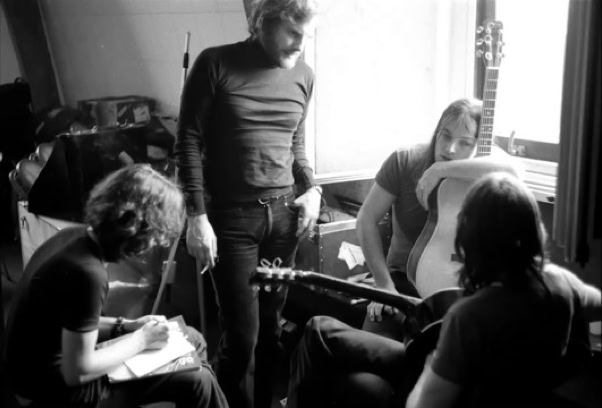
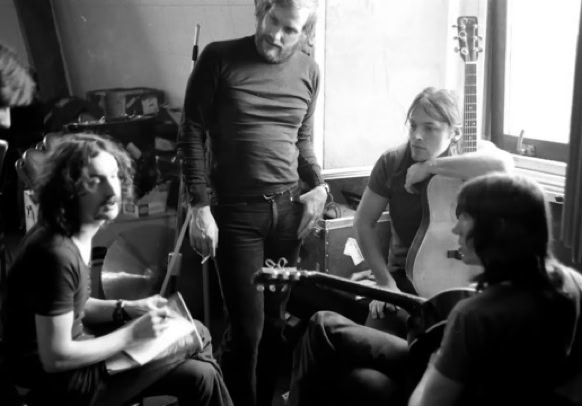
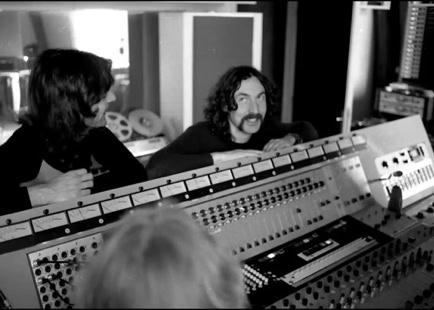
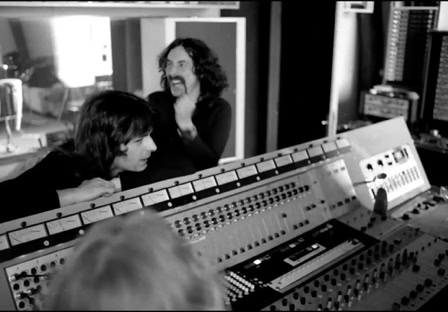
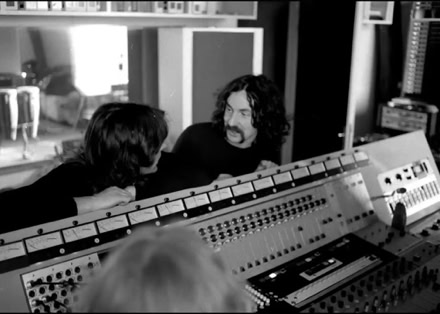
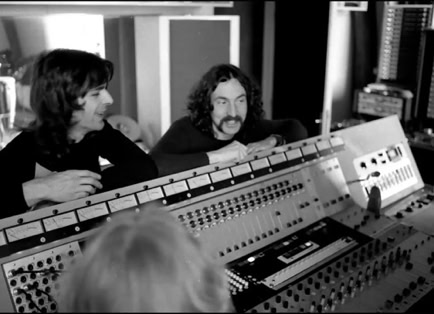
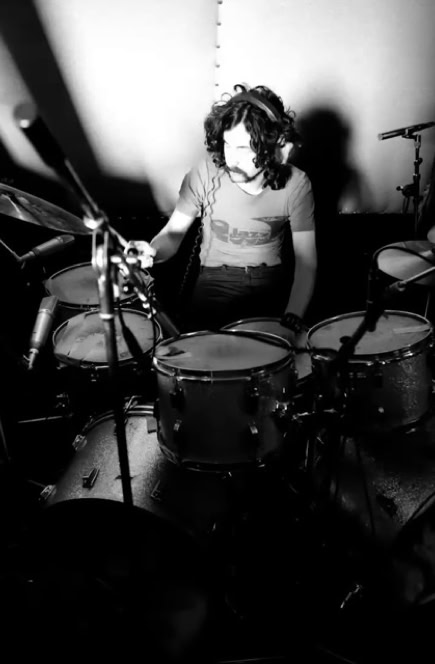
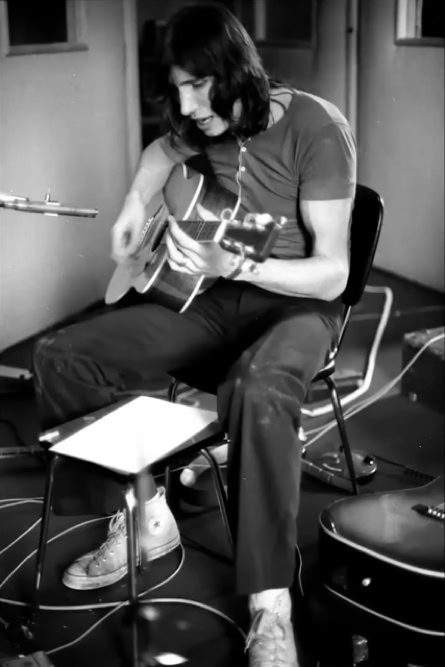
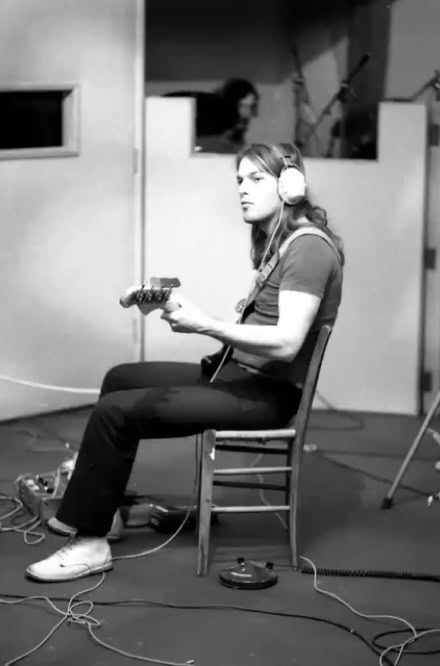
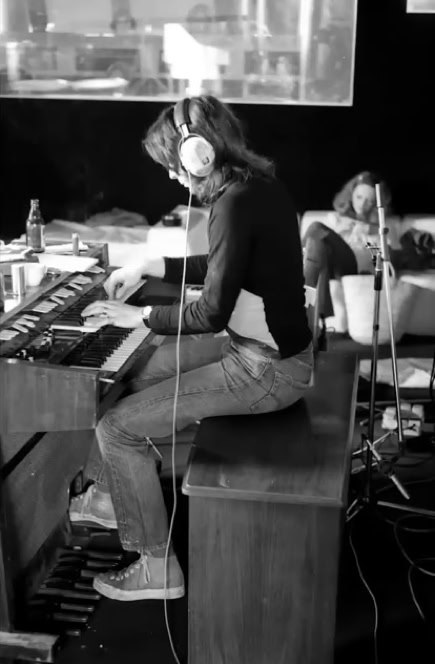
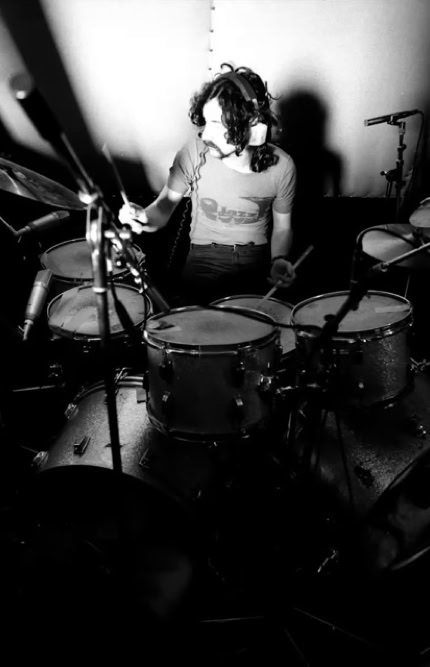
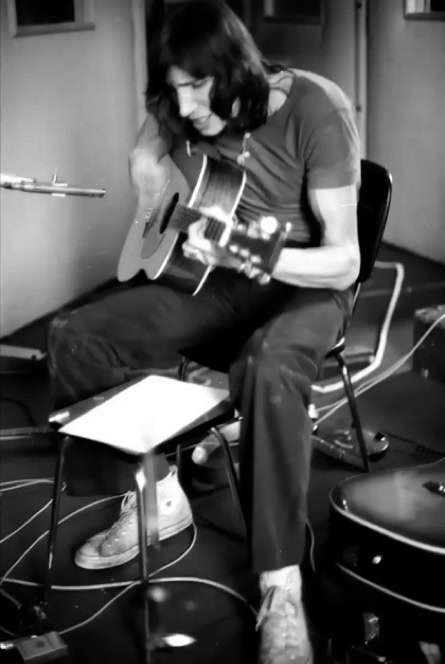
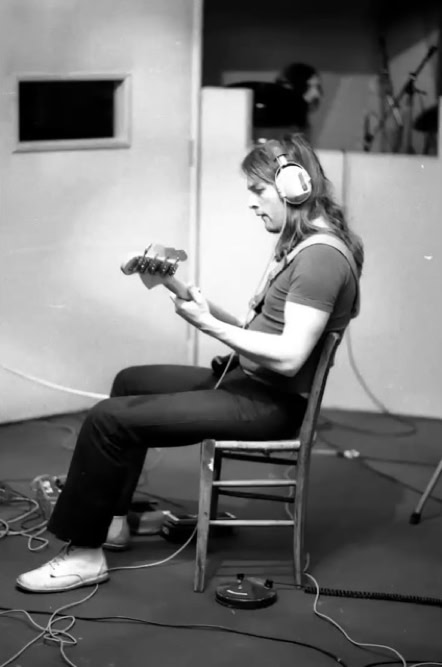
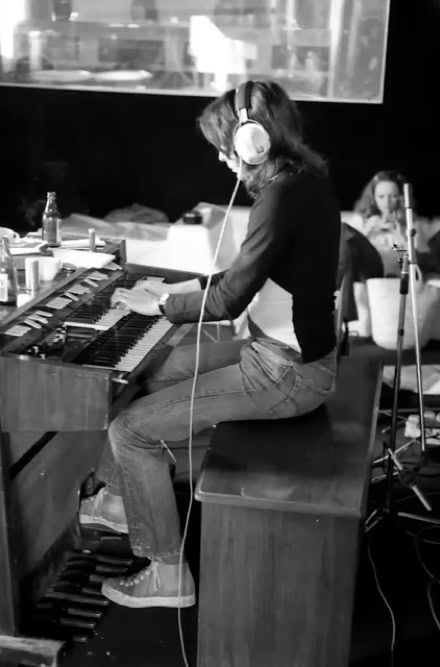
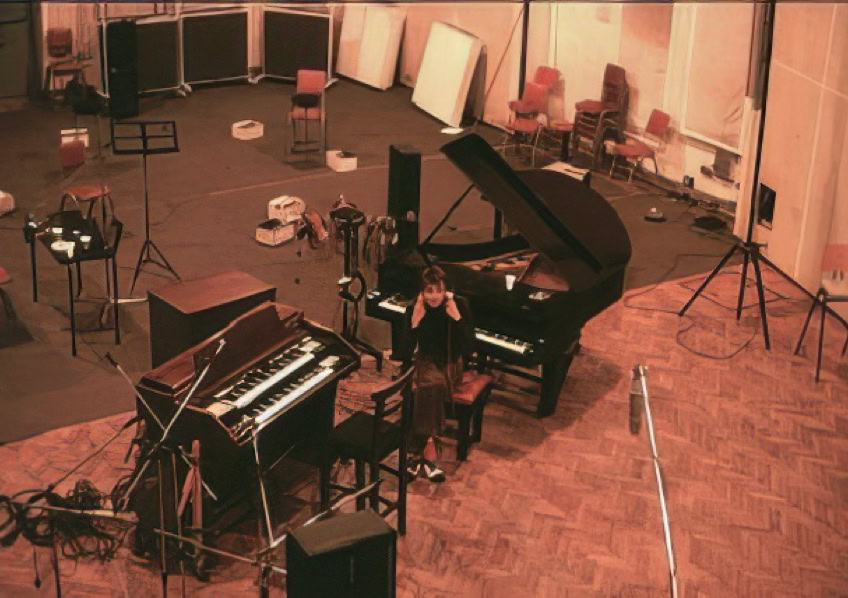
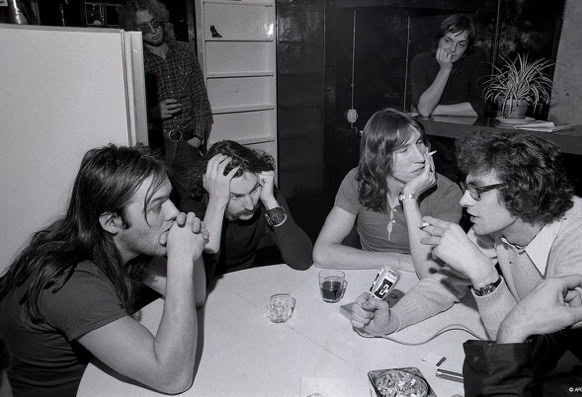
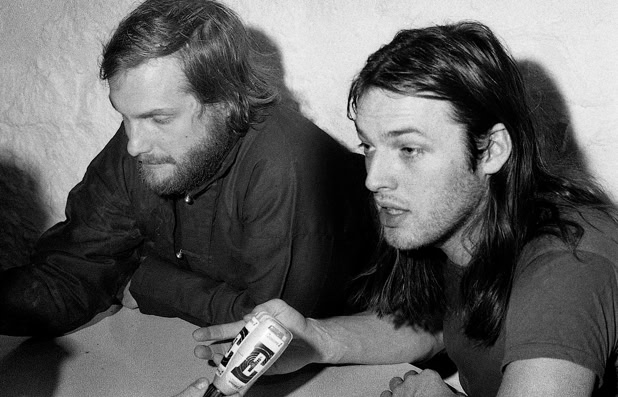
REHEARSALS| From 3 January to 15 January 1972: Rehearsals to the Rolling Stones’ rehearsals facility, 47 Bermondsey Street, London
David Gilmour:
«We were there for a little while, writing pieces of music and jamming. It was a very dark room».
«The Making of Dark Side of the Moon», Classic Rock, 2013.
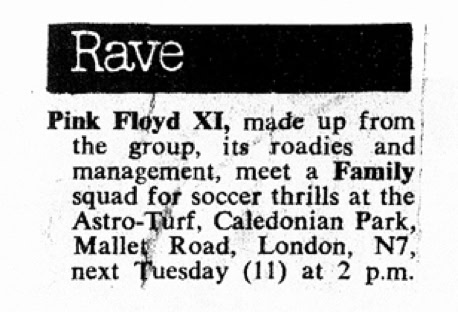
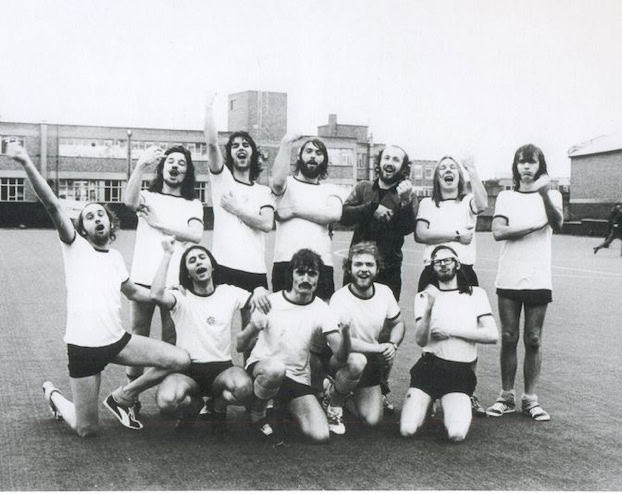
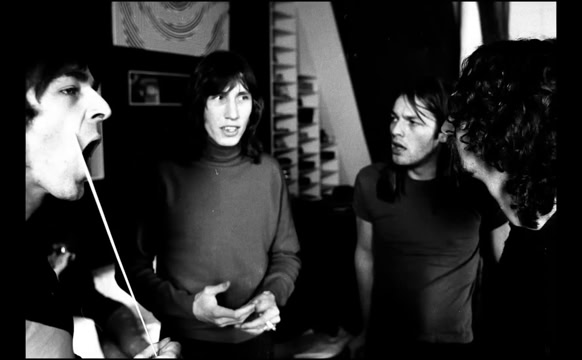
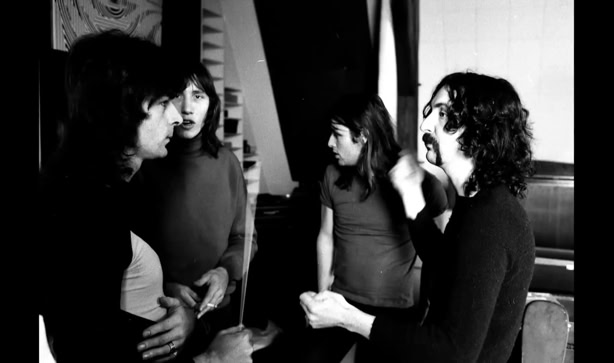
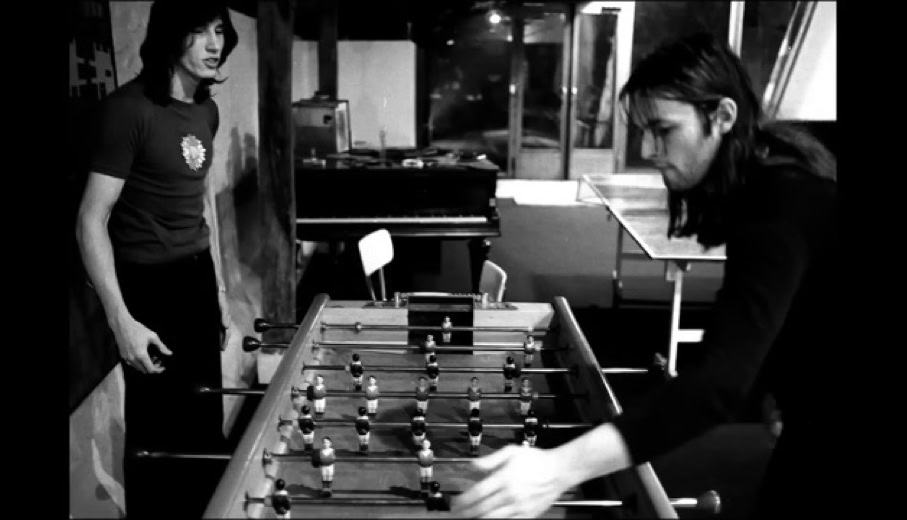
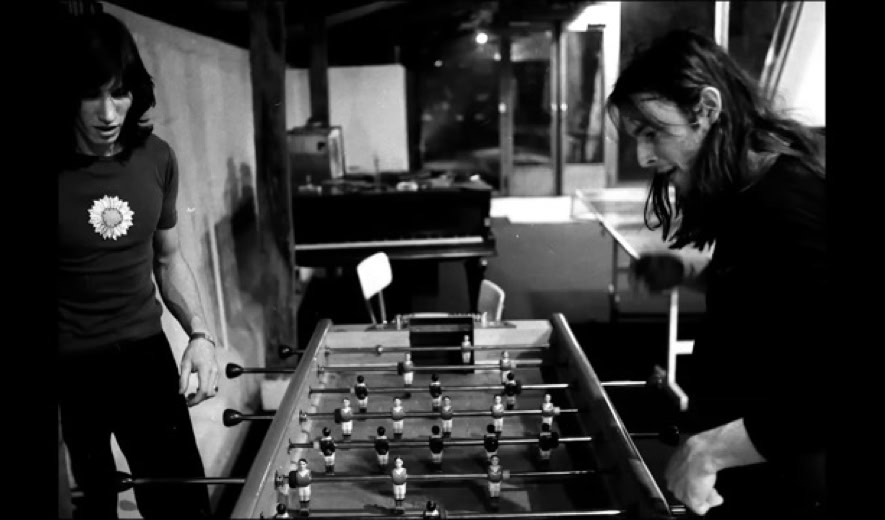
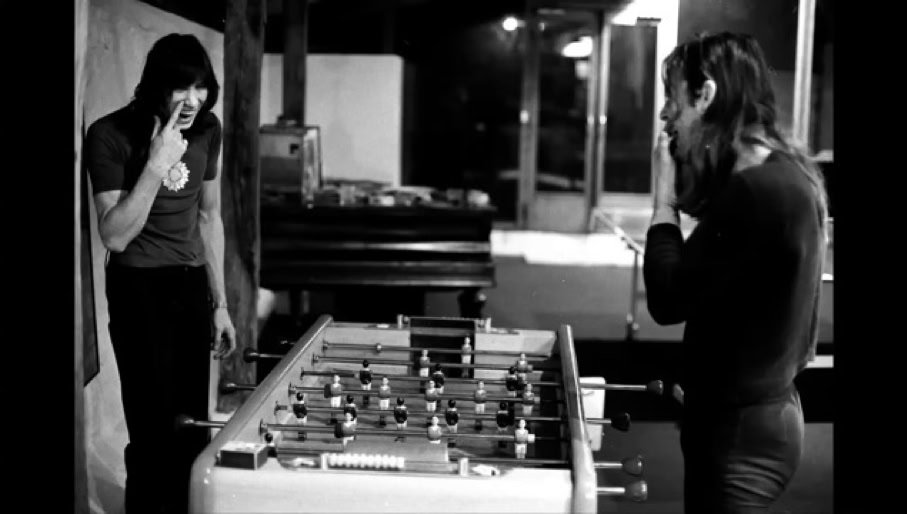
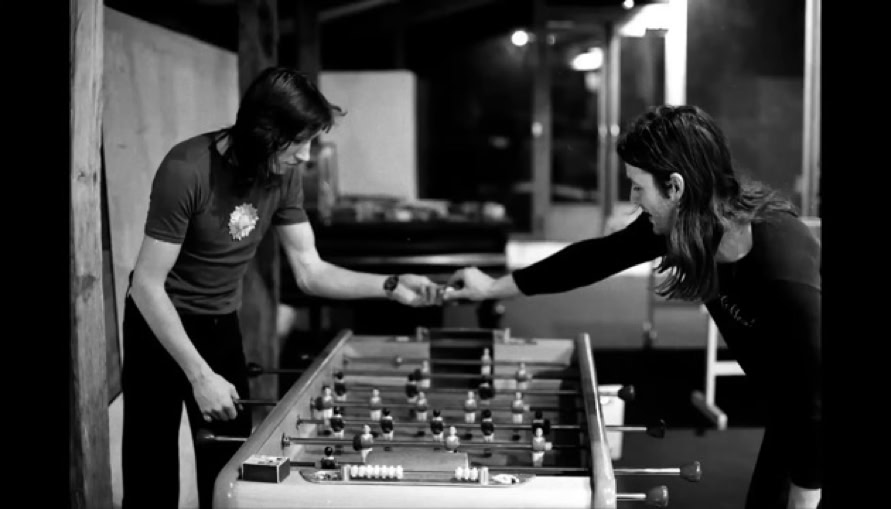
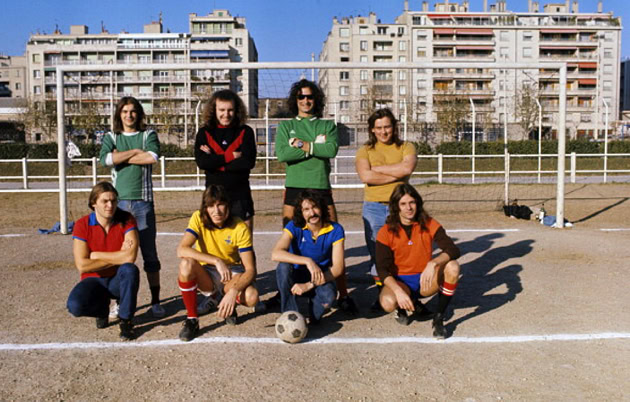
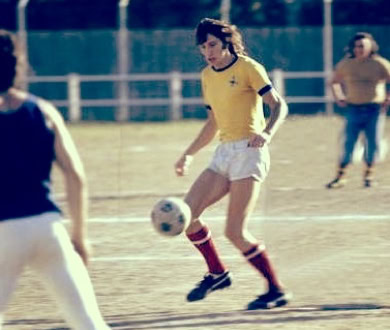
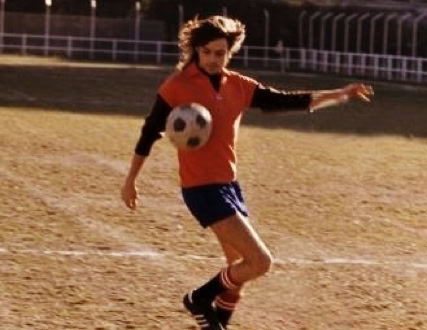
REHEARSALS | 11 January 1972 Football game at Caledonian Park in London against the band Family
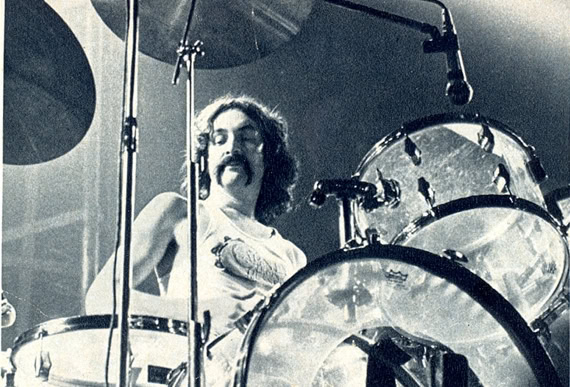
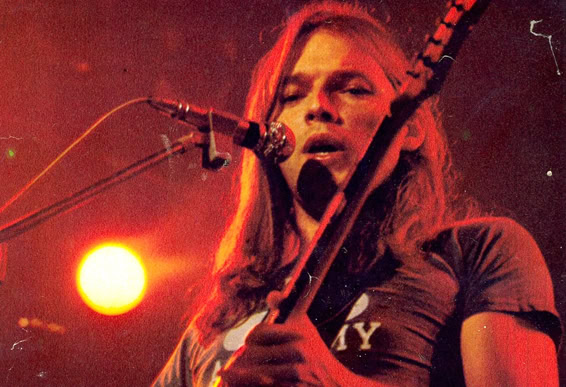
Pictures by Kim Gottlieb
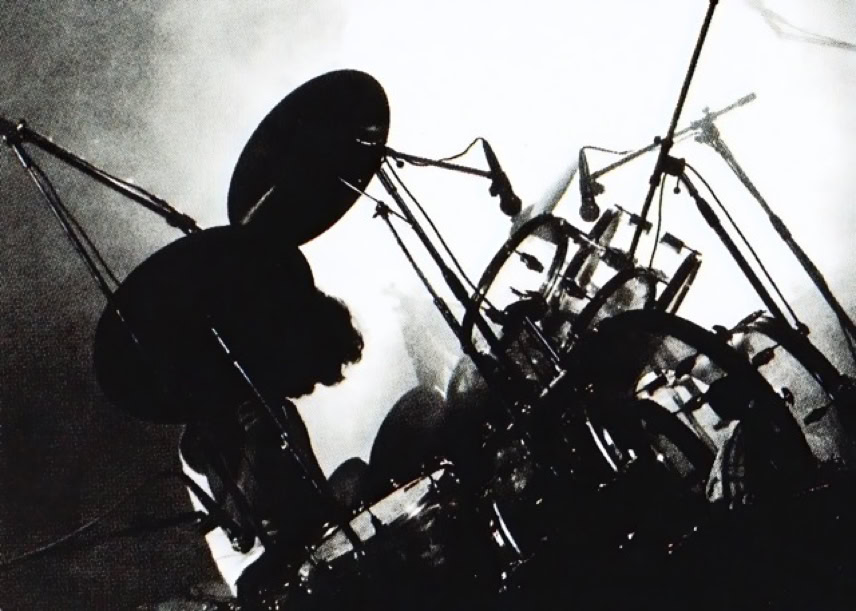
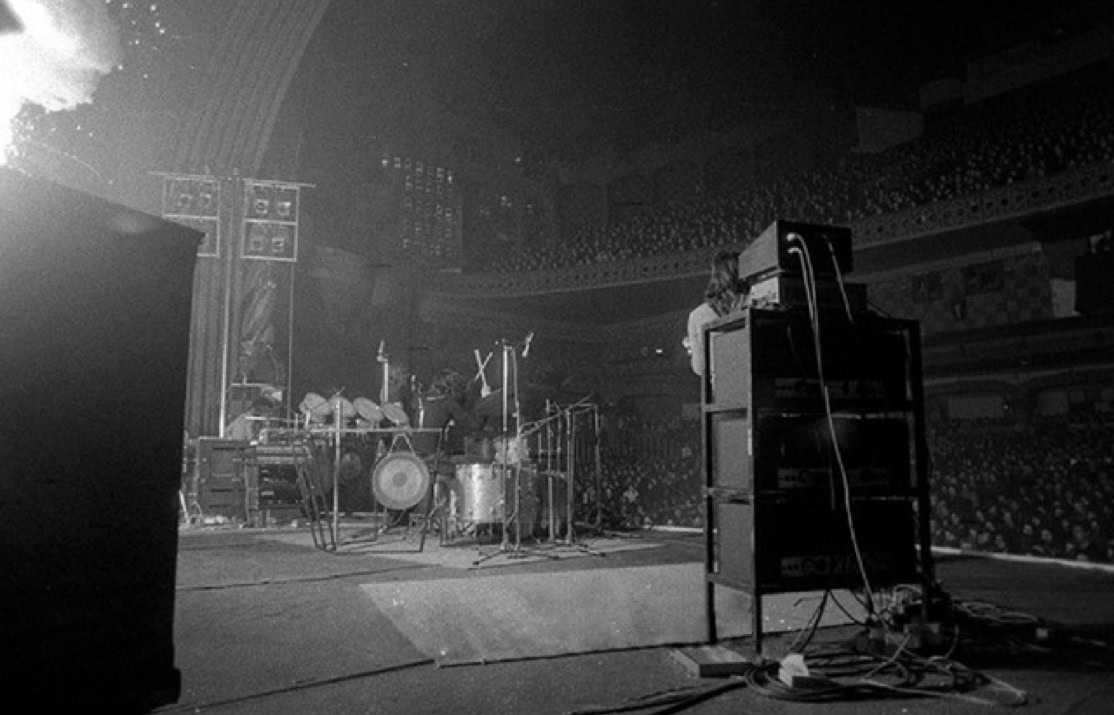
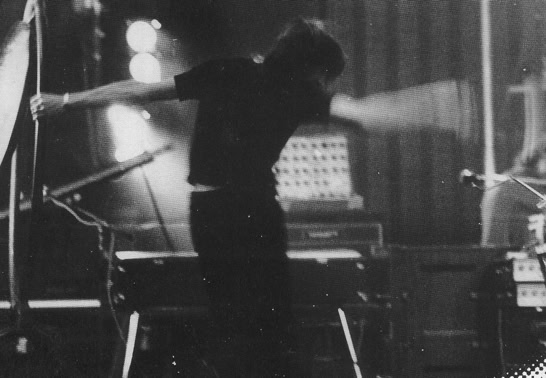
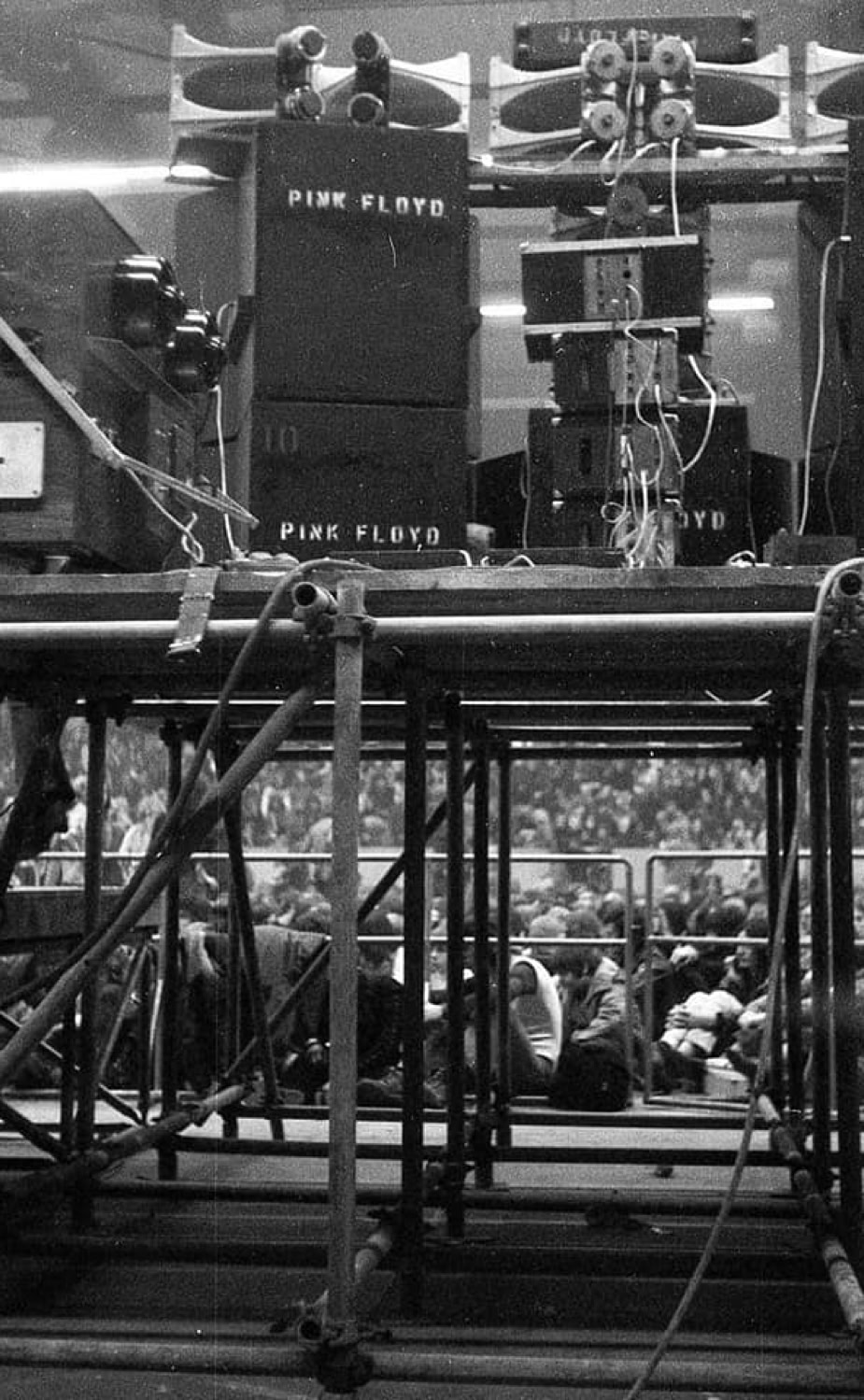
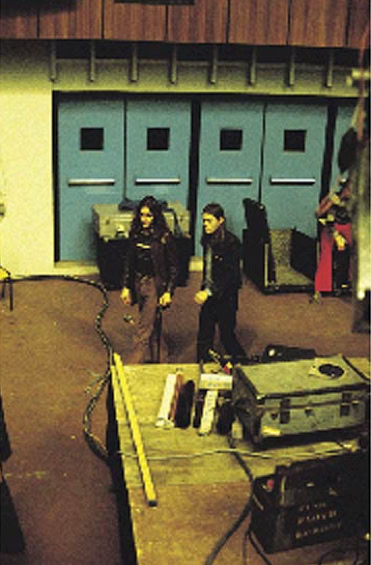
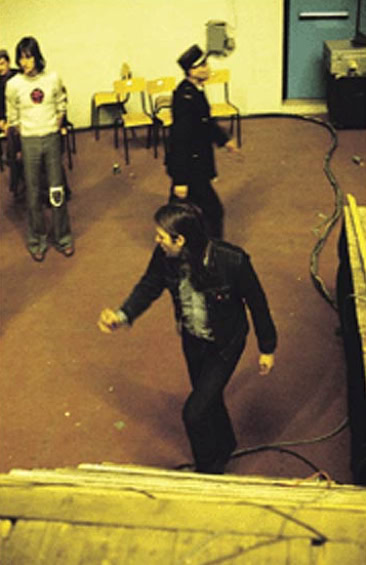
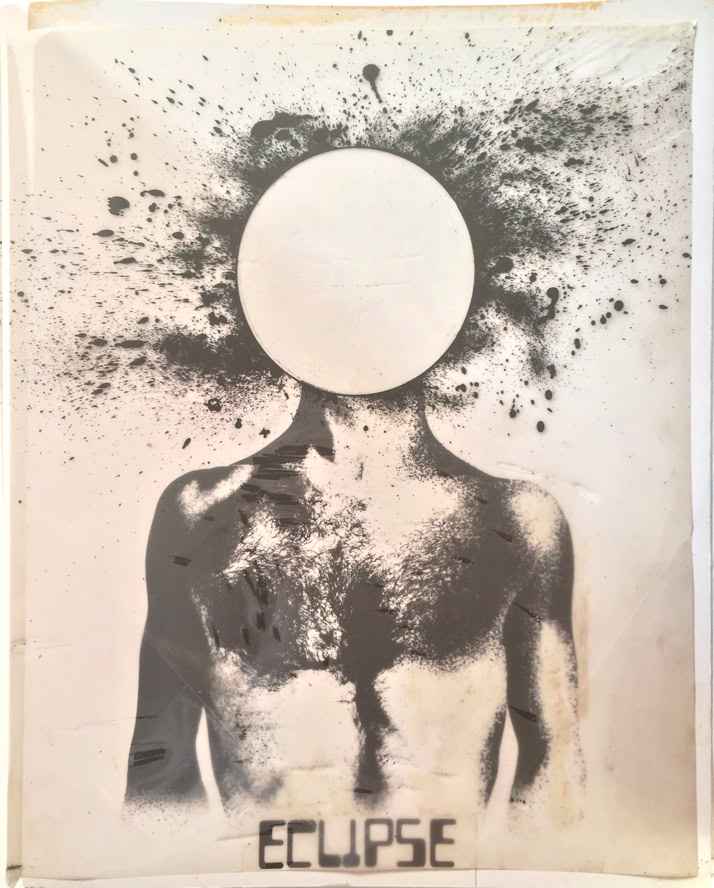
REHEARSALS | From 17 January to 19 January 1972 rehearsals at Rainbow. The band rehearsing their new suite «Eclipse» and test their new P.A.
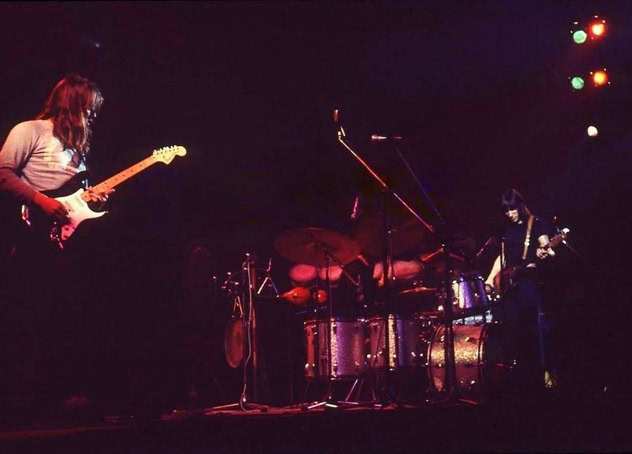
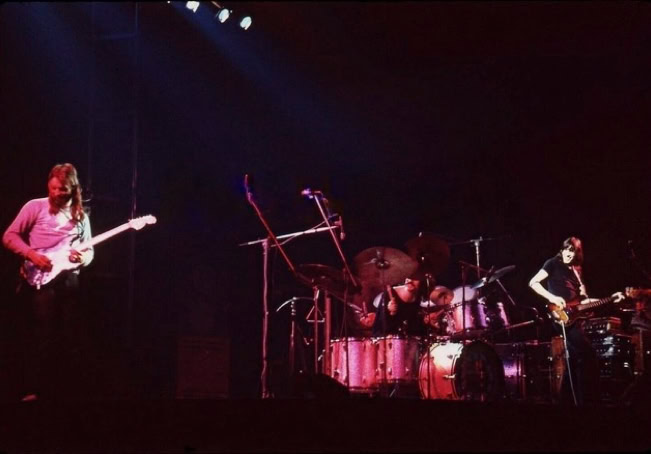
Jill Furmanovsky
«(…) I was working at the Rainbow Theatre’s official photographer (…) getting to know the promoters was also important. One, Peter Bowyer, paid me £15 (a lot of money at the time) to use one of my Faces pictures for a poster. He then allowed to photograph Pink Floyd and Elton John at the Dome in Brighton»
«The Moment», 1996.
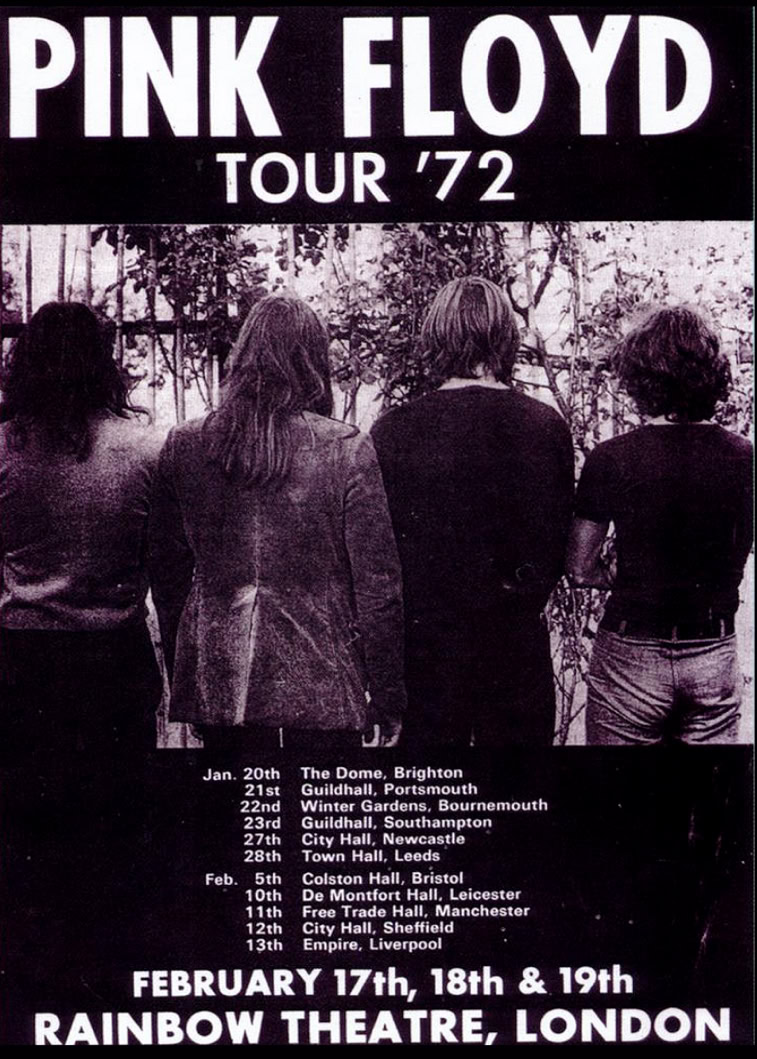
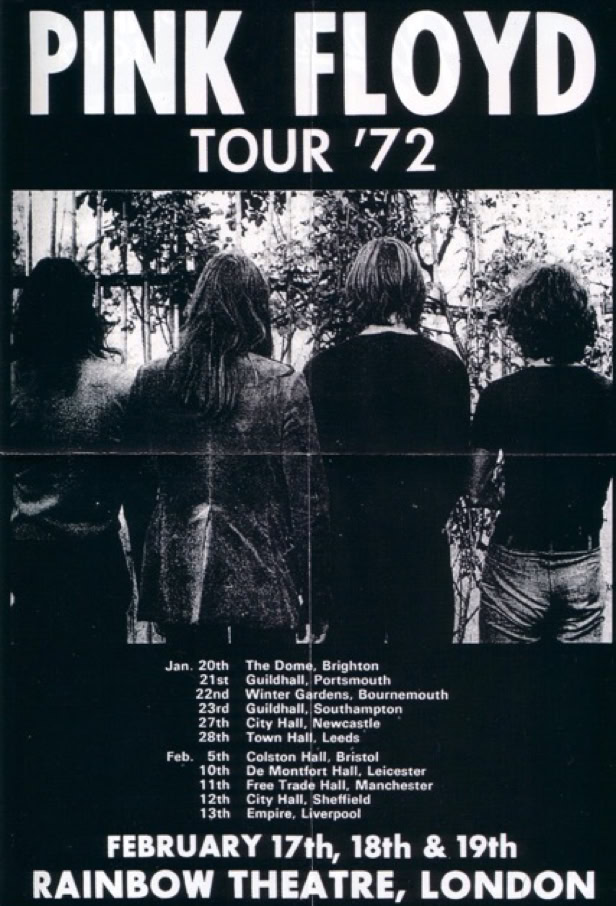
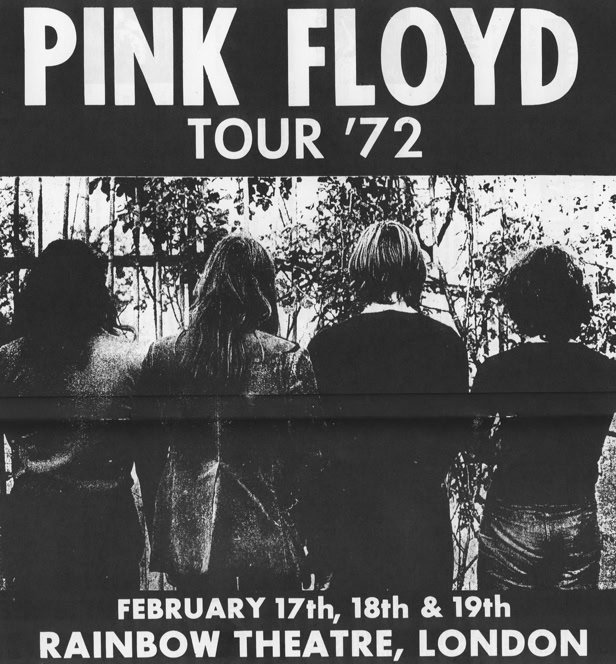
Poster by Hipgnosis (based on an unused picture from the 1970 photo session)
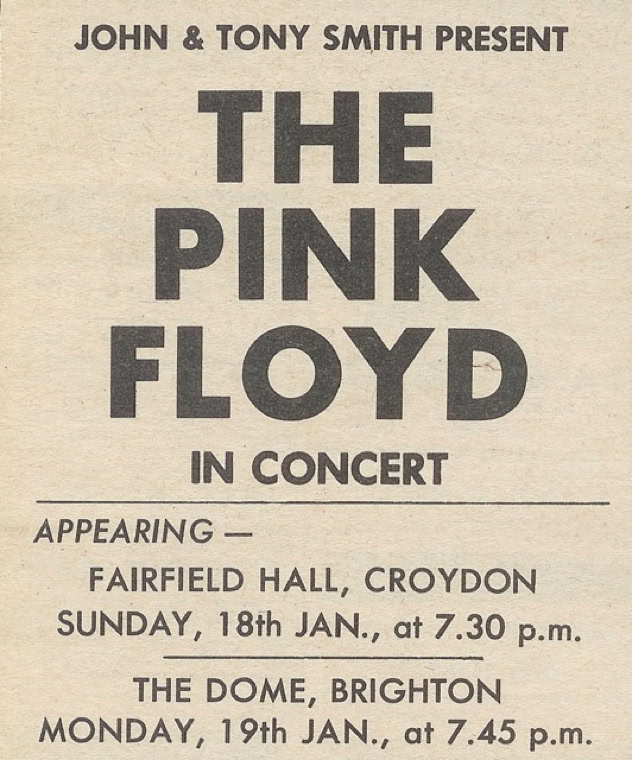
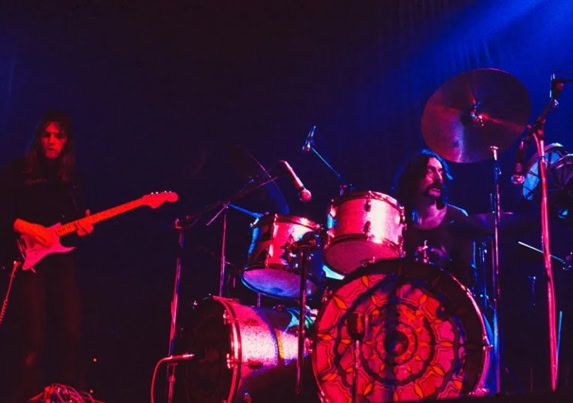
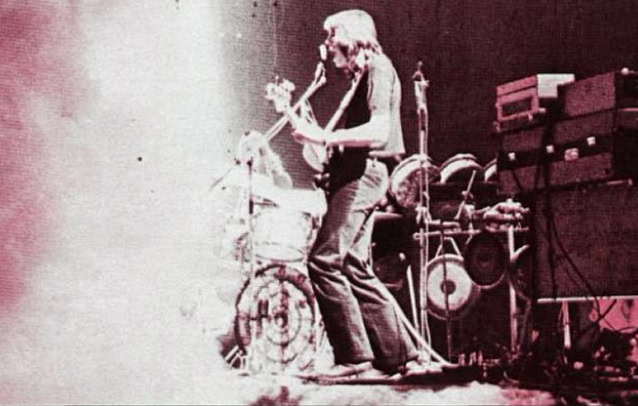
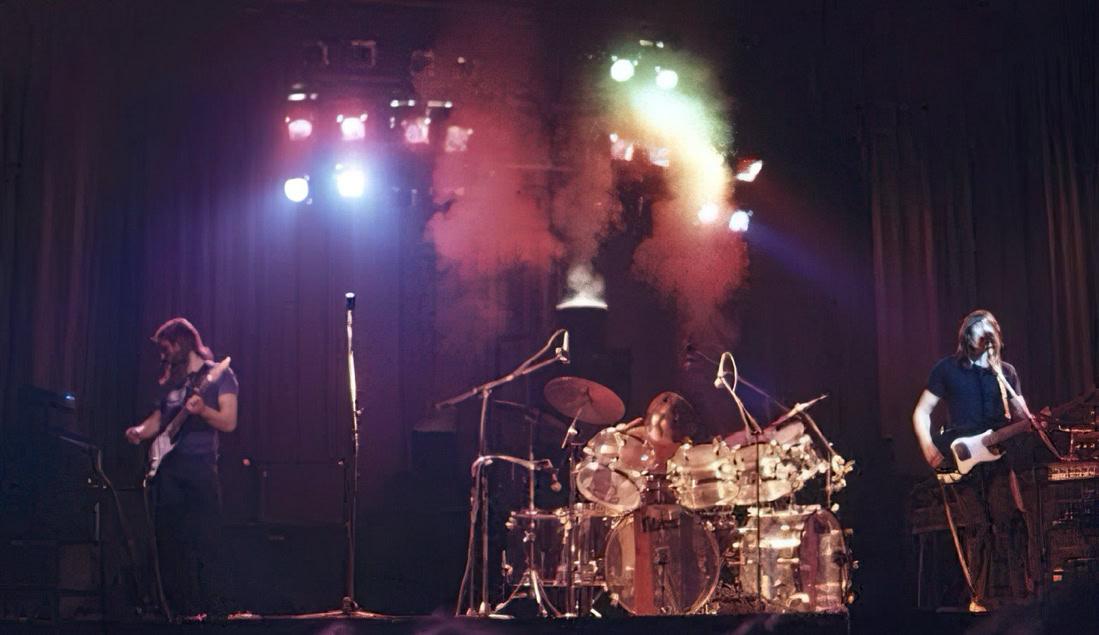
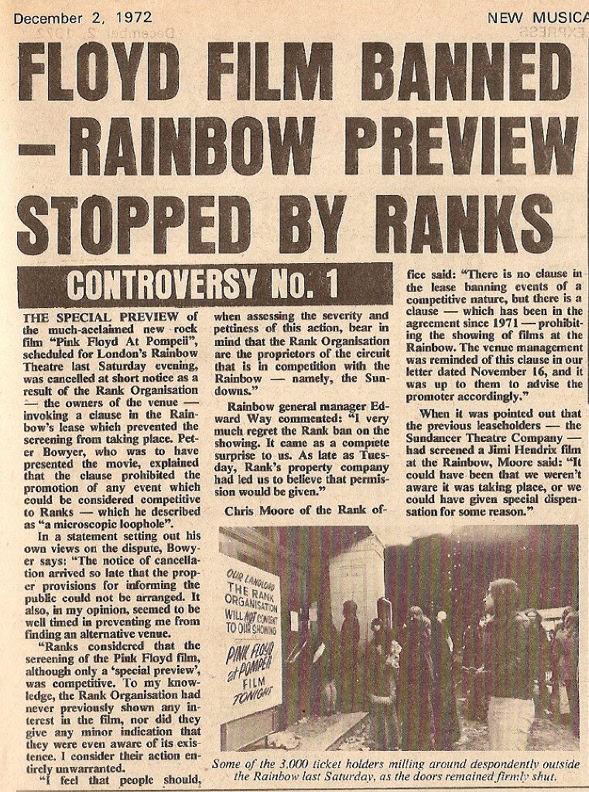
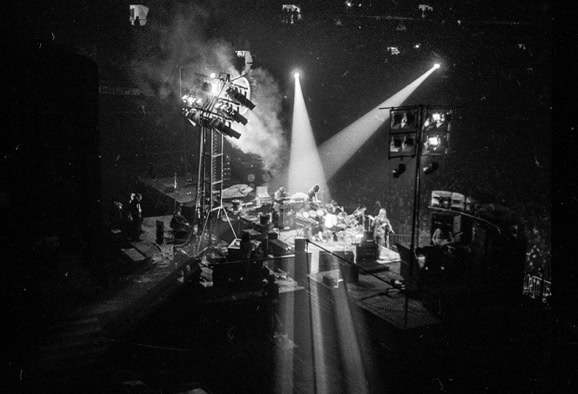
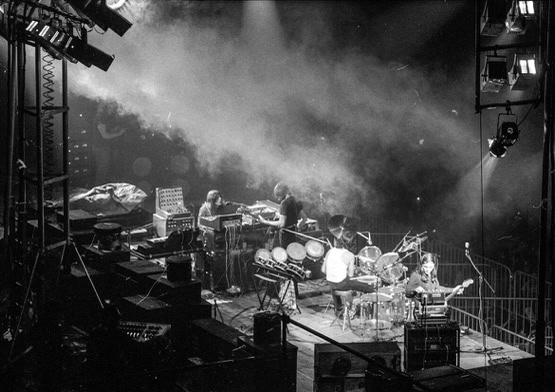
CONCERT DATE | 20 January 1972 The Dome, Brighton, England initially scheduled for the 18th and 19th, the first concert of the tour finally took place on the 20th. What should have been the live debut of « The Dark Side Of The Moon » at Brighton's The Dome was cut short when technical problems led to the band abandoning the piece mid-way through the song Money.
«What better place for the Floyd to start their 1972 tour than at the Dome, Brighton ? The symmetrical roundness of the theatre lent itself perfectly to the Floyd’s new 360 deg. surround sound and allowed them to demonstrate that, as well as being impressionistic composers on a grand scale they are master technicians in sound. not everything was perfect - whenever is it ? - and problems forced them to abandon a new piece which they described as their «masterpiece». But this is the first performance of their new show, and a wildly cheering audience left them in no doubt as to what they left about it. After the shortened laster work, they played Atom Heart Mother, building from its floaty, disembodied organ passages to the full fuzz-brass treatment and shrieks from Waters (I suspect they may be using an Echoplex unit on his vocal mike); then One of these Days from «Meddle»; then Echoes, where Waters remove a couple of Nick Mason’s cymbals and lays into them like an insane man while the electronics do their work and send them crashing and whizzing round the auditorium. A flashing yellow spot from their incredible battery of new lighting picks him out as he moves over to the huge gong and attacks it like an apoplectic version of the Rank man.A stunned audience was treated to A Saucerful of Secrets to conclude. Several people ducked as the feedback from Gilmour’s guitar roared overhead like a dive-bomber attack. If there are any tickets left anywhere for this show, buy them»
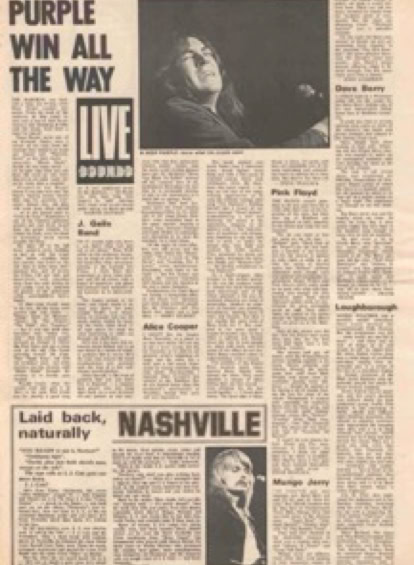
«Caught in the act - Pink Floyd», Melody Maker, January 1972
«A pulsating bass beat, pre-recorded, pounded around the hall’s speaker system. A voice declared Chapter five, verses 15 to 17 from the Book Of Athenians. The organ built up; suddenly it soared, like a jumbo jet leaving Heathrow; the lights, just behind the equipment, rose like an elevator. Floyd were on stage playing a medium-paced piece… The Floyd inventiveness had returned, and it astounded the capacity house… The number broke down thirty minutes through».
«Electric chaos, but just great», New Melody Express, January 1972
«Nobody who's involved in present day music is going to deny that the Pink Floyd have contributed some classics. But having become accustomed to them it is all too easy to see all their work as variations from one prolonged blueprint. There are few groups that could rival the distinctive originality of their sound — and that leads to the heart of that problem.
For frequently their compositions arc merely a collection of sounds. Magnificent sounds, startling sounds, shattering sounds, sounds rearranged in different orders, maybe, but still ephemeral shadows, insubstantial and without any real body. The Floyd can, and have, produced some mind-blowing material.
Then, as time passed, the senses are deadened to repetitions of sound. The electric shrieks and wails are anticipated by the listener, and fresh contexts deny even the welcome familiarity of numbers like " Saucerful Of Secrets." Even Eugene seems only to whimper in response to a cut finger.
The battle for the Pink Floyd, and one that they must have been aware of at Brighton on Thursday, is to keep their audience on a nervous pinnacle. Their music thrives on the uncertainty and fantasy induced In the listener.
Bearing that in mind, their performance at the Dome didn't impress me. although It's only fair to add that they received tumultuous applause and were obviously far from failures in most people’s eyes. The one-element that still hit me with its freshness and vigour was Nick Mason's drumming rhythms. What their music lacked in framework and conception it seemed to be trying to compensate for with volume and aura I clarity. Even this produced its problems for the group, in that their speakers were cursed with breakdown and this undoubtedly affected I the concert.
Evidently the Floyd were as depressed about it as anyone, as there are vague rumours that a repeat performance may be staged in Brighton to make up for these electrical shortcomings*»
"Pink Floyd", Melody Maker, 29 January 1972
*It will be actually the case with a two-concerts in June and the statement of the promoter (see below).
Tony Stewart (NME’s reporter):
«A pulsating bass beat, pre-recorded, pounded around the hall’s speaker system. A voice declared Chapter five, verses 15 to 17 from the Book Of Athenians. The organ built up; suddenly it soared, like a jumbo jet leaving Heathrow; the lights, just behind the equipment, rose like an elevator. Floyd were on stage playing a medium-paced piece… The Floyd inventiveness had returned, and it astounded the capacity house… The number broke down thirty minutes through (…) A drone and a hissing sound filled the hall as Floyd went into a simple riff. Gilmour turned to Waters and spoke. We didn’t catch what he said, but it had a staggering effect. Waters removed his guitar, and both he and Gilmour left the stage»
Mick Kluczynski (Pink Floyd road crew):
« In those days we didn’t understand how to separate power sufficiently between sound and lights… It was the very first show any band had done with a lighting rig that was powerful enough to make a difference. So we had this wonderful situation where the fans were actually inside the auditorium, and we had [_sound engineers_] Bill Kelsey and Dave Martin at either side of the stage screaming at each other in front of the crowd, having an argument»
«The making of Dark Side of the Moon», Classic Rock, 2013
Roger Waters:
«At the first gig we had a terrible technical disaster during the first half of the set, which is 50 minutes long and is one whole new piece, and we couldn't finish it. The tape we were using just wouldn't play on to the end: but I think that's been sorted out now»
«Pink Floyd have gone mental», Sounds, 29 January 1972
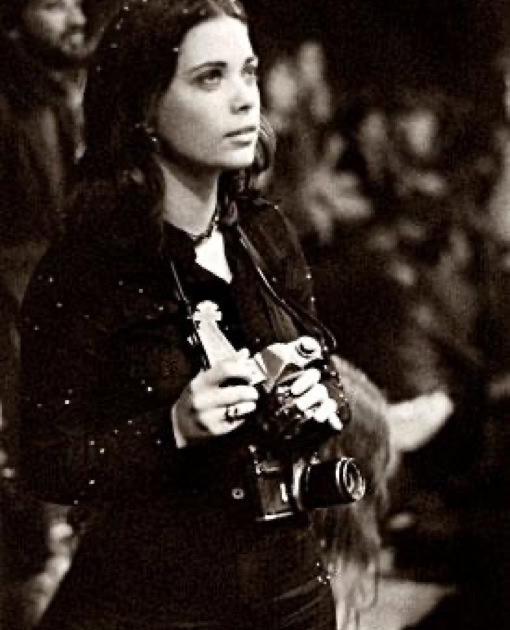
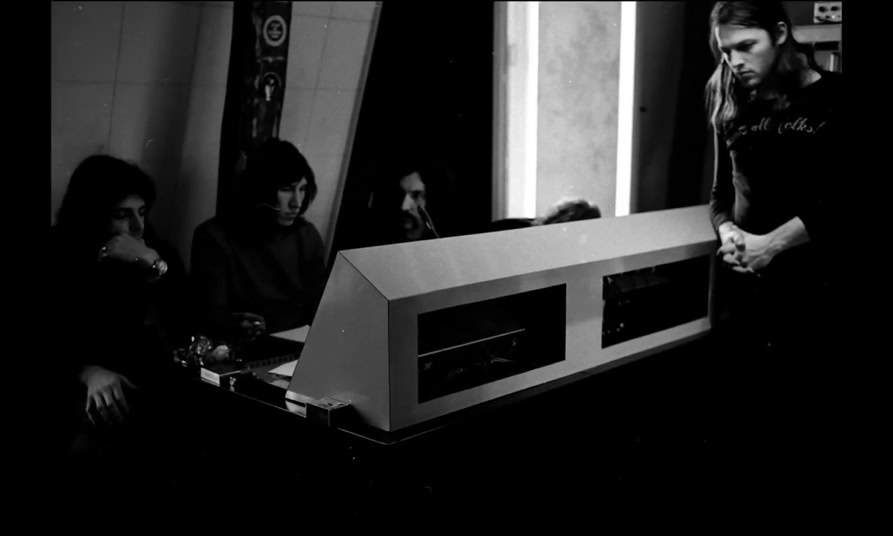
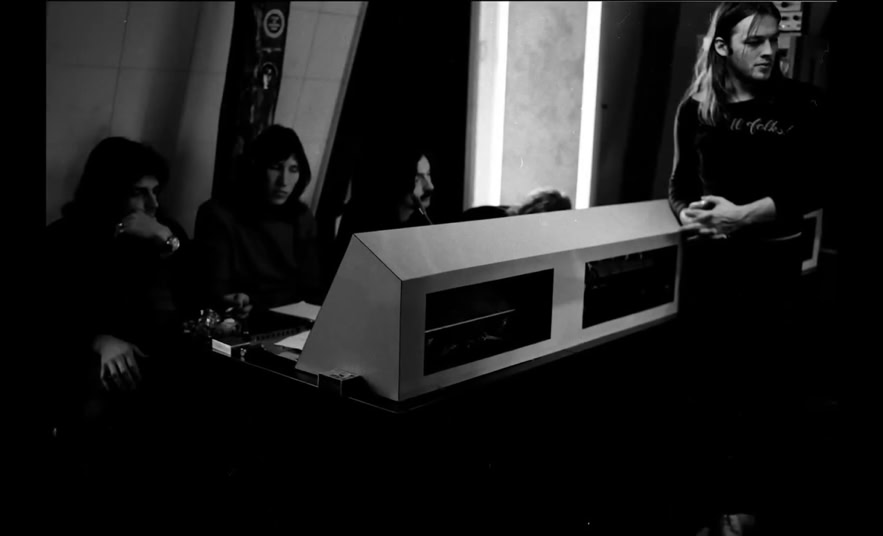
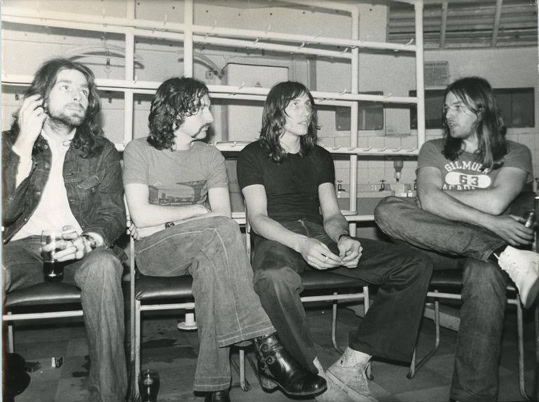
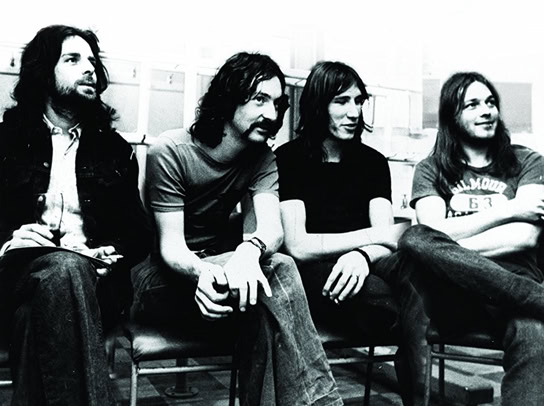
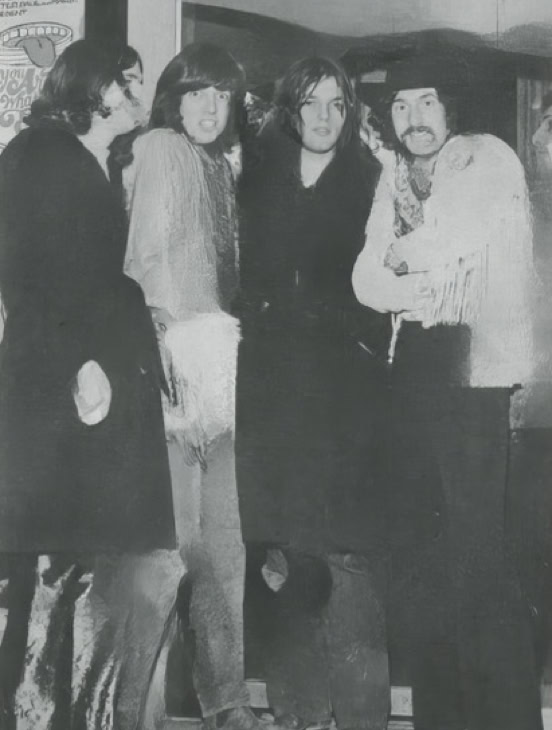
A young freelance photographer was working to the Dome at this time. She met the band for the first time in the backstage
Jill Furmanovsky:
«They had seen me around at the Rainbow Theatre and I managed to get backstage and into their dressing room, which was virtually unheard of (…)
They were very reticent and private. I got into the dressing room and took a few pics, they didn't mind. I don't think I said a thing to them and they didn't really look at the camera. With Pink Floyd you didn't know if you were persona grata or non grata. I was persona half grata. They thought «if she doesn't get too annoying she can sit in the corner and take a few snaps, if they're not too intrusive and it's not for too long».
«Pink Floyd's early Brighton Dome gigs recalled», BBC News Website, 22 August 2012
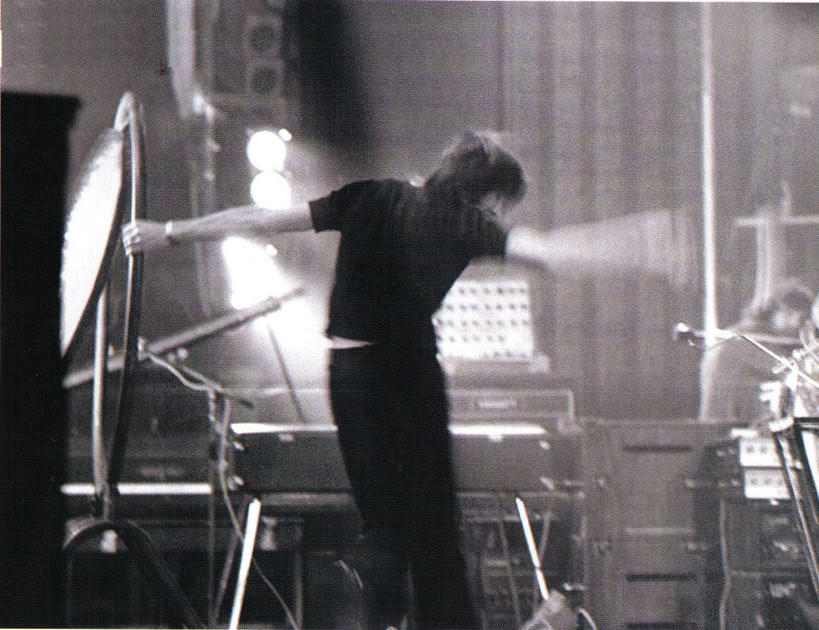
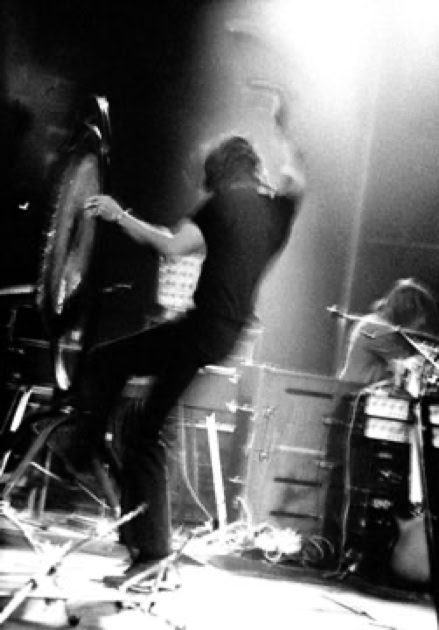
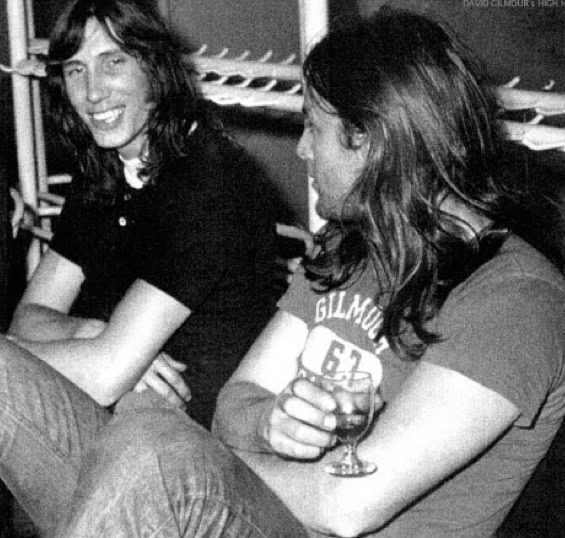
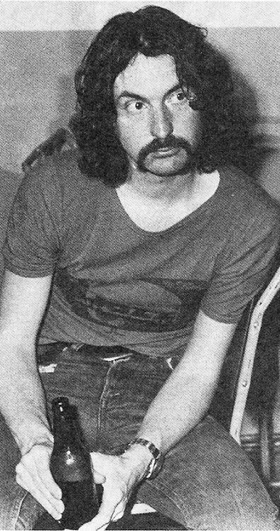
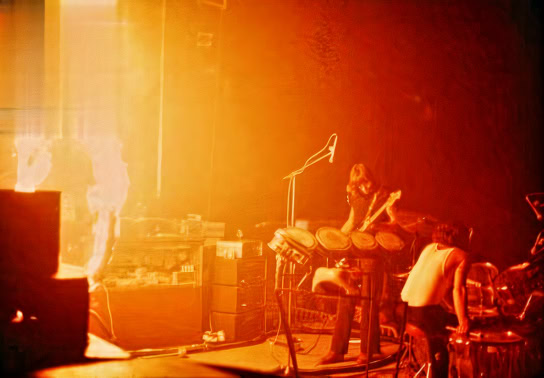
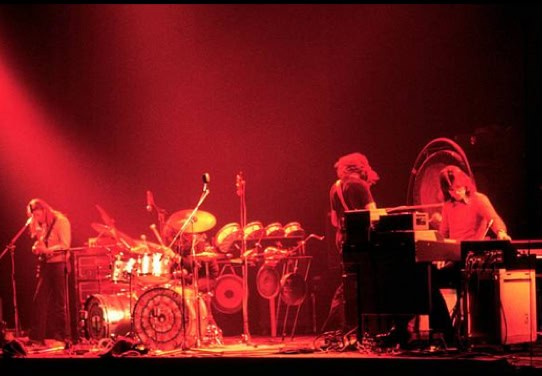
Above: Jill Furmanovsky with his first pictures of the band on stage. Below, she took some additional photographies backstage
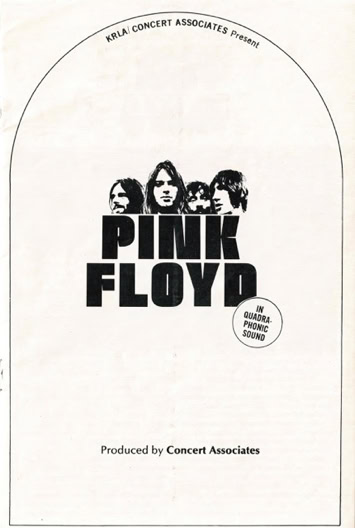
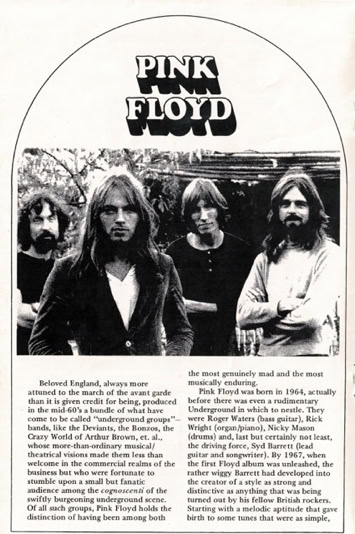
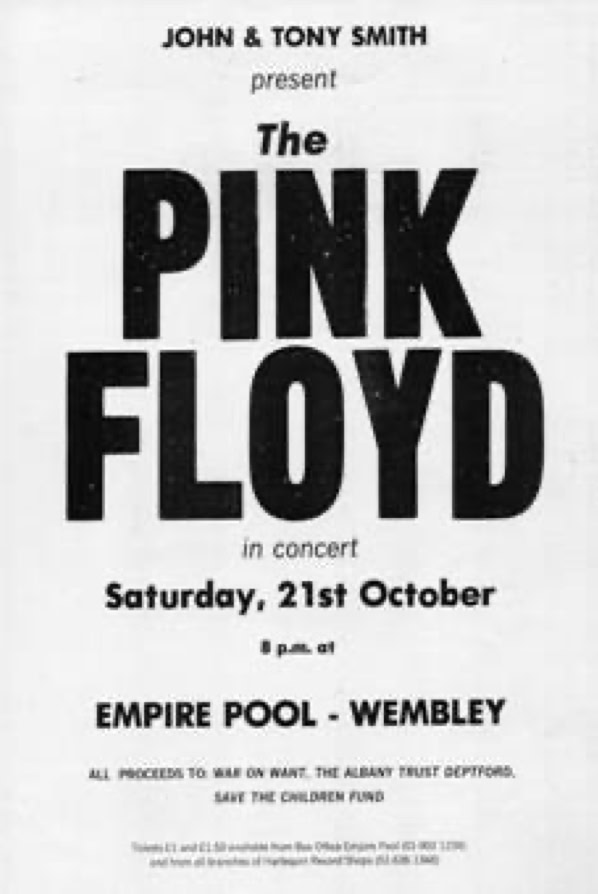
Flyer for this show
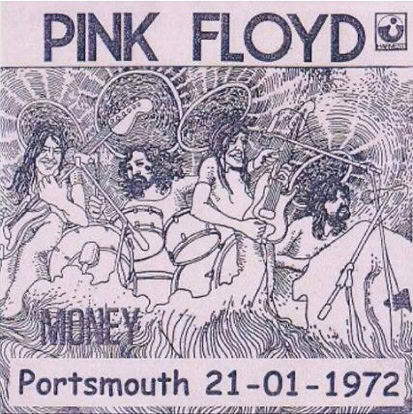
CONCERT DATE | 21 January 1972 Guildhall, Portsmouth, England
CONCERT DATE | 22 January 1972 Winter Gardens, Bournemouth, England
Pictures by Michael PUTLAND
« Almost unheralded Pink Floyd arrived in Bournemouth on Saturday evening. But even with a distinct the Winter Gardens Theatre was sold out in record time. Floyd, possibly the creators of the progressive cult, are somewhat unpredictable, one never knows what to expect next. The first half was completely taken up with a series of connected individualities, drifting from to the other with effortless ease. Parts of this were really beautiful, using Floyd's dreamlike capabilities to the full. It is possible not not to be consciously listening to the gentle music, but still get caught up in its shifting moods. Clever was the changing of a religious setting into the sound of clanging cash registers. Floyd's literal all round sound was used to enhance the atmosphere. Highlight of the second half was Echoes from the Meddle album and the powerful encore of Saucerful of Secrets. On the whole, however, Floyd were disappointing. One would expect more from the group around which such a cult was grown. The shifting colors of the light show - apparently a new version - might have been better if the Gardens' system had been linked. As it was most of the effect was lost, blinded by brilliant spots from the rear of the theatre».
«Pink Floyd», Disc and Music Echo, January 1972.
CONCERT DATE | 23 January 1972 Guildhall, Southampton, England
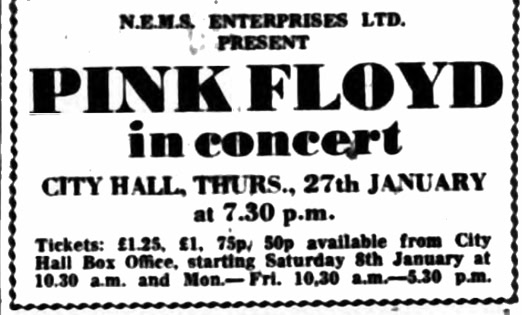
CONCERT DATE | 27 January 1972 City Hall, Newcastle-Upon-Tyne, England
« I first saw Pink Floyd at Newcastle City Hall in 1972. The date of the concert was changed as I recall; I went through the week before, not knowing the gig had been postponed by week or so, and had to come home again. I returned on the correct night, without a ticket for the sold out gig, and managed to buy one outside for face value. The first thing I noticed were four large PA speakers set out in the corners of the hall. Iíd read in the music papers of their quadrophonic sound system, so I knew that I was about to experience something quite different to any other concert I’d been to before. The show was in two sets; I sat and waited. As a 15 year old I was totally immersed in the music and the event; no sneaking down to the bar for me in those days. Pink Floyd introduced their new composition ìEclipse (A Piece For Assorted Lunatics) and played it in full during the first half of the concert. «Eclipse » was to develop into «The Dark Side Of The Moon» in the coming months, and the titles of the tracks changed during that period. A few of the tracks were apparently played as instrumentals in some of the earlier concerts. I definitely remember them (Roger I think) introducing it as «Eclipse » and I also recall the voice «I’ve been mad for f**ing years» swirling around the hall; and the clock, the heartbeat and that laugh reverberating around and around us, switching between the four speakers*. None of us knew what to expect of course; I nearly jumped out of my seat when I heard the laugh come at me from a speaker behind me at the back of the hall, and at very high volume. Just incredible. Even then, hearing the piece for the first time, you just knew it was unique.
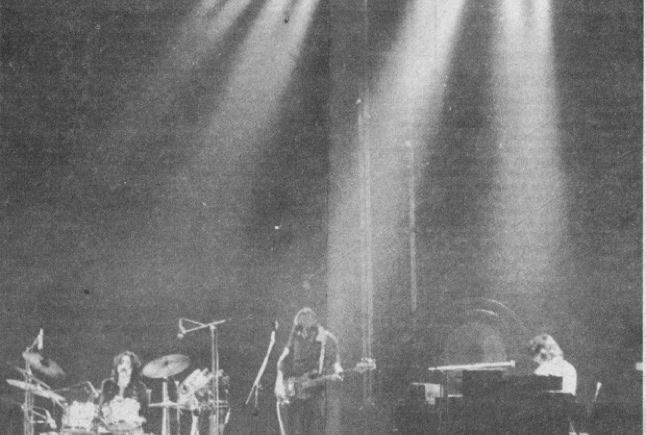
After a short internal the Floyd returned to play a set of classics; starting with ìOne of These Days from «Meddle» (a favourite of mine at the time) which was their most recent album at that time. Roger’s bass vibrated through the hall; to be followed by lots of screaming in ìCareful With That Axe, Eugene. Another thing that sticks in mind was the elevated lighting rig, which stood at the back of the stage behind the band, and was unlike anything I had seen before. Towards the end of the show the rig swirled up to the ceiling drowning the hall in myriad coloured lights. Very effective and actually quite spooky. I would imagine by today its standards it would seem pretty basic, but at the time is was state of the art stuff, and all added to the mysterious of the Floyd in concert. The second closed with the beautiful Echoes and the haunting ìSet The Controls For The Heart Of The Sunî with its heartbeat drum beat, and closing with Roger beating a fire-lit gong. I was totally blown away by the performance, and bored everyone at school for weeks, telling them how great Pink Floyd (and they were great indeed ). A memory I will keep with me forever (at least I hope soÖand if my memory does go, one of the purposes of this blog is to remind me)»
«Pink Floyd Newcastle city Hall 27 January 1972 », Vintagerock Website, 20 January 2014
CONCERT DATE | 28 January 1972 Town Hall, Leeds, England
Denis Keenan (Audience member):
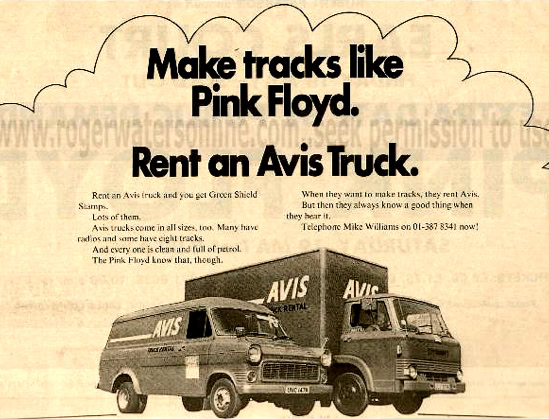
« The first Pink Floyd concert I attended was at Leeds Town Hall on the 28th January 1972 and this was one of the several venues making up Pink Floyds winter tour 1972. This concert was very much about Pink Floyd performing some of their most memorable music from the late 1960's but also performing Dark Side of the Moon, before its official launch in March 1973. I attended this concert with several friends studying at Leeds University who also knew roadies helping the band transport their equipment via haulage company "Avis Trucking". At the end of this concert and as most of those attending were leaving the venue my friends and I held back for a while and were invited to help remove some of the bands WEM speaker columns making part of the group's quadraphonic sound system. The equipment to be loaded into waiting Avis trucks. In completing the task we gathered around the bands 32 channel Allen and Heath sound mixing console looking at the technology. Whilst discussing the equipment to our amazement each of the Pink Floyd band members emerged and stood around the sound mixer for a chat with the sound engineers. Without hesitation the Pink Floyd concert programme I purchased at this concert was presented to each band member and on asking for their autographs they duly obliged. Whilst asking Roger Waters to sign I also plucked the courage to ask him what base guitar strings he used to this he replied "Rotosound". A friend asked him about the main chord sequence for Interstellar Overdrive (music from Floyds Piper at the Gates of Dawn) and again he explained clearly the sequence in word. This was a wonderful concert and the Pink Floyd autographs made the occasion all the more memorable. The concert stub and signed programme saved and looked after by the writer over43 years ».
MISCELLANOUS | Early February 1972. A gig in Birmingham was planned but eventually cancelled
CONCERT DATE | 5 February 1972 Colston Hall, Bristol, England First appearance of the song Eclipse
Roger Waters:
«The actual song, Eclipse, wasn’t performed live until Bristol Colston Hall, on February 5. I can remember one afternoon rolling up and saying: «I’ve written an ending». Which was what’s now called Eclipse, or Dark Side. So that when we started performing the piece called Eclipse. It probably did have Brain Damage, but it didn’t have ‘All that you touch, all that you see, all that you taste»
«The making of Dark Side of the Moon», Classic Rock, 2013
Roger Waters:
«(…) I seem to remember a giant papier-mâché elbow and hanging it over the band. I have no idea if it's real or not, but it is in my head»
«To Infinity... And Beyond!», Uncut, May 2019
CONCERT DATE | 10 February 1972 De Montfort Hall, Leicester, England
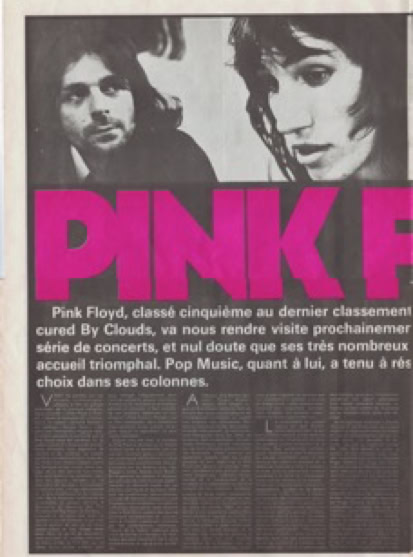
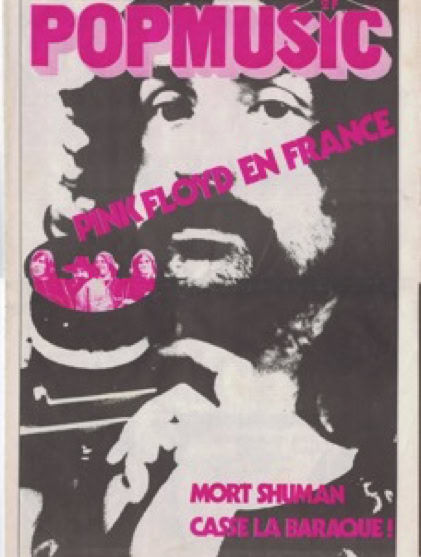
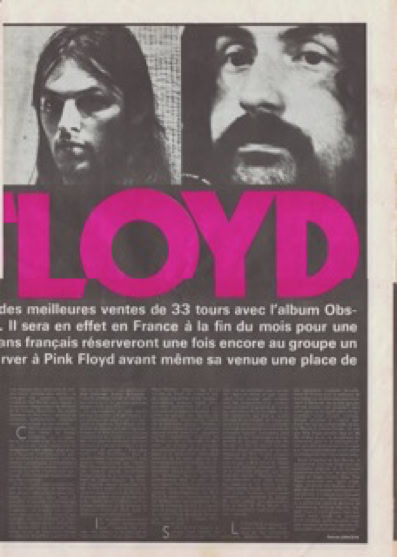
«Pendant quatre jours, l'arc-en-ciel fut rose ... Dans le décor baroque de l'imposant et déjà légendaire Rainbow Theater de Londres, le Pink Floyd est venu installer ses neuf tonnes de délire spatial et quadriphonique. Pendant quatre jours, il a retrouvé le public de ses débuts, puis il est parti enregistrer à Hérouville (lui aussi!) avant de s'envoler vers le Japon et les Etats-Unis. Mais où en sont donc les Floyd ? On les a adulés, vénérés comme les grands maîtres de l'underground, et puis régulièrement, d'année en année, on les a dénigrés en annonçant que, cette fois-ci, c'était fini. Ils étaient à court d'inspiration.
Et pourtant, ils sont toujours là, et après deux soirées au Rainbow, j'étais définitivement convaincu que c'est pour longtemps encore ..."
«Pink rainbow», Best, March 1972
CONCERT DATE | 11 February 1972 Free Trade Hall, Manchester, England
«The (literally) dark days of the early 70s, the miners’ strikes, power cuts everywhere. We had tickets to their show at (again) the Free Trade Hall (“Judas!”) and had heard that they were premiering an even longer new piece (than Echoes) on this tour. The power cuts were, at least, predictable. Local radio stations would broadcast “such-and-such an area will be blacked out between 16.00 and 18.00, and then the next area between 18.00 and 20.00, etc”. We used to do our university (home)work until 15 minutes before we’d be plunged into darkness, then stop, jump into a car, and drive to the next district (which was now just having its electricity restored), have a couple of pints, and return to our house just as the power came back on…….happy days (not!) Well, come the night, as you already know, the Free Trade Hall was in line to have a power cut partway through the Floyd’s show. As a result, they came on stage, on time, and announced that there was a high probability of a power cut during the show and so they would reverse their sets. Instead of doing their long piece and risking having to stop partway through, they’d do short numbers until they were forced to stop, in which case, if we kept our ticket stubs, we could come along on a rearranged date (no good to my friend who couldn’t come back to Manchester). I don’t recall what they did - probably One Of These Days … not my favourite song from that era and maybe a couple more - before they stopped, mid-song, and said the power would go off in about 15 or 20 minutes and could we all leave the hall in an orderly manner (of course we could, we were “British”, after all!). We were front circle so were among the last to leave. As we shuffled out, I looked back and they were playing a fairly elementary blues number to an almost empty Hall. Fast forward to …»
«Recollections of Early Floyd Shows» (Simond), Yeeshkul Website, 9 March 2015
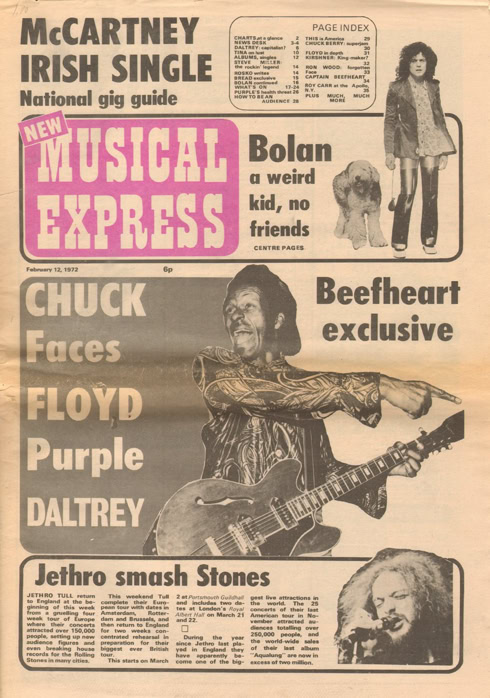
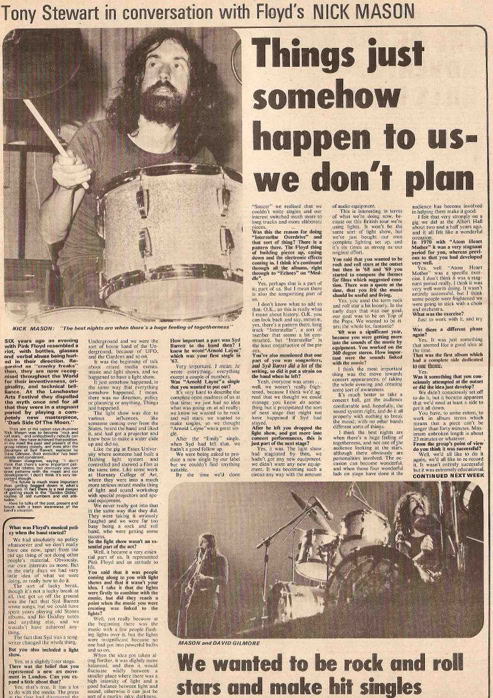
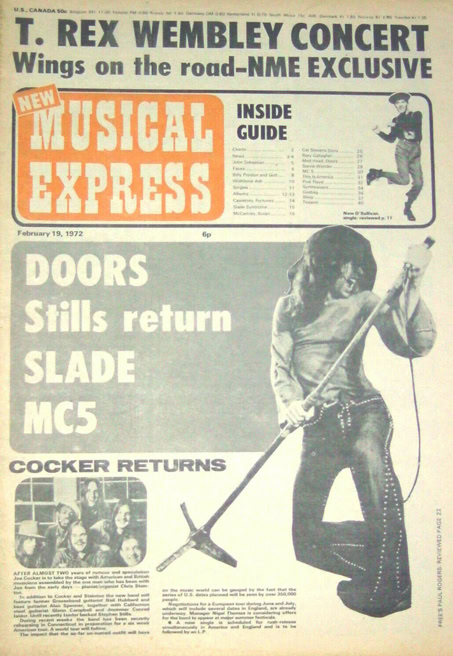
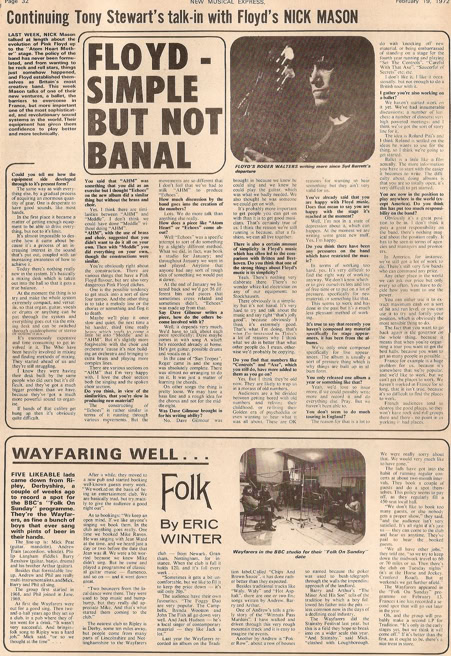
PRESS MENTION | 12 February 1972 An exclusive interview (in two parts) of the band in the « New Musical Express »
An exclusive interview (in two parts) with the band on the February 12th 1972 issue
CONCERT DATE | 12 February 1972 City Oval Hall, Sheffield, England
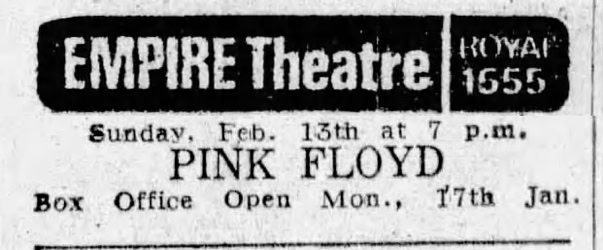
CONCERT DATE | 13 February 1972 The Empire Theatre, Liverpool, England
J. Marchant (Audience member):
«I have just seen Pink Floyd at Liverpool. They were fantastic. But the Pink Floyd act is a total experience, a visual/audio assault on the senses and anyone who has seen them can understand the annoyance caused by mindless children who sit throughout the show making stupid remarks and comments.
I was unfortunate enough to be the person sitting in front of just such a group of animals. These people completely spoiled the act for me, and others near them»
«Spoiled concert», Sounds, 26 February 1972
CONCERT DATE | 17 February 1972 Rainbow Theatre, Finsbury Park, London, England
Pictures by Michael PUTLAND
Chris Charlesworth (Melody Maker reporter):
«I first heard Dark Side Of The Moon at the Rainbow on February 17, 1972 (a full 12 months before it was released), and went back the next night because I enjoyed it so much but I managed this not through the good offices of the Floyd themselves but through the kindness of the manager of the theatre, John Morris, who had given me a magic pass that read: «Admit to all parts of the theatre at all times»
«No One Knew What They Looked Like», Q Magazine #98, November 1994
«Pink Floyd are the ultimate statement about why I believe in pop music. Last night they played for an hour a new piece, The Dark Side of the Moon, that brought tears to the eyes. It was so completely understanding and musically questioning. The Floyd have always been innovators in Britain. The last time I saw them at their best was in Hyde Park in 1970 with orchestral and choral accompaniment. They did not need those embellishments as they proved last night. The great thing about them is their originality and peculiarly they represent the ultimate in the British underground because they have sold out The Rainbow for four nights at 3,200 seats a house with scarcely an advertisement.
The Floyd are like that. You will never hear them on BBC‘s Radio One for all that matters and indeed rarely have a chance to even pay to see them. They appear as seldom as they wish to. An incredible hardback to the late 1960s when really only the music mattered and not the hits. And yet in “Dark Side of the Moon” is their total musical statement with Dave Gilmour and Roger Waters’s guitars whining up into the abyss of this theatre whose sound system so often eludes lesser groups. Nick Mason reassures from his drums in the centre of the stage, Rick Wright nurses his keyboards and more poignantly his VCS 3. Shrill shrieks, notes and even at one time the sepulchral tones of Malcolm Muggeridge reverberate around the hall. This is all part of the Floyd’s statement, they build their music, they are the last of the true originals. Over the years they have produced albums and even the soundtrack to the film Zabriski Point (sic) but for me never have they delivered a musical performance as truthful as last night Why truthful?
Well, for one thing no one ever identified themselves and they forsook The Rainbow’s normal light show for their own smoky green blue and white lights which only heightened their smoldering performance and all the time there was this total committal, total originality. Gilmour’s guitar and Waters’s bass soared and re-echoed about us. The drums strode about them; if needed Wright added credible echoes. They are the first group, excepting perhaps The Who, who have come to terms with sound at The Rainbow. This is because with their promoter Peter Bowyer they took 24 hours to work on it»
«Pink Floyd - The Rainbow», Times, 18 February 1972
CONCERT DATE | 18 February 1972 Rainbow Theatre, Finsbury Park, London, England
«The first half of the Pink Floyd's set at the Rainbow on Friday night was the most directly aimed, involving, and satisfying combination of sound, words and visual effects I can remember seeing for a long time. It showed just how successfully people can harness technology and make it work for them, it showed a rare depth of insight into situations that many of us have been through during the past few years, and it confirmed that when the Floyd set their minds to it they can show themselves to be among the strongest, perceptive and most articulate people working within contemporary music. It is a pity that by contrast, the second half of their set seemed over played and overacted. almost to the point of hamming. In fairness. I should say that the majority of the audience were delighted with the second half — “Careful With That Axe". “Echoes". “Saucerful Of Secrets”, even a sloppily jammed 12 bar at the end — but after the intensity of “Dark Side Of The Moon" I felt cheated. I felt it was all slipping away, slithering downhill into something rather ordinary and predictable. But that probably says more about the strength of the first half than the weaknesses of the second. “Dark Side Of The Moon" lasts an hour, is based around a theme of “madness” — whatever you understand by that — and takes you through a bewildering, yet completely logical series of emotional changes. Musically, it's inventive and welli structured, lyrically it's strong, and the use of quadraphonic sound helps with a rare sense of total involvement. But finally, a plea: don't let «Dark Side Of The Moon» become a millstone round their necks, don't scream for it and refuse to leave it alone, like you did with “Tommy". Treat it with respect, and it'll stay a living, classic musical creation»
«Pink Floyd», Sounds, February 1972
«This was one of the finest rock concerts I have heard. Ever since their days as house band at UFO—the first " underground " club—the Pink Floyd have been in the experimental van-guard, but have never before progressed quite this far. Their doubling in electronic games (which marred the first part of their latest, disappointingly pedestrian album) has been trans-formed into the most complicated, yet integrated use of electronics and sound systems that any band has devised. The new work on which this is all used, "The Dark Side of the Moon," will stand beside "Sergeant Pepper" and "Tommy" as one of the rock classics. These days they don't just use a quadraphonic system, but fill the hall with speakers, so the sound comes literally from all sides. The New Work —which deals with madness and is their first in which the lyrics are Important —is almost an hour long and includes taped noises of everything from manic electronic groaning to a church service that slowly becomes a cacophony of cash registers. In bald print that may sound like gimmickry, but when such effects were used as balance to main theme or improvisation, the effect was startling and exhilarating. In the past, they have concentrated on soaring, ethereal organ for grand, optimistic works like "Atom Heart Mother". "Dark Side of the Moon" is conceived on the same bold scale, but is tougher and snore varied. It has slow, lyrical passages (reminiscent of "Echoes ") and choppy riffs coupled with almost free-form improvisation. The result was sad, magnificent, and exquisite. Little wonder that many of the audience left in tears"
«Pink Floyd at the Rainbow», The Guardian, 19 February 1972
CONCERT DATE | 19 February 1972 Rainbow Theatre, Finsbury Park, London, England
«Burning flashlights, wind-blown sparkle dust, the pre-recorded voice of Malcom Muggeridge and a trip to the dark side of the moon all added up on Saturday to the most successful night’s business London’s Rainbow Theatre had enjoyed since its opening last November.The occasion was the third night of the Pink Floyd’s extravaganza and the converts packed the theatre to such an extent that manager John Morris could happily have retained the group for another seven days.
The greater part of the group’s new act is taken up with their latest opus «The Dark Side of the Moon». Like so much of the group’s material it is a king of space fantasy opera where the all-around speaker system, pre-recorded (including Muggeridge’s voice) and spectacular lighting columns play as big a part as the instrumental work on stage. Musically, they were some great ideas but the sound effects often left me wondering if i was in a bird cage at Regents Park Zoo. At times they were pretentious to the point of absolute silliness, but i was obviously in a minority, judging by the total involvement of all around me Floyd fans are vey serious about their jungle calls For me, the most enjoyable part of the show was the familiar material. They did Careful with that Axe, Eugène and Saucerful of Secrets, a number which allows Roger Waters ample scope for his J. Arthur Rank gong work, but which takes an awful long time to get to the enjoyable vocal and organ piece at the finale. The fans got three encores and demanded a fourth. Just to show they were not limited to psychedelia, there was a blues jam as one of the encores and they closed with my particular Floyd favourite: Set the Controls for the Heart of the Sun which for me was the best thing in the act».
«Floyd’s Star Treck», Melody Maker, 26 February 1972.
«Pendant quatre jours, l’arc-en-ciel fut rose … Dans le décor baroque de l’imposant et déjà légendaire Rainbow Theater de Londres, le Pink Floyd est venu installer ses neuf tonnes de délire spatial et quadriphonique. Pendant quatre jours il a retrouvé le public de ses débuts, puis il est parti enregistrer à Hérouville (lui aussi!) avant de s’envoler vers le Japon et les Etats-Unis. Mais où en sont donc les Floyd ? On les a adulés, vénérés comme les grands maîtres de l’underground, et puis régulièrement, d’année en année, on les a dénigrés en annonçant que, cette fois-ci, c’était fini. Ils étaient à court d’inspiration. Et pourtant ils sont toujours là, et après deux soirées au Rainbow, j’étais définitivement convaincu que c’est pour longtemps encore …»
«Pink Rainbow», Best, March 1972.
The second part to the NME interview as published on 19 February 1972.
CONCERT DATE| 20 February 1972 Rainbow Theatre, Finsbury Park, London, England
The Rainbow concerts was seen by 12,000 people in total. According Billboard, the band won $33,600 for the four Rainbow concerts (see issue 15 April 1972)
Tony Tyler (audience member):
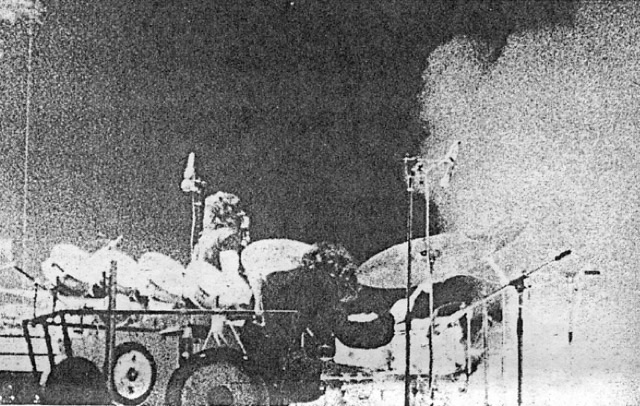
«Pink Floyd don't fit into categories they make them. Their casual, almost diffident approach to stage work — with Dave Gilmour sitting, back towards the people, as he did magical things with steel and strings; with Nick Mason's graceful, effortless style of drumming; with Rick Wright's monstrous keyboard complex and with Roger Waters' own semi-casual posture, facing half-towards the drumkit — all served to underline the almost fanatical care and diligence with which Floyd had prepared another of their mind and sense-stunning appearances. On the last of their four sell out nights at the London Rainbow, they opened the show with their new hour-long piece, "Dark Side Of The Moon". an assault on the corruption of media, delivered, ironically enough, with all the facilities of media at their disposal: gigantic light-towers; banks of quadrophonic speakers; taped harangues from Muggeridge* and his ilk: all swirling; floating and moving from space to space, leaving the listener stunned and yet not bewildered. At the end of the piece, police sirens echo. through the Rainbow, revolving red lights atop the speakers-banks were switched on, and the main light tower —to the accompaniment of agonised mechanical groans — dipped in mock-salute to media, to Floyd, and to us. Tremendous. For their second half, after a short interval, Floyd opened with "Meddle", displayed imaginatively by offstage wind-machines to accentuate the noise-generator effects, while an unseen minion tossed handfuls of silver dust into the fan so that the air glittered. Careful With That Axe followed with magnesium gases at dramatics moments, then Echoes — with Waters opening at the organ — and finally, after a short but applause-filled wait, "Saucerful Of Secrets". The production — for that's what it was — was magnificent, and mention must be made of the fantastic sound quality throughout the concert. Floyd's sound man, mid-centre of the stall, controlled the whole event front behind an enormous console with care and devotion. I have literally never heard such good-quality sound in any auditorium from any group—ever. It's been almost eighteen months since I last saw Pink Floyd, and I'd forgotten how unbelieveable they can be. I won't forget again. Honest, Eugene»
«Front Row reviews», New Musical Express, 26 February 1972
For the last three Rainbow gigs, the band plays a Blues improvisation as encore
Nick Mason:
«Playing them on certain occasions, like in the Rainbow last year, is fun. Every night, on the other hand, would be boring».
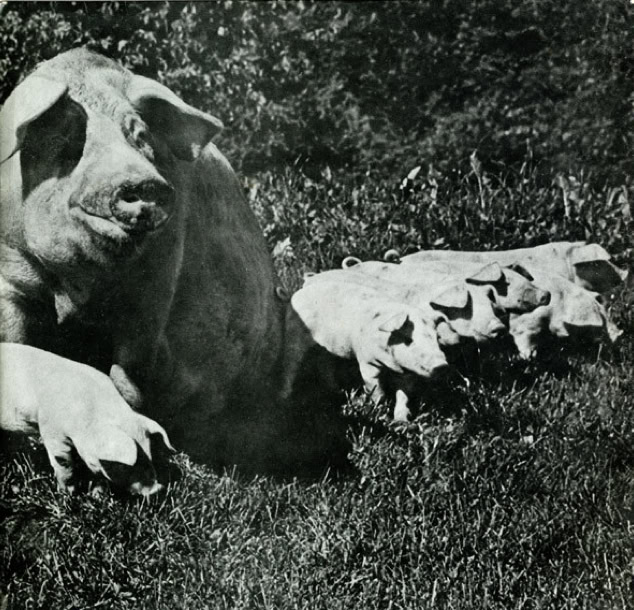
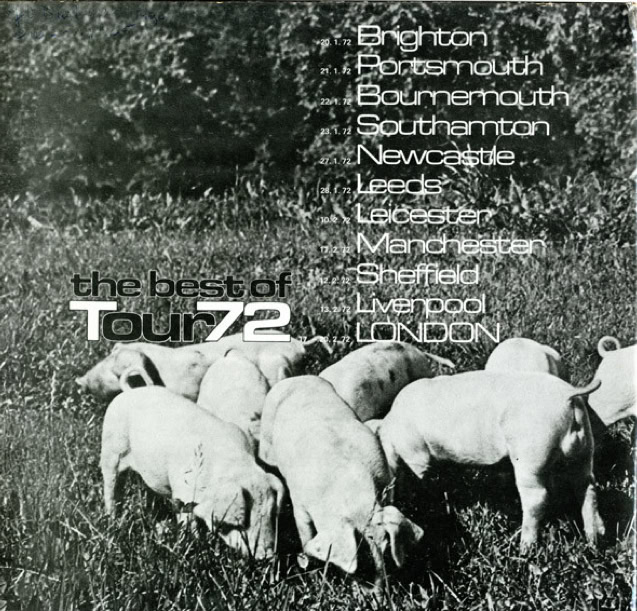
MISCELLANOUS| The Rainbow concerts were released as a bootleg under the title «Best of tour 1972». It would be one of the best selling for a bootleg with 100,000 sales
Nick Mason:
«Aucun d'entre nous ne comprenait ce qui se pas-sait, nous entendions parler de ce disque live mais nous ne savions pas les conséquences que cela pouvaient avoir. La qualité de l'enregistrement était mauvaise, malgré tout il y avait assez de fan pour l'acheter en nombre, puisque le chiffre de plus de 100 000 a été avancé sans que cela ne soit réellement vérifiable. Bien sûr, nous parlons d'un temps où internet n'existait pas et où trouver cet album n'était pas chose aisée. Il fallait quand même le chercher dans certaines boutiques très spécialisées, cela ne s'adressait donc qu'à un réseau très parallèle. Le piratage n'était pas une menace ni un gros problème il y a trente ans»
«Pink Floyd - Interview Nick Mason», Jukebox, November 2005
RECORDING SESSION | From 23 to 26 February 1972, the band is working in the Strawberry Studios of Hérouville for «Obscured by Clouds».
All photographies by Jean-Denis MAHN
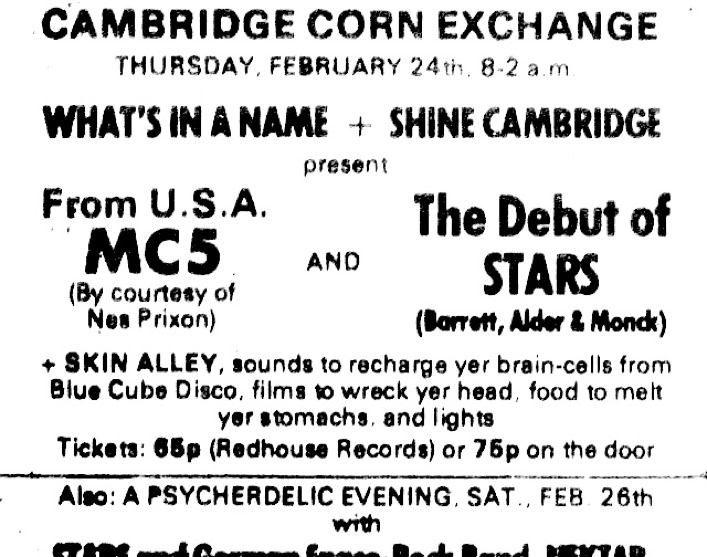
CONCERT DATE | 24 February 1972 The Corn Exchange, Cambridge, England
After a spell in Morocco, Twink (ex-Pink Fairies) moved to Cambridge and worked with the 'Last Minute Put Together Boogie Band', initially with vocalist/guitarist Bruce Michael Paine and John 'Honk' Lodge playing bass.» The Last Minute Put Together Boogie Band», now with ex-Delivery bass player Jack Monck, backed American Blues guitarist Eddie "Guitar" Burns at King's College Cellar on 26 January 1972. Jack's wife Jenny Spires, a friend of Twink's and former girlfriend of Syd Barrett went with Syd down to the gig and he brought his guitar along and jammed with them in the last set. At the "Six Hour Technicolor Dream" at the Cambridge Corn Exchange the next day (27 January), the Last Minute Put Together Boogie Band, with guests Fred Frith and Syd Barrett, played on a bill with Hawkwind and the Pink Fairies.The Boogie Band played five tracks before being joined on stage by Syd for a further three.
Twink:
«We went round to his house and... Syd came to the door and Jenny said, 'Jack and Twink were thinking it would be nice to form a band, just the three of you.' So he said 'Yeah, alright, come in'. And that was that. We started rehearsing down in the basement of his house, that's how it started." "We were doing all of Syd's stuff, old material like 'Lucifer Sam'. We did about half a dozen gigs. I think it was a pretty tight set but some of the gigs were kind of loose because we didn't have road managers, we just had people helping out and stuff. We played all around the Cambridge area, didn't go out of Cambridge, just places like coffee bars - and we played the Market Square, that was the most memorable gig. It was a good gig, it was really brilliant»
Joly MacFie (Stars’ roadie):
«Stars played a number of times at a hippie-community cafe called 'The Dandelion' and then one Saturday outdoor in the main square in Cambridge and then two shows at the (huge, cavernous) Corn Exchange on a Thursday and Saturday, two days later. Nektar had state of the art audio... I mixed the band. Another roadie was Nigel, who took care of the stage. I think it was a friend of his that taped the show. I was lent the tape by Nigel some months later and it sounded good; I gave it back without copying. I later heard he lost it... The MC5 show was not recorded and was not a good show. The promoter of these shows - Steve Brink - had promised that there would be no press; however he did invite a guy from the Melody Maker, Roy Hollingworth, who had some sort of nervous breakdown at the [MC5] show. He wrote a piece that came out the next Wednesday detailing a wave of absolute alienation he sensed at the show, and used Syd as a metaphor for it»
Hollingworth:
«He played a demented solo that ran ragged lines of up to 10 minutes. His raggled hair fell over a face that fell over a guitar and seldom looked up. He changed time almost by the minute, the keys and chords made little sense. The fingers on his left hand met the frets like strangers. They formed chords, reformed them - apparently nearly got it right - and then wandered away again. Then Syd scratched his nose and let loose a very short sigh. It was like watching somebody piece together a memory that had suffered the most severe shell-shock. I don't know how much Syd Barrett remembered, but he didn't give in. Even though he lost his bassist and even though Twink couldn’t share Syd's journey, Syd played on. ...He has a beard now, but his eyes are still deep cavities hiding an inexplicable vision. Tuning up presents awkward problems. He holds his guitar like he’s never held a guitar before. He keeps scratching his nose. 'Madcap Laughs' opened the set. It didn’t sound much like it used to. But Syd’s voice did. A well-spoken wine - "Barth", "Larf". See Emily Play? The chords are out of tune and he keeps looking to his right and sort of scowling at Twink and the bassist, as though in disagreement. I stood and watched and thought he was bloody great. A girl gets up on stage and dances; he sees her, and looks fairly startled. As the clock ticked into the small hours of Friday morning, Syd retreated to the back of the stage trying to find one of those runs. He messes chords together. There is no pattern but if you think hard you can see a faint one, you can see some trailers in the sky. The large concrete floor is littered now, not with people but with their relics. Plastic cups that contained orange juice or lemon or coffee. And some squashed wholenut scones and buns. And underground papers. And Syd played on. Will anyone listen to the Madcap?»
«The Madcap Returns», Melody Maker, 4 March 1972.
Interviewer: «Il a fait un bœuf avec Twink, récemment, dans une université ...»
Gilmour: «Moi, je ne sais pas, mais... je trouve que ces choses avec Twink ne sont pas très bonnes. C’est Twink, qui je pense, a dû aller à Cambridge dans cette université pour jouer avec le génie. Il sait que ça lui fera de la publicité. Syd ne peut pas dire non. Il ne peut pas dire oui non plus. Tous les gens qui ont vu le concert et que je connais m’ont dit que c’était dégueulasse (rappelons que Gilmour parle le français)».
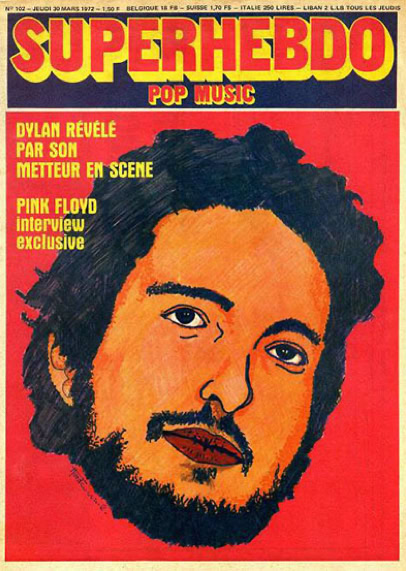
«Les Pink Floyd en studio», PopMusic Superhebdo, April 1972
Bruce Gill:
«It seemed no big deal at the time - things like this were often happening. Youn could walk into a Cambridge music shop and see Dave Gilmour trying out a guitar. It felt like a rehearsal. They were quite a few mistakes, false starts and endings - actually I thought yr was very chaotic. Jack and Twink were very tight, Syd less so, but that guitar could be out of this world»
«Twilight last gleaming», Mojo, April 2006
Robert Chapman (Pink Floyd’s biography):
«The gig was either a disaster or a shining pinnacle of Syd's twilight shelishock - but I'm not going to say which. Anyway I was starry eyed and laughing at the time and cannot recall. Syd mostly rambled up and down his stratocaster searching for tunes that probably weren't there (and yes he did hold his guitar as if it were highly explosive). He opened with a slow version of 'Octopus' and the 30 or so people who had stayed to watch registered instant dismay when it became quite clear that the P.A. was going to render Syd's lyrics almost inaudible. He also performed 'Dark Globe' from the 'Madcap' L.P. and 'Gigolo Aunt' 'Baby Lemonade' and 'Waving my arms in the air' from the 'Barratt' L.P. The only time he spoke was when introducing 'Octopus' and 'Gigolo Aunt'. He distinctly mumbled "I don't know what that one was called". Surprisingly he also played a remarkable version of 'Lucifer Sam'. I learned later that 'See Emily Play' was also rehearsed the afternoon of the gig. The set was concluded with a couple of shapeless ragged 12-bar instrumentals and ended eventually when Syd's right index finger began bleeding rather badly. The performance as a whole was hampered by Twink's rather pedestrian drumming and Jack Monk's various hassles with his bass amp. I understand the band played again on Saturday and by all reports the gig was similar although the lyrics could be heard and they were slightly more rehearsed. Syd opted out of a proposed gig at Essex University the following Friday "he got cold feet" stated Jack Monk. Rather than that I think Syd was painfully aware that this mediocre band was not the vehicle for a comeback»
«The Last gig - A personal report», Robert Chapman
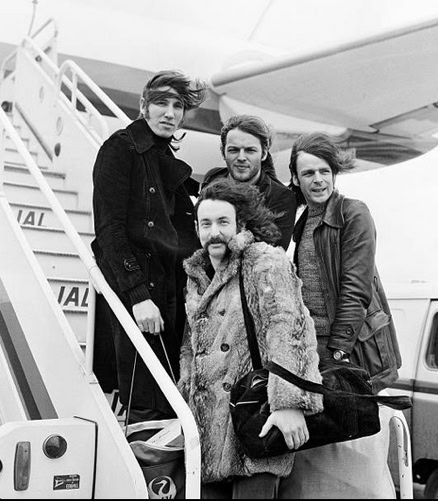
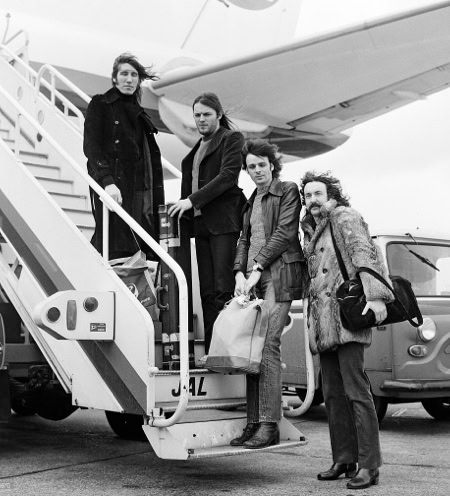
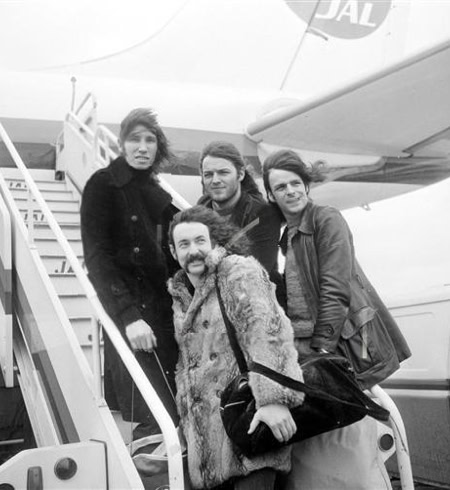
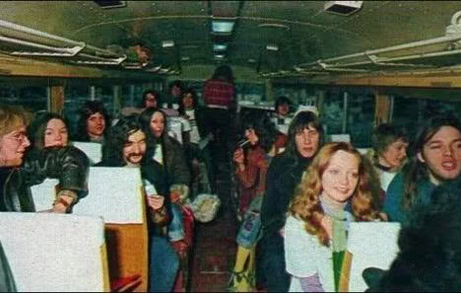
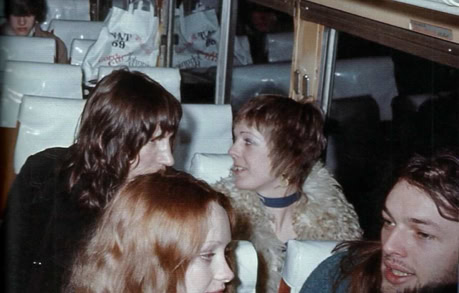
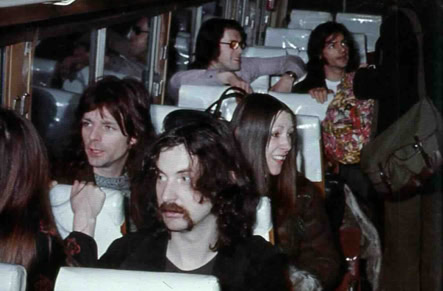
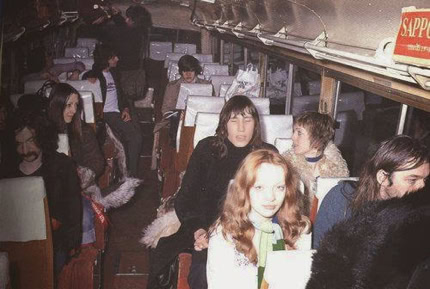
MISCELLANOUS | 3 March 1972 Pink Floyd embarks on a DC8 for a 17-hours fly to the North Pole to Tokyo via Anchorage with a 16 members crew.
The band was shot by the reporters of « The Daily Mirror »
Nick Mason:
«We still had to remix the material for an album release, hut before we could do that we had another tour to Japan. This tune we had chartered a DC8 but even after loading all our equipment on board there were still plenty of spare seuls Wives and girlfriends were obvious co-travellers, but the remaining places were filled with passengers w ho had increasingly tenuous connections with the hand, but the kind of careers that apparently allowed them to drop everything and join us at very short notice - usually a had sign»
«Inside out: a personal history of Pink Floyd», Nick Mason, 2006
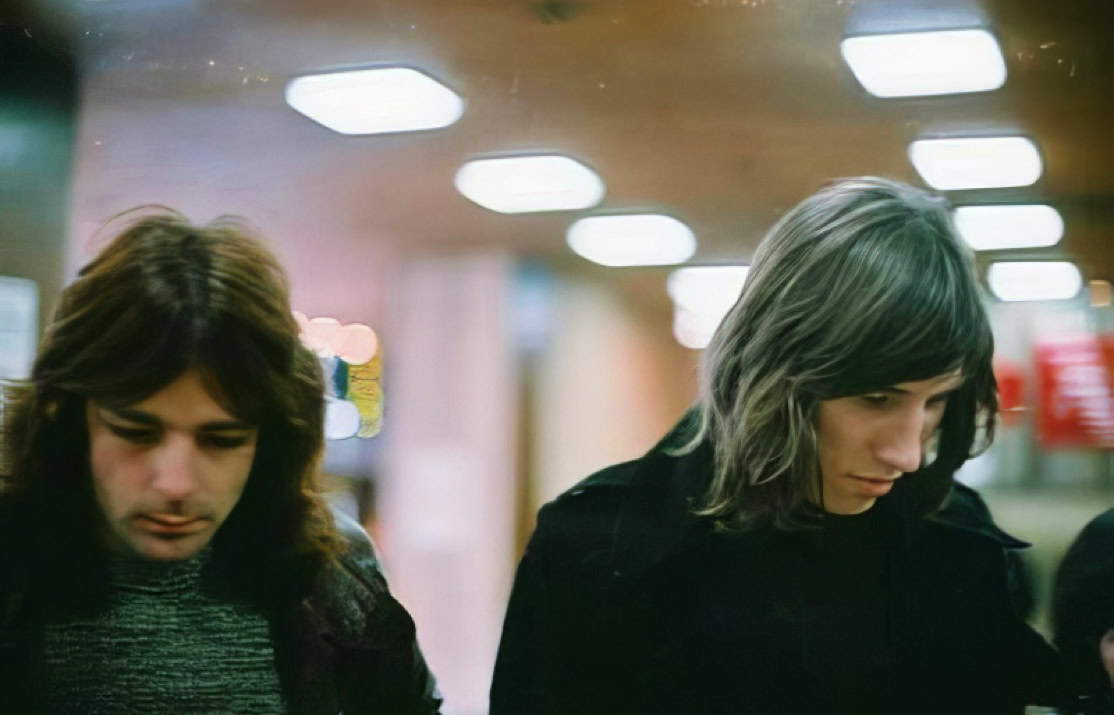
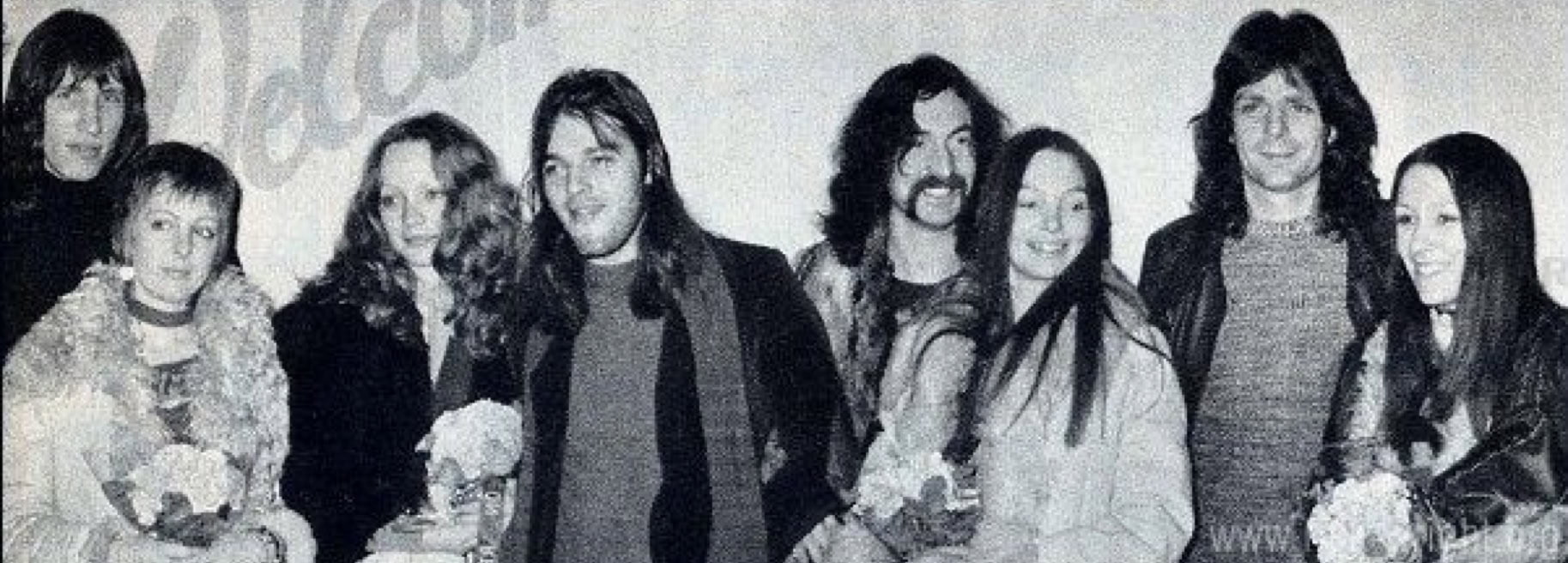
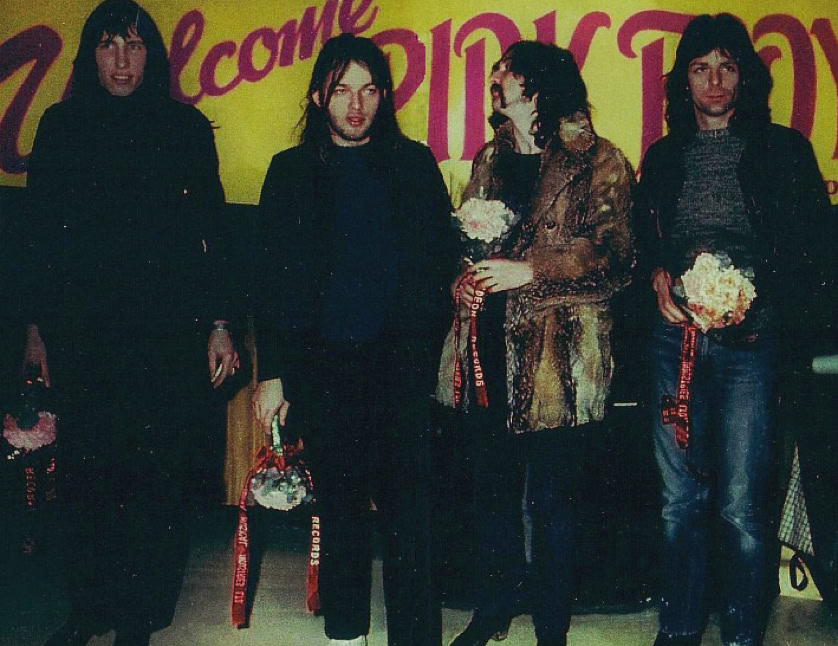
MISCELLANOUS | 5 March 1972. The band is welcomed by the Japan press at the Tokyo Airport.
Ginger Gilmour:
«It was a long, long flight. Most of us took a Mandie which is a form of happy sleeping pill, whic always made me giggle until I fell asleep. Japan was different from France. Some might call it a culture shock for this American at the time, and perhaps it was for the band and wives, managers, roadies as well? However, this was their second trip. I often felt we were living a modern day 'Shogun' walking down the streets with our long hair and different accents. when we first arrived at the airport, there was a banner hanging over the door at the terminal saying, Welcome PINK FROYD. The Japanese had difficulty tin pronouncing our L's and it seems even writing it. We had to take a large bus to our hotel and David was sitting next to the window. There was a surge of people towards the bus, flashing cameras were everywhere.
David noticed that one of the girls had not taken off her lens cap so he was pointing to her through the window that separated them, trying to tell her. She got so excited that he had acknowledged her that she did not notice until the bus drove away. We could see from as we drove away that she was slumped in a pile of tears at the lost opportunity. No photos but she did have a memory that David Gilmour had acknowledged her»
«Memoir of the bright side», Ginger Gilmour
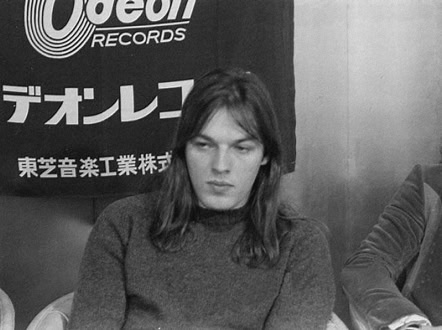
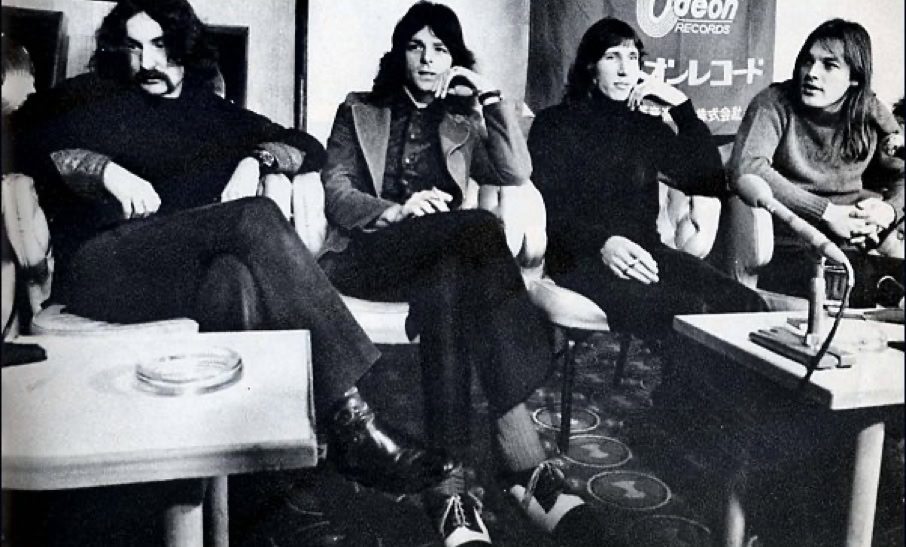
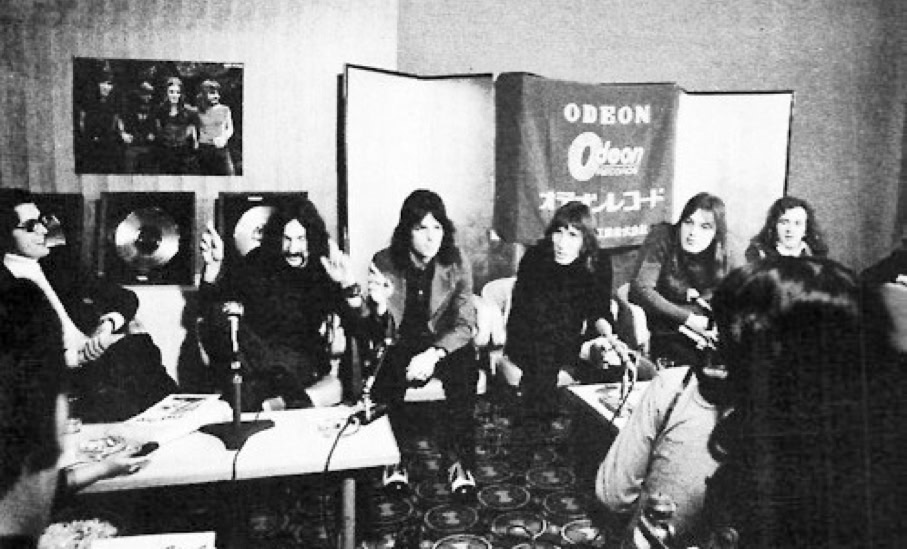
Right picture (from L to R): Roger and Judy Waters; Ginger & David Gilmour; Nick and Lindy Mason; Rick and Juliet Wright.
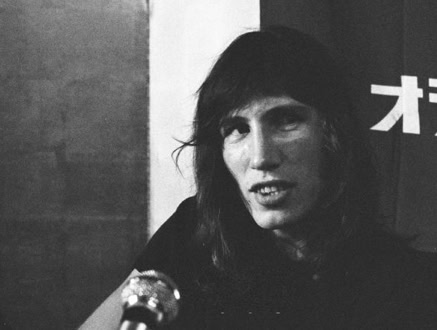
The band answer to the press crews during a press conference at the airport.
The band stayed at the New Otani Hotel of Tokyo
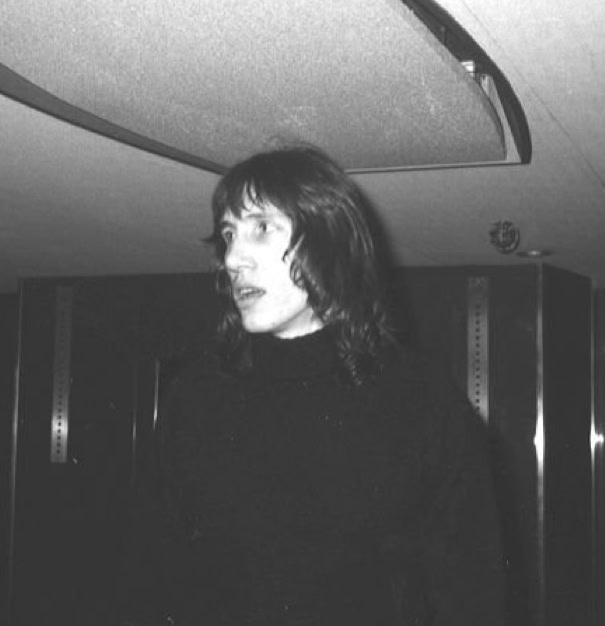
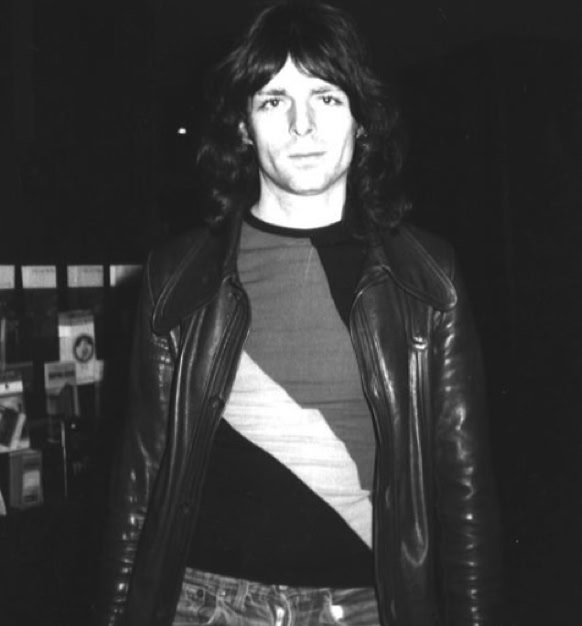
Photographies by Midori NATSUKAWA
MISCELLANOUS | Early March 1972. The French composer Pierre Henry,pioneer of musique concrète (author of the famous « Messe pour le temps présent » states his admiration for the Floyd
Pierre Henry (composer)
:«En musique pop, j'aime bien sûr les Pink Floyd»
«Pierre Henry, ses machines, son "herbier sonore", ses mystères …», Le Devoir, 4 March 1972
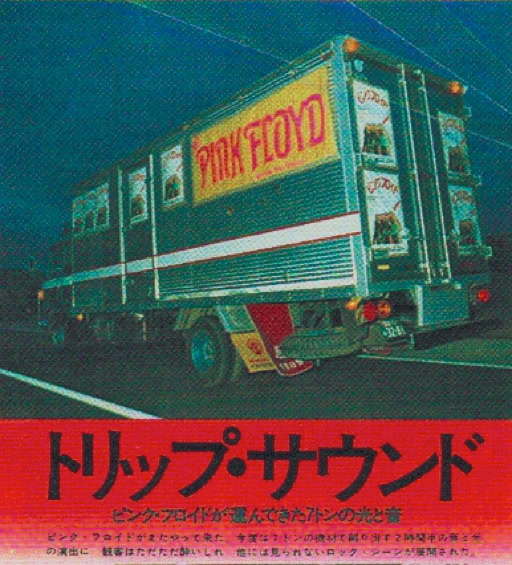
MAIN EVENT DATE | Early March 1972. Second Japan tour for the band.
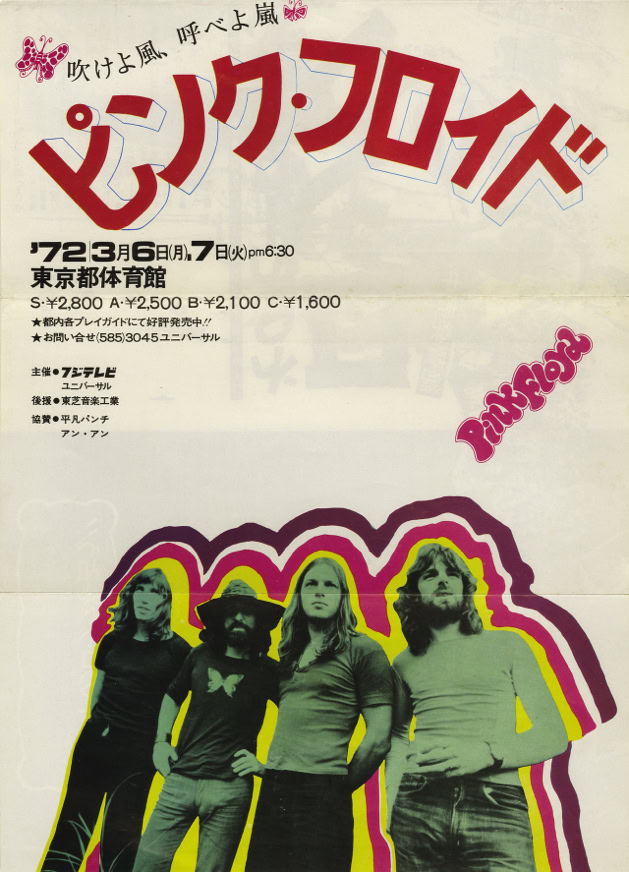
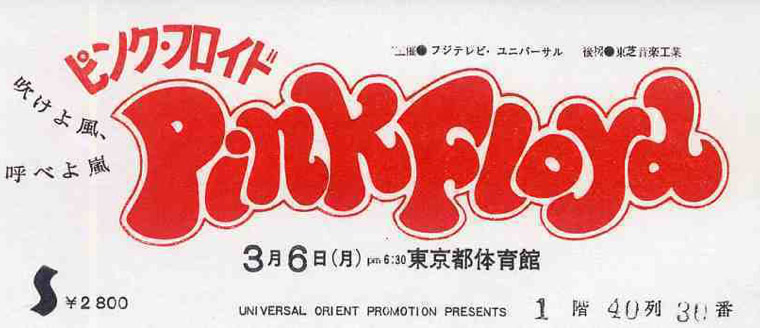
CONCERT DATE | 6 March 1972 Tokyo-To Taiikukan, Tokyo, Japan
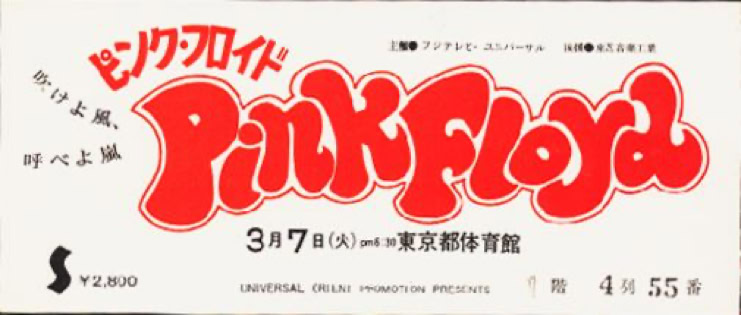
CONCERT DATE | 7 March 1972 Tokyo-To Taiikukan, Tokyo, Japan
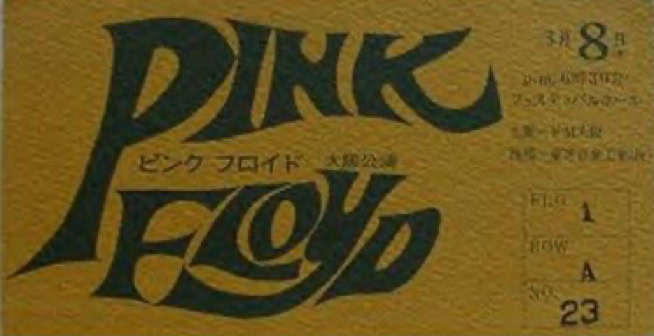
CONCERT DATE | 8 March 1972 Festival Hall, Osaka, Japan
CONCERT DATE | 9 March 1972 Festival Hall, Osaka, Japan
CONCERT DATE | 10 March 1972 Dai-Sho-Gun Furitsu Taiikukan, Kyoto, Japan
CONCERT DATE | 13 March 1972 Nakajima Sports Center, Sapporo, Japan
MISCELLANOUS | 16 March 1972. Fly from Tokyo on Japan Airlines to Australia for playing some gigs but eventually it was cancelled. The band decided to come back in England.
MISCELLANOUS | 18 March 1972 Richard Wright and his wife Juliet attended the Marc Bolan’s concert at Empire Pool of Wembley
RECORDING SESSION | From 23 to 27 March 1972, the band returns to the Strawberry Studios of Hérouville for more recording sessions for «Obscured by Clouds».
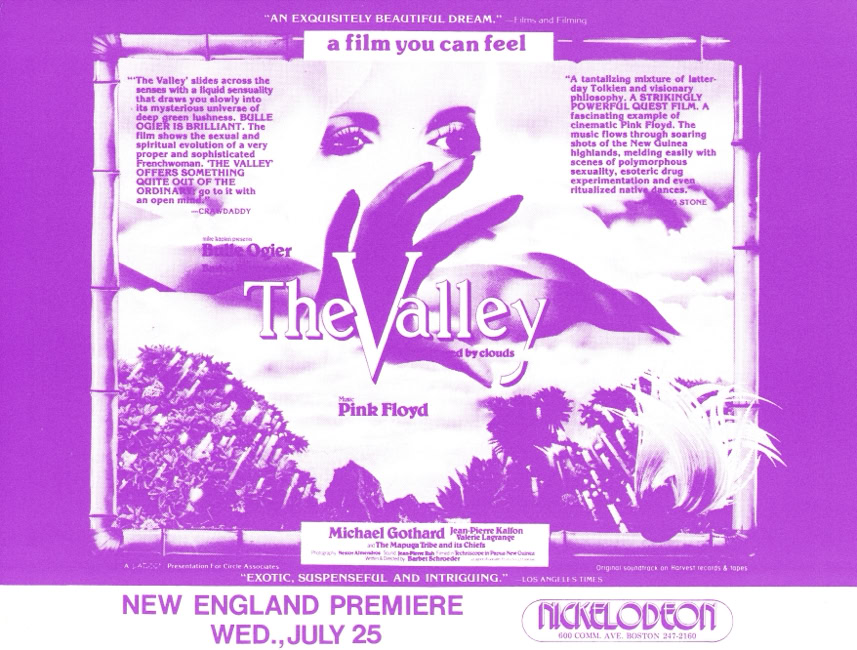
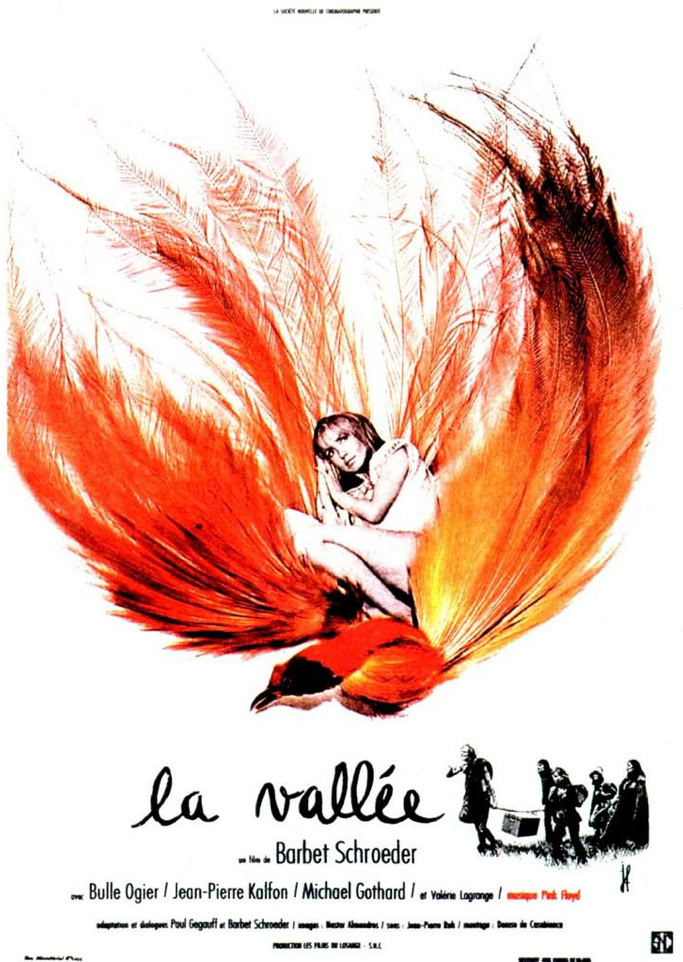
The band spent four days completing the soundtrack to La Vallée at Château d'Hérouville. During downtime, Pink Floyd roadie Chris Adamson was challenged by Roger Waters to eat a stone (14lbs) of raw potatoes in one sitting. Waters later said that the stunt was abandoned after Adamson had consumed «around two and a half pounds».
The band gives an exclusive interview the French musical press (can be read here).
Pictures by Gilbert NENCIOLLI
Interviewer: «Pourquoi êtes-vous ici ?»
Mason: «Nous enregistrons un nouvel album, la musique du film « La Vallée ». C’est le metteur en scène de « More » qui l’a tourné. Le mois dernier, nous avons composé cette musique ici, et l’avons enregistrée. Maintenant, nous la mixons».
Interviewer: «Quel est le sujet de ce film ?»
Mason: «C’est l’histoire de types qui cherchent un nouveau paradis en Nouvelle Guinée»
Interviewer: «Quelle sorte de paradis ?»
Mason: «Quelque chose de différent de ce qu’ils connaissent»
Interviewer: «Cette musique constitue donc la matière de votre prochain album ?»
Mason: «Oui, mais il n’a rien à voir avec | l’album annuel que nous sortons depuis nos débuts. Celui-ci sortira en automne et comprendra les nouveaux [ morceaux que nous jouons sur scène».
Interviewer: «Personne ne vous a demandé de jouer à Paris ?»
Mason: «Si, mais nous ne trouvons pas de salles. J’espère que nous y jouerons en octobre. Nous allons faire une tournée de 10 jours en France en automne. Nous jouerons à Paris, à Lyon, à Nice et dans d’autres villes»
«Les Pink Floyd en studio», PopMusic Superhebdo, April 1972
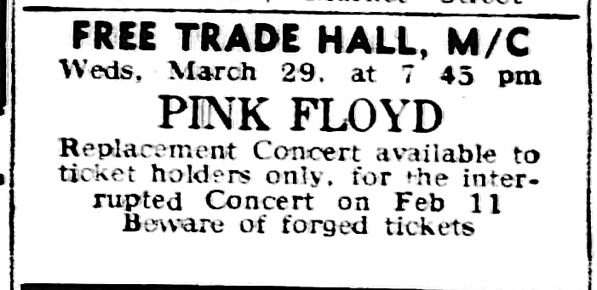
CONCERT DATE | 29 March 1972 Free Trade Hall, Manchester, England
«my last “proper” Pink Floyd show. From now on, I’d be sharing them with the world……stadia, sports grounds, queues, tightly packed crowds, etc. But their music was changing too, it had become more predictable, more precise, every show the same. I liked unpredictability….if a band flubbed it and you could hear them laugh (but recover), that was fine. The Grateful Dead did that most shows but the Floyd were becoming too polished, too rehearsed (for me). Why see them more than once a year when it would be identical? Or so I thought back then.
The show was fine. Sorry, but I’ve no particular recollections of Dark Side Of The Moon other than it was ‘long’. We were about a third of the way back in the stalls so had a pretty good view. I’m pretty sure they did Echoes which, for me, would have been the highlight. My friend recorded the DSOTM set so we got to hear it a few more times before he recorded over it with a Roxy Music show! And that’s me about done. I stopped going to the shows (and, for a while, I also stopped buying the records). I can’t remember if it was a conscious decision or not, or maybe because I left university in 1973, moved out of the city, got married and had a different sort of life. I bought The Wall and caught two of the Earls Court shows in 1980 (the last time I saw them) but they’d moved on – no longer the ‘local band’, they were now megastars, the gigs had become huge spectacles, and I felt as though I was sitting half a mile away. I hardly listened to them for the next 25 years and, really, it was stumbling across this site that re-ignited my passion. I now play shows from that period all the time so … thank you one and all for preserving these wonderful recordings»
«Recollections of Early Floyd Shows» (Simond), Yeeshkul Website, 9 March 2015
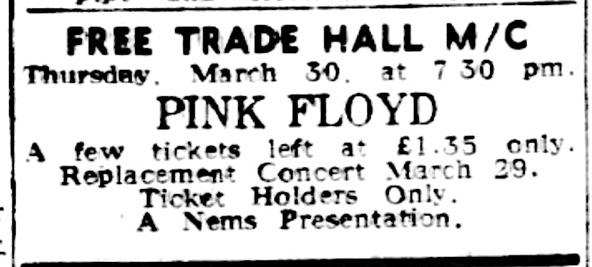
CONCERT DATE | 30 March 1972 Free Trade Hall, Manchester, England
This second date was added at the last minute:
Peter Bowyer (show promoter):
« The post-poney show was such a sell-out - people were camping outside almost - that another date was arranged »
« Power to the Floyd » Disc, 4 March 1972
RECORDING SESSIONS | Late March 1972. Alan Parson made a demo recording of multiples clocks (later used as intro for Time).
Alan Parsons:
«It was a recording I did for a sound effects record, originally. It was done for a quadraphonic sound effects album. Nobody took much interest in it. When I heard the clicking bass, I told them that I had this recording of these clocks that would fit in. I played it to them, and they loved it»
«Spend time on 'The Dark Side of the Moon' with Alan Parsons», Goldmine, 12 May 2013.
RECORDING SESSIONS | From 4 to 6 April 1972 the band is mixing «Obscured by Clouds» at Morgan Sound Studios
CONCERT DATE | Early April 1972 Pink Floyd's 17-date US tour commenced at Fort Homer Hesterly Armory Auditorium in Tampa, Florida, and ended on 4 May at the Music Hall in Boston, Massachusetts. For the US tour, Storm Thorgerson is invited by the band to took pictures of the members.
Aubrey Powell:
« He was only person let loose backstage with a camera, because of his familiarity with the band, and there a whole bunch of photographs where you get a real sense of intimacy within Pink Floyd that isn’t usually associated with them, and it comes flooding back»
«Special Animals», Mojo, April 2017
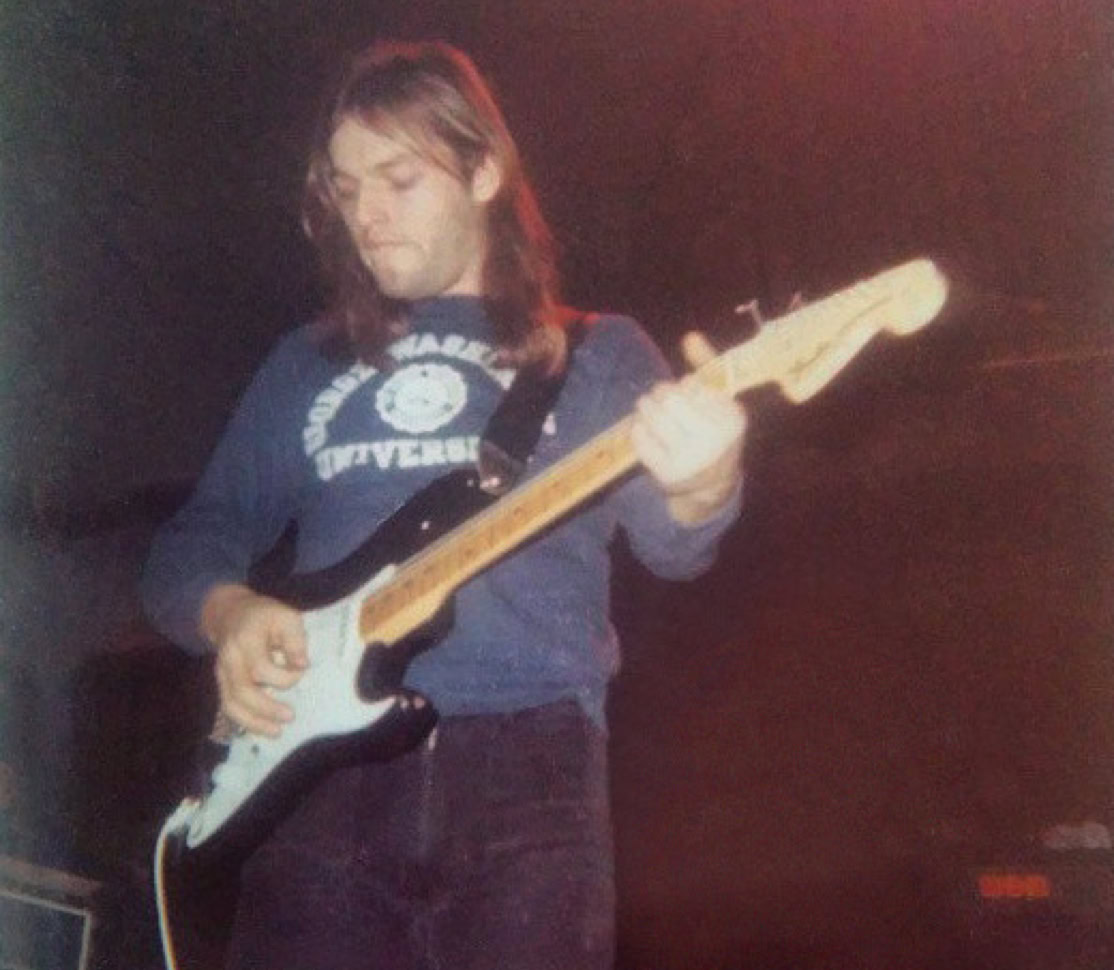
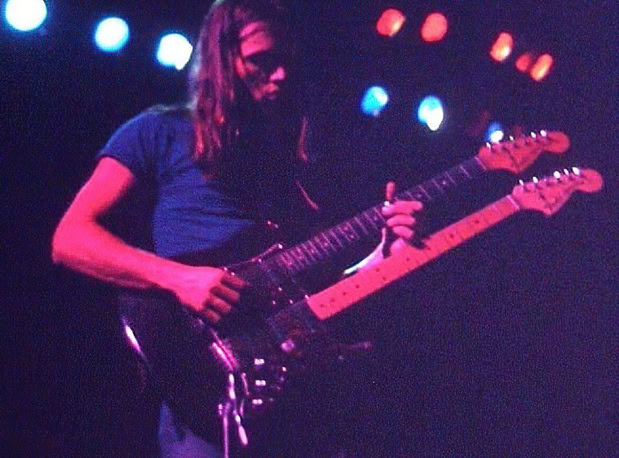
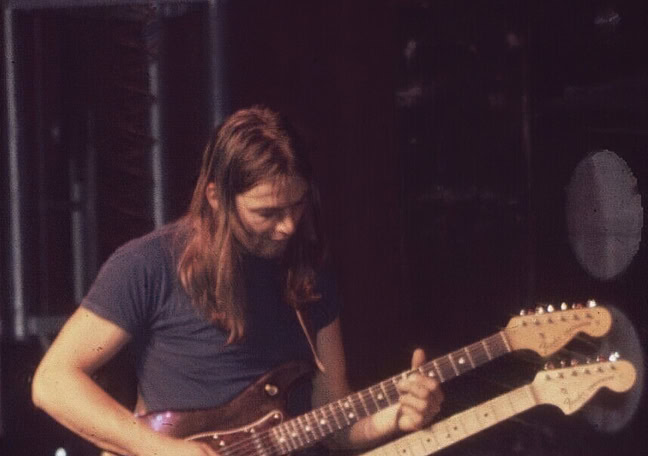
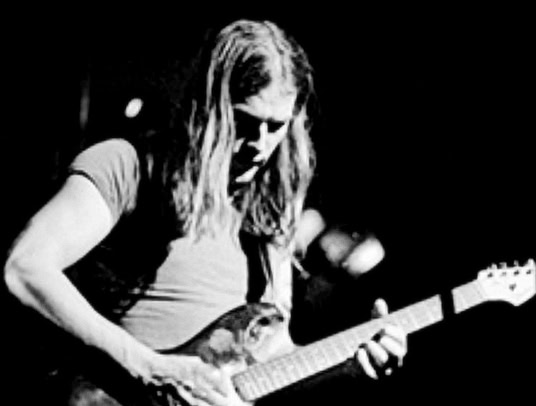
During the US tour on April 1972, David Gilmour experiments his double-deck Stratocaster guitar.
CONCERT DATE | 14 April 1972 Fort Homer Hesterly Armory Auditorium, Tampa, FL, USA
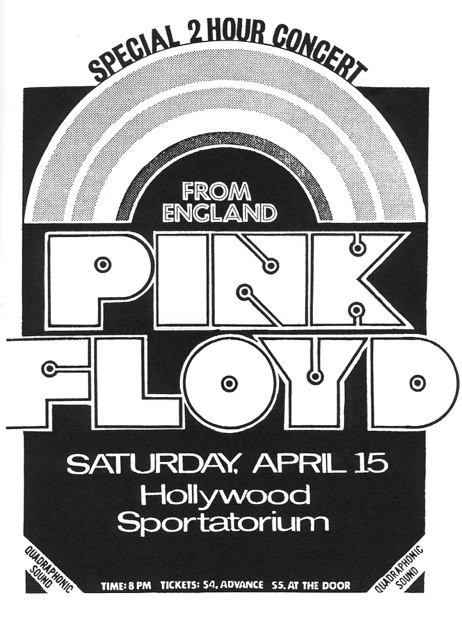
CONCERT DATE | 15 April 1972 The Sportatorium, Hollywood, USA
Pictures by Octavo DIAZ
CONCERT DATE | 16 April 1972 Township Auditorium, Columbia, USA
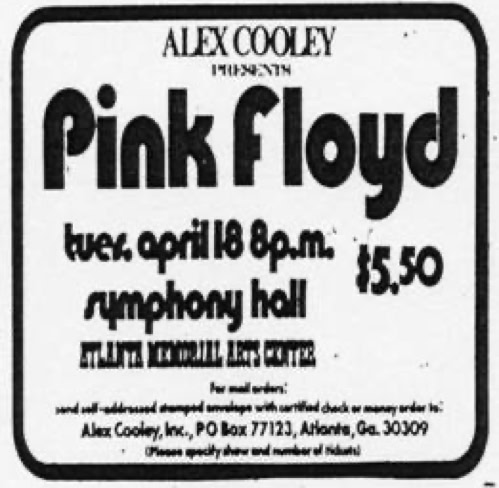
CONCERT DATE | 18 April 1972 Symphony Hall, Atlanta Memorial Arts Center, Atlanta, USA
Pictures by Carter TOMASSI
«Sound is in large measure what the Floyd is all about. The band possesses a remarkable sense of how discordant elements and sound effects can be meshed together with raw rock power and be made melodic. Soft, slow, haunting tunes are often metamorphosed into loud screaming rock, with drums, guitars, and organ filling all spaces as they crash into one another. The group's sound encapsulates you and wraps you up; it lulls you and wakens you. Pink Floyd is one of the few bands, perhaps the only one now, to maintain the integrity of electronic and psychedelic music, principally because of their inventiveness. Their first set featured, as far as I could tell, all new material. But the band seemed a bit out of synch, and their usual power and intensity was dulled. The second set was a different story. They ran through some of their best and most familiar material: "One of These Days," "Careful With That Axe, Eugene," "Echoes," and the encore, "A Saucerful of Secrets"—the latter perhaps their most psychedelic number, with a remarkable complexity and depth, from Roger Waters' eliciting pain as he thrashed the cymbals, to Dave Gilmour's spinning freaky rivulets of sound from his lead guitar as he sat on the floor and manipulated two sets of panels in addition to his amp. Nothing short of incredible»
«Pink Floyd», Great Speckled Bird, First May 1972
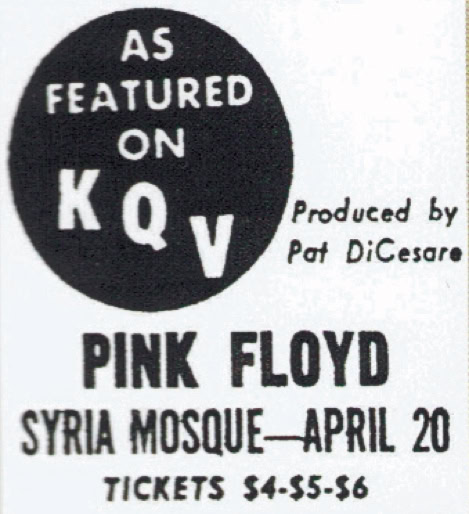
CONCERT DATE | 20 April 1972 The Syria Mosque Theater, Pittsburgh, USA
CONCERT DATE | 21 April 1972 Lyric Theater, Baltimore, USA
«Pink Floyd's music is not always agreeable, but you have to respect the integrity of the group’s approach to it, for it is the most determinedly avant-garde rock group in the business. For all that, they can play some very listenable music as well, which they did during the first half of their concert Friday night at the Lyric.
It consisted entirely of a long piece titled "Eclipse". Pink Floyd set the stage for it, after a delay due to a power failure, by playing a single-note drum beat, probably taped, through the speakers—thump, thump, thump— like a heartbeat. Then a single organ note was superimposed, still without the band having appeared. Then a kaleidoscope of sound effects, ringing cash registers, and so on, emerged through the speakers mounted in the back of the Lyric. Then two racks of eight spotlights each on either side of the stage, topped by yellow, police-type, revolving lights, began to rise, lending an eerie glow to the already strange setting. Pink Floyd entered at last, the white lights went on and I prepared for the electronic assault of the century. .
Instead, the band began with a deceptively simple lune, "Breathe, breathe in the air". They continued playing without a stop through the various sections of "Eclipse", the first part merging into a hard-driving rock section which, in turn, gave way to stately organ chords and a Zappaesque tape pastiche emanating from the rear speakers that included a parody of a church service and featured the voice of Malcolm Muggeridge talking about the past, the present and ‘‘carrying us into the glorious future.”’
"What a Day", a pleasant vocal by guitarist Dave Gilmour and bassist Roger Waters based on a four-note descending bass figure, followed and the band ended as softly as it began. After the intermission, Pink Floyd opened up with some of their more characteristic material,. which is very spacy, electronic stuff with lots of ‘special’ sound and visual effects. Keyboard man Rick Wright, who tends to two pianos, two organs and a special sound, mixer, is the key man here. and his vast set-up of knobs and dials includes a terrifying mechanism that literally made the floor of the Lyric shake. Fortunately, he managed to keep it in check, but rather than worry about what would happen to the walls if he grabbed the wrong dial as he swiveled around in his seat, or worse yet, had a seizure and fell over on the console, loosing all that power at once, I shut my eyes to listen to the opening sequence, which they call "Careful Eugene, One of These Days I’m Going to Cut You Into Little Pieces". I was embarking on a pleasant inner voyage as Wright and Gilmour wove a rich tapestry around the bass and drums (Nick Mason), when I decided to check and see if everything was still in place. I opened my eyes just in time to be blinded by a bright orange flash of magnesium or something, set off at the back of the stage, and to hear Waters start screaming into the microphone.
He subsided fortunately and "Careful Eugene" ended calmly enough with Waters inhaling and exhaling into the microphone. “Echoes”. and an encore that Waters again enlivened by vigorously attacking a pair of cymbals and a gong ended the concert. Pink Floyd was an underground group that started in London about five years ago. They are essentially sound poets who inkabit a musical Alice in Wonderland or audial Hades, depending on your mood or theirs at the time. Like that of their colleagues in the jazz avant garde, their music is difficult to listen to, in fact sometimes defies listening to, and yet it is necessary music. If the shrieks and off-the-instrument "notes" of the jazz avant-gardists express an anguished racial outlook (and that is an oversimplification), Pink Floyd’s music, suggestive of an endless, arid plain, broken by electronic gibberish, seems to express some of the purpose-lessness of modern industrial society" That they chose to include more conventional material during the first half is to their credit (it is, after all, more than jazz saxophonist Archie Shepp will concede); the result was a well-balanced and highly interesting concert»
«Pink Floyd unleashes sound and fury in the Lyric», The Baltimore Sun, 24 April 1972
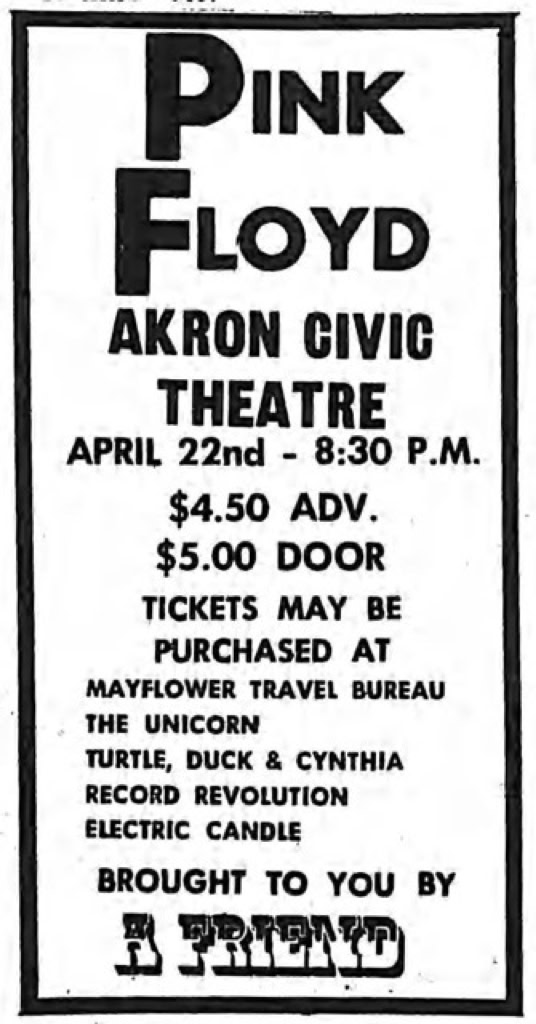
CONCERT DATE | 22 April 1972 Civic Theater, Akron, USA
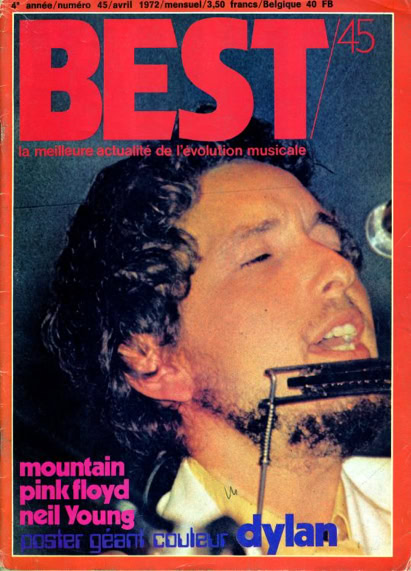
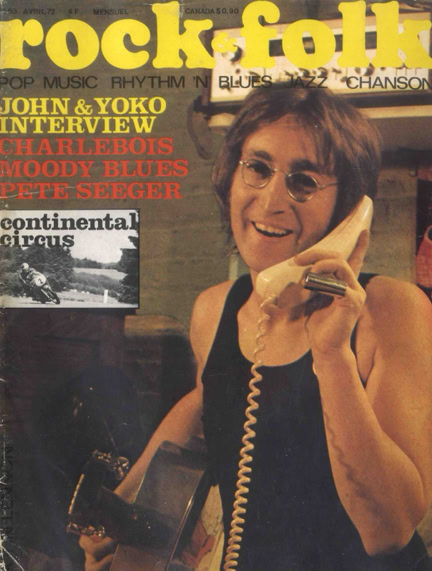
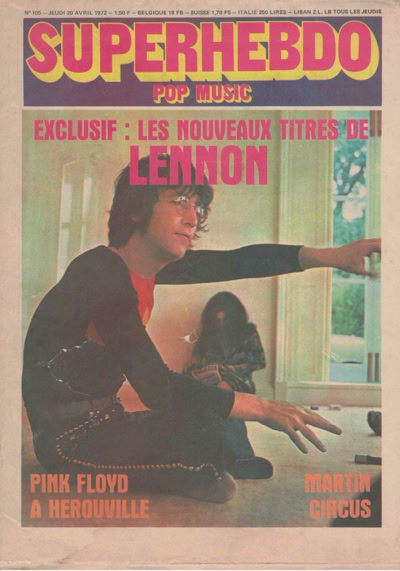
PRESS MENTION | The French musical press made a large coverage of the band on April 1972.
CONCERT DATE | 23 April 1972 Music Hall, Cincinnati, USA
«Witnessing a concert like Pink Floyd’s last night at Music Hall again raises that familiar, stupidly basic question regarding rock; how inipoi iant is the music9 if you think feeling and musicianship are the most important or the only valid factors, then a group like Pink Floyd will bore you stiff, for the most part. But music is only one part of that groups eclectic multimedia trip, and if you think their music should be weighed together with their standards, the group is a qualified success. Qualified, because the musical sector leaves a gaping hole in the total picture.
Let's take a trip through their first composition last night, to illustrate. “Composition,” not “song” because they obviously had something to say in it and took the entire half of the concert, almost an hour, to say It.
Cue the set, the equipment of which could comfortably fill a C5A transport; bass, lead guitar and accompany-ing amplification (in the super giant noneconomy size wattage range), a raft of drums, several keyboards (synthesizer, mellotron, electric piano, etc.). Lights: three banks of multicolored spots on hydraulic lifts, a red police flasher atop each. Plus a ceilingful of speaker banks. That’s just the stage.
Don’t forget the special tape and amplification units in the left boxes, and the three other banks of speakers north, south and east of the audience. Hang on. Flashes of red, green and blue from the stage. Cue the sound man. . a slow, electric heartbeat moves across the audience, left to right, back over, slides to the rear, forward again. Other sounds crowd In, moans, a telephone, gulping cash register. The light columns suddenly begin rising, 25 feet over the group's heads. Cue the music: a somber, strung-out melody set by keyboardist Richard Wright, occasionally punctuated by guitarist, David Gilmore. Nick Mason’s drums are even, unobtrusive, Roger Waters’ bass is locked to a single note. A couple of fairly interesting key changes, then Gilmore and Waters sing a verse of hard-to-hear, vaguely threatening lyrics. Back to the initial melody, which goes on . . . and on . . . and on, Wright improvising behind it with various effects.
The piece becomes freeform, the lights alternating color effects, the heartbeat returning, now louder, almost panting, mellows out again ... Mason breaks with a interlude of timpani sticks on a bank of bongos. Another vocal verse, rise to Gilmore's snarling guitar, a bit sloppy. Storm alternates with tranquility. More tapes cut in, this time the English media gets it in the neck, with a satiric reading of “Hymn No. 357 in the BBC hymn book”. . a meaningless political speech follows purposely nonsensical . . . bottles breaking, dishes crashing More monotonous music, to be consistent with the themet?). A final verse, laughter from the left speaker bank, and one final "out of gas” siren as the light columns sink back to the stage. Darkness (…)»
«Pink Floyd the eyes have it», The Cincinnati Post, 24 April 1972
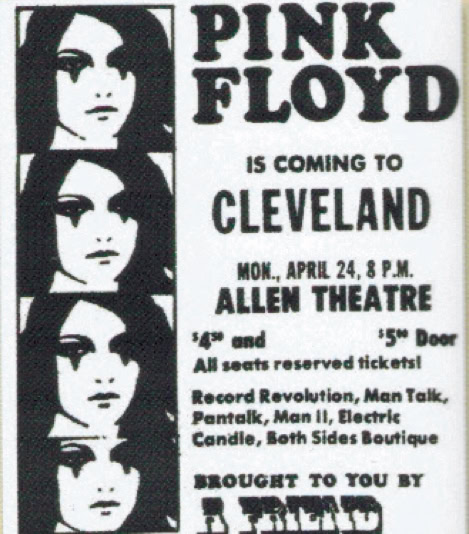
CONCERT DATE | 24 April 1972 Allen Theatre, Cleveland, USA
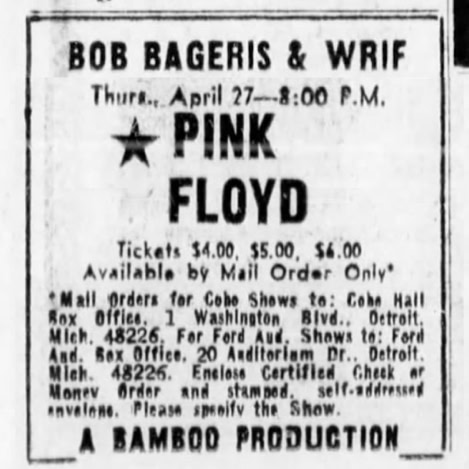
CONCERT DATE | 26 April 1972 Ford Auditorium, Detroit, USA
CONCERT DATE | 27 April 1972 Ford Auditorium, Detroit, USA
Roger Waters:
«Pat [Leonard] grew up in Michigan, and he told me when we first met that he came to a Pink Floyd concert when I believe it was when Dark Side of the Moon was still called Eclipse... he was one of those 13 or 14 year old kids in the front row sitting there with their mouth open (…)»
Rockline, February 1993
CONCERT DATE | 28 April 1972 The Auditorium Theater, Chicago, USA
The band photographed backstage
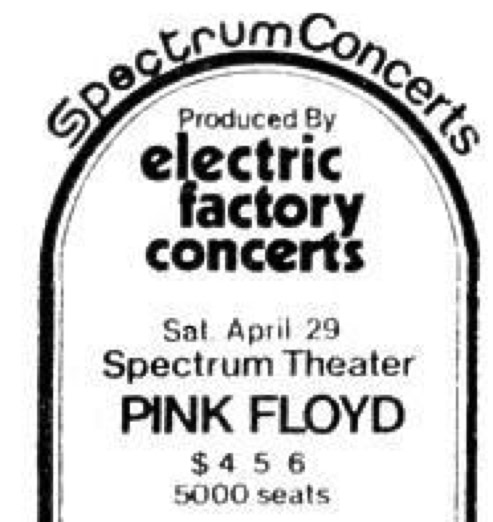
CONCERT DATE | 29 April 1972 Spectrum Theater, Philadelphia, USA
«Unprecedented, unconventional. rock at its best—that’s Pink Floyd. A sellout crowd of 5,000 at the Spectrum Saturday night, witnessed what very easily could have been one of the most
freaked-out experiences of our times. Everything having to do with the concert was much stranger than usual. First of all, only having 5,000 tickets available is very unusual for a hard-core rock band, but the reason or this was obvious: the group, just wanted to completely surround its audience with sound, sight, and feeling. Another oddity: of the show was that Pink Floyd was the only act on the bill. They played for a little over three hours, with only a short intermission. During the first half, they did a thing ‘entitled, ‘Eclipse ... a piece for Assorted Lunatics’’. This was a true rock ‘concert’, with real, live programs for the performance being handed out. During the second half, they did old favorites. "Echoes", from their latest album, ‘‘Meddle”, and -‘Careful With that Axe, Eugene”’, received the warmest receptions. Still another strange happening was that they used quadraphonic stereo sound systems. This is what really made the msuic sound far out.
Pre-recorded: tapes, also in stereo, played underneath the live music created an even deeper and darker mood. The total sound was unbelievable, it just went right through everyone.Another aspect of their production was the visual effects. These started off even before Pink Floyd appeared, with red police-car type lights revolving and flashing on top - of the lighting setups. When the group came on, one of these setups toward the ‘back of ‘the stage started flashing violently and the whole thing moved upward on a hydraulic lift, matched with the screaming shrill notes of Richard Wright's Moog synthesizer in stereo, Sight went along with sound again during ‘Careful With That Ax, Eugene', when, after a long period of soft music, suddenly two explosions thundred from two urns at the back of the
Stage simultaneously with the loudest sound each member of the group could possibly get. Then, afice again, when the band came back on for their encore, “Set the Controls for the Heart of the Sun"; a Chinese gong was used which burst into flames all around the outer side, hence, the "sun". These are just some of the materialistic. aspects of Pink Floyd's works: There, are many highly spiritual aspects, alsa, but which are beyond description and must be felt by each person, individually. The only way to know what is meant this is to go and see Pink Floyd in concert for yourself. Be prepared, however, for the total sound, sight. and feeling, for it: you're careful, it may come along and swallow your brain»
«Pink Floyd: unconventional' rock music at its best», Delaware County Daily Times, 2 May 1972
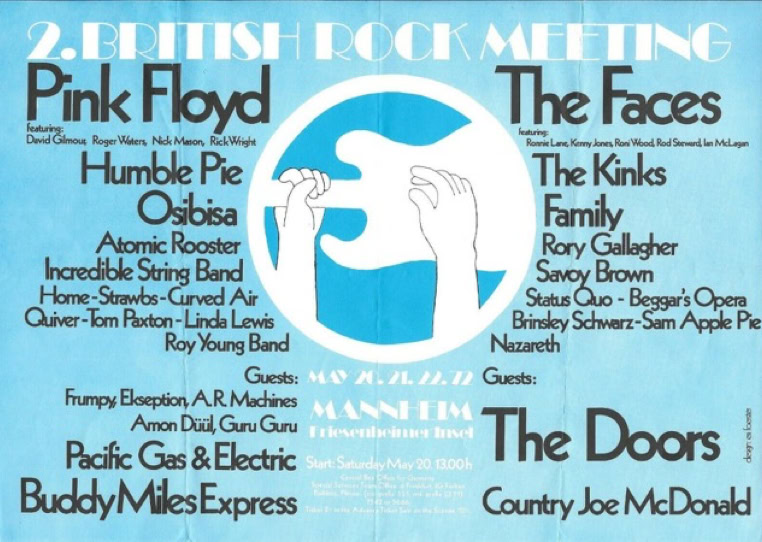
MISCELLANOUS | Early May 1972. The band is announced for the «2nd British Rock Meeting» at Mannheim by the International press.
This festival will be eventually rescheduled at Gemmersheim.
CONCERT DATE | 1 May 1972 Carnegie Hall, New York City, NY, USA
«Pink Floyd, the English rock group, is more concerned, I suspect, with light and sound than with the driving rhythms of traditional rock. The group's concert at Carnegie Hall Mon day night was a characteristic excursion through a Dantesque Purgatory of shrieks, electronic wails, exploding flames and choking smoke.
All this in Carnegie Hall? Yes, indeed, and augmented by additional speakers placed around the sides of the halls to make sure that everyone would receive full impact of the high acoustic wattage, as well as the occasional multitrack gimmickry. There is nothing wrong with sound for its own sake, of course. Nor is there anything unusual about a pop‐rock group that obviously aims its music at an audience whose senses have been dulled (or stimulated, depending upon one's point of view) by various forms of solid, gaseous and liquid drugs. But I like to think that good music and theater can provide their own trips, their own ultimate sensations. May be that's the difference between music and theater, and sound and lights»
«Rock Aura Frames show by Pink Floyd», New York Times, 3 May 1972
«No one can play before them for two reasons. Firstly, their 360 degree sound system, smoke bombs, lights and darning gong set-up would necessitate at least an hour’s intermission after another act left the stage. And secondly. Pink Floyd fans cannot sit through anything that does not emanate from their favorite cosmic quartet. Floyd fans have changed over the years. They are more in line with the average boisterous rabble that attend rock nights in large halls nowadays, not the beautiful people of yore. But they know what they like. No other group could come out and do a fifty-minute number that hasn’t yet been recorded. Most would be drowned out in a sea of screams for letter known material. But a Floyd concert is like a seance. You come for the unexpected and you get it. After the unveiling of “Eclipse,” described by its composers as “a piece for assorted lunatics” and a brief respite, the show continued with Pink “gold,” but as the band saw fit to mine it. They make little effort to gain audience acceptance through any means but their music as they choose to play it. And while the lights and the smoke and the taped effects may be showmanship to some, they are more exactly extensions of the art that Pink Floyd addresses itself to. If you want to be wrapped in sound but not smothered by it, this is the act to spend an evening with: the world’s most self-contained group»
«Talent on Stage», 13 May 1972, Cash Box
«This time around, the English group brought along their own light show as well as a couple of effects to add some visual flash to their otherwise static stage demeanor. Sheets of flame sprang from buckets atop three amplifiers halfway thru the set, and at the end, fire licked the edges of a giant gong as Pink Floyd fluidly "Set the Controls for the Heart of the Sun". "Echoes", a more purely electronic piece, and "Eclipse" described as "a piece for assorted lunatics" were also outstanding»
«Same old stills still dull», Chicago Tribune, 1st May 1972
MISCELLANOUS | 2 May 1972 The band watch the final version of «Pompeii» at New York
«The past five years have brought many significant shifts in the direction of electric music, but, throughout the ebb and flow of generic tags, Pink Floyd have remained stoic in their commitment to English space music. Granted, the band’s style may strike some as a bit melodramatic in its preoccupation with images of surreal violence, but those years of steady work, particularly on the U.K. college circuit, have forged a group of exemplary stability and undeniably effective showmanship. Determining just where Pink Floyd’s musical expertise leaves off, and their electronic powers begin, is really beside the point, for the band’s use of elaborate electronic effects, routed through a quadrasonic sound system utilizing pre-recorded tapes mixed under the live performance, is perfectly suited to their sinister, atmospheric use of harmony and texture. Monday’s set began with “Eclipse,” a new piece which consists of several shorter pieces blended into one another with electronic bridge passages. As the first, hushed section was devastated by the sudden, searing tension of Gilmour’s guitar and Rick Wright’s keyboards, thre hydraulic lighting platforms flashed on, rising slowly at either side of the stage and behind the band. Very theatrical, evoking “War of the Worlds,” but beautifully timed and presented with no little humor. Gilmour and Wright are supported throughout by Roger Waters’ massive bass lines and Nicky Mason’s incisive drumming«
«Pink Floyd - Carnegie Hall», Billboard, 13 May 1972
CONCERT DATE | 2 May 1972 Carnegie Hall, New York City, USA
CONCERT DATE | 3 May 1972 Concert Hall, John F Kennedy Center for Performing Arts, Washington, USA
«Despite a 45-minute delay due to technical difficulties, Pink Floyd demonstrated to a sold-out audience at the Kennedy Center last night why they are in the fore-front of avant-garde rock groups. For the last three years, they have explored a fusion of electric mnsif* and electronic technology which has netted them, a huge audience in Europe (the group is British) and a small, but growing and rabid following in America.
The developing technology within the group enables it to work in two styles not common with the mainstream of rock. First, in integrating live performances with pre-recorded passages, they are able to recreate the fascinating complexities that shape their albums. But beyond that integration (or perhaps necessary to its successful application) they have developed perhaps the most unique and intricate sound system around. It works on the principle of encompassing a listener, surrounding him with speakers, rather than having him face a single set of speakers. Thus, with Pink Floyd, on any given song, portions attack the ears from the side, from out front, and quite often from all angles at once. The listener is at the center of 360 degrees of sound.
The music that Pink Floyd plays falls into two general categories. The first, and thematically the most common, could be generalized as “space rock,” though it is less concerned with science fantasy than science mystery, with exploring and recreating through sound the indefinable auras of space and time. Songs like “Set The Controls for the Heart of the Sun” and “Pillow of Winds” exemplify this genre. The other style features often whimsical and humorous explorations of people, animals and moments — songs like “Allan’s Psychedelic Breakfast” or “Careful With That Axe, Eugene.” The latter was received last night with a tremendous ovation from an audience that was both amused and a little shocked by an amazing audio-visual effect.
The strength of the group definitely lies in its compositions and instrumentation, and guitarist David Gilmour particularly stood out. On one number, he blended his voice and guitar into an eerie organic entity of its own. The vocals were generally mellow, with unpretentious harmonies, and lyrics that floated between poetry and mysticism. It was pleasing to hear the complex sound system in an acoustically excellent hall like the Kennedy Center, and hopefully the group will visit again, and continue its brilliant exploration of sound and space»
«The Pink Floyd is intriguing», Washington Evening Star, 4 May 1972
«Pink Floyd. How to describe it ? Total theatre ? Music ? Ah ; well, whatever it was, they played and played last . night at the Music Hall, It was difficult to decide where the audience left off and where the music started, Pink Floyd was . awfully good. It’s hard to know where f to begin, so first I’ll introduce you: Roger Waters on bass, Rick Wright on keyboards, Nicki Mason on drums, and David Gilmour on guitar. They’re nice fellows, but the outstanding person in their group is not a person at all, but some kind of fantastic conglomeration of all the special effects that go into making if a Pink Floyd concert a special happening. I wish I knew enough about electronics to tell you about their sound system, but suffice it to say their 360 degree sound sounded pretty good from a layman’s point of view.
The concert got off pretty much on time. They concentrated on old familiar favorites like ‘‘Echoes,” from their most recent release on Harvest Records, and “Careful With That Axe Eugene.” They played two one hour sets, with a short intermission. The encore may be worth noting. The entire band was playing one of their looser compositions when it became apparent that the equipment was being packed up. Eventually only the bass and drums were left playing, as piece after piece of their elaborate set was taken off stage. All in all, an evening with Pink Floyd is an enjoyable, though slightly mystifying event»
«Pink Floyd awfully good in concert at Music Hall», The Boston Globe 5 May 19722
Photographies by Frank SIMEONE
An interview is released after the show with David Gilmour and Rick Wright by the Free underground newspaper « Woodwind ». This tape is still unreleased since although a transcript circulated in1972. See the page Missing in action for more details.
CONCERT DATE | 4 May 1972 Music Hall, Boston, USA
«L’événement du festival comme on pouvait s'y attendre ce fut le concert de Pink Floyd. Ils jouèrent avec beaucoup de courage, samedi soir sous une pluie fine. Le groupe a présenté un spectacle son et lumière inoubliable. Batteries de projecteurs, bombes fumigènes colorées, cercles de feux, tout était bon pour illustrer une musique beaucoup plus libérée, plus acid-rock que celle des concerts en salle du genre de ceux de Montreux. L'apothéose fut la fin du fantastique Saucerful of Secrets : les dernières notes furent décorées d'un feu d'artifice d'une beauté remarquable. Inutile de dire que le public resta bouche bée incapable d'applaudir tout de suite. Il y aura d'autres manifestations de ce genre cet été, notamment à Vérone le dernier week-end d'août, peut-être avec Pink Floyd. Pour plus de renseignements, ainsi que pour savoir ce qui se passera en Hollande, en Angleterre et en France, je vous renvoie à la presse spécialisée …»
«Festival de rock près de Mannheim», L'impartial, 31 May 1972
Photography by Jim KOZLOWSKI
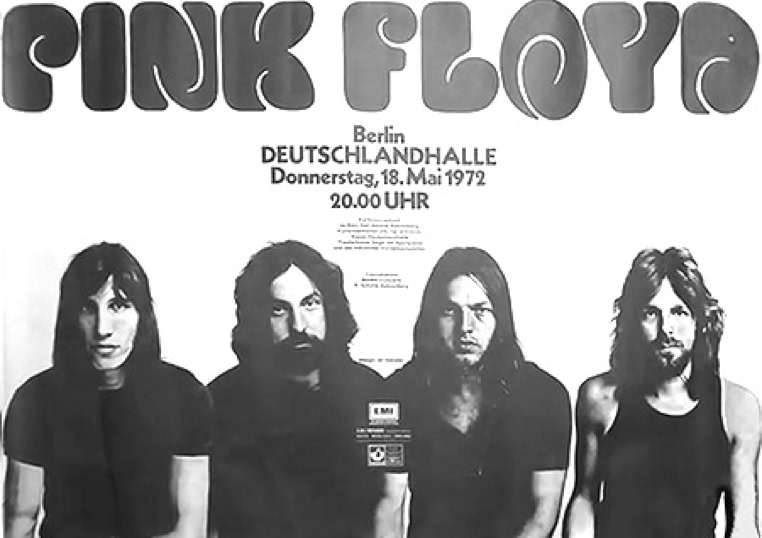
CONCERT DATE | 18 May 1972 Deutschlandhalle, West Berlin, West Germany
CONCERT DATE | 21 May 1972 «2nd British Rock Meeting», Gemmersheim, West Germany
«L’événement du festival comme on pouvait s'y attendre ce fut le concert de Pink Floyd. Ils jouèrent avec beaucoup de courage, samedi soir sous une pluie fine. Le groupe a présenté un spectacle son et lumière inoubliable. Batteries de projecteurs, bombes fumigènes colorées, cercles de feux, tout était bon pour illustrer une musique beaucoup plus libérée, plus acid-rock que celle des concerts en salle du genre de ceux de Montreux. L'apothéose fut la fin du fantastique Saucerful of Secrets : les dernières notes furent décorées d'un feu d'artifice d'une beauté remarquable. Inutile de dire que le public resta bouche bée incapable d'applaudir tout de suite. Il y aura d'autres manifestations de ce genre cet été, notamment à Vérone le dernier week-end d'août, peut-être avec Pink Floyd. Pour plus de renseignements, ainsi que pour savoir ce qui se passera en Hollande, en Angleterre et en France, je vous renvoie à la presse spécialisée …»
«Festival de rock près de Mannheim», L'impartial, 31 May 1972
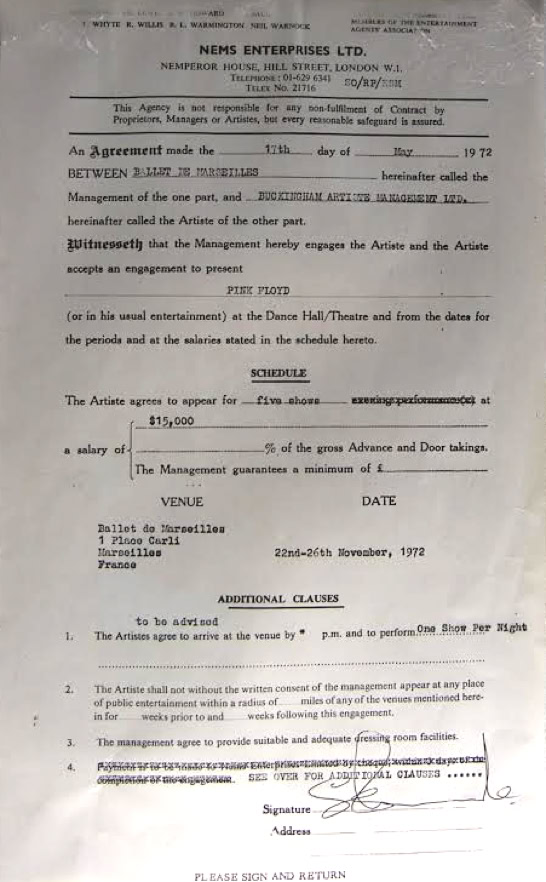
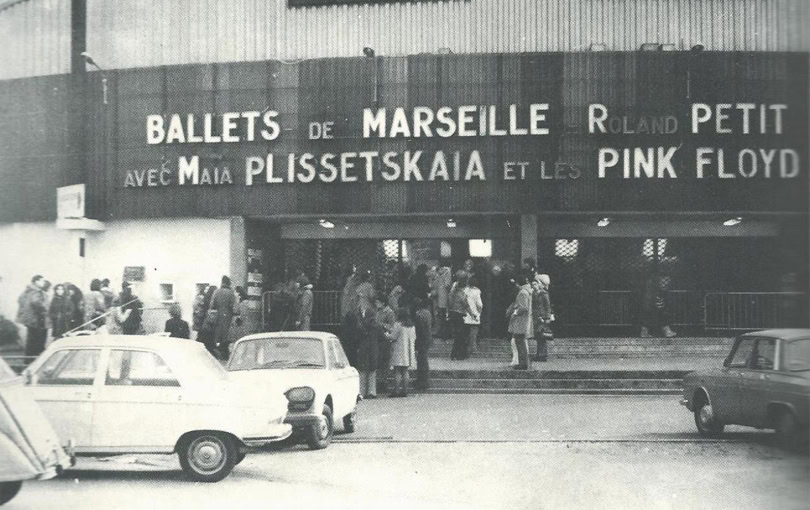
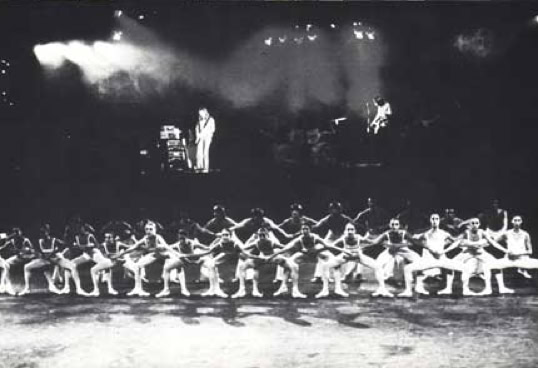
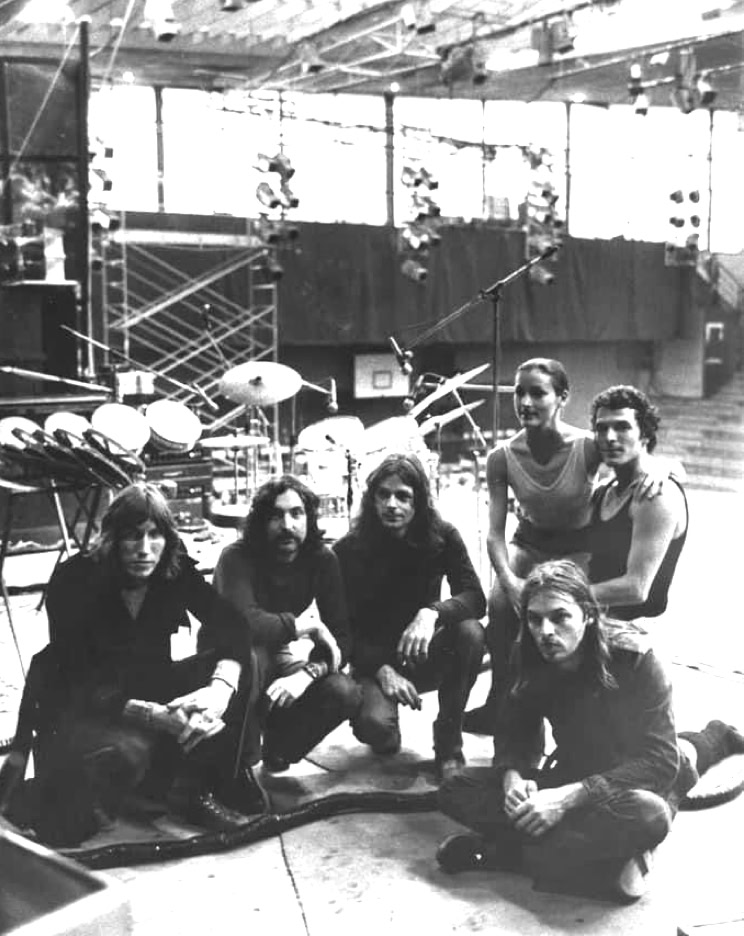
MISCELLANOUS | 17 May 1972, the band agreed to give a serie of concerts for the «Ballet de Marseille».
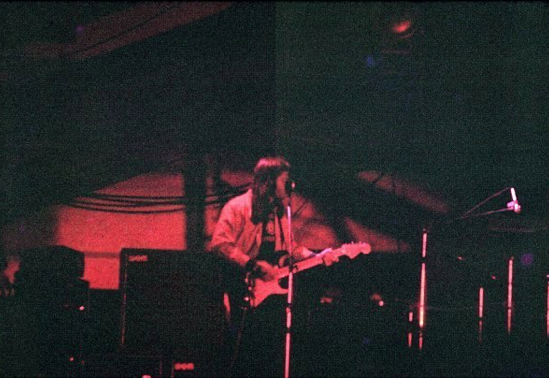
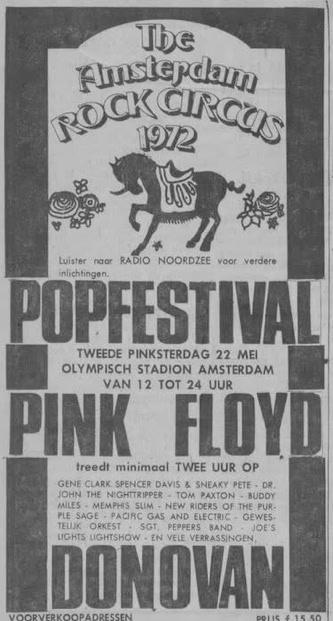
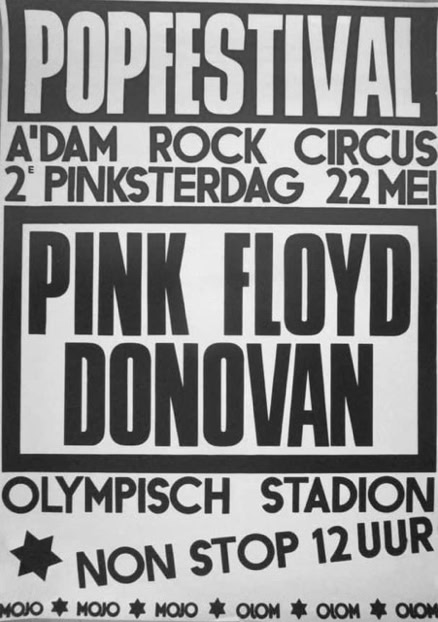
CONCERT DATE | 22 May 1972 «Amsterdam Rock Circus», Olympisch Stadium, Amsterdam, The Netherlands
Photographies by Gijsbert Hanekroot
«Een opstijgend vliegtuig sirkelt door het olimpies stadion: rode zwaailichten; het geluid zwelt aan en dan plotseling begint de Flovd te spelen; alle lichten gaan aan; rood, blauw, groen, wit: in ddn klap van volledige duisternis naar een zee van licht: de spots rijzen omhoog: een onwezenlijk gevoel maakt zich van je meester: een ge-weldige uitvoering van Atom Heart Mother. Echoes en meer Met ieder nummer brengt de groep weer iets verbazends: hinnikende paarden, gierende orkanen: oseanen van vuur en rook, waarin het podium ver-dwijnt: een bewolkte hemel sluit zich als een dak over het stadion: de sterren en de maan, het hoort er allemaal bij: je bent blij dat je het meekunt maken. De perfekt getimede show verloopt vlekkeloos. Een orgie van geluid gilt via het verbeterde kwadrofoniese sies-teem van links naar rechts door het stadion: geluid is over al om je heen. Als A Saucerful of Secrets eindigt schieten vuurpijlen naar de hemel en zetten alles in een rose gloed. De muziek en 't vuur op het podium doven tegelijkertijd uit. Duisternis en verlatenheid sluiten zich weer om je heen. Pink Floyd heeft het 'm weer geleverd»
«Pink Floyd - Paarde, Orkanen & Vu urpijlen», Aloha, 16 June 1972
Rick, photographed backstage by Gijsbert Hanekroot
Paul McGowan (Audience memebr):
«The last day of the festival was to be the most exciting. No bands played the entire day, as crews dismantled the two stages, then erected a single, bigger stage—and rewired the sound system for what would later become known as Quadraphonic sound, an early version of what today we call surround sound. The act everyone had waited for was on tap for 8 p.m., just as it was getting dark: Pink Floyd.
I was keyed up as well, cleaning the tape-recorder heads, making sure everything was in place for that evening, the most important recording I had ever made. Pink Floyd was, by far, the biggest act in the show, and was already an ascending phenomena. Today they can boast of 16 gold albums, 13 platinum, and 10 multi-platinum. Their seminal works, The Wall and The Dark Side of the Moon, are two of the best-selling albums in the history of music. Dark Side, the album they were about to debut at the concert in Germany, would be on the Billboard Top 200 Albums Chart for a record 736 weeks. (It finally dropped off the charts 14 years later, in 1988.) As night fell, I could feel the crowd’s excitement. Roadies and stagehands scurried over the newly constructed wooden platform that would soon host Pink Floyd. I was ready, as was my crew. Then the concert’s two promoters, Marcel and Marek, accompanied by a silent, heavyweight guy, meekly approached the van to let me know that I would not be recording the Floyd, despite the fact we had a written contract to the contrary. All my angry outbursts, and my jumping up and down in frustration were to no avail. Pink Floyd wanted nothing to do with the recording and that was that. To make sure I didn’t attempt to make a pirate recording, they posted a muscular roadie just outside the van. Terri and I were crushed. Recording Pink Floyd had been one of the primary motivations for agreeing to the job in the first place. Depressed and upset, we dragged our tails out into the crowd, where the promoters had set up a reserved area for us to enjoy the show, just slightly above the noisy, muddy throngs. The lights dimmed, and all went surprisingly quiet—only an anxious buzz rippled through the crowd. Then Pink Floyd walked onstage. It was May 22, 1972, and they played a precursor of the music that would soon become their newest album—Dark Side of the Moon—for concert goers in full surround sound. To this day, it remains one of the more remarkable concerts I have ever seen or heard. Unlike any other concert, the band didn’t speak a word. They just played the entire album without breaks—one long, linked song, with both rehearsed and spontaneous riffs blowing through the audience as if we were all traveling together through space. During the music, not one member of the crowd acted poorly. The music, the surround sound, the warm May summer night, the slight breeze fluttering the many flags—all combined to make magic happen, as only music can do. To this day, I am thankful that Pink Floyd’s management stopped me from recording the concert. Had I been stuck inside that cramped van, listening through monitor speakers to a pale facsimile of the music, I’d have missed one of the greatest musical events in the history of rock»
«Ninety-Nine Percent True», Paul McGowan, 2018
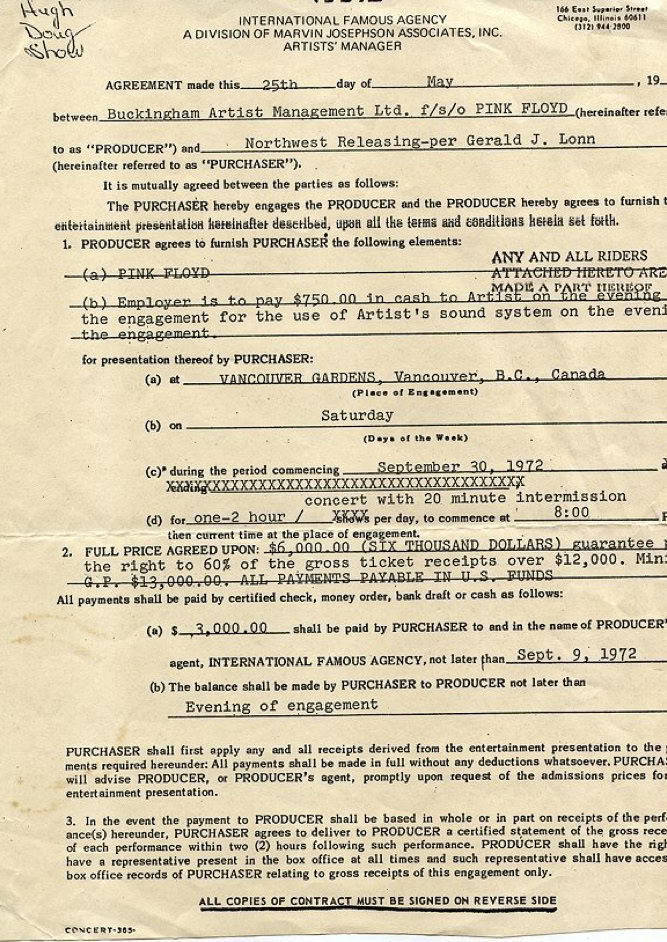
MISCELLANOUS | 25 May 1972, the band agreed to give a concert to Vancouver on September for $13,000
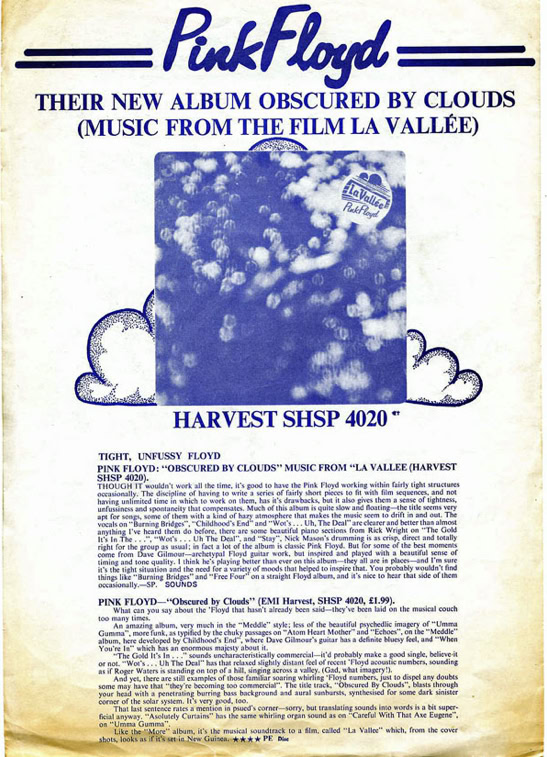
RECORD RELEASE | 2 June 1972 «Obscured By Clouds» was released in the UK, where it reached No. 6 in the charts.
RECORD RELEASE | 17 June 1972 «Obscured By Clouds» is released in the US, where it reached No. 42 in the charts.
Billboard on the Sunset strip of Los Angeles to promote « Obscured by Clouds » album.
CONCERT DATE | 28 June 1972 The Dome, Brighton, England
Pictures by Jill FURMANOVSKY
«Sitting in the Brighton Dome, waiting in anticipation, when through the PA system came the first, weird exciting sounds of “Dark Side Of The Moon” Talking stopped, ears strained in the darkness. Floyd had started. “Moon” was, as ever, brilliant. I don't think I ever seen Floyd do anything badly, and tonight was no exception. As they took the audience round the dark side and back into the light, every nerve was centred on the moog, and the mood of the music. The number, which took the whole of the first half, finished to thunderous applause.
As you know, several groups nave been banned from the Dome because of over enthusiastic receptions and this annoyed a lot of the audience. It’s difficult to listen to Floyd sitting still. The second half of the set featured “Meddle”, which was truly magnificent overall Though there were some poorer passages. “One Of These Days” started off much too fast, but they slowed It down round about the middle. As encores they did “Set The Controls For The Heart Of The Sun” and “Sauccr-ful Of Secrets” and, oh what, it was really incredible. During “Set The Controls”, Roger Waters was thrashing the gong as if his life depended on it and, all of a sudden, near the end the gong was set light to and really looked like the sun. I just sat there spellbound. That, as well ‘ as their fantastic lighting arrangements went to make a truly good night out, well worth hitching down to Brighton for»
«Front Row Reviews», New Musical Express, 8 July 1972.
Peter Bowyer:
«This is just a one-shot booking to compensate for Floyd's appearance at Brighton during their last British tour, when the act
was hit by gremlins ans was broken off midway through»
«Floyd for Brighton», New Musical Express, 10 June 1972
CONCERT DATE | 29 June 1972 The Dome, Brighton, England
Photography by Jill FURMANOVSKY
«The Floyd weren't planning to do any gigs here for a while after their tour at the beginning of the year, but their tour gig at Brighton got power-carried so they returned to the Dome last week for two concerts. The set was more or less the same as on the tour: "Eclipse" (aka "Dark Side of the Moon") for the first half and a handful of old favorites for the second. It seemed to take them a while to get into the scene of playing again and "Eclipse" suffered somewhat (...) Roger Waters and Nick Mason didn't really seem to be quite sure what was happening and though the best moments came form Dave Gilmour's guitar work, he contribued the most noticeable good as well.
They didn't really do justice to the piece though the lighting and effects were as good at the Rainbow. Part of the reason was the fact the floyd were using their new P.A for the first time and there were a few sounding troubles. The second half got off better, with the Waters/Mason section working together a bit more. Mason grinning and wincing throught the good, some nice stuff from Rick Wright and again some remarkable playing from Gilmour - though he seemed to be having a bit of trouble finding the key for some of the vocals. theatrically it worked well, especially the exploding flares and the fiery gong and they worked quite happily through pieces like Echoes, Careful with that Axe, Eugène, Set the Controls for the Heart of the Sun and half of Saucerful of Secrets. It wasn't by any means the best Floyd gig I've seen, through it did have its moments. I think the ideal time to see them is probably after they've done a few gigs and have worked themselves into the right mood»
«Live Sounds», Sounds, 8 July 1972
«The atmosphere at Brighton Dome was one of indifference. As Pink Floyd ran through Echoes, the uniformed officials sat stone-faced and silent at the back. There were a few unimpressed chicks down the front. And Floyd just couldn't get the effects to combine with the music, although they were trying hard. A couple of times they stopped. Gilmour shouted suggestions at the sound crew, situated at the back of the front stalls. Finally things started to go well: the music slowly took on the unmistakable Floyd force and cohesion. But that was temporary. With a blaze of white, eye-disturbing light, the hall was illuminated. The sound disintegrated. Gilmour rushed up to the control desk. Mason, Wright and Waters disappeared off stage. Rehearsals for the first date of their British tour were over, and the kids swarmed in, shouting, screaming and pushing like rush-hour business gents on the Central line. They too were not unduly concerned who got shoved to the floor.
The band had arrived early afternoon, preceded by roadies at nine in the morning. Things just had to be right. Floyd always strive for perfection. The combination of technology and musicianship has to be total ñ otherwise the resulting sound loses all impact and interest. And Floyd know that too well. The opener of a tour can be a hairy experience.
Since their return from the States they have worked hard on new material, and rehearsed for several days at London's Rainbow, and also at the Rolling Stones factory, in downtown Bermondsey. The new material was long overdue; they had still been playing Careful With That Axe, Eugene and Set The Controls For The Heart of the Sun. And they don't dig a complacent approach to creativity. A spirit of revitalisation had come into the band. "I think," explained Nick Mason, "all of us feel more excited that we have for ages, because we have new material and new equipment."
Floyd's Atom Heart Mother/Echoes period has been described as unproductive. Certainly there are similarities in structure between the two pieces. But the "unproductive" question is crap, because that whole period, which dates back to 1970, made it so obvious that the band were creating original material. Echoes was only possible because of Mother, and it expressed more. And as Floyd opened the first set of the British tour ñ incidentally the first time I've seen them since 1970 ñ a new piece, tentatively titled The Dark Side Of The Moon, showed that their writing had taken on a new and again innovatory form. A pulsating bass beat, prerecorded, pounded around the hall's speaker system. A voice declared Chapter Five, verses 15 to 17 from the Book of Athenians. The organ built up; suddenly it soared, like a jumbo jet leaving Heathrow; the lights, just behind the equipment, rose like an elevator. Floyd were on stage playing a medium-paced piece.
The Floyd inventiveness had returned, and it astounded the capacity house. From the easy-paced tempo, the music gained exuberance, and they went into a racing, jazz-based riff. Rick Wright on piano provided some delightful filling, with Gilmour's guitar interweaving well, and the team of Mason and Waters as solid as ever.
The song's structure bore little resemblance to their earlier material. There was a definite jazz feel throughout many of the passages. Not everything in the piece flowed. The church organ part seemed to come all of a sudden, rather than as a continuation of the theme. Yet that too added a new dimension to the Floyd music. The instrumentation was truly magnificent, and although the vocals were indistinctive, the harmonising between Wright and Gilmour was good and emotional. At the beginning we had the quasi-religious element, and this became more apparent in the middle. "Let the Holy Spirit fill you," the voice urged. "Speak to one another. Sing and make music in your hearts to the Lord."
Other voices, on the quadrophonic system, professed other feelings. At one time three voices fused into complete confusion, and ended with the Lord's Prayer. Pretty hot stuff. All that the band said in that piece was directly related to themselves. And it's so new that they were still arranging it on the way down to Brighton. Mason told me after the show: "The piece is related to the pressures that form on us and other people generally. That is the very rough theme ñ although it doesn't really relate to us as much as we'd originally planned.
"The various pressures that we talked about when we wrote it were physical violence, travelling, money, religion. Those were the things which we thought sidetracked people from things we thought might be important. And religion for us is one of those things. I mean, not religion as much as Christianity as practised by a large section of the population of Britain." Unfortunately those profound sentiments were lost as a result of two things. One was that the vocals were none too clear, and secondly, the number broke down 30 minutes through. A drone and a hissing sound filled the hall as Floyd went into a simple riff. Gilmour turned to Waters and spoke. We didn't catch what it was he said, but it had a staggering effect. Waters removed his guitar, and both he and Gilmour left the stage. Up until then the music had been fine. A mood had captivated the audience, and now they didn't quite know what to make of it. "That wasn't pretty," said Waters. "We'll fix that." And later, when the band returned to the stage, he explained: "Due to severe mechanical and electric horror we can't do any more of that bit so we'll do something else."
The biblical references lost all relevance. Only half of the new piece had been completed. Floyd were using a light show, which seemed OK but nothing spectacular. And it was that which caused the electrical mess. «I don't know if you heard» Mason edified,«but basically what happened was the most incredible tone started rushing through the PA. The scene is the new lighting system is run off a separate circuit, and due to some power failure somewhere we had to double up on the circuit, so it was on the same circuit». «There was a Variac on the lighting system which went wrong, and shorted out the PA. So it was impossible to get any tapes through, any sounds through, and we stopped because there was nothing we could do. I think, in that situation, you have to decide whether the show must go on, or whether it's better to stop the show and sort things out ñ which is what we decided to do» They restarted the show with part of the Atom Heart Mother suite. And they were a new band. The beginning was not too good, but then Floyd flew high. The music flowed naturally, and Gilmour did one hell of a job on vocals during the normal choir piece. But it was disappointing that such a remarkable new piece should collapse abysmally part-way through. Even more disappointing was the fact they restarted the second half with Careful With That Axe, Eugene. Mason told me afterwards: "We were all tensed up. And we decided that if we started off with Cut You Into Little Pieces ñ which is a very loud, and slightly complex number in terms of getting the electrics right ñ we might get into trouble and start, well, banging about. "So we thought we'd use Axe. Basically it was a big disappointment to use old stuff. But it couldn't be helped. I think probably it was better to do that." This nervous pressure on the band resulted in one of the most brilliant sets I have ever heard them perform. Echoes was masterful. The vocals came over clearly. What they achieved on the album they strove to perfect, and did so successfully.
Floyd always seem to work best under an awe-inspiring atmosphere. Even their writing comes out better when a deadline has to be kept.
Mason said: "Frankly, I thought some of tonight was fantastic. Like there's all sorts of cueing things that we have to sort out, but the lighting system is amazing. It's a new start."
Oh, he's right. That new piece expressed succinctly in musical terms the innermost feelings of a person, including the strain of being one of this country's top bands. At no time during the performance were Floyd untogether. The musicians go together like salt and vinegar on fish and chips ñ it is that sort of tasteful relationship. Floyd proved to me that they are the leading explorers of electronic music. Their effects, which are always used economically, create an intriguing interest. And that music: it's so good »
«They don't dig creative complacency », New Musical Express, June 1972
Jill Furmanovsky shot Pink Floyd at Brighton Dome and become a member of the inner circle of the band
Backstage pictures by Jill Furmanovsky
Jill Furmanosky:
«They had seen me around at the Rainbow Theatre and I managed to get backstage and into their dressing room, which was virtually unheard of. They were very reticent and private. I got into the dressing room and took a few pics, they didn't mind. They were sports fanatics. If Match of The Day was on, they had to finish the gig in time to be back I don't think I said a thing to them and they didn't really look at the camera. With Pink Floyd you didn't know if you were persona grata or non grata. I was persona half grata. They thought 'if she doesn't get too annoying she can sit in the corner and take a few snaps, if they're not too intrusive and it's not for too long»
«Pink Floyd's early Brighton Dome gigs recalled», BBC News, 22 August 2012.
RECORDING SESSION | From 5 to 8 July 1972. Recording session for «Dark Side of the Moon».
Richard Wright at EMI Studios, June 1972
FILM RELEASE | 6 July 1972, Release of «La Vallée» in France. The band come in France for the promotion. Barbet Schroeder approched Roger Waters to ask him another film score for a Hollywood production but «the producers eventually refused to agree to his conditions, finding Roger’s financial demands too high».
David Gilmour, Barbet Shroeder are interviewed by Marc Gacia of Europe 1 Radio Station (French).
«The set was more or less the same as on the tour - "Eclipse" (née "Dark Side of the Moon") for the first half, and a handful of old favourites for the second. It seemed to take them a while to get into the swing of playing again, and "Eclipse" suffered somewhat from missed cues and general not-remarkably-togetherness. Roger Waters and Nick Mason didn't really seem to be quite sure what was happening and though the best moments came from Dave Gilmour's guitar work, he contributed the most noticeable goofs as well. They didn't really do justice to the piece, though the lighting and effects were as good as at the Rainbow. Part of the reason was the fact that the Floyd were using their new PA for the first time, and there were a few teething troubles.
The second half got off better, with the Waters/Mason section working together a bit more, Mason grinning and wincing through the goofs, some nice stuff from Rick Wright, and again some remarkable playing from Gilmour - though he seemed to be having a bit of trouble finding the key for some of the vocals. Theatrically it worked well, especially the exploding flares and the fiery gong, and they trotted quite happily through pieces like "Echoes", "Careful With That Axe, Eugene", "Set The Controls For The Heart Of The Sun", and half of "Saucerful Of Secrets"»
« Live Sounds », Sounds, 8 July 1972.
FILM RELEASE | 25 July 1972 England premiere for « The Valley »
FILM RELEASE | 29 August 1972 « La Vallée» is presented at the Venice International Film Festival.
CONCERT DATE | September 1972 Nick Mason will use a new perplex transparent drum kit for the Autumn dates but he’ll eventually come back on a more classical gear.
Nick Mason:
«I had a brief flirtation with a perspex drum kit made by American company «Fibes». I was captivated by the ida of an ‘invisible’ kit, nut in fact they were very difficult to record successfully»
«Inside out: a personal history of Pink Floyd», Nick Mason, 2006
CONCERT DATE | 2 September 1972, Preview of «Live at Pompeii» on the 26th Edinburgh Festival
«There has not been a film made about any pop group to beat this all-round quality and technical presentation»
Edinburgh Evening News
CONCERT DATE | 8 September 1972 Municipal Auditorium, Austin, USA
PRESS MENTION | September 1972. A new interview of the band made during the recording of «Obscured by Clouds» is published on the September issue of «Circus». About the statut of «Eclipse», here what Roger said at this time:
Roger Waters:
«We’re probably going to put it out in September but we’re having a bit of trouble recording it because we’ve got t cut ten minutes out of it for the album. It’s going to be incredible once it’s sorted out, though »
« Obscured by Clouds - Pink Floyd kicks a two-year slump », Circus, September 1972.
CONCERT DATE | 9 September 1972 Music Hall, Houston, USA
«I went to a concert in the Music Hall in Houston last Saturday night and heard four English musicians who call themselves Pink Floyd. They perform in a manner which is highly suggestive of the setting you described in your letter. Perhaps they are cosmic fellows as well.
In any case, their amalgam of visual and audio electronic wizardry is nothing short of total environment. From the first pulsating heartbeat (literally) to climactic explosions of fire and smoke and sound the audience could not help but become involved.
Pink Floyd does songs like "Echoes” and "The Dark Side of the Moon.” They make albums with names like Obscured By Clouds, Atom Heart Mother and Ummagumma.
Somehow, Hal, all this seems to relate to your situation so I’ve enclosed an audio-visual tape of their performance in quadrophonic and technicolor with rhinestones on the cover. I hope you enjoy the show, I did»
«Pink Floyd climactic», 12 September 1972, Houston Daily Cougar
CONCERT DATE | 10 September 1972 McFarlin Auditorium, Southern Methodist University, Dallas, USA
Right picture by Carl DUNN
CONCERT DATE | 11 September 1972 Memorial Hall, Kansas City, USA
CONCERT DATE | 12 September 1972 Civic Center Music Hall, Oklahoma City, USA
CONCERT DATE | 13 September 1972 Henry Levitt Arena, Wichita, USA
CONCERT DATE | 15 September 1972 Community Center Arena, Tuscon, USA
«As an eerie bright orange moon sank in the west Tucson sky last night, a big black moon hanging over the Community Center Arena stage was radiating smoke 20 feet above a British group called Pink Floyd. I have been an on-and-off screaming fan of Pink Floyd ever since “See Emily Play” five or six years ago. And 4 whatever their 'musical excesses, they abate when the foursome performs. For me, anyway. They did two 45-minute sets, each one beginning with smoke pouring all over the stage, and two red police-car lights flashing in the drummer’s bass drums.
The songs, in general, are heavy and long and pound like oil rigs, but the vocals are usually high, sung softly, and super-amplified. Songs end but you don’t know exactly where. One transition was a surreal repetitive cash register,^ slo) machine sound — the electronic ching of money — and another was the group just getting back in tune, but done musically, mellifluously.
What makes Pink Floyd a brilliant' concert group, though, is the visual effects. On “Dark Side of theMoon », a moon-line circle with tiny hole begins to, well, shower smoke. The drums are transparent but, of course, cylindrical, so the drummer is a flailing ghost. Red, yellow, green, blue, and purple spotlights photograph the stage in color negatives.
One Pink Floyd song is an instrumental except for the title, which is whispered somewhere in the center of the song. After the bass player says, "Careful with that axe, Eugene” (which kills me), he begins a series of blood-chilling, murder mystery screams just as two hatbox-size canisters of flash powder and flare on either sid stage. "Echoes," which takes up one whole side on the group’s "Meddle" album, hammers at the beginning and turns beatlessly psychedelic in the middle. The music gets weirder and louder, and the stage gets darker, and as smoke flows out again, the tiny orange amplifier lights look like fires on Mt. Lemmon.
Five thousand people want more.
And have we got a fall for you. The song is “Set the Controls for the Heart of the Sun” from their old "Saucerful of Secrets” album (their best). A gong is pushed onstage. Then the gong burst into flames. So,it’s your move, Alice»
«Smoke, red lights, music», Tucson Citizen, 16 September 1972
MISCELLANOYS | As a dare, David Gilmour rides a motorbike through the Hilton Hotel’s restaurant in Scottsdale. The hotel eventually banned the band.
Interviewer: «Did you really once ride a motorbike through a crowded restaurant ?»
David Gilmour: «Yes. It was in Scotsdale, Phoenix, Arizona. When? God! I can't remember what year. It would be early 70's. Funnily enough, it didn't get any reaction at ail. People were so frightened by it that they ail stared very hard at their plates»
«David Gilmour», Q Magazine, June 1999.
CONCERT DATE | 16 September 1972 Golden Hall, Community Concourse, San Diego, USA
Photographies by Mike CARIOLA
CONCERT DATE | 17 September 1972 Big Surf, Tempe, USA
«Sunday night a crowd entered Big Surf, looked at the speakers on their four sides, the mountain of equipment onstage surrounded by banks of colored lights, said "wow"" and sat down. Gradually a heartbeat hit them from behind. Lights begin to reyolve in Mason’s clear drums, a dense bank of green fog rolls onto the stage, towers of lights raise themselves high into the air, and Pink Floyd begins with words from “Music from the Body.” Using quad effects, Pink Floyd played most of their latest album, “Obscured by Clouds,” ending with . the appearance of a yellow disc of light above the band, After intermission, they returned with “One of these Days,” which was so engulfing, the audience could not help but be merged with the flashing lights. At this point we knew something was happening-here-in music that had needed to happen for a long time — that we couldn’t criticize, analyze, evaluate or resist.
After the stage exploded with light and flame during a piece from “Ummagumma” and Pink Floyd followed with “Echoes,” a long, super-mellow thing, it was no wonder that the Wind started blowing and the ruin falling. Waters stopped, said rain could mean instant death to their sound stage*. Pink Floyd was over. Angry cries, as I remember Waters singing in the rain, trying to tell us about ourselves. How Gilmour could do those things with a guitar, how Wright could turn an organ into a mellotron, I wondered. Next to me, some asshole was yelling, “No wonder they call you Pink,” forgetting the future he had»
« Far Floyding out: Pink Clouds », New Times, 20 September 1972
CONCERT DATE | 19 September 1972 University of Denver Arena, Denver, USA
«Prior to the show, promoter Bob Garner told me Pink Floyd did not allow anyone near their equipment. “There’s enough electricity back there to send you to the moon and back,” he said. (…) I thought the Floyd might do the job. After their gantry of spotlights took off. Pink Floyd opened with a 20-minute number that blended into a second 10-minute number. The first half-hour didn’t qualify as songs, and many riffs were without direction — which is not the case of their latest LP, Obscured by Clouds, where they showed a stronger preference for the standard song form. Pink Floyd’s second “tune” lasted 15 minutes and just as it seemed they might make a take-off similar to the gantry’s, it abruptly fell to a stop. After this they took a half-hour break. The second set began much stronger with a tune from Meddle, “One of These Days.” Appearing to have found their range, this tune was flowing and spacier, bringing the crowd to their feet. Next “Careful With That Axe, Eugene” featuring David Gilmour’s whining guitar accompanied by blinding bursts from some sort of Cl ime-throwing device, much to the crowd’s delight. The second set was more reminiscent of the Pink Floyd of Ummagumma days. The last tune was a 25 minute rendition of “Echoes.” Again, it enjoyed its moments but did not sustain itself. The show closed with Pink Floyd’s scheduled “encore” — perhaps the best number of the night “Set the Controls for the Heart of the Sun,” featuring a gong bursting into flames. Pink Floyd depended largely on the presence of their sound system and light and fire gimmicks. The tone of their music varied little and the bursts of light or flame served to direct the audience in the middle of the dragged-out numbers. The spectacular effects seemed to overshadow the long boring numbers; the Floyd were somewhat more adept at presenting their show than their music. Time and space give the musical scale a lot of room for invention and improvisation. Pink Floyd did not take advantage. If you wanna see and hear the full scale put to use, go dig Herbie Hancock»
«Pink Floyd», Colorado Daily, 22 September 1972
CONCERT DATE | 22 September 1972 Hollywood Bowl, Los Angeles, USA
Pictures by Henk DE JONGE
Pictures by Henk DE JONGE
« On Pink Floyd’s last visit to Los Angeles, the entire Hollywood Bowl was immersed in searchlights, fireworks and dry ice during a ghostly rendition of Echoes, from the «Meddle» album»
«Space by the Ton …», Rolling Stone, 8 May 1975
«Pink Floyd has ventured beyond the limiting notions that music comes only from the instrument and is solely for the car. Their presentation has advanced far beyond other musicians to a delivery that is a fusion of music, sounds, and sights, a package of elements evolving into moods. Their music is haunting, "spacey,” and unlike any other produced by groups today, with their greatest tool in achieving this effect being the synthesizer. Pink Floyd used this instrument masterfully by itself and by playing other instruments through it. The progressions they use with the equipment arc fairly simple and effectively repeated. The sounds that they attach to the music include people laughing, birds singing, rivers flowing, wind blowing and many others. Somehow Pink Floyd molds these common noises compatibly with the sounds being produced by their instruments. Undoubtedly the visuals played an important role here. The performance featured spot lights shooting upward from behind the Bowl, flashing light patterns, a fog machine that engulfed the stage in mist, and a phenomenal fire-works display. Yet the most important aspect of Pink Floyd’s offering is that anyone on the receiving end should appreciate all three facets of the show as one unit. The sights are not iust attention-getting "bombs bursting in air,” they arc there as an extension of the music into a visual dimension.An example of this was a portion of Echos (sic) where the stage was blanketed in fog almost totally obscuring the musicians, with green lights adding to the mire. th*» sounds of soft wind blowing in the background, amid an albatross cry filtering through the synthesizer. Combining these elements, Pink Floyd created an eerie sort of peace on stage, and those who were open to it could just as well have been floating on a cloud or drifting on a tranquil river in Mississippi, as being in the 43rd row of the Hollywood Bowl»
«Talent on Stage», 14 October 1972, Cash Box
«Pink Floyd started the concert off with the debut of their new album; «The Dark Side of the Moon», in its entirety. Immediately we were entranced and spellbound by Breathe and On the Run but Money blew everyone away as the sound of huge cash-registers circled the Bowl in quadraphonic sound! I remember giggling in exhilaration of the whacked-out music I was hearing – they weren’t even halfway through before I knew that Rock ‘n’ Roll as we knew it (and as I liked it) was again being defined by PINK FLOYD! This outdoors among-the-stars incredible Pink Floyd concert experience had a dream-designed set of songs – seemingly hand-picked by myself and the rest of the fortunate Pink Floyd fans that filled the Bowl – absolute gems !»
«Pink Floyd - Hollywood Bowl 9/22/1972 ... 40 years ago today», 00individual WebSite, 22 September 2012
«Surrounded by walls of white light, pinwheels, blazing gongs and sound effect tapes, Britain's Pink Floyd brought their electronic experimental sounds to Hollywood for one of the most visually spec- tacular and musically entertaining shows of the season. One of the first groups to rely almost entirely on purely electron- ic rock and still probably the most successful, Pink Floyd depended primarily on their music mixed with various tapes of airplanes and madcap laughter to get them through a non stop 50 minute opening set which included some of their better known tunes, including Echoes»
«Pink Floyd - Hollywood Bowl», Billboard, 7 October 1972
«Pink Floyd's insane asylum rock, ah patented at Friday's Hollywood Bowl concert, is, so simple, - so, monotonous and so derivative in many ways that the band's’ reputation as a musical trailblazer stands as one of the rock 'n' roll world's greatest puzzles. But in view of the concert's entirety the visuals, the mystique that the group has managed to acquire and the unflinching pretension of it all— the presentation was the ' most enjoyable change of pace of the.season. So what if nearly all the songs’ follow exactly the same pattern of development? If you enjoy the soundtracks to creepv John Carradine movies you can't help but love Pink Floyd when they sing
"The lunatic is in my head" as maniacal laughter : reverberates from the rear speakers. And even if "I'Jl see you on the dark side of the moon" is uncomfortably close to bits Prolo Harum's Song for a Dreamer someone's foresight in making sure that a full moon would be hanging overhead Made everything quite alright. In short, Pink Floyd is able to create an aura that, while not profound, can al-. most make being bored a; pleasant experience. And the British approach to madness, as embodied by Floyd and touched on by others (the Hove, David Bowie), is, in its quasi-humorous involvement with night forces, infinitely; preferable to the downright evil tack taken by an Alice Cooper. The fireworks, .searchlight!, blazing gong, flaming disc, murky fogs and clouds of smoke were crass, cheap, gimmicky and thoroughly sensational. And_ if, you're worried about who's on the receiving end of the
standing ovations—the person who lit the Skyrockets? The roadies who set up the mountains of equipment ? The engineers who devised the quadrophonic system ? The musicians ?— you're missing the point.
Because Pink Floyd is not those four little faceless people who play the instruments, but lights and fire and smoke and water and noise.
It just wouldn't be the same without them.»
«Pink Floyd’s asylum rock», LA Times, 25 September 1972
Photographies by Chris MICHIE
The above photo (taken by Chris Michie) will be the Steve O’Rourke office wall for many years. In 1993, this picture will be a source of inspiration for the « Division Bell » tour stage design.
Concert programma
CONCERT DATE | 23 September 1972 Winterland Auditorium, San Francisco, USA
Pictures by Bill CAVIGAN
It will be the last ever time the band played the title A Saucerful of Secrets
Interviewer: «You no longer play songs like A Saucerful Of Secrets»
Nick Mason: «No, we abandoned them last year. A Saucerful Of Secrets is like the story of Pink Floyd. For those of you who have heard it often, it's still there. We've played it too long. We prefer to look to the future, to play new songs. It's very dangerous to play the same records for four years »
« Les Pink Floyd en studio », PopMusic SuperHebdo, April 1972
CONCERT DATE | 24 September 1972 Winterland Auditorium, San Francisco, USA
MISCELLANOUS | 26 September 1972 Press conference at Rembrandt hotel in Vancouver, Canada
« Press conterences have got to be the weirdest things, but being anxious to see The Floyd along again with two kids on the top floor of the Rembrant. Along with varlous record combany and TV and newspaper media. Evervone seemed slightiy nervous with this cat from CBC started the usual question 5…) and so it all droned on cameras flashing movie cameras whirring »
«Pink Floyd-trapped in the rembrandts», Georgia Staight, 28 September 1972
CONCERT DATE | 27 September 1972 Gardens Arena, Vancouver, Canada
Pictures by Don POISSON
«It began with a heart heal and two police Hashers and it ended with a journey to the heart of the sun: Pink Floyd at the Gardens Wednesday night. With one loot rooted firmly in yesterday, the other still searching out a stepping sonte on tomorrow, they immobilized the crowd with their 360 degree sound and hypnotized them with lights. Finally, after two hours, they drew as rousing a response as could be humanly be expected from an audience euphorically stoned and reduced to a level of alpha wave functioning. Pink Floyd are heavy in the best tradition of 1968 British psychedelia, and they are good at it. Masters of effect, they handle their cauldron of audio-visuals with flamboyance send ing the long, rambling, monochromatic instrumentals on their way with rushing wind, clattering birds, sinister footsteps, lunatic laughter and suchlike, and illustrating them with ranks of lights, flash powder and smoke, so that they played most of the night in heavy, floodlit smog. Far out.
What these four musicians arc concerned with is composite sound, not color but texture and dimension, depth, u perspective of sound, and they use about anything to get at it. Part two took us from mystic to manic with the same kind of changeability and the same kind of monotony that was present in the first half, but with greater drama and passion and compulsive involvement, climaxing with a burning hoop and a rush of gongs. It’s all pretty pretentious, but then it’s so obvious that, it doesn’t somehow occur to you at first and then it doesn’t matter. And Just think, if they ever get to the point where they can't draw a crowd any more. Pink Floyd can always write scores for horror films or science fiction movies. They play al the Gardens again Saturday night»
«Pink Floyd immobilized crowd until the time came to applaud», The Province, 28 September 1972
CONCERT DATE | 28 September 1972 Memorial Coliseum, Portland, USA
CONCERT DATE | 29 September 1972 Hec Edmundson Pavilion, University of Washington, Seattle, USA
CONCERT DATE | 30 September 1972 Vancouver Gardens Arena, Vancouver, BC, Canada (two shows)
« Billboard », 30 September 1972.
PRESS MENTION | Late September 1972: An autumn tour in France is annouced
PRESS MENTION | 7 October 1972: Pink Floyd announces his participation to the benefit show in Empire Pool
PRESS MENTION | 12 October 1972. Nick mason is interviewed by the English press. He’s photographed by Michael Putland
Photographies by Michael PUTLAND
RECORDING SESSION | 16 October 1972, while the band are working on «The Dark Side», Adrian Maben comes to shot more sequences of the band. Adrian Maben shot them for an expanded version of Pompeii intended for the American market.
David Gilmour:
«We had finished the Live at Pompeii film a year and a half before and, as they had taken so long to get it ready for release, they wanted to modernise it a little bit because it was already out of date. So they came along to the studio to record us doing a bit of Dark Side of the Moon to slow a bit of our latest album being made in the process and to try and cut it into the film to update it a little»
«David Gilmour», Guitarist Legends, 2003
Adrian Maben:
« One year later, I timidly asked Roger Waters about doing a third shoot. He replied, « I will think aboutit. I must ask the others, of course ». Two months later, I got a call: « Come over to Abbey Road next week. One camera only and no interference with the recording » It turned out that I had been asked to film the band making « The Dark Side Of The Moon ».
Good luck, I suppose. But as Pasteur once remarked: « Chance favours those who are well prepared » - or words to that effect »
« Under the volcano », Mojo, March 2013
PRESS MENTION | October 1972, A great article with many unreleased quotes of Floyd’s members are published on the october issue of Zig Zag magazine
Zig-Zag Magazine, October 1972
CONCERT DATE|21 October 1972 Empire Pool, Wembley, London, England
This concert was organized in aid of three funds: War on want, Save the Children and the Albany Fund of Dulwich. £6,000 was raised from this gig
Pictures by Michael PUTLAND (left) and Neil LIMBERT (right)
«While a host of current bands are injecting glamour and excitement back into rock, the Pink Floyd continue in their own way to do just the opposite. Messrs Waters, Wright, Gilmour and Mason wounl no soone wear a satin jacket as finish their set with a rock medley. It’s the way it should be, for the Floyd are an institution in this country and elsewhere. They are the world’s number one underground band.
And while there are nowadays many who attempt to emulate their space voyage ideas, none are half as good as the Floyd in top gear. They needed no warming up at the Empire Pool Wembley on Saturday. From the word go, they gave the packed stadium a faultless demonstration of what psychedelic music is all about.There wasn’t a note or a sound out a place during the whole evening.It’s a recital more than a concert and the Floyd don’t so much give us numbers as perform pieces of music, lasting up to an hour each. For starters on Saturday that lengthy work entitled «The Dark Side of the Moon» an eery title for an equally eerie piece of music that takes the listener through a host of different moods, most of which are accompanied by unusual sounds stretching around his head by way of the group’s quadraphonic sound system. I can’t understand why more group’s don’t try this Floydian tactic: the effect is really stunning.
The second half of the recital was composed of three more major pieces, and a couple of encores. The first encore – the riveting Set the Controls for the Heart of the Sun – was obviously rehearsed but the second – a bluesy jam – wasn’t. It served a useful purpose to show that the group are not confined to playing science fiction soundtrack all the time.The incendiary gimmicks from the stage frequently obliterated the artists. Flash bombs erupted here and there at well timed places and Roger Waters’ gong actually became a blazing sun during Controls.All the time the group were effectively illuminated by their imposing lighting tower at the rear of the stage which served a dual purpose – at frequent intervals it belched out smoke which mingled with the colored lights and the dry ice surface mist to effectively wish us all away to Planet Floyd. Dave Gilmour is an underestimated guitarist. That he knows his instrument back to front is never really in doubt, but playing guitar with the Floyd demands an extra precision, and the ability to strike harsh chords one minute and lighter notes the next. And hehas to be the handiest man around when it comes to using an echo chamber as the extended notes proved.
Rick Wright, i suspect, contributes considerably more than just keyboards. Someone must dabble around with pre-recorded tapes and Wright seems to be the obvious choice. Bothtape and keyboard work is executed with the unassuming precision thaht typifies the band’s approach to their highly individual music. One final thought: wouldn’t be great if, for once, they dropped the image and played See Emily Play just for an encore»
«Quadraphonic Smokebombs», New Musical Express, 28 October 1972.
«A pulse beat and chapel reading opened the first half, which was devoted entirely to ‘'Dark Side Of The Moon/* for almost a year, part of their stock on stage and next month to be released on an album. Nine tons of equipment including quadrophonic sound make for near perfect tonal representation and Saturday was no exception, except, unaccountably, for the lower/middle registers which were a little ragged. If you haven't heard “Dark Side'* suffice to say that it is well-balanced and tends to break up into three movements, denoted by rhythm changes.
Just over halfway through the pulse beat is picked up mechanically by a clock's internal rhythm which prods the consciousness. The whole opus is amplified by coloured lights and mist — very Floydian. The second half of the two and a half hour set was how ever to me a disappointment musically. Both the first number “One Of These Days," and the second “Careful With That Axe, Eugene" lacked sufficient dissimilarity to prompt a reaction that was tangible either then or later, nor did it show the musical scope of which they are capable. “Echoes" their third offering in the second set, was positively facile.
Nevertheless. Floyd received a standing ovation from the crowd, who had remained quiet throughout, besides one small group who disturbed the peace with a rockets and sparklers light show of their own.Three encores followed, which included “Heart Of The Sun" and “a quick jam," a heavy impromptu blues with David Gilmour playing standard, cut-off runs. Clapton based»
«Live sounds - Pink Floyd», Sounds, 28 October 1972
«A capacity 10,000 people packed the Empire Pool, Wembley, on Saturday evening for two and a half hours of psychedelic rock courtesy of Pink Floyd, performing in aid of the Albany Trust, War on Went and other charities. In their first London appearance for eight months, Floyd, who un-like most other top bands need no support ing act. kicked off with the mammoth 50-minute Dark Side of the Moon . or Eclipse" as it will be called on their forthcoming album. Several tapes were played from the back of the pool in conjunction with the music, giving an enormous stereophonic effect, the timing of which was superb. The group s light show was also stunning, especially when used in projecting the occasional smoke screen. Following a short break after Eclipse.
I the group went into One of These Days i from the Meddle album Beginning with a whistling wind sound, the beat sped up via Roger Waters bass into a frenzied climax of psychedelic madness Careful With That Axe Eugene followed again with the bass build-up strung together with Rick Wright s swirling organ. As the number reached its peak a huge explosion of white light lit up the pool.
Set the Controls to the Heart of the Sun the first encore, saw a large going rim set on fire, a really spectacular moment But the highlight of the whole performance was the classic Echoes a superb piece of music which really brings out the best in a group that is unique in the true sense of the word. For sheer originality alone there is not a hand in the world to touch them»
«Floyd's effective charitive concert», Harrow Observer, 27 October 1972
Jill Furmanovsky:
«21st October 1972 - Spent the day preparing for Floyd. Went to Wembley at about 7.30pm. Got to dressing room. Had a very embarrassing encounter with Steve O’Rourke with made me feel about 4 years old. However, got some nice pictures»
«Moment», Jill Furmanovsky, 1996
FILM RELEASE|25 October 1972 Premiere of «Pompeii» at the «Studio Jean Cocteau» in Paris, France.
«Le Pink Floyd joue une musique structurée, élaborée, sans cesse en évolution, fruit des expériences, individuelles ou communautaires, de Rick Wright, Nick Mason, Roger Waters, David Gilmour. Musique " aérienne ", le son s'élargissant, s'épurant, amplifiant la plénitude. Le réalisateur, Adrian Maben, a eu l'idée de mettre le Pink Floyd et sa musique dans le décor de Pompéi, parmi ses ruines et l'évocation de sa chute. Rien de plus arbitraire et de plus admirable. L'univers sonore du Pink Floyd est parfaitement «mis en situation». Rarement un groupe pop' et sa musique ont été aussi bien utilisés au cinéma. Le plaisir est sans mélange»
«Cinéma: «Pink Floyd à Pompei»», Le Monde, 28 October 1972
FILM RELEASE|26 October 1972 Premiere of «Pompeii» at the 26th MIFED convention in Milan.
Roger Waters
«It’s just us playing a load of tunes in the amphitheater with some rather Top Of The Pops-ish shots of us walking around the top of Vesuvius and things like that. I think Pink Floyd freaks would enjoy it. I liked it because it’s just a big home movie»
MISCELLANOUS|11 November 1972, the company «Pink Floyd Music Limited» is created in London
TV SESSION|10 November 1972 « Les beaux Dimanches », Radio-Canada, Montreal, Canada
Following the successful first broadcast on the 5th, a re-broadcast is scheduled on 22 noivemebr at 9:30 pm which results in the cancellation of the documentary «The Legend of Rudolf Valentino».
CONCERT DATE|10 November 1972 KB Hallen, Copenhagen, Denmark
Pictures by Jorgen ANGEL (left) and Jan PERSSON (right)
CONCERT DATE|11 November 1972 KB Hallen, Copenhagen, Denmark
«Kr. 42 stod dcr pA den billet, jeg som anmeldcr af Pink Floyd i KB-hallen fik udleverot af arrang0ren. Da jeg satte mig ned pA mlr plads ude 1 aiden, var det kun muligt at se gruppens enorme forstaerkeranlaeg.. .der var absolut intet spor af Pink Floyd selv. Efter lang tids so gen lykkedes det mig endelig at finde et sted, hvor det var muligt ogsA at se gruppen.
Nu bar vore to storste kon-certbureauer i snart (alt for) mange Ar holdt beatkoneerter i KB-hallen, og den ene af dem har endnu ikke opdaget at der er en d0d vinkel i hvor side apA et par hundrede pladser. Eller vaerre endnu. de ved det mAske ..
Pink Floyd var som ventet ovenud kompetente- Forste halvdel af koncerten bestod udelukkende af nyt materia-le, og selvom intet overhove-det blev annonceret fra deres side, vil jeg formode at mate-rialet er fra en kommende LP. arm efter al sandsynlig-hed kommer til at hedde no-get i retning af "Dark Side of the Moon". Der var ingen stilsendring i denne halvdel af koncerten, og man kan ud fra den roligt imodese Pink Floyds neste LP med fryd i aindet
2. afdeling bod pA to over-raskelser. Den fdrste var en teknisk fell, en naesten uhort ting hos Pink Floyd, som det tog 10 min. at ordne. den anden var, at gruppen for forste gang i meget lang lid bruge fA men meget effektive lyseffekter i form af lysbom-
ber. Ellers var det de gam-melkendte numre fra tidlige-re LP'er, som praegede denne del af koncerten. med det eneste nye, at guitaristen Roger Gillmore i hojere grad end tidligere blev brugt som sanger.
Udsolgte huse i KB-hallen er meget, men noget tyder pA, at den selvsamme hal er med til at odelseggc en hel del af det kebenhavnske be-atmiljo, og arrangdreme er snart nddt til at vise en smu-le mere interesae for andet end de penge. de kan fA skovlet ind. enten ved at in-sistere pA KB-hallen som et stolelost sted uden nummere-rede pladser, oiler ogsA ved at forlapgge deres koncerter til i alle mAder bed~e lokaler. Pink Floyd havde i hvert fald fortjent det»
«Pink Floyd i en darlig hal», Aalborg Stiftstidende, 13 November 1972
CONCERT DATE|12 November 1972 Ernst Merck Halle, Hamburg, West Germany
Photographies by Carl VAN DER WALLE
CONCERT DATE|14 November 1972 Philipshalle, Dusseldorf, West Germany
Pink Floyd with Wilfried Jung, Düsseldorf
AWARD CEREMONY| 1After their Dusseldorf concert, EMI chairman presented a golden disc to the band for the German sales of the «Obscured by Clouds» LP
PRESS MENTION | 15 November 1972, the French musical magazine « SuperPop Hebdo » covers the band recording for « La vallée ».
Super Pop Hebdo, 15 November 1972
CONCERT DATE| 15 November 1972 Sporthalle, Boblingen, West Germany
The band photographed backstage with the German promoter Mark Lieberberg
CONCERT DATE| 16 November 1972 Festhalle, Frankfurt, West Germany
«Pink Floyd, die am 16. November in der Münchner Olympia-Sporthalle (fast 10000 Plätze) auftreten sollten, mußten das Konzert absagen und nach Böblingen bei Stuttgart verlegen. Der Grund: Die Halle war nicht ausreichend versichert. Die Veranstalter (Stimmen der Welt, München) hätten noch eine Zusaizversicherung abschiießen müssen, die fast 20 000 Mark
diese Belastung hätten die Eintrittskarten so teuer gehalten werden müssen, daß sie für die meisten Zuhörer unerschwinglich geworden wären. Wie ich erfuhr, seien vor allem städtische Stellen daran interessiert, durch unerfüllbare Auflagen die Durchführung von Pop-Konzerten zu verhindern (Auch die Pop-Veranstaltungen während der Olympiade wurden abgeblasen. Begründung: lärm-belästigungund Ausschreitungen wurden befürchtet). Scheinbar sind einige Herren in der Stadtverwaltung - und zwar nicht nur in München - immer noch der Meinung, daß Rockmusik nicht ebenso eine Ausdrucksform unserer modernen Kultur ist wie zum Beispiel Film oder Theater. Ich finde diese Einstellung und die damit verbundene Zensur einfach untragbar. Wenn Ihr, liebe Freunde, von ähnlichen Fällen in Euren Heimatstädten wißt, schreibt mir bitte. Ich werde mich drum kümmern und versuchen, etwas dagegen zu unternehmen!» «Pink Floyd, who were to perform on 16 November in Munich's Olympia-Sporthalle (almost 10,000 seats), had to cancel the concert and move to Böblingen near Stuttgart. The reason: the hall was not sufficiently insured. The organisers (Stimmen der Welt, Munich) would have had to take out additional insurance, which would have cost almost 20,000 Marks. this burden would have made the tickets so expensive that they would have been unaffordable for most listeners. I was told that it was mainly the municipal authorities who were interested in preventing pop concerts from taking place by imposing unfulfillable conditions (the pop events during the Olympics were also cancelled. Reason: noise pollution and riots were feared). Apparently, some gentlemen in the city administration - and not only in Munich - are still of the opinion that rock music is not as much a form of expression of our modern culture as, for example, film or theatre. I find this attitude and the associated censorship simply intolerable. If you, dear friends, know of similar cases in your home towns, please write to me. I will look into it and try to do something about it!»
«Hallo Freunde!», Bravo 22 November 1972
CONCERT DATE| 17 November 1972 Festhalle, Frankfurt, West Germany
The band photographed near Gare St Charles of Marseille.
MISCELLANOUS| 19 November 1972, the band (with their families) arrives at Marseilles, France prior their particpation to the « Ballet Roland Petit »
Photography by Max COLLIN
REHEARSALS| 20 and 21 november, two-days rehearsals with full crew at Marseille. Some parts were filmed by Differents French TV crews (see this page for more details).
Pictures by Jean-Claude DEUTSCH (first row) and Fernand MICHAUX (above)
PHOTO SESSION| 23 November 1972 The band (and their families) were eventually shot at Le Vieux Port during these days at Marseilles by Jean Claude DEUTSCH. For some reasons, Roger didn’t show up.
Pictures by Jean-Claude DEUTSCH
MISCELLANOUS| During their Marseille’s gigs, Steve O’Rourke faces to EMI to cancel their contract with Capitol Record (the Floyd’s US label). Bhaskar Menon, the new chairman of Capitol Record fly to Marseille in order to solve the conflict..
Bashkar and Steve photographed on New York, February 1973
«Steve O’Rourke had made it clear to EMI that we were not prepared to continue with Capitol. We were proposing to withhold Dark Side from the USA since our contract was expiring after five years, and we were not prepared to waste what we thought to be our best album yet on a record company that wouldn’t support us sufficiently. After Steve had gone in and batted heavily for the fact that the results just weren’t good enough, even EMI had seen that there was a problem in the US. Bhaskar Menon, who had recently been appointed the chairman of Capitol Records, heard about our unhappiness, and he took the trouble to travel over to Marseilles to see us. His flying visit made all the difference. Bhaskar was still only in his thirties, a graduate of Oxford and the Doon School in India. He had met and impressed Sir Joseph Lockwood, who had brought him into EMI. Later Bhaskar would himself become chairman of EMI.
Bhaskar convinced Steve that he could deliver what was needed in America and we agreed to let him have the record. It was a shame that he hadn’t been brought in earlier. Unknown to Capitol - and Bhaskar - we had already given up on the company earlier in the year and signed a new deal with Clive Davis at Columbia for the American distribution of all our releases following Dark Side. In our usual non-confrontational way we just forgot to mention it.»
«Inside Out», Nick Mason, 2006
MISCELLANOUS| 22 November 1972. Roland Petit is interviewed for the France Inter radio programme «Inter actualités 19 Heures». He talks about the fruitful work with the group for his ballets. You can hear unreleased extracts from the rehearsals (Echoes, One of these Days among others).
CONCERT DATE| 23 November 1972 «Roland Petit Ballet», Salle Valliers, Marseille, France
Photography by Jean PAGANO
CONCERT DATE| 24 November 1972 «Roland Petit Ballet», Salle Valliers, Marseille, France
«Nous aimions Marseille, et le fait que David parlât bien le français facilita grandement les choses, autant pour les relations avec le corps de ballet que pour la vie quotidienne. Le séjour se déroula dans une atmosphère érudite et raffinée, ce qui contrastait agréablement avec la routine des tournées et des studios.«Lors des représentations, nous jouions sur une «scène surélevée, dominant les danseurs qui se produisaient devant nous. La principale difficulté, toutefois, résidait dans le fait qu’ils avaient toujours répété la chorégraphie à partir de nos seuls enregistrements. Or, dans le cas d’Axe, par exemple, chaque interprétation variait en longueur, l’intérêt du morceau résidant dans ses possibilités d’improvisation. Nous dûmes rapidement concevoir une version de longueur constante, tâche presque insurmontable à cause de notre légendaire incapacité à compter correctement les mesures.
Par chance, Leslie Spitz nous avait accompagnés. Leslie était un marchand de lits à baldaquin, de la partie mal famée de King’s Road à Chelsea. Son plus grand triomphe avait été de trouver un siège à bord de l’avion que nous avions affrété pour notre fameuse tournée au Japon quelques mois auparavant. Personne ne savait au juste pourquoi Leslie était là, ni qui l’avait invité, et nous étions trop affairés pour nous en préoccuper. Mais en échange d’un séjour aux frais de la princesse, nous le chargeâmes de compter les mesures. On lui fournit des cartes. Accroupi sous le piano, tel un chef d’orchestre invisible, il brandissait une carte tous les quatre temps pour nous donner le tempo. Le résultat manquait cruellement de précision, Leslie étant facilement distrait par la musique et les ballerines, mais cela nous aida quand même. De toute façon, nous devinions qu’il fallait nous arrêter quand les danseurs s’immobilisaient. En fin de compte, ce fut un succès »
Mason Nick. «Pink Floyd, l'histoire selon Nick Mason NED.» iBooks.
CONCERT DATE| 25 November 1972 «Roland Petit Ballet», Salle Valliers, Marseille, France
«Le public, pas toujours d'accord avec cette forme de spectacle composite, a manifesté bruyamment à diverses reprises. Difficultés d’intégration, ou de synthèse, de modes culturels trop éloignés dans le temps, et les générations. Ce n'est pas la première fois que les « classiques » découvrent les « pop », et vice versa. Le violoniste Ivri Gitlis a toujours voulu travailler avec un groupe électrifié. Les grands orchestres symphoniques, avec Zappa, les Who, Deep Purple, Procol Harum, ont retrouvé une autre jeunesse. Des expériences chorégraphiques avaient déjà eu lieu aux États-Unis, dans un contexte plus moderne : en 1966, Frank Zappa et les Mothers of Invention se produisaient en compagnie des super-freaks de Los Angeles, Karl Franzoni et Vito. Toutefois, ces manifestations se présentaient plutôt comme une invitation à la danse que comme un spectacle. On verra bientôt à Paris comment
le Pink Floyd conçoit sa participation à un mode d'expression encore assez éloigné de sa musique. A Marseille, il semble que le public n'ait pas été entièrement d'accord avec cette initiative de sa part. Dans la salle Vallier, petit gymnase pas trop mal insonorisé, les Floyd étaient loin du public, isolés sur une très haute scène en retrait, laissant tout le devant à la disposition du ballet. Ils manquaient un peu de présence, de chaleur. Ils donnaient une demi-heure de concert seulement, tandis que devant eux, à leurs pieds,* évoluaient les danseurs, aux gestes peut-être trop classiques. Trois morceaux figuraient à leur programme, tronqués. Des échantillons, en quelque sorte. Les deux parties de « Echoes », et « Careful With That Axe » avec ses gimmicks de feux de Bengale et de vapeurs colorées par les projecteurs. Et puis c'était tout.
Ils mettaient l'eau à la bouche de leurs clients, comme des représentants de commerce qui ne dévoilent qu'un coin de leur marchandise pour mieux exciter la curiosité. La suite du programme, il fallait aller la chercher à Toulouse, à Lyon ou même à Paris. Étaient-ce vraiment des mauvaises manières que d'en réclamer davantage, ô gentils flamants roses ? Chez vous, il est vrai, la moindre université produit au moins un concert pop par semaine. On peut alors comprendre que les réactions du public français vous échappent»
«La vie en rose», Rock&Folk, January 1973.
MISCELLANOUS| 25 November 1972. The movie premiere of «Live At Pompeii», which was due to take place at London's Rainbow Theatre, was cancelled. Partly because the theatre's owners discovered that the film had not yet been granted a certificate by the British Board Of Film Censors.
New Musical Express, 2 December 1972.
Nick Mason:
«I think it was because everyone thought rock and roll films were not very good news, but in fact it has turned out to be very good news»
Sounds, 17 August 1974
Football game against the French reporters at Marseille. By Jean-Claude DEUTSCH
CONCERT DATE| 28 November 1972 Palais des Sports, Toulouse, France First concert of the short-French tour. Organized with the French radio RTL, it was considered as a event by the French press media (with a TV coverage. See this page)
Pictures by Thierry Boccon-Gibod
«Marseille. Un million d’habitants. La deuxième ville de France. Comme les autres, elle s’émiette sous la pioche des promoteurs immobiliers. Autour d'un vieux port à peine préservé, les quartiers populaires disparaissent un par un. Pour des milliers de jeunes, il n’existe pratiquement rien qui mérite un peu d’attention. Les cinémas de la Canebière passent en série les plus infâmes navets. Aucun programme “d’art et d’essai”. Quant aux concerts pop !... Hasard, ou heureuse conséquence de rencontres à divers niveaux, le Pink Floyd est venu s’installer ici pour jouer une semaine entière à la salle Vallier (22-26 novembre). Oh, pas pour un grand spectacle quotidien. Simplement pour tenter une expérience nouvelle, avec le ballet de Marseille dirigé par Roland Petit. Surprise des spectateurs venus très nombreux assister à un show Pink Floyd bien complet : le programme comportait une première partie entièrement consacrée à un spectacle chorégraphique inspiré de (et consacré à) Maïakovsky. D’une facture plutôt classique, échappant beaucoup à l’entendement d’un public situé dans un contexte culturel différent (…)
Dans la salle Vallier, petit gymnase pas trop mal insonorisé, les Floyd étaient loin du public, isolés sur une très haute scène en retrait, laissant tout le devant à la disposition du ballet. Us manquaient un peu de présence, de chaleur. Ils donnaient une demi-heure de concert seulement, tandis que devant eux, à leurs pieds, évoluaient les danseurs, aux gestes peut-être trop classiques.
Trois morceaux figuraient à leur programme, tronqués. Des échantillons, en quelque sorte. Les deux parties de Echoes, et Careful With That Axe avec ses gimmicks de feux de Bengale et de vapeurs colorées par les projecteurs. Et puis c’était tout (…) Huit jours à Marseille avec Roland Petit, sept villes ensuite : sous l’égide de RTL, la plus importante tournée française réalisée »
«Ballets Roses», Rock & Folk, January 1973
CONCERT DATE| 28 November 1972 Palais des Sports, Toulouse, France First concert of the short-French tour. Organized with the French radio RTL, it was considered as a event by the French press media (with a TV coverage. See this page)
«Vu son succès, le concert du Palais des sports de Toulouse nécessitait l'éloge, seulement voilà, le rédacteur en question, ça faisait bien la dixième fois qu'il le voyait et l'entendait ce flammand (sic) rose. Entre la première et la dixième fois, jamais (à de minimes détails près) il n'avait eu l'occasion/chance/joie/satisfaction/soulagement de constater que chez les quatre anglais, la moindre évolution, à quelque niveau que ce fut. Plus : à mesure qu'il avait pénétrer l'atmosphère qui régnait entre ces quatre musiciens, la certitude s'était installée en lui qu'il n'était pas toujours lors des concerts le seul à s'ennuyer. Des pages sur les concerts de Pink Floyd, ledit rédacteur en avait déjà lu des dizaines, et idem pour nombre d'autres groupes. C'est ainsi qu'il fit la grande découverte d'une catégorie de formations pour lesquelles la moindre mutation signifierait «risque» et où, c'est certain, Pink Floyd figurerait désormais en tête. Rien de nouveau en effet, entre le passage du groupe sur la scène de Plumpton en 69 et la soirée du Palais des Sports. Naturellement, à Plumpton, le gong ne brûlait pas, comme il le fit à Toulouse, naturellement ceci, naturellement cela, mais Set the control for the heart of the sun ça date pas de la dernière Sainte Catherine.
Alors le rédacteur, il a hésité à écrire «Quel formidable contraste entre les gradins vides de Pompéi et ce Palais des Sports archi-bondé de Toulouse».
A croire que toute la ville rose vécut ce 28 novembre à l'heure du flammand de la même couleur. Durant près de deux heures, les magiciens Gilmour, Waters, Wright et Mason auront ensorcelé, ravi, transporté, subjugué, charmé. Musique/relief, reliefs/couleurs, couleurs d'argent, couleurs liquides. Durant près de deux heures, les quelques 7 000 personnes pressées les une contre les autres auront assisté à l’un des concerts les plus fantastiques de ceux qu'il faut désormais considérer com-me uniques. Musique …»
«Magie Rose», Extra, November 1972
Jacques (Audience member):
« J'ai vu Pink Floyd au parc des expositions, en 1972. C'était l'époque du disque «Ummagumma» (sic), j'avais 17 ans, du genre Peace and love et accro à la musique du film La Vallée, composée par le groupe. Le concert, je l'ai débuté pas loin de la scène avant de reculer peu à peu: j'étais noyé dans la fumée des effets spéciaux et celle des cigarettes qui circulaient, en même temps que de curieuses boissons. Quand je suis rentré, j'ai mis un long moment avant d'atterrir. Ma mère s'en souvient encore !
La mise en scène était très soignée avec notamment un avion qui passait au-dessus de nous. Et les musiciens étaient exceptionnels. Il fallait voir David Gilmour sur scène, penché sur sa guitare, ses longs cheveux se mélangeant aux cordes. Après, je suis passé à autre chose: «Dark Side of the Moon», c'était trop commercial »
« Quand Pink Floyd jouait à Toulouse », La Dépêche website, First November 2011
CONCERT DATE| 29 November 1972 Les Arènes, Parc des Expositions, Poitiers, France It will be the shortest gig of the year for the band!
Interviewer: «Quels sont les premiers groupes que KCP a produit ?»
Albert Koski (Concert promoter): «Je commence par faire Pink Floyd à Poitiers en 1972 à la Halle aux Veaux. C’était Pathé Marconi qui voulait faire le concert là-bas. Pourquoi Poitiers? Je ne comprenais pas trop mais bon, pourquoi pas. J’arrive sur place quelques jours avant l’arrivée de l’équipe technique du Floyd. Il y avait trois disquaires dans la ville qui vendait les billets pour le concert. Leur maison de disques m’avait donné un budget ridicule. Heureusement que j’avais consolidé un partenariat solide avec RTL qui m’a toujours soutenu pendant toutes ces années KCP. J’ai rapidement fait les comptes: j’avais 800 billets de pré-vendus et je devais faire 18 000 entrées pour rentrer dans mes frais. J’avais loué notamment quatrecamions de matériel de sonorisation pour la production et tous les frais annexes qui vont avec…
Quelques jours plus tard, le bouche à oreille avait manifestement bien fonctionné car ce soir-là, on a fait 20 546 entrées, payées en cash. À la fin de la soirée, je quitte Poitiers pour Paris avec la recette du jour, en compagnie de Danielle Thompson qui m’avait accompagné ce soir-là. On arrive à l’Aéroport d’Orly très tard, avec les mains chargées de sacs de cash. Je prends un trolley et je dispose les sacs de billets dessus. À bout de fatigue, on s’engouffre Danielle et moi dans un taxi en oubliant la quasi-totalité de la recette du concert du Floyd sur le trolley. Au bout de quelques secondes, je demande au chauffeur de faire demi-tour et de retourner fissa dans le hall de l’Aéroport. Je me précipite à grandes enjambées vers le Hall d’arrivée et par miracle, je retrouve les sacs sur le trolley qui n’avaient pas bougé de place. C’était mon jour de chance, on peut le dire!»
« Interview – Albert Koski expose ses artefacts de concerts», Rolling Stone (website), 8 july 2019
« Pep Magazine », 2 Decemebr 1972.
PRESS MENTION | December 1972, the French musical magazine « Rock & Folk » covers the French tour and the Pompeii’s movie.
Rock & Folk, December 1972
CONCERT DATE | 1 December 1972 Centre Sportif, Ile des Vannes, Paris, France
This show was recorded by the French radio RTL
Pictures by Jean-Pierre LELOIR (left) and Phlippe GRAS (right)
«Aussi, samedi dernier (le 1er décembre), près de 7 000 personnes se pressaient, sous la grande coupole de Saint-Ouen. Depuis longtemps, tout le quartier était quasiment bloqué par la foule. Pénétrant dans l’enceinte du palais, au début du show du groupe, je fus surpris par la relativement bonne acoustique de l’endroit. La preuve qu’un groupe qui a le souci de la perfection peut jouer n'importe où. Dès la première partie, le triomphe était assuré. Deux longs titres de près de vingt minutes, puis entracte. Quand le groupe, au bout de dix minutes de répit, revient sur la scène, tout aussitôt le brouhaha stoppe, et attentifs, 7 000 paires d'yeux attendent calmement que Gilmour ré-accorde sa guitare avec calme, un flegme très britannique. Mais dès les premières secondes, l'enthousiasme secoue la salle. Quand vient « Careful With That Axe Eugene », le seul vestige de leur passé, la joie sur les visages atteint son paroxysme. Doublé d'un ensemble de spots colorés rouges, verts, bleus, jaunes, qui forment à chaque instant le climat visuel propice à chaque interprétation, chaque nuance du groupe, le show du Floyd se déroule dans le grandiose, le magnifique. Dans « Careful », après la calme introduction à l'orgue, survient cette accélération de rythme sous l’impulsion des baguettes de Mason, puis le cri de Waters, prolongé par la chambre d'échos, tandis que quatre vasques ce feux éclatent et envahissent Ea salle d une épaisse fumée. Show total. Quadriphonie. Superbe Echoes Gilmore se permet à la guitare des solos en distorsion qui comblent de plaisir ses admirateurs. Ceux-ci seront de plus très heureux de savoir que Waters parle un français irréprochable. En effet, un léger ennui avec le circuit électrique des spots plongera la salle dans une obscurité complète. Alors, Waters calmement demandera : « soyez gentil, nous avons un petit ennui, mais on est là, et on va réparer tout ça vite fait ». Quand le groupe quitta la scène, le public ne l’entendit pas de cette oreille, et ce fut le rappel grandiose. Le Floyd apporte plus que jamais une dimension nouvelle, une force et une énergie supplémentaires à leur musique. Leur prochain album, dont ils jouèrent quelques extraits, promet d’être assez fantastique. Une fois de plus, le Pink Floyd a triomphé à Saint-Ouen, à Lyon, partout où la tournée les a conduits"
«Pink Floyd», Maxipop, 13 December 1972
Extract broadcasted during the radio show
« album Culte » on RTL, 25 July 2021
AWARDS | 2 December 1972 «Pathé Marconi», the French label of Pink Floyd hold a ceremony in a parisian’s restaurant to celebrate the sales of the band in France
Left picture by Guy FERRANDIS
CONCERT DATE | 2 December 1972 Centre Sportif, Ile des Vannes, Paris, France
Left picture by Guy FERRANDIS
CONCERT DATE | 3 December 1972 Parc des Expositions, Caen, France
Pictures by « Pop 2000 »
«Combien étions-nous dans ce Palais des Sports ? Certainement 4 000 ou 5 000 personnes dans un endroit bien conçu mais un peu exigu pour un Pink Floyd si populaire. Populaire, le Floyd l’est certainement et peut-être trop ! Waters, Wright, Mason, Gilmour (et Barrett) ont conçu une musique planante et d’une beauté évidente accessible aussi bien aux freaks qu'aux autres (...) Le public était très déroutant : la cravate et le complet-veston côtoyaient le jean usé (et non pré-usé). Les vrais «Floydmaniaques» (ceux en jeans généralement) formaient une minorité. Il est difficile d’évaluer mais on peut risquer une proportion : disons un petit quart du public, sans doute moins. Oui. beaucoup moins encore (…) La scène est ce soir la occupée par quelques amplis, pédales. une double et magnifique batterie transparente des claviers en tous genres (un piano à queue) et entourée d imposants balles et jeux de lumières Sur les trois murs de la salle sont plaques d autres ba fies pour permettre les effets quadraphoniques.
La salle est déjà bien remplie quand s’élèvent les premiers sons pré-enregistrés (des battements de cœur apparemment) Quelques rares individus comprennent que le concert est déjà commencé par cette sorte de mise en condition qui précédé la musique même C est alors qu’une porte d’entree annexe est défoncée et qu’une centaine de types fait irruption, accueillie par l’enthousiasme presque générai qui se traduit par des cris et applaudissements assourdissants reléguant au deuxième plan ce qui devrait être le point d intérêt commun la musique La scène est vide mais derrière, Gilmour fait la grimace, ça se comprend Le calme revient lentement mais est aussitôt rompu par les acclamations débordantes accueil tant les membres du Floyd qui prennent place au milieu de la fumée colorée par les faisceaux lumineux rouges, verts ou bleus L effet est fantastique mais rate dans un sens puisque tout le monde applaudit en négligeant une musique dont le préludé est passé complètement inaperçu. D'emblée, Waters tourna le dos au public pour tout le spectacle Ne se retournant qu’une fois pour répondre « merci » aux applaudissements et chanter « mal»ce qu’il est obligé de chanter. Ce premier morceau, c’est «The Dark Side of the Moon», exactement comme sur Ie disque (pirate) Il dure 50 mn a I issu des quelles le Floyd fait un petit entracte qui devient, dans la salle, un véritable chahut d’amphi.
Le Floyd devait revenir pour jouer Echoes et One of these days pendant lequel le public tapait des mains et des pieds (le fallait-il vraiment ? le Floyd n’est pas hard-rock) Suivaient aussi Careful with that Axe Eugene méconnaissable et mauvais. II est sublime sur «Ummagumma» où la tension monte très lentement jusqu’aux cris formidables et déformés par la technique mais ce soir l’esprit n’y était vraiment pas La tension montait, descendait, montait et redescendait souvent pour en venir aux cris (?) d un Waters ennuyé et donc bien décevant. Un autre ancien morceau devait terminer ce concert, peut être était-ce Astronomy Dominé, je ne sais plus. Et tout le monde est parti sans en redemander alors que certains attendaient encore A saucerful of secrets ou Set the Controls …
Mais le public était con, alors le Floyd a joue pendant a peine 1 h 45. remplissant tout juste son contrat, sans plus. J'attendais ce concert depuis 4 ans et ;e suis reparti déçu Bien sûr. le Floyd est certainement capable d'autre chose mais avec un vrai public Les gens qui vivent véritablement cette musique existent-ils vraiment ? Sans doute pas en France, sinon écrivez-le moi. j’ai besoin de savoir»
«En Public - Pink Floyd à Caen», Pop 2000, January 1973
CONCERT DATE | 5 December 1972 Sport Palais Vorst Nationaal, Brussels, Belgium
PRESS MENTION | December 1972, the French musical magazine « Rock & Folk » covers the French tour and the Pompeii’s movie.
Rock & Folk, December 1972
CONCERT DATE | 8 December 1972 Parc des Expositions, Nancy, France
CONCERT DATE | 8 December 1972 Parc des Expositions, Nancy, France
Pictures by L’Est Républicain
«Ils étaient 10 000 jeunes passionnés à Nancy pour voir le phénomène Pink Floyd au Parc des Expositions le 8 décembre 1972. Sur le gigantesque podium construit pour la circonstance, il y avait 240 bafles, 90 kilowatts, 300 ampères de puissance. Du côté de notre confrère L'Est Républicain, on apprend également qu'il y avaitdeux mille resquilleurs de dernière minute, une bousculade monstre et 150 personnes pour le service d'ordre, plus une douzaine de médecins etsecouristes (…) Les retardataires, faute de mieux, n’ont eu droit au cours de deux heures de spectacle qu’à une surface correspondant à celle d’une demi-fesse».
«Le phénomène Pink Floyd à Nancy», Le républicain Lorrain, 10 December 1972.
«20 h 30. Une martèlement sourd retentit dans la salle, obsédant, il surgit à nos oreilles, renvoyé aux quatre cojns de la salle, tel un lion aux quatre angles de sa cage rugissant et crachant sa hargne, les yeux rougeoyants telles les lampes rouges tournantes qui s’allument dans les deux grosses caisses de Nick Mason, dont la formidable batterie verre et plastique étincelle de mille feux sous les spots, puis les martèlements redoublent, soutenus par un vrombissement gigantesque qui encercle la salle, fantastique danse électronico-spatiale soudain jaiilie de la scène tel un geyser, le gong s’élève et crache une fumée blanche qui l’auréole tel un soleil dont les rayons se colorent des mille et une couleurs des projecteurs, impalpable transparence, tandis que prennent place tels des hommes surgis de nulle part, sur la scène-autel, les musiciens-magiciens de l’underground, Pink Floÿd, flamant rose aux envolées pour d’épuisantes migrations, oiseau ou vaisseau à la recherche de lointaines galaxies. Une première partie époustouflante, composée dans sa majeure partie, sinon dans sa totalité, de nouveaux morceaux qui composeront sans doute leur nouveau 33 tours : « Eclipse ' » à paraître en janvier 73 est dont l’un des titres principaux et peut-être l’énigmatique « Dark Side Of The Moon », de toute façon c’est du grand Pink Floyd, plus hard certes que les autres fois, le beat basse batterie étant plus soutenu, réduit à dessein, concis pour en accentuer l’obsédante répétition tel un leitmotiv incantatoire, une messe striée de passages fort jazzy au piano électrique de la part de Rick Wright, et d’époustouflants solos tout en distorsion, haut dans les aigus de David Gilmour, bouquets d’épines transperçant les tympans avec toujours la voix magnifiquement prenante de Gilmour : du grand Pink Floyd, du nouveau Floyd, mais toujours les mêmes constantes : maîtrise et qualité.
Après un court entracte où la folie reprend aux différentes entrées, chacun piétinant l’autre sous la poussée venant de derrière, criant. frappant, haletant et suant dans une quasi-indifférence de la part des organisateurs. Au retour du groupe, le calme revient, le groupe agissant telle une baguette magique, et le concert reprend, débutant magistralement sur « One Of These Days » tiré de l'album « Meddie », très hard, mais plein d’une folie accentuée par la démesure floydienne, la foule tapant des mains, éructant sa joie et saluant ce morceau comme on salue un drapeau, et les autres morceaux alors?, la basse martelant les accords, Roger Waters, secouant l’instrument pour en faire jaillir la semence de rythme, personnage inquiétant au sourire satanique, qui s' « éclatera », hurlant, ricanant au cours du morceau suivant, l’un des meilleurs du Floyd « Be Careful With That Axe Eugene », Waters sussurànt la peur, insufflant la peur parmi la salle, les sons grandissant au fur et à mesure de ses cris pour exploser en orgie, ballet diabolique où le soufre jaillit des braseros situés derrière Nick Mason, le batteur, pour saluer l’apothéose du sabbat, avant le silence soudain que vient troubler l’accord de piano cristallin qui introduit « Echoes », obsoience légère comme le manteau de plumes du volatile rose, poussière duveteuse que les sons modulent tels des battements d’ailes sculptant les nuages, nappe d'orgue évoquant une mer étale, égayée par les piaillements des oiseaux répétés de vagues en vagues, réverbération issue des doigts agiles de Gilmour, tandis que bat le cœur de l’oiseau, formidable batteur tout en nuances comme les trois autres musiciens de climats, puis vint la tempête et l’orage, dévastant tout, noyant, arrachant, la fumée envahissant le sol de la scène, déversant sa transparence telles des chutes torrentielles.
Puis le calme et de nouveau l’envol vers d’autres deux, d’autres contrées étranges, un final tout en douceur, le calme après la tempête. Puis plus rien, pas même un rappel, l’absence et le silence s’accouplant pour engendrer la tristesse... la tristesse d’un public qui écouta, mais ne vibra pas, qui apprécia, maïs ne comprit pas... Demain, peut-être, que dis-je sûrement, le public de Zurich offrira aux magiciens l’hommage des initiés à leurs maîtres !!!»
«En scène - Le Floyd ailleurs», MaxiPop, 26 December 1972
CONCERT DATE | 9 December 1972 Hallenstadion, Zurich, Switzerland
Pictures by Roland STUCKY
«Le Hallenstadion de Zurich accueillait samedi 9 décembre l’unique concert en Suisse de Pink Floyd pour cette année. En choisissant cet emplacement, les organisateurs voyaient grand (environ seize mille places vendues — mais tout de meme il n’y en eut pas assez). Pour contenir une aussi grande foule, on s’allierait a de gros détachements policiers. II n’en fut rien, juste quelques-uns pour régler la circulation devant le pare. En guise de service d’ordre, les « rockers » de Zurich faisaient «gentiment» l’affaire. Cette immense foule prit un certain temps pour s’ins-taller a son aise dans le velodrome. Et, comme prévu, le concert com-men?a avec un peu de retard. Les musiciens, Nick Mason (batterie), Roger Waters (basse et chant), Rick Wright (claviers et chant), David Gilmour (guitare et chant), entrèrent en scene pendant que des battements de coeur sous des stroboscopes blancs parcouraient la salle dans tous les sens. Des les premieres mesures, l’éclairage se gonfla en crachant des fumées roses.Pendant toute la premiere partie, Pink Floyd entrecoupèrent morceaux de leurs nouveaux albums (plus « rock » qu’avant) et bruitages électroniques. Ce que j’ai trouve exceptionnel dans cette ouverture, c’est le culot des musiciens qui sont parvenus a imposer sans problème a un public de seize mille personnes une série de gentils petits rocks sympathiques et intimistes. La deuxième partie fut beaucoup plus classique. « Pink Floyd » jouèrent la succession des morceaux spatiaux, mais sans « Astronomy domine » et «A Saucerful of Secrets». Là, le public un peu déphasé par la premiere partie s’est trouve complètement a l’aise. Ce fut sans con-teste fantastique, mais deja use et connu. Alors, passons puisqu’il en fut deja question. Je veux surtout parler des innovations qui sont l’environnement visuel qui se compose d’un magnifique éclairage coloré et d’astuces telles que lampes clignotantes dans les grosses caisses transparentes de la batterie, des flashs de magnesium qui se déclenchèrent au sommet du cri surhumain de Waters dans « Careful with that Axe Eugene » et des machines a faire de la fumée, le tout réglé à la perfection dont « Pink Floyd » a l’habitude. Deuxième innovation : la nouvelle sonorisation, toujours aussi parfaite, mais entièrement faite de chambres de compression (système utilisé pratiquement par tous les grands groupes actuellement). Elle est encore plus mouvante que d’habitude. Je m’explique : avant, la quadriphonie n’était utilisée que pour des bruitages particuliers. Maintenant il est frequent que meme la musique soil en mouvement dans l’espace. En resume, excellent concert, d’un très grand groupe, a la recherche d’un renouvellement indispensable a son succès et surtout a la continuité de son travail sur le son et les melodies spatiales. En plus, «Pink Floyd » retrouve un peu de sa folie des debuts quand il jouait encore avec Syd Barrett par l’utilisation des artifices comme l’éclairage et les fumées. Ah ! s’ils bougeaient un peu sur scene …»
«Pink Floyd à Zurich», L’impartial, 20 October 1972.
«Samedi soir, à Zurich, plus de dix mille jeunes gens se sont entassé, compressés dans le vélodrome du Hallenstadion, transformé en gigantesque théâtre, pour assister au nouveau show des Pink Floyd. Dans un déluge de lumières et de fumées multicolores, les Pink Floyd sont apparus tels des démons surgissant des flammes. Ces magiciens de la musique quadri-dimensionnelle ensorcelèrent l'assistance par leurs très belles mélodies, leurs chants harmonieux. Ils les transportèrent dans un univers flou où le réel a disparu. Les Pink Floyd transformèrent ce concert en un rêve fantastique et merveilleux; les spectateurs charmés ne furent décus que par une "fausse note": la brièveté du spectacle»
«Les Pink Floyd à Zurich», Le Matin, 13 December 1972
CONCERT DATE | 10 December 1972 Palais des Sports, Lyon, France Stage equipment was held up at customs, delaying the start of the concert by several hours while technicians set up the stage.
«Les données d'abord : Lyon était en ce 10 décembre la dernière ville visitée par le «french tour» de Pink Floyd. Quantitativement, c'était le concert le plus important. On a parlé de 18 000 personnes : chiffre peut-être un peu gonflé, reste que tous les records étaient battus. Bon, mais moi je prétends, et je le crie bien fort s'il le faut, que ce genre de concert «mammouth» (pour éviter pudiquement le terme concentrationnaire) est en train de faire le plus grand mal à la Pop Music. je vois Waters qui traverse tranquillement et sans être reconnu ; Richard Wright débarque un moment après, clopinant et appuyé sur une canne. David semble boiter un peu aussi. D'où viennent-ils ? Ils sont enfin sur scène, valides malgré tout. Introduction presque «heavy», certains riffs de basse étant, que les puristes floydiens me pardonnent, tout à fait ceux de «Whole Lotta Love». Avec «The Dark Side Of The Moon» on éprouve une sensation réconfortante. Si l'exploration est (peut-être) moins ambitieuse qu'elle ne le fut un temps, du moins la démarche est honnête. Ils ont voulu, (et sont parvenus à) éviter le piège de l'agence de tourisme cosmique... Entracte après une heure de musique. Careful With That Axe ... entame la seconde partie. Toujours une certaine léthargie chez le public : on se laisse aller (si possible), et parfois on s'aperçoit avec bonheur que l'on est en train de flotter délicieusement... C'est le miracle du. Floyd, s'il y en a un. Echoes est joué avec plus de conviction qu'on pouvait l'espérer et prend de nouvelles résonances. Par contre, rien de très convaincant dans l'apport visuel, malgré le travail honnête de projecteurs. En fait de pyrotechnies, juste quelques embrassements, les préposés ayant sans doute épuisé leurs artifices. Et pour ce qui est du «brouillard», les Lyonnais en sont assez saturés pour ne pas en redemander. Pourtant, quand il était répandu au ras de la scène, l'effet était assez heureux, les membres du groupe semblant flotter sur un nuage. Encore une fois le public quitta la salle dès que les musiciens posèrent leurs instruments en se privant volontairement de rappel : chacun songeait sans doute à s'échapper avant les «17 999» autres... Car combien étaient présents à ce concert sans autre motivation que celle, justement, de pouvoir dire ultérieurement «J’y étais» ? Combien étaient-ils à attendre la fin, certains étant même partis à l'entracte, contents d'être venus ... Ceci dit je m'en voudrais de mettre en doute la conviction de ceux qui ont trouvé là quelque chose. Je l'ai dit : la soupe n'était pas si mauvaise, tant s'en faut …»
«Pink Floyd à Lyon», Pop Music, 20 December 1972
David Meiris (Audience member):
«Je me souviens, que j’ai été très étonné du silence avant le concert. On aurait pu entendre une mouche voler! Tout le monde était assis et très calme. Puis ils sont arrivé, en jeans, habillés comme tout le monde, ils marchaient le dos courbé, l’air très fatigués. Mais ils donnaient aussi l’impression d’être très relaxés, tout comme le public (...) je me souviens parfaitement de ‘One of these days’, à la fin quand ça devient fou il y a eu de grosses gerbes de feu avec une violente explosion de part et d’autre de la scène, j’ai été aveuglé pendant quelques secondes, c’était fantastique! Et aussi cet énorme gong à coté de Roger Waters, et le grand écran circulaire... Mais en fait il ne servait pas encore aux projections de films, ils n’y projetaient que des lumières colorées. Je me souviens aussi de ‘Echoes’, de ‘Careful with that axe, Eugene’... Et puis le concert s’est fini et la salle a été plongée dans le silence, tout le monde est parti, satisfait, personne n’a réclamé de rappel, ce n’était pas nécessaire. Ils sont sortis de scène, les lumières se sont rallumées et puis c’est tout. Ce que j’ai beaucoup aimé c’est que c’était un divertissement mental; sans avoir recours aux drogues la musique m’avait transporté comme dans un trip, c’était une véritable envolée spirituelle. Et c’était très relaxant»
«Waiting here seems like years», Fanzine Pigs #2
PRESS MENTION | December 1972, the French musical magazine « Maxipop » covers the French tour.
RECORDING SESSION | 14 December 1972, the band re-record Careful with that Axe, Eugène for the ballet gigs in Paris the following year
Maxipop, 13 December 1972
Rough artwork for « Eclipse »
RECORDING SESSION | 19 December 1972 Alan Parson produced a rough mix of «The Dark Side» to the band during the winter break.
The band photographed at EMI Studios on December 1972 for « Hit magazine »
David Gilmour:
« Dans 20 ans, nous ferons encore de la musique ensemble. Peut-être plus de la même façon mais je ne conçois personnellement aucune activité autre que musicale.»
«Pink Floyd Un par un », Hit Magazine, January 1973